
Uncategorized

National Poetry Month – Link Roundup

It’s National Poetry Month again, and I am bringing you a few cool links to events and ideas that are inspiring me this April.

  • What happens when you gather together a bunch of politically active artists? The Poetic Address to the Nation. Happening on April 22, at 7pm, this event is an artists’ compilation of and reaction to “the interlocking crises of systemic racism, eviction, poverty, access to healthcare, and more laid bare by COVID-19” You can register for it here. (Full disclosure, this event is being co-sponsored this year by MassCreative, an advocacy organization with which I am affiliated.)
  • NPR wants your Twitter poems! (Or TikTok, apparently, which has turned into a hotbed of spoken word poetry, which is cool.) Use the hashtag #NPRpoetry for a chance to catch their eye and get featured on All Things Considered.
  • Get a look at rarely seen items from the Emily Dickinson Collection at Harvard’s Houghton Library (where they keep the cool, old, rare stuff).
  • The Mass Poetry Festival is back!
  • Longfellow National Historic Site has released their schedule and registration for their virtual summer poetry readings.

And okay, this isn’t technically poetry, but I just can’t stop listening to Perseverance rolling across Mars. There’s definitely a poem in there somewhere.
Uncategorized

Found: Poetry, Art, and Longfellow connections

I had a great time leading two workshops at the Longfellow House/Washington’s Headquarters National Historic Site to help celebrate National Poetry Month.

“Something New, Something Strange:” Found Poetry Workshop

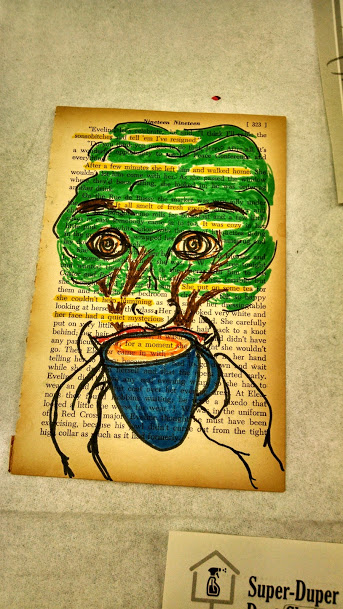
This workshop included lots of discussion of found poetry in the 21st century, including the many ways the internet has made found poetry more possible, varied, and hilarious. We tried illustrated found poetry using Henry Longfellow’s poetry, and also pages from a mystery novel and a historical fiction, and talked about fun everyday found poetry from sources like Pentametron and GooglePoetics.

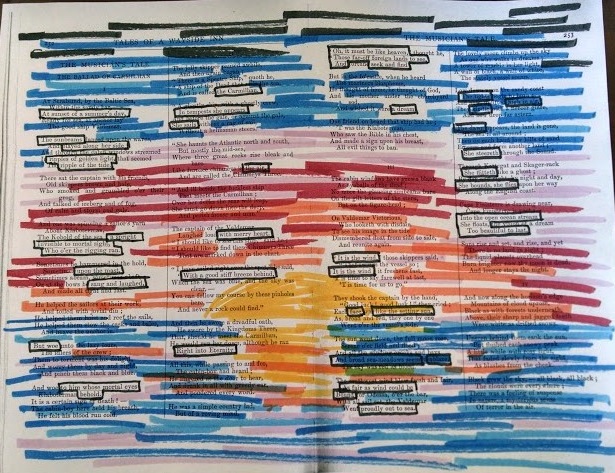
longfellow shipwreck found poem
My found poem of a sea sprite, from Longfellow’s “Musician’s Tale” in Tales of a Wayside Inn.

“Grace Unto Every Art:” Poetry and Visual Arts Workshop

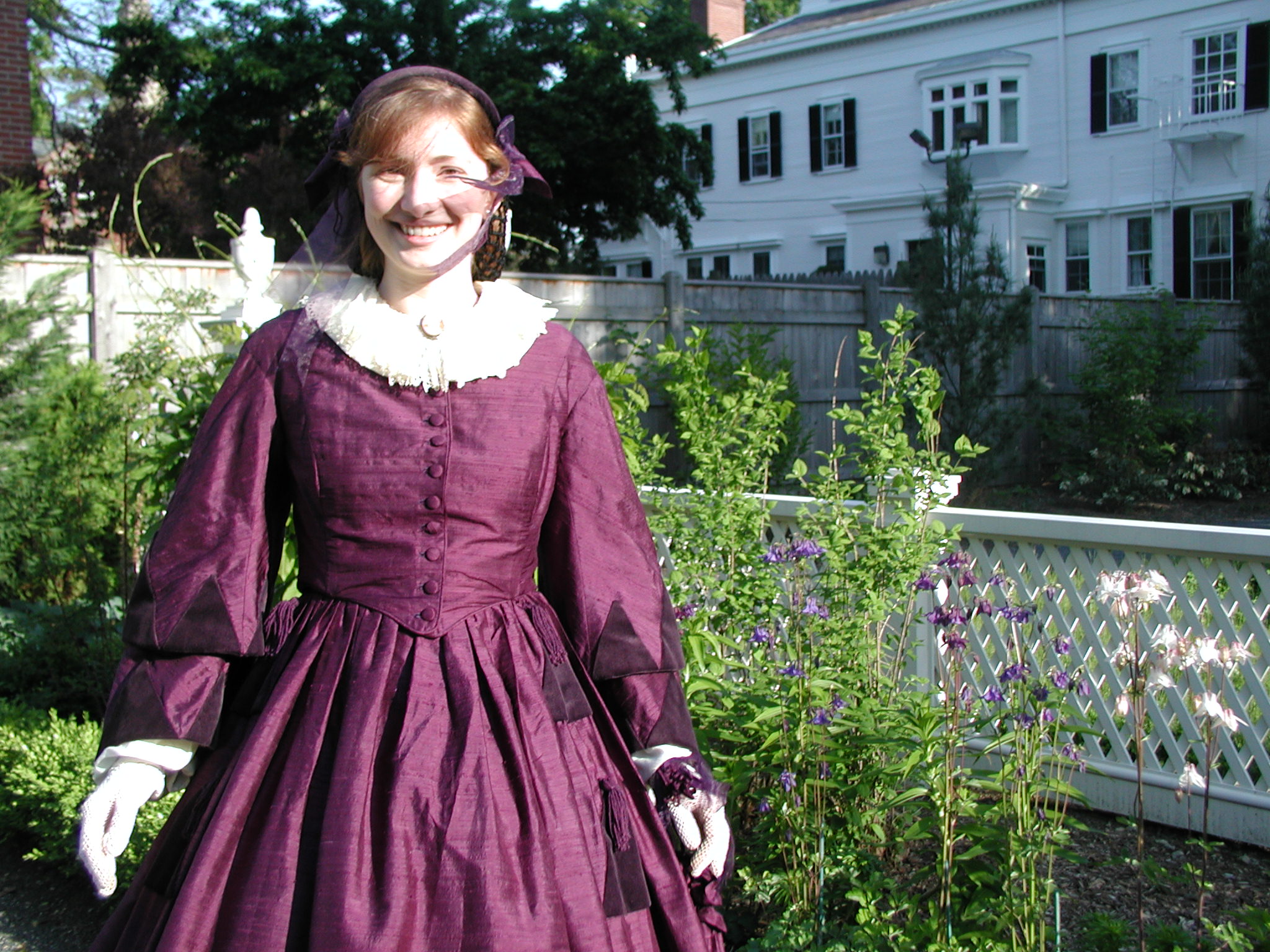
This included getting to talk about the Longfellow family connections to the visual arts (Henry’s wife Fanny Appleton had a brother, Thomas, who was part of the founding of the MFA. Henry’s older son Charlie collected a lot of Asian art on his trip to Japan, and Henry’s younger son Ernest became a painter.) and taking a tour of the first floor of the house. Many thanks to the fabulous rangers who kept an eye on us and answered our dozens of questions as we each picked an object that inspired us to write!

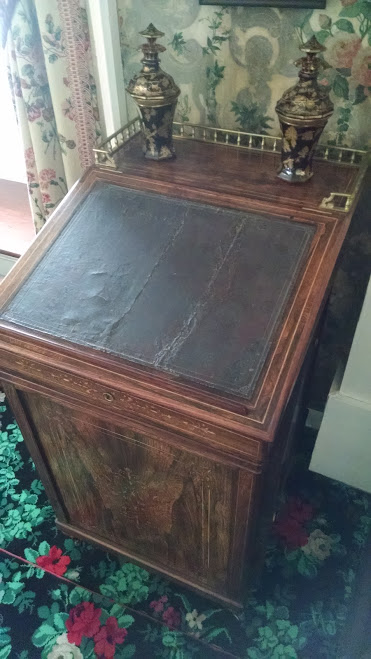
fanny longfellow writing desk
Fanny Longfellow’s writing desk in the parlor of the Longfellow National Historic Site

Inspirational Books
I brought these to the workshops for people to leaf through for inspiration; you can find them at your local library or bookstore (or museum gift shop!):

Missed out on the workshops? There’s lots of cool programs coming up at Longfellow for their summer festival, and the Mass Poetry Festival is this weekend in Salem, MA. I’ll be at the Peabody Essex Museum talking scale in poetry & art on Saturday afternoon. Hope to see you there!

Uncategorized

Should everyone write poetry?

It’s National Poetry Month! Lots of fun poetry news and discussion to share with you this month.

I recently re-encountered an article from 2014: “Everybody Should Write Poetry” by Peggy Rosenthal. I had bookmarked it because I was drawn to the idea that “everyone needs to nestle down inside language to get to know its ways, to get comfy with how playful it can be, how expansive, how unexpected in its openings to new experience.” It reminded me of the kinds of conversations I’ve had in the other part of my professional life, among those of us who work in museums and in education and in the arts. Participating in something; taking a class in glass fusing, for instance, gives you an appreciation for the process and the artistic choices and the intricacies of both which you keep forever, however lopsided or surprising your own* efforts turned out to be. (*Meaning, of course, my own!)

On the same day I apparently bookmarked an article with suggestions on “How to Read Poetry” – not requirements, but suggestions on ways to approach it without the apprehension of ‘getting it wrong.’ Again, a discussion that we keep having in museums and symphonies and similar venues; how do we best let people know that, barring actual destruction, there aren’t really ways to be ‘wrong’ in such spaces? (Perhaps we should take some marginalia notes ourselves.)

So what do you think? “Should” everyone write poetry? (or make art? or play music? or fix a car?) What’s your favorite way to approach a new poem or experience?

Finally, a shameless plug, because I firmly believe that while ‘shoulds’ are odious, ‘go for its!’ are necessary and beautiful.  Therefore, if you feel like writing poetry, go for it! and you can even do some writing with me:

“Something New, Something Strange: Found Poetry” at Longfellow National Historic Site, this Thursday, 4/7, at 6:30 pm

visitor altered page at PEM

“Grace Unto Every Art: Poetry from Visual Art” also at Longfellow National Historic Site, Saturday, 4/16, at 2 pm

p5250054

“The World in a Grain of Sand: Incorporating Scale in Poetry and Art” at the Peabody Essex Museum, Saturday, 4/30, at 3:15 pm (Part of the Mass Poetry Festival!)

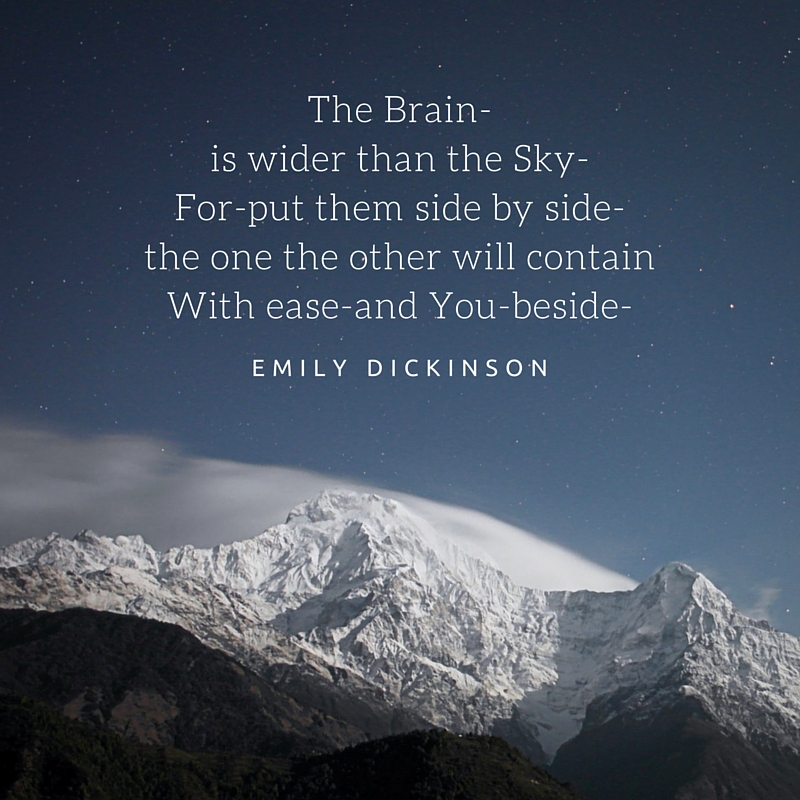
The Brain-is wider than the Sky-For-put them side by side-the one the other will containWith ease-and You-beside-

Uncategorized

Poetry Ahoy! Upcoming Workshops

National Poetry Month is still more than a month away, but I’m already in planning mode. (Meanwhile, did you know February is Library Lover’s Month? Go hug your favorite librarian!)

meg for emporium32 2015
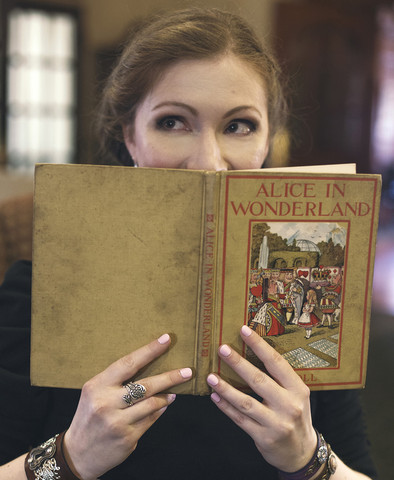
‘Found poetry’ from old books! Playing with scale in literature and art! April is going to be awesome. (Photo by Nate Buchman, http://www.natebuchman.com/ for Emporium 32, http://emporium32.com/ Go check them out if you like the jewelry I’m wearing in this photo.)

I’m very pleased to announce that I’ll be leading three poetry workshops in April!  If you’re in the driving-distance-from-Boston area, I hope you’ll stop by and join me for some playing with words and art.

Something New, Something Strange: Found Poetry
April 7, 6:30 pm, Longfellow National Historic Site, Cambridge

In Longfellow’s poem “Keramos,” a potter at his wheel says, “All things must change/To Something new, to something strange.” Recombine, illustrate, and give shape to old forms using found poetry techniques with poet and educator Meg Winikates as part of our celebration of National Poetry Month. Please call (617)876-4491 or email reservationsat105@gmail.com to reserve your spot!

Grace Unto Every Art: Poetry from Visual Art
April 16, 2:00 pm, Longfellow National Historic Site, Cambridge

Whether it was shipbuilding, smithing, sculpting, or singing, Henry Longfellow found poetry in all forms of art. Join poet and educator Meg Winikates to explore ekphrastic poetry, enjoy the Longfellows’ art collection, and write your own art-inspired pieces as part of our celebration of National Poetry Month. Please call (617)876-4491 or email reservationsat105@gmail.com to reserve your spot!

The Brain-is wider than the Sky-For-put them side by side-the one the other will containWith ease-and You-beside-

The World in a Grain of Sand – Incorporating Scale in Poetry and Art
Massachusetts Poetry Festival (April 29, 30 or May 1), Peabody Essex Museum, Salem

Galaxies and exoplanets, scanning electron microscopes, 4 million queries per minute on Google: in our ever expanding universe, is the human brain still ‘wider than the sky’ as Emily Dickinson said? What is the role of poet or artist in helping us understand how and where humans fit? Join poet and museum professional Meg Winikates to explore the use of scale in poetry and art in PEM’s Sizing It Up exhibition, experiment with physical and mental scale in your writing, and generate a poem idea (or three!) inspired by the artworks on view.
Buttons for the festival are not yet on sale, so keep checking the MassPoetry site for updates on button sales and scheduling!


Uncategorized

“Mill Brook” & Happy National Poetry Month

You didn’t think I’d let more than a few days of National Poetry Month pass without comment, did you? I celebrated the first week by diving headfirst into Mary Oliver’s latest volume, Blue Horses, which I adored, and also I’m gearing up for leading my session “Found Narratives” at the Mass Poetry Fest in May.  Finally, I’m doing my best to participate in the ‘poem a day’ challenge.  While I have been taking some of my themes from the challenge they’re hosting at Writers’ Digest, I’ve also been going where my whimsy takes me, so here’s a piece I’m fairly happy with from this month’s early efforts:

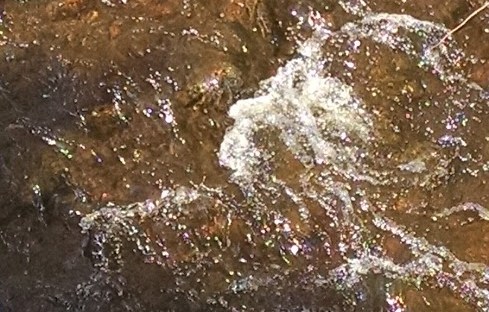
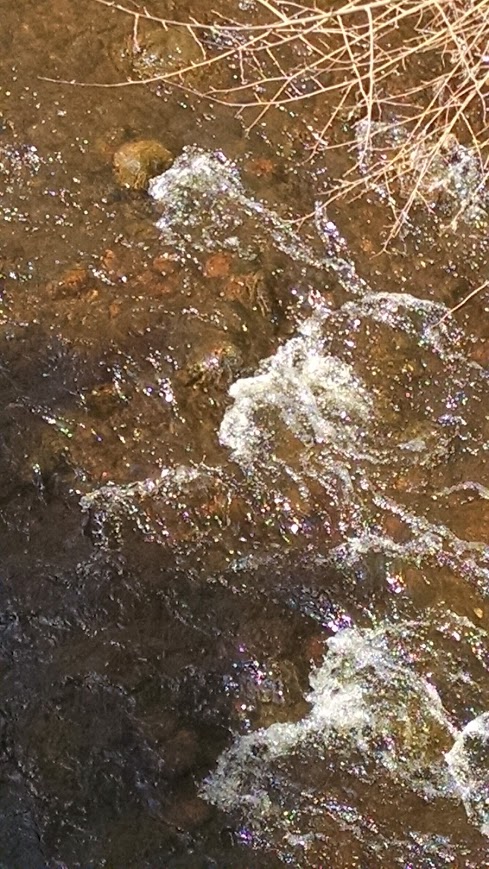
Mill Brook, from the Mill Street Bridge, Arlington, MA.  Photo by Meg Winikates
Mill Brook, from the Mill Street Bridge, Arlington, MA. Photo by Meg Winikates

Mill Brook
By Meg Winikates, April 2015

Missing the ocean, I have decided
to adopt the brook.
It is not especially approachable,
high-banked and fenced,
a little cantankerous at times
with the culverts and cobblestones
the city has gifted it.
But I am determined
to love its brown burbling,
its occasional patient mallard,
as we all await
the timid spring.

Uncategorized

Found Poetry in un-Altered Books

Last year’s found poetry experiment required altered books (Post 1 on Brain Popcorn, Post 2 on Sea Dreams).  This year, inspired by the remarkable photopoetry of Nina Katchadourian (see her Sorted Books Project and accompanying book), I decided to mine my own shelves for poetic assemblages of titles.  Unsurprisingly, there was a lot of epic sword-and-castle type imagery, both historic and fantastic.  And also dragons, though I’m still working on making some of those titles into a fluid poem.

Here, then, are two poems for you from my bookshelves!

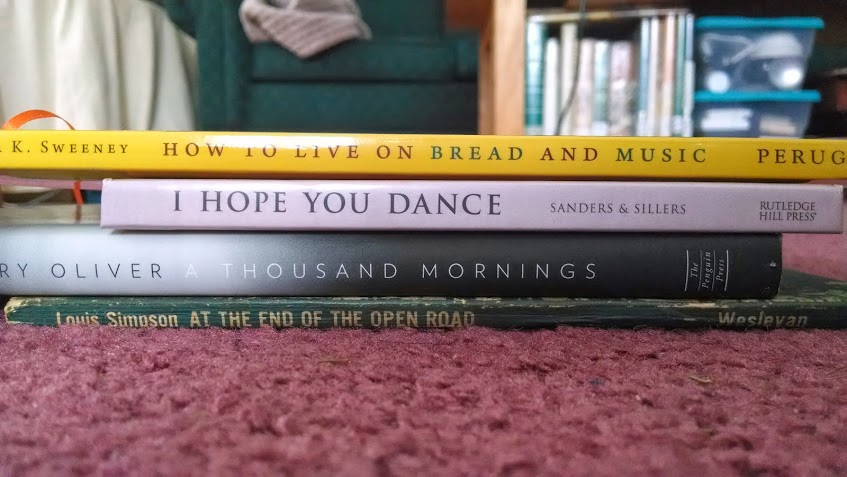
"How to live on bread and music/I hope you dance/A Thousand Mornings/At the end of the open road" Bookspine poem by Meg Winikates
“How to live on bread and music/I hope you dance/A Thousand Mornings/At the end of the open road” Bookspine poem by Meg Winikates

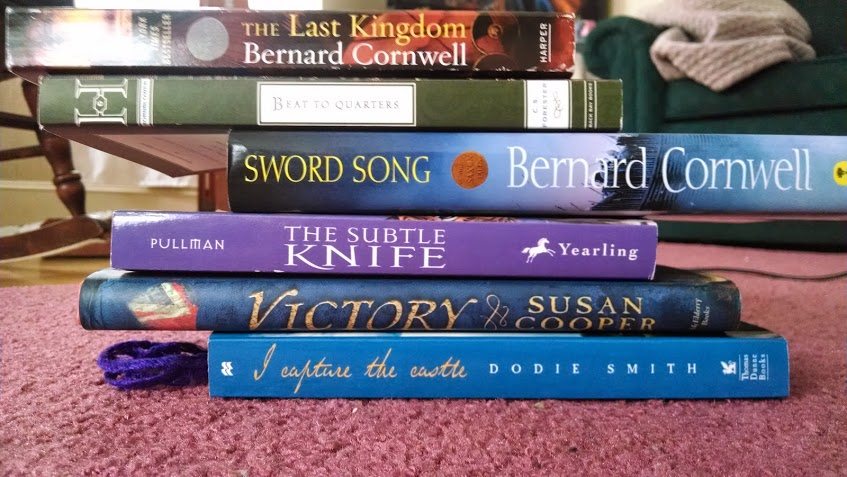
sword song poem by meg
“The last kingdom/Beat to Quarters/Sword Song/The Subtle Knife/Victory/I capture the castle” a bookspine poem by Meg Winikates

Check out other great visual constructions of poetry over on my interdisciplinary museum blog, Brain Popcorn, here: Poetry Constructions

Uncategorized

Thoughts on Boston and Camp Nano update 2

Fun things first: I’m up over 25,500 words, so I’ve already surpassed the mark I hit in November’s Nanowrimo, which feels good, even if I remain behind par.  I’ve hit the point where the plot ratchets up a notch, hoping that my pacing has been working so far given that my main antagonist has been an invisible puppetmaster.  Pacing is always one of those things I know I need to pay attention to!

Sadly, this has not been such a great week for me, my loved ones, and my city.  Though nearly everyone I know came through Monday’s bombing essentially unscathed, not all did, and the constant strain of continual coverage and bad news has taken its toll even on those of us who were nowhere near the finish line.  I’ve been trying to process through painting and poetry, and positive thoughts.  Sadly, despite my best attempts, my words remain spiralling and frenetic.  Therefore, for lack of a poem of my own worthy of sharing at the moment, since it is National Poetry Month, a poem by one of my favorites that gave me some peace this morning:

Poem of the One World
by Mary Oliver

This morning
the beautiful white heron
was floating along above the water

and then into the sky of this
the one world
we all belong to

where everything
sooner or later
is part of everything else

which thought made me feel
for a little while
quite beautiful myself.

Uncategorized

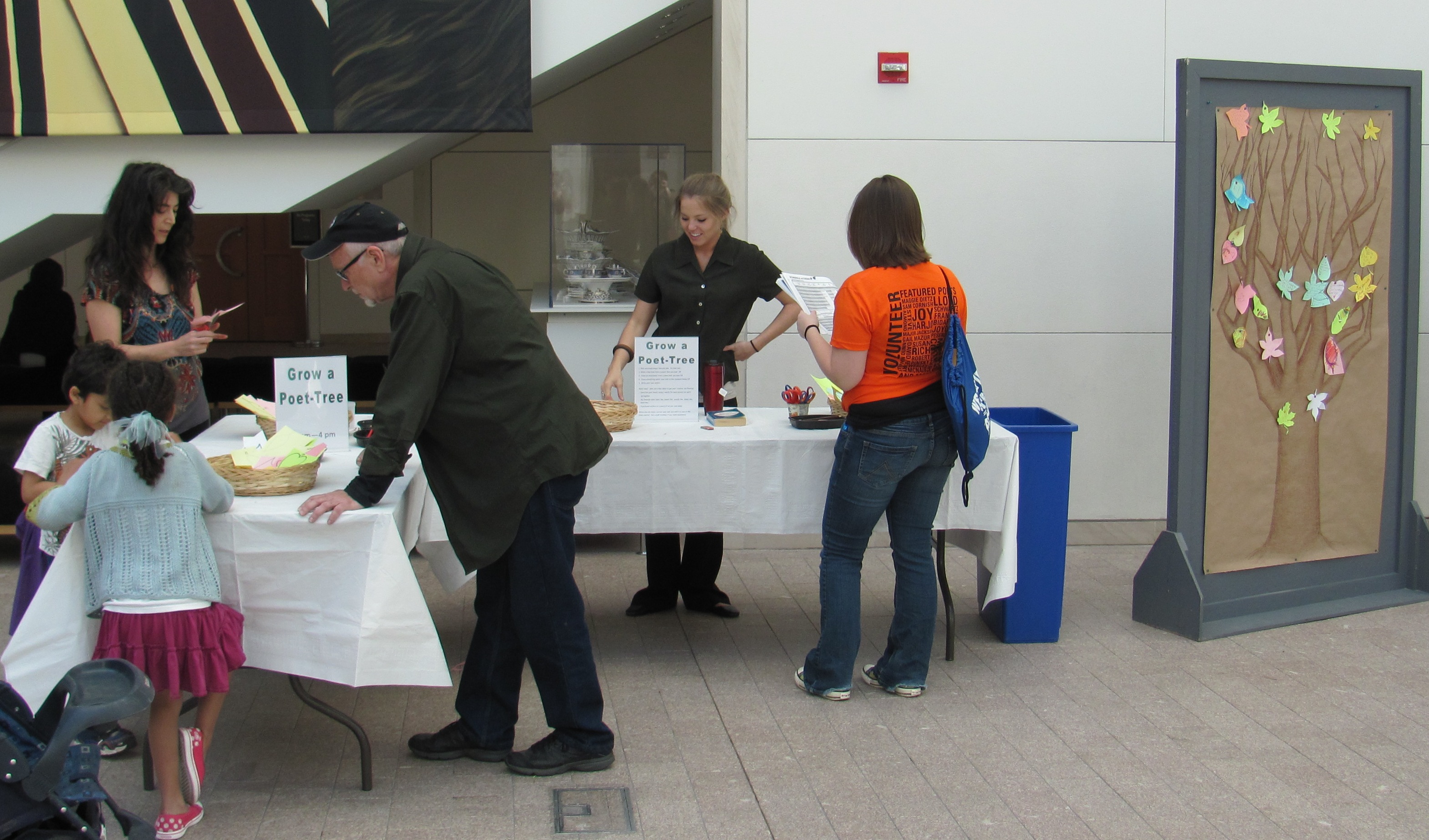
Grow a Poet-Tree

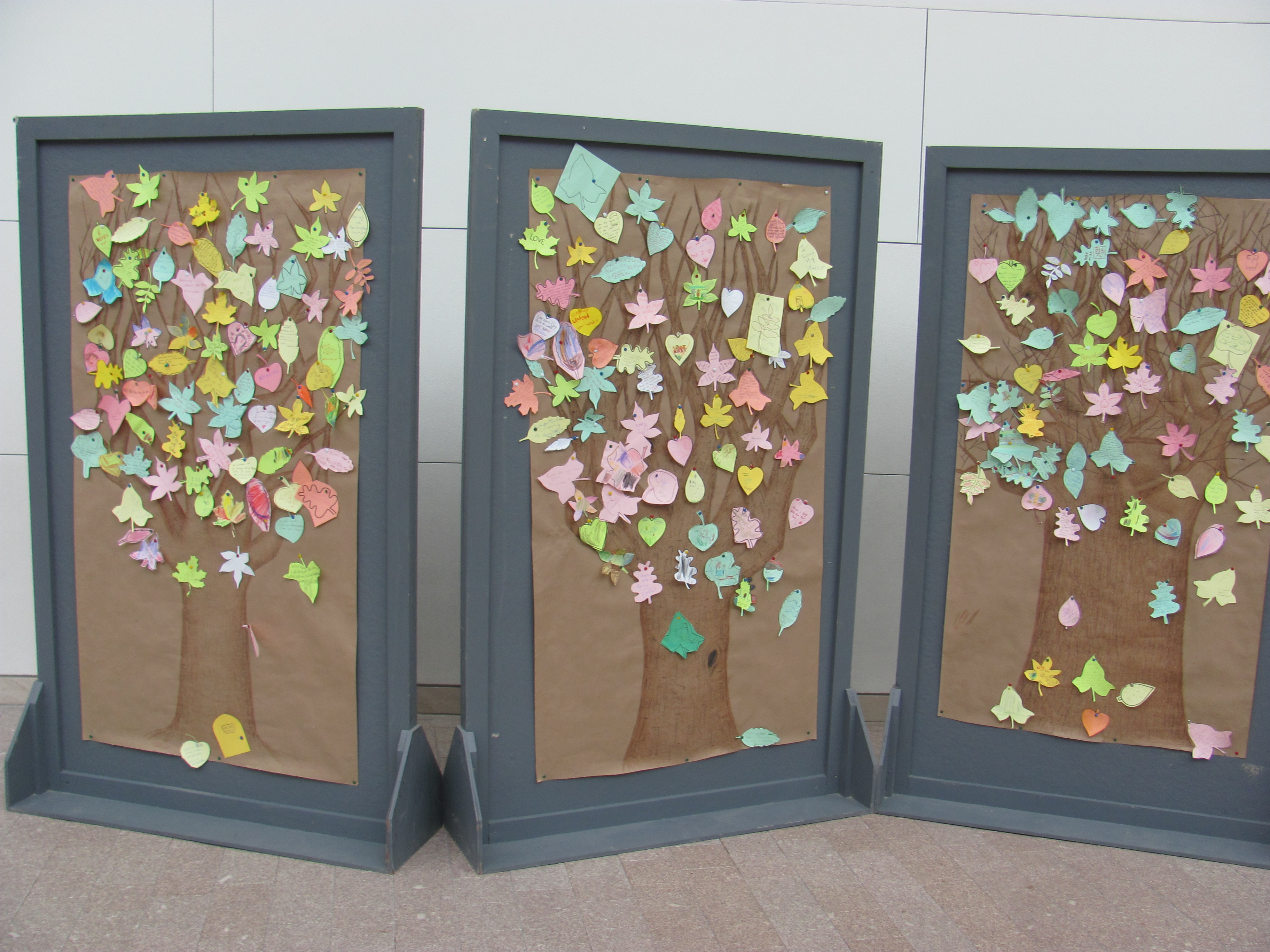
Just a few snapshots from this weekend’s drop-in art and writing activity, “Grow a Poet-Tree” at PEM for the Massachusetts Poetry Festival.  Kudos to my intern Kate for drawing three beautiful trees for us to decorate with leaves of original and remembered poetry, illustration, and reflection.

Poets quoted included but were not limited to: ee cummings (the runaway favorite with at least 5 quotes on the trees), Robert Frost, Henry Wadsworth Longfellow (the runner up in popularity, and not my fault), John Masefield (okay, that was my fault), and Shel Silverstein, with a hefty sprinkling of song lyrics (“Morning has Broken” for instance, though no “Amazing Grace”) and a few ad jingles thrown in.  Other messages included variations on a theme of ‘save the trees’ (clearly I do my work as an Art & Nature specialist thoroughly…), a lot of ‘I love you’s, and a few witty folk who wrote things like ‘This space intentionally left blank.’   I was most amused by the inclusion of text speak and hash-tags on several of the submissions, I think, but I was also impressed by the way some of the participants chose to address some fairly serious themes even in 2 square inches of space on a public bulletin board.

Greeting early poets and artists of all ages on Friday morning

A few of my favorite additions to the Poet-Tree forest, courtesy of PEM visitors and attendees of the Poetry Festival:

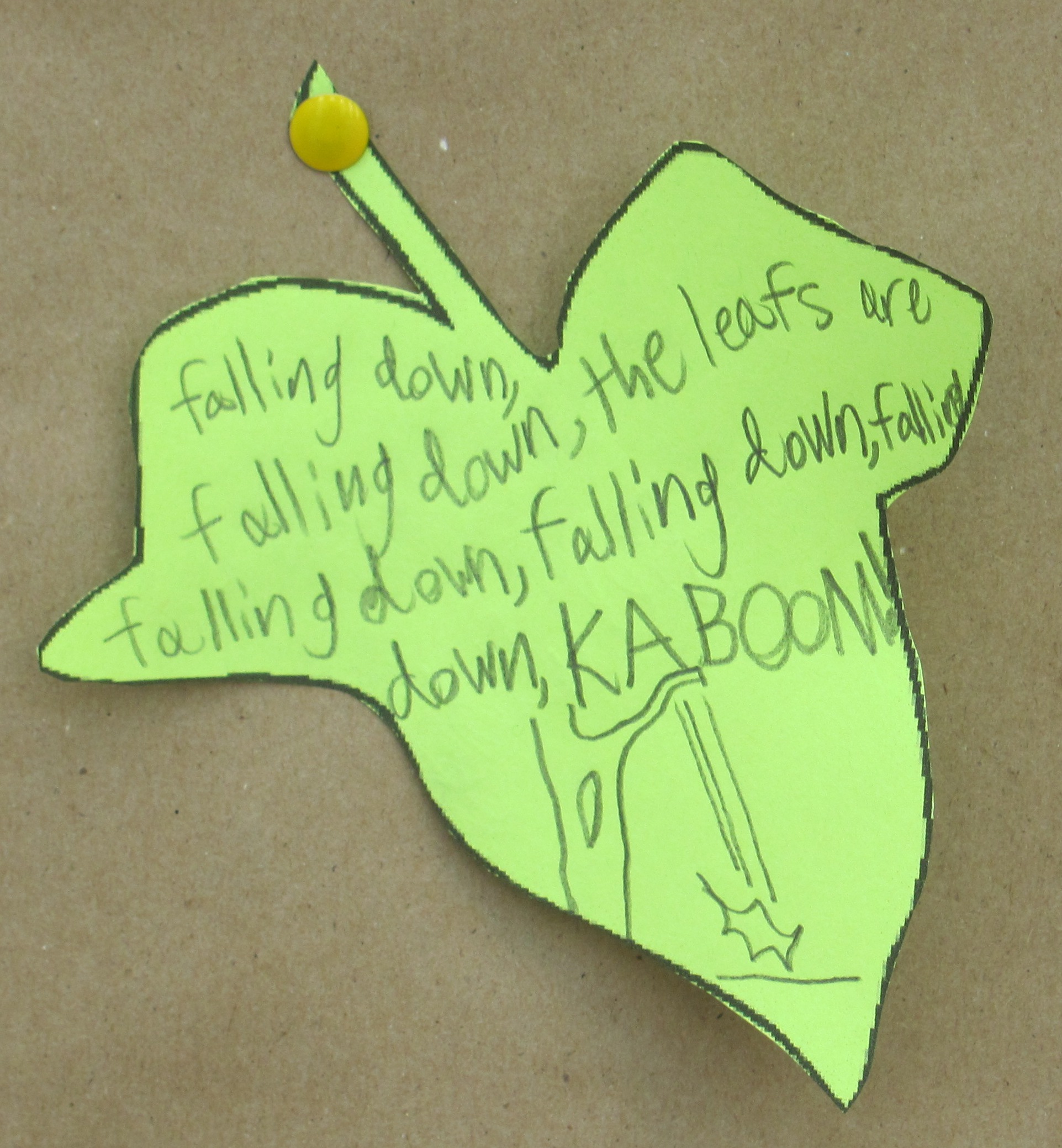
Child's Poem: Falling down, the leaves are falling down, falling down, falling down--KABOOM!
Forget asking about when a tree falls in the forest--apparently even these leaves make a noticeable auditory shock upon impact!

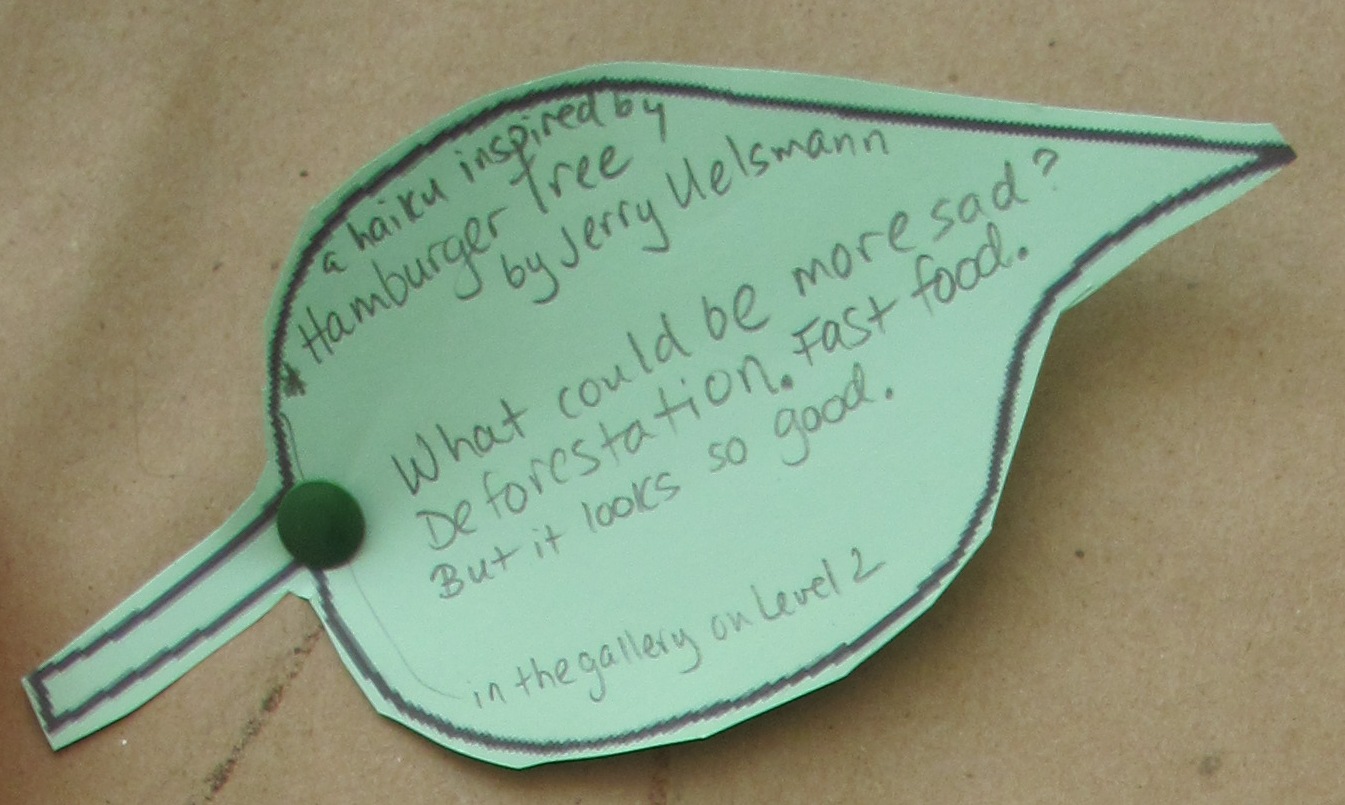
Responding to a photomanipulated image by artist Jerry Uelsmann from a current PEM exhibit--someone went to the ekphrastic workshop!

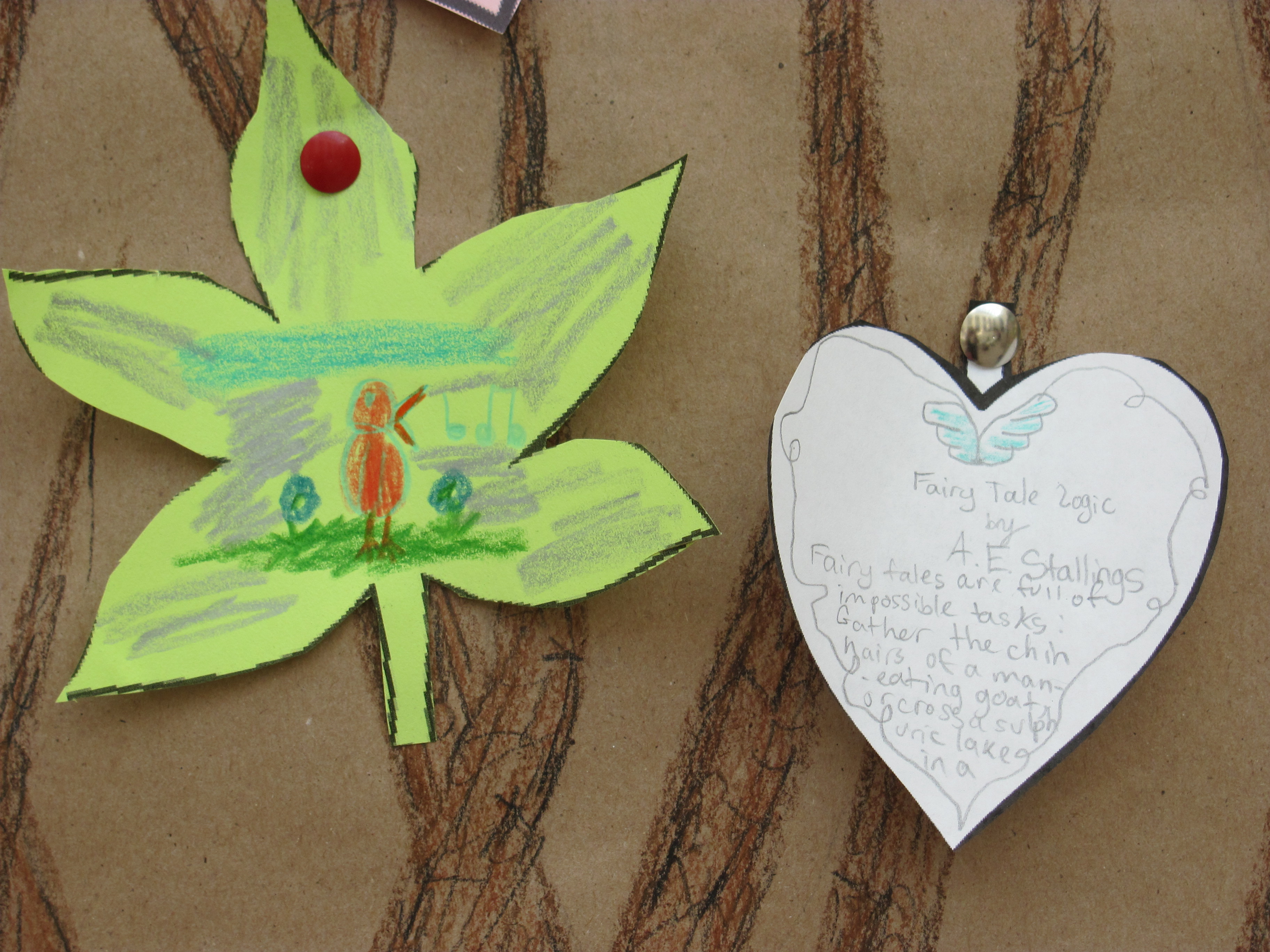
A fun illustration and a sweet poem about 'Fairy Tale Logic' (that participant was clearly my kind of whimsical!)

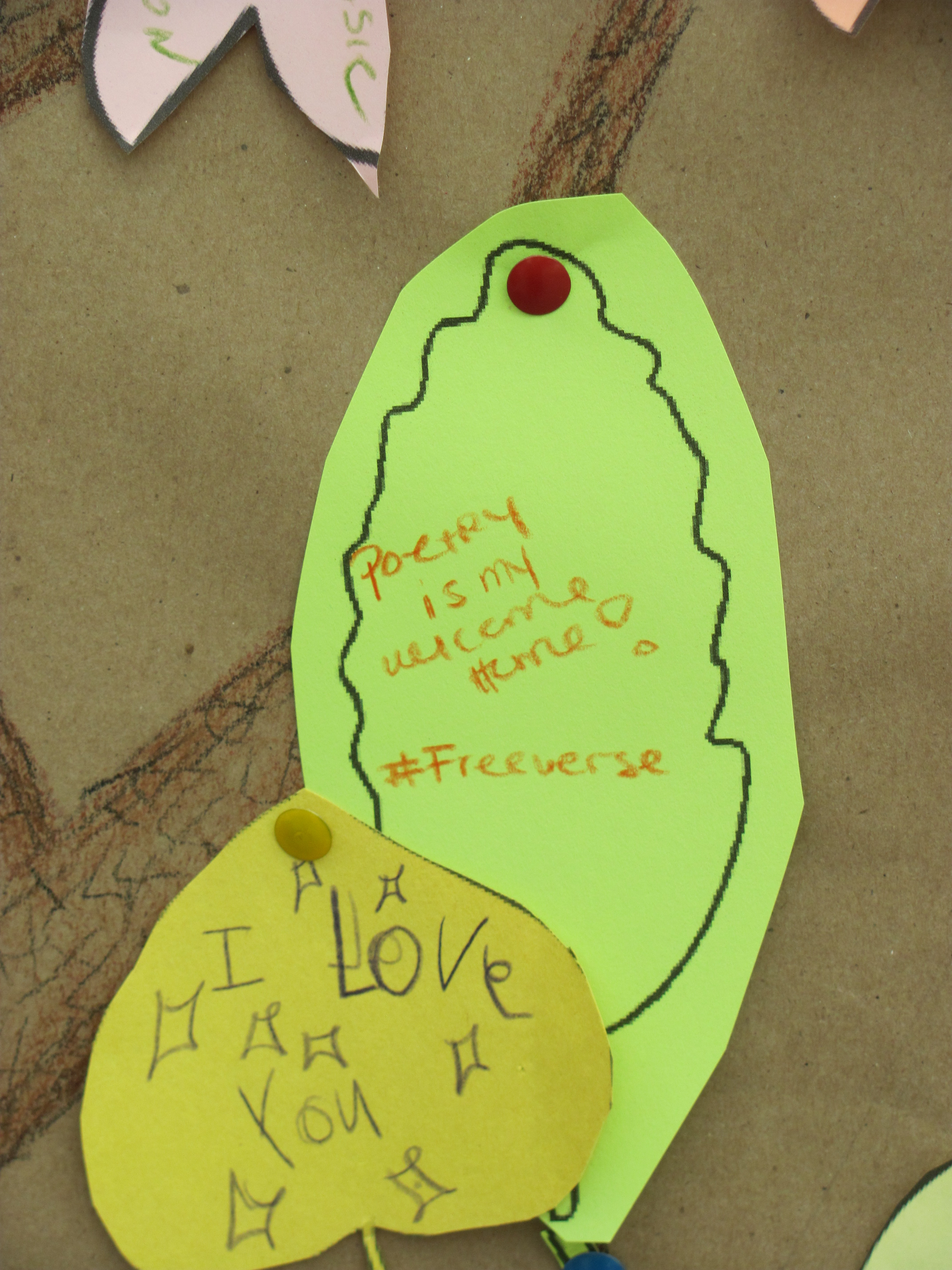
One of several #freeverse tags. Who says poetry isn't adapting to the 21st century?

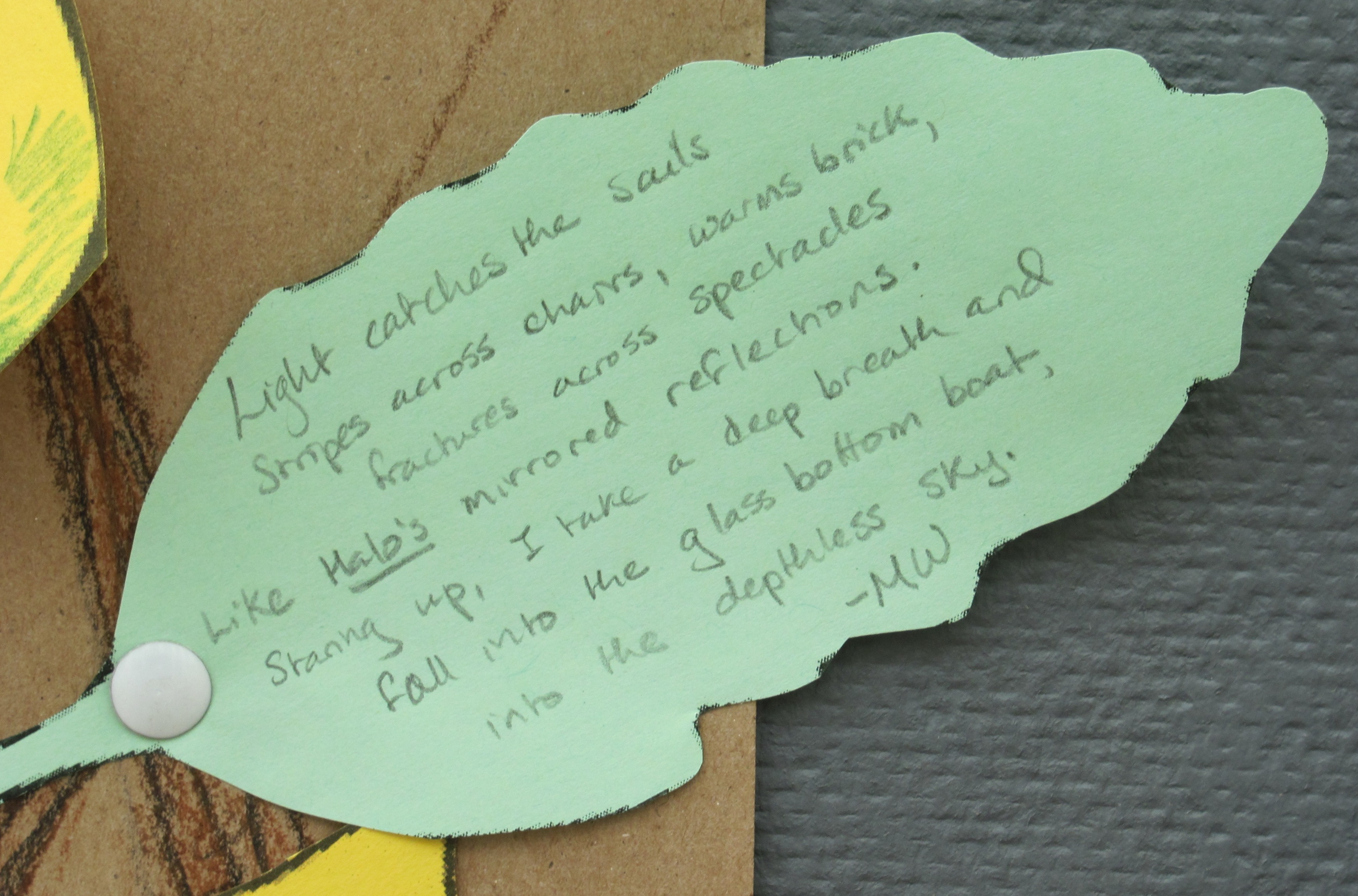
My own addition to the tree, inspired by sitting in the Atrium and appreciating the greenhouse/sailboat effect of Moshe Safdie's glass roof.

The final product