Uncategorized

A grand weekend of Bualadh Bos(ton)

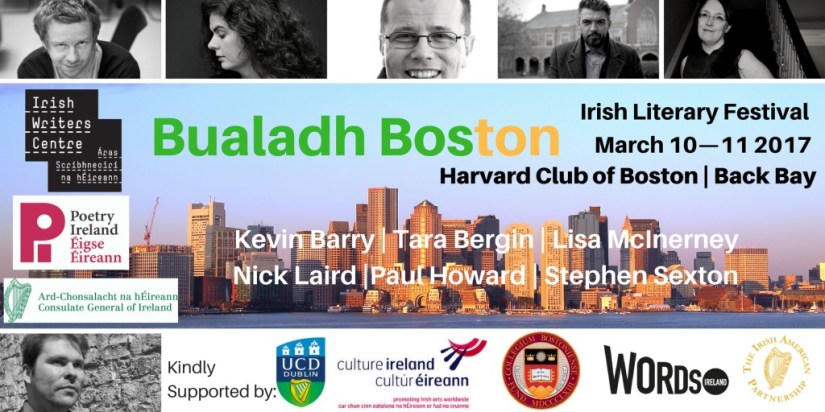
Bualadh-Boston-e-flyer-2-1024x512

Apparently, “Bualadh Bos” is a phrase in Irish that means applause, and there was plenty of cause for cheers at the recent Irish Literary Festival, held for the first time at the Harvard Club in downtown Boston and arranged by a whole bunch of clever cultural ambassadors from the Irish Writers’ Centre, Poetry Ireland, and the Consul General of Ireland to Boston, Fionnuala Quinlan (@IrelandBoston). (My companion and I had a lovely conversation with Ms. Quinlan during the reception on Friday, and she’s  delightful. I hope she has reason to remain posted in Boston and help arrange many such events in the future.)

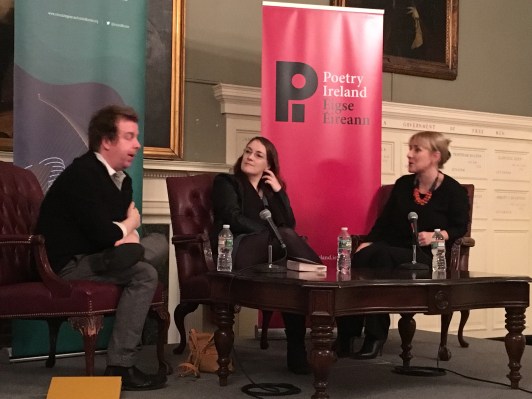
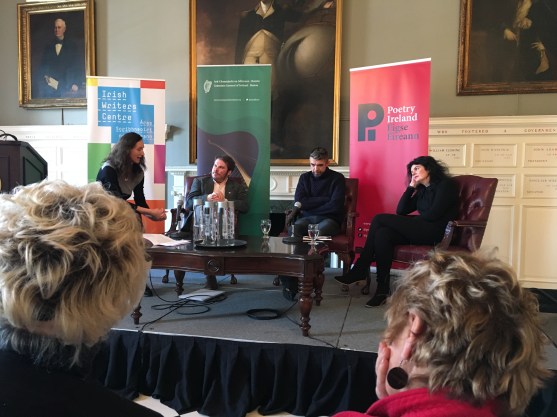
Friday night began with readings by novelists Kevin Barry and Lisa McInerney (@SwearyLady), followed by a discussion led by Fionnuala Quinlan.
IMG_0803
Kevin Barry, Lisa McInerney, and Fionnuala Quinlan in conversation during Friday’s opening event.

Barry read a section of one of his short stories, and McInerney from her recent award-winning novel, The Glorious Heresies. Both authors were excellent readers of their own work; funny, dramatic, and engaged with both the text and the audience, which meant that my companion and I both left the evening more interested in reading more of their work, rather than less, which can be the case with less skillful presenters.
IMG_0811
From right, Tara Bergin, Nick Laird, and Stephen Sexton in conversation with Maureen Kennelly of Poetry Ireland.

The next day we got to hear readings of some fantastic poetry from Tara Bergin, Nick Laird, and Stephen Sexton. Bergin’s poetry is lyrical, with an element of folklore-sound to it without ever directly referencing specific legends. You can read a review of her debut book, This is Yarrow, here.  Laird’s poetry was sharp and wound round itself like an ammonite, and frequently referenced current events and recent scientific thought. You can read his article “Why Poetry is the perfect weapon to fight Donald Trump” here. Sexton’s poetry was often, though not solely, humorous; he noted as he began that when picking his poems for the event he discovered “[he had] a lot of hobbies for about three weeks,” which was long enough to work them into a poem or two before going on to something new. You can read one of the poems he read that day here: “The Curfew.”

Though my companion and I bought several books at the event, which I am reading with great pleasure, I also went and found more of their poetry after the event. My current favorite is Bergin’s “Appointment with Jane Austen,” especially appropriate as I shall shortly be undertaking a literary pilgrimage to Austen’s country myself.
IMG_0814.JPG
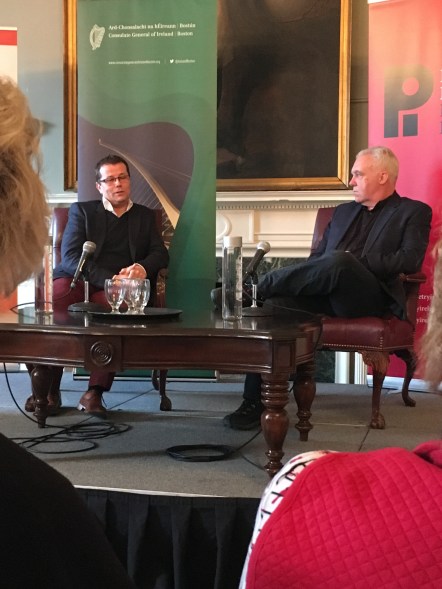
Paul Howard and Kevin Cullen

The last event of the weekend was Boston Globe columnist and journalist Kevin Cullen interviewing journalist and novelist Paul Howard. They spoke of everything from sports journalism and doping scandals to the success of Howard’s satirical main character, Ross O’Carroll-Kelly, in whose Homer-Simpson-esque adventures and foibles Howard keeps a running commentary on current events in Dublin and to a lesser extent, the wider world.

Overall it was a fascinating weekend, and I was only sorry that it seemed the event had not been widely enough publicized, as the room was moderately full but deserved to be more so on each of the two days. As it seemed many in the audience, like myself, were being introduced to most of these writers for the first time, the event definitely succeeded in its stated purpose to use Ireland’s literary offerings as a bridge to new audiences and new opportunities, and Boston was a perfect place to hold such a gathering. I will be keeping my eyes out for announcements of next year’s Irish Literary Festival, for sure.
Save

Uncategorized

Looking forward to Arisia 2016

For the last several years I’ve tried to make it to either Arisia or Boskone, to get a full weekend’s worth of geekery, inspiration, and writing research. Last year’s trip to Boskone got a little dicey thanks to the blizzard (1 of…14 or so, thanks, global warming). I’m keeping my fingers crossed for more beneficent weather this time around.

rocketeer
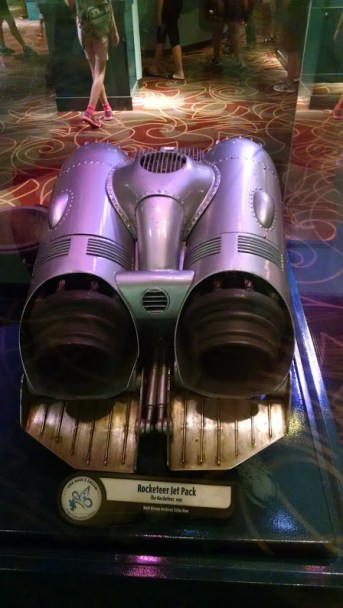
Maybe I can borrow this to get to the con? (Jet pack from The Rocketeer, as seen in One Man’s Dream at Walt Disney World. Photo by me, Nov. 2015)

As always, there seem to be more options than time, but here’s where you’ll likely find me if you too happen to be at the con this weekend:

Friday

7 pm: “How Lord of the Rings Stunted Fantasy’s Growth” (Interesting premise, fairly sure I disagree, but I want to hear why they think so)

8 pm: “Mrs. Hawking: A Steampunk Play” (Sounds like fun, and I’m always up for a good performance. If I miss it on Friday I think it repeats later in the weekend)

Saturday

10 am: Oh, who knows. It will either be “The Founding Mothers of SF/F,” “Constructing Languages,” or watching the artist guest of honor make wood-turned rocketships on a lathe, which sounds awesome.

11: 30 am: “Nonstandard Paths to Magic” (If you didn’t know I was a fantasy writer, would you assume that this was ‘how to sneak into Hogwarts?’ Because I might)

1 pm: Short Story Contest

4 pm: John Scalzi Reading (there were a few other good looking sessions in this block, but I can’t *not* go to the Scalzi reading.)

Evening: Who knows (part 2)? Depends on how much energy I have left and how far I have to go to find food.

Sunday

10 am: Broad Universe rapid-fire reading (though “Headcanon and SF/F” looks good too, so I may end up there if the BU panel is full)

11:30 am: “Complexities of Voice” most likely, though I have the art director’s tour of the art show and NASA documentary films as back-up options.

1 pm: “Vivat Regina: Mrs. Hawking Part II”

2:30 pm: “Science Year in Review” (with “Themes of Afrofuturism in SF” as backup)

4 pm: “Everything I say is a lie” ie. the unreliable narrator panel, not a declaration of intent or challenge.

5:30 pm: “Worldbuilding with the Soft Sciences” unless I get in a mood, in which case I may end up in “Lesser Known Tropes v. Women in SF/F”

Evening: Ditto from Saturday. Might go swing dancing at 7:30?

Monday

10 am: “Inside Out: Pixar Gets Smart”

11:30 am: “Speculative Poetry is Awesome” or “Humor in Writing” No idea how I’m going to pick on that one.

2:30 pm: “The Story within the Story” or “Don’t Quit Your Day Job” (good advice, I like my day job!)

Chances are good if I’m *not* any of these places, I’ll be down in the vendors’ hall hanging out with my ever-talented friends from Emporium 32.

What are you up to this weekend?

Uncategorized

Video: My reading at MassPoetry’s U35

I had a fabulous time a few weeks ago reading at the Marliave Restaurant in Boston, as part of MassPoetry’s U35 reading series. You can check out the videos of the other readers from that evening (Chen Chen and Sarah Tourjee) on the U35 site, as well as the bios for November’s upcoming readers.

Also, don’t forget that MassPoetry is accepting festival session proposals until the end of this month! If you have a panel, reading, or workshop idea, make sure to submit here before October 30.

Uncategorized

Brushing up for Boskone

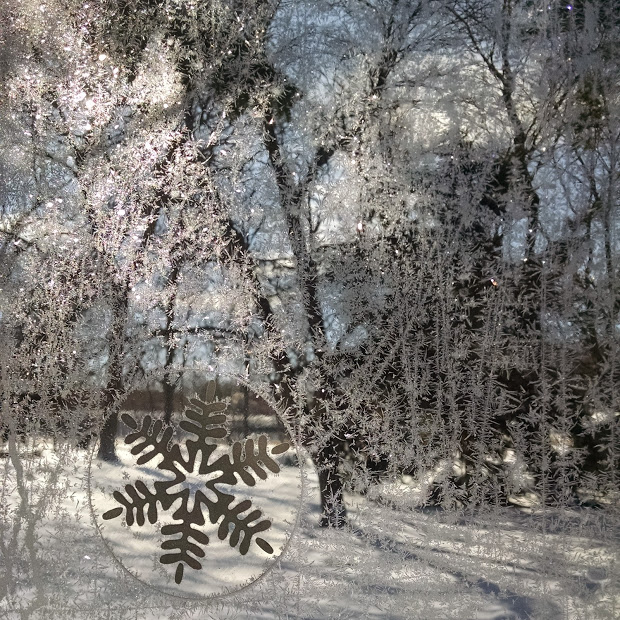
A shimmering visit from Jack Frost on the back porch last week.  Photo by Meg Winikates.
A shimmering visit from Jack Frost on the back porch last week. Photo by Meg Winikates.

February is here, and with it comes not only a shocking pile of snow, but also one of my favorite parts of the geeky side of the calendar: Boskone.  Last year I got to have tea and coffee with Jane Yolen (wow!) and Bruce Coville (also wow!).

This year, if you have the time available, there’s a bunch of free programming on Friday afternoon (2/13), which looks like a really cool selection of stuff.   I’m starting a new job so I won’t be able to make it before Friday evening at the earliest, but there’s no shortage of neat stuff to see the rest of the weekend. (Link above also goes to the rest of the weekend’s program.)

If you should happen to be at the convention on Sunday morning, don’t miss the Flashfic read-aloud competition at 9:30!  11 writers get 3 minutes each to read a story, get critiqued, and compete for the top spot, yours truly included.   Last year’s stories were all fun and incredibly varied, and I’m looking forward to being part of the action this year.  Hope to see you there!

Uncategorized

What makes a literary district?

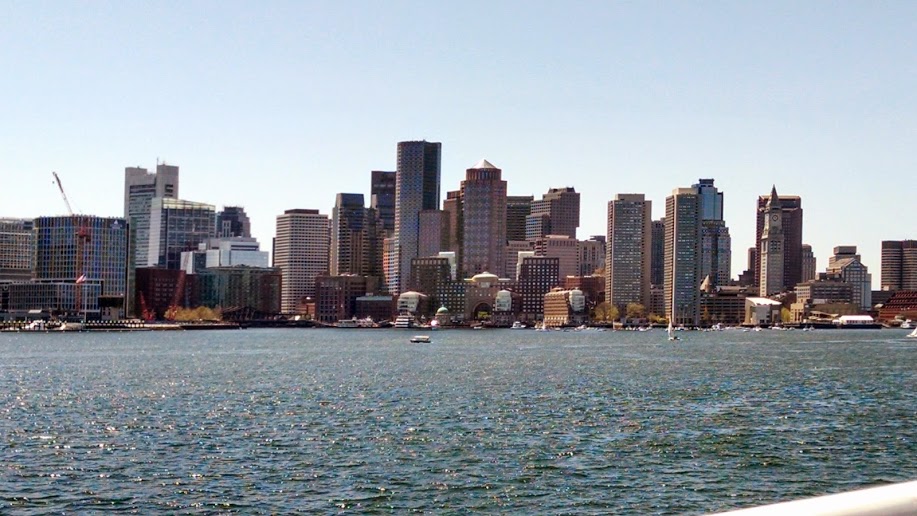
Boston from the harbor. Photo by Meg Winikates.

In August of this year, the Mass Cultural Council approved the creation of a ‘cultural district’ in Boston dedicated to the literary arts.  Cultural districts are a way of raising awareness about the various arts organizations and resources in an area, and are meant to have an economic impact as well, attracting businesses and creative professionals to a designated area.  There are currently 26 designated cultural districts in Massachusetts, and I find a lot to like in the definition the MCC provides:

It is a walkable, compact area that is easily identifiable to visitors and residents and serves as a center of cultural, artistic and economic activity. The Massachusetts Cultural Council recognizes that each community is unique and that no two cultural districts will be alike.

That seems like a set of very achievable guidelines, given that much of New England falls into the ‘walkable, compact’ category already, and the rest of the definition of ‘culture’ is left open to the strengths of the city/town that applies.

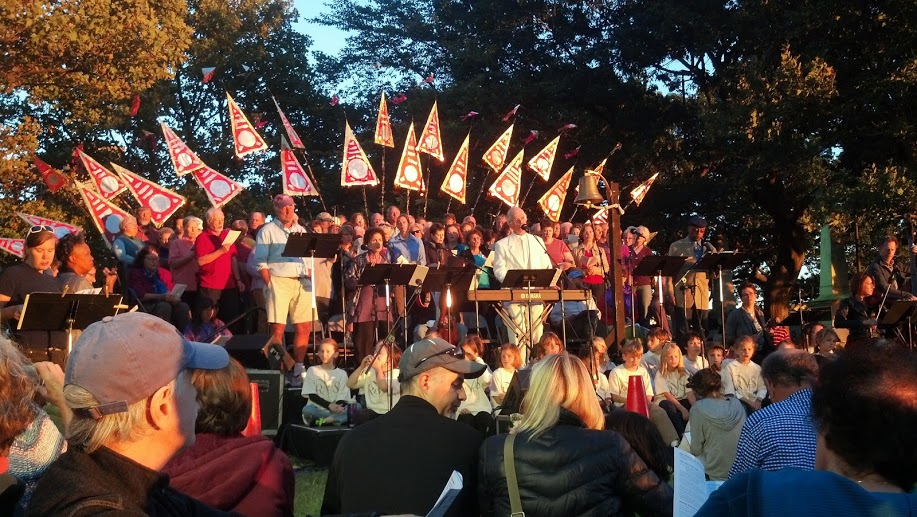
Revels' River Sing on the banks of the Charles.  Photo by Meg Winikates.
Revels’ River Sing on the banks of the Charles. Photo by Meg Winikates.  Many cultural districts seem to feature recurring music and dance festivals like this one, as well as the local waterfront, for understandable reasons. (Though the current Cambridge cultural district is in Central Square, up the road from where this celebration of the autumnal equinox occurs.)

So what makes the Boston Literary District (the only one of its kind in MA and the only district specifically geared to one arts discipline) fit the bill?

Mass Poetry recently interviewed Larry Lindner, the Literary District’s coordinator, who enthused about his hope that “the Lit District website becomes for Boston what Time Out is for people who go to London — a kind of what’s-going-on-in-the world-of-literature in Boston” and mentioned plans for an app to help explore the District in 2015.  And the physical district itself?  By making the sites and events more visible, accessible, and tangible, Lindner hopes to encourage timid readers as well as those already deep in the reading and writing world.  He also suggests that associate partnerships with organizations and businesses outside the District’s official borders can help their visibility as well, and bring some of the benefits of the district designation to other areas of the city that need it.  (Even events outside the city get a chance to be included on the District’s events calendar, such as a public art/poetry event in Newton earlier this month.)

The thing I love best about perusing the map of the district is the number of surprises it holds, even for someone who has lived all but 2 years of her life in and around this city, who has worked at a local literary/historical site (2 if you count the Paul Revere house and his own poetical connections), and who was an English major to boot.  For instance, did I know that E.B. White’s The Trumpet of the Swan was set in Boston’s Public Garden?  Maybe when I read it when I was nine, but I certainly didn’t remember the scene with Louis playing his trumpet on the actual existing bridge over the pond.  Nor could I have named even half the writers and poets listed as having ever been Boston residents.  (I love learning new things about my city!)

A few of the sites listed do seem like a stretch (there’s a small bookshop on the ground floor of the State House, really?) and some a bit vague (the Old City Hall listing says ‘Legend has it that that’s the setting for Edwin O’Connor’s novel The Last Hurrah‘) but on the other hand, one can choose to take that as a plus.  Some of these places had to really *try* to connect to the literary district.  It was worth the effort to find the thread, the history, the destroyed address that this modern building now stands over–and that’s kind of awesome, that people want to be a part of it.  I know next time I’m free to wander a bit downtown, I’ll be keeping my eye out for some of the literary landmarks listed.

Boston Public Garden (and Louis' bridge!).  Photo by Captain Tucker, used under creative commons license.  Click for source.
Boston Public Garden (and Louis’ bridge!)  Photo by Captain Tucker, used under creative commons license. Click for source.

And if you can’t make it to Boston to check out what’s going on on the bookish byways, take a stroll down Author Avenue  or Fantasy Street as you check out this virtual literary district at  My Independent Bookshop.  This site is a visually appealing compilation of people’s book recommendations which are then linked to independent bookstores.  I haven’t set up a ‘bookstore’ of my own yet, but it does look like a fun community and a fairly intuitive interface. (Don’t forget to scroll sideways as well as down, though!)

Uncategorized

“At the Info Desk (Logan Airport, 10 pm)”

I always appreciate it when my writers’ group offers up a prompt that makes you  consider a new perspective.  This week’s best prompt was to write from the point of view of “someone who works at an airport.”

"Logan Airport, Terminal A at night" by Alan Myles.  Creative Commons, click for source
“Logan Airport, Terminal A at night” by Alan Myles. Creative Commons, click for source

At the Info Desk (Logan Airport, 10 pm)
by Meg Winikates

Departures, arrivals, wheels up, wheels down,
conveyor belts creak round and round,
handles up, wheels down.
“Cup of coffee? That’s three fifty,”
and her sigh’s a lonely sound–
Ten pm at Logan: parking up, buses down.
“Did I miss the Silver Line?”
“Five more minutes, head on down–
last exit on the left,” and
the wheels go round and round.
“Left my passport at the hotel!”
Customs up, taxis down.
Peculiar sort of silence as
the last flight touches down
and the echoes of the travelers
pulse like heartbeats round and round.


Uncategorized

Mental and Emotional Geography: MA Poetry Fest Reactions 2

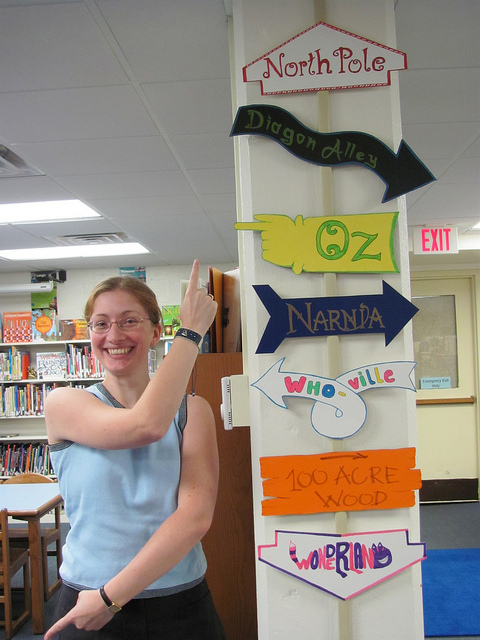
Library directionals, designed and created by Kathleen and Meg Winikates, 2012

What is it about a place that grabs hold of the imagination?  Is there some magical combination of language and  association and vista and memory that makes a place ‘real’?  Is one city the same to different people and are we the same person in one city as we are somewhere else?  Just what do we get when we gaze out over the water, anyway?

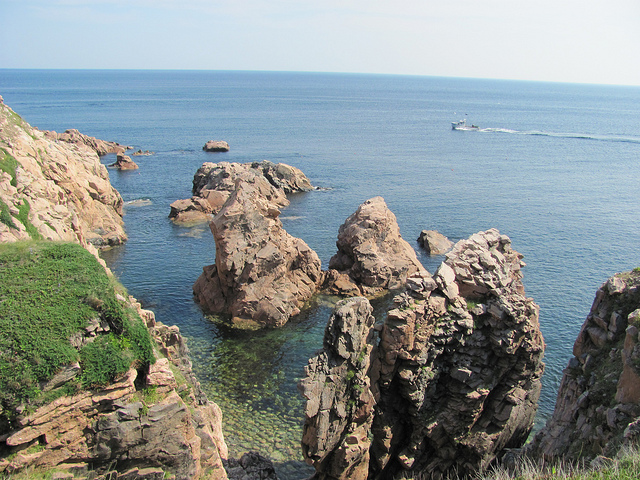
White Point, Cape Breton, by Kathleen Winikates, 2013

Two different sessions I attended at this year’s Mass Poetry Fest dealt with the themes of people in places – the reading “Poetry of Place,” with poets Cammy Thomas, Julia Lisella, Theodora Stratis, and Rosamond Zimmerman, and “Writing the Sea: Poetry of the New England Coast” with poet/professor Elisabeth Weiss Horowitz.  They were both incredibly thought provoking in their own ways.

This is the place. Stand still, my steed,
Let me review the scene,
And summon from the shadowy Past
The forms that once have been.

The Past and Present here unite
Beneath Time’s flowing tide,
Like footprints hidden by a brook,
But seen on either side.

– Henry Wadsworth Longfellow, “A Gleam of Sunshine” (excerpt)

“Poetry of Place” featured a lot of different ways to think about how we locate ourselves.  The poets involved offered readings of their own poems that dealt with place as a way to connect to memory, to family, to the present, to a collective cultural heritage, to the structures we inhabit, and even to the boundaries of our own physical bodies.

Are you still yourself in a leopard’s skin?

How does living abroad change the way you see your home and your relationship to it?

Why is New England different from New York, and why are our pasts so much more present here?

Can the paper of a poem be a place, with poems nested within each other?  (Admittedly, that last one required some brain bending on my part, but that’s what this kind of event is good for, and using color to identify an inner poem within the overarching poem was a neat experiment.)

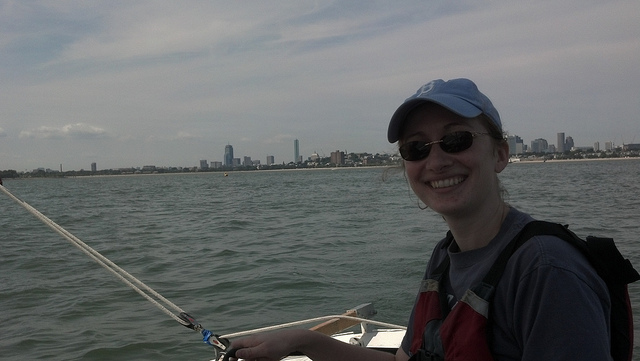
Sailing in Boston Harbor, photo by Kathleen Winikates, 2012

This session made me think a lot about the grounding I get from living here in Massachusetts, only an hour’s drive or so from where I grew up.  I’ve always been a Boston Girl, but why is that?  As I’ve been rereading and organizing my poetry for a project, the prominence of place has grown pretty evident, as I was writing about it even when I wasn’t thinking about it consciously.  I’m looking forward to going back into some of those poems to think harder about why where they are and where I am is so important.

“Writing the Sea” was definitely the most immediately effective at getting me to put pen to paper.  I’ve always been drawn to water (*squints at blog title*), and Horowitz assembled an impressive array of historical and contemporary examples of poets inspired by stints along one New England shore line or another, including riverbanks and lake sides as well as ocean beaches.  I’ll breakdown why this was such an effective workshop in my next post, but it certainly helped that she maintained an excellent balance between highlighting particular lines, themes, and commonalities within and among the poems with a set of great writing prompts.  Even the simplest instruction to write a word bank of as many water-related words as we could, from any discipline, led to my dredging up words I haven’t used since I worked at the New England Aquarium.  Some of them have a lot of evocative possibility: “pelagic,” “phytoplankton,” “undertow.”

One of my favorite prompts was inspired by an Inuit form of poetry, in which the last word of the line becomes the first word of the next, and we were asked to write a flowing poem about rivers in a handful of minutes.  This is my attempt, though in a second draft I think it would need more actual focus on the water as well:

On the Charles

I haul on the mainsail sheet,
the sheet that shivers in my hands,
these hands that rein the wind
winding through my city.
City buildings soaring high
and higher above their echoes,
echoing in slices under my hull.
Hull cupping me as I brace
the bracing wind, balanced on the mainsail.

Do you have a favorite poem that is grounded in a particular place?  Please share in the comments below, I’m always looking for the next great read!

Uncategorized

Thoughts on Boston and Camp Nano update 2

Fun things first: I’m up over 25,500 words, so I’ve already surpassed the mark I hit in November’s Nanowrimo, which feels good, even if I remain behind par.  I’ve hit the point where the plot ratchets up a notch, hoping that my pacing has been working so far given that my main antagonist has been an invisible puppetmaster.  Pacing is always one of those things I know I need to pay attention to!

Sadly, this has not been such a great week for me, my loved ones, and my city.  Though nearly everyone I know came through Monday’s bombing essentially unscathed, not all did, and the constant strain of continual coverage and bad news has taken its toll even on those of us who were nowhere near the finish line.  I’ve been trying to process through painting and poetry, and positive thoughts.  Sadly, despite my best attempts, my words remain spiralling and frenetic.  Therefore, for lack of a poem of my own worthy of sharing at the moment, since it is National Poetry Month, a poem by one of my favorites that gave me some peace this morning:

Poem of the One World
by Mary Oliver

This morning
the beautiful white heron
was floating along above the water

and then into the sky of this
the one world
we all belong to

where everything
sooner or later
is part of everything else

which thought made me feel
for a little while
quite beautiful myself.