Uncategorized

Halloweensie Contest: Baby Goblin at the Halloween Ball

Today’s the start of the Halloweensie contest run by author Susanna Leonard Hill, and this year’s challenge was to write no more than 100 words (not including the title) using the three prompt words: goblin, tiptoe, and chill. There’s lots of fun stories up already, and I encourage you to go check them out. Here’s my entry:

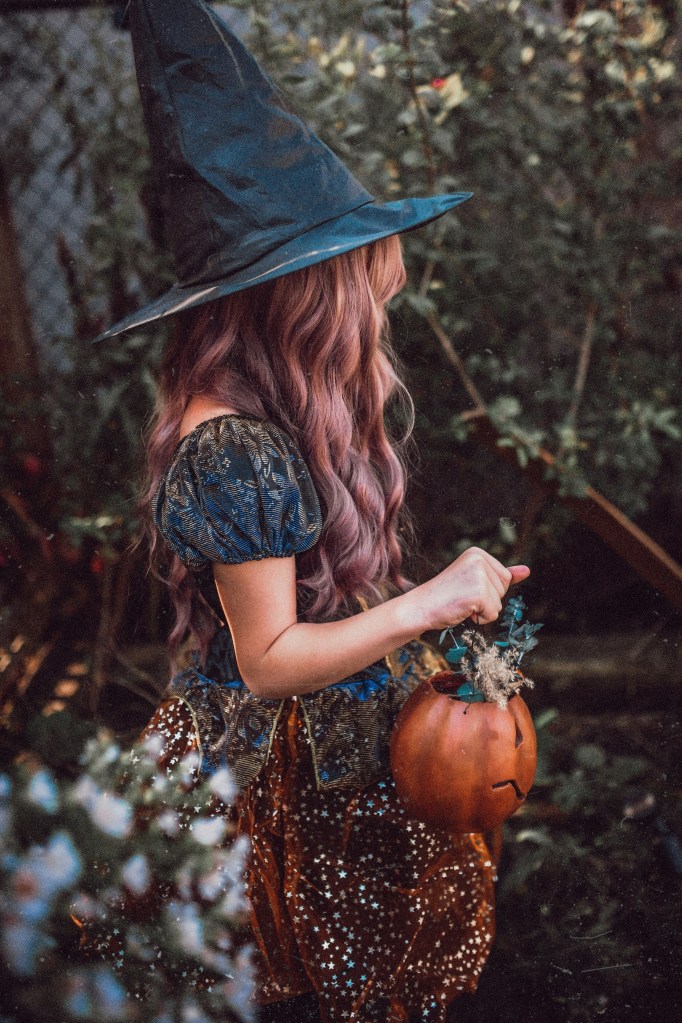
A girl with curly red hair, seen in profile, wearing a sparkly black and gold dress and black witch hat, carrying a small pumpkin shaped bucket with plants inside.
Photo by Paige Cody on Unsplash

Baby Goblin at the Halloween Ball
by Meg Winikates (100 words)

Baby Goblin on tiptoe,
sneaking where she shouldn’t go—
Grown-up goblins celebrate,
Halloween Ball starting late.

Ghosties twirling, goblins bounce,
Werewolves whirling, black cats pounce.
Baby Goblin, heaving sighs,
knows that boogying’s unwise:
squishing’s likely, being small.
Baby Goblin hugs the wall.

Cider simmers in a pot,
sweetly spicy, piping hot!
Tempting taste relieves the chill—
Trembling fingers almost spill…
Uh-oh! Slipping! Tipping! Crash!
Baby Goblin makes a splash.

Many fingers point her way—
Mama Goblin saves the day.
“Someone should be safe abed,
but tonight, let’s dance instead.”
Tucked in Mama’s arms, she spins;
Baby Goblin grins and grins.

Uncategorized

#MPF17 Wrap-Up: “Solarpunk Serenades” workshop

The second workshop I led for MassPoetry Festival 2017 was “Solarpunk Serenades,” which was an introduction to the world of eco-conscious, optimistic, near-future science fiction that is now termed solarpunk.  Arguably, there are moments in poetry, publishing, and popular culture which have fit this bill in the last hundred years at least, but now it has a name, and an opportunity to make its mark in sci-fi literature, aesthetics, design, and imagination the same way cyberpunk or steampunk have.

The slides below contain links to and names of most of the resources I mentioned in my presentation, for both the context and history of solarpunk, and places to find inspiration to write your own. There are also three themed writing prompts with visual cues.  You can find most of those visuals and links to their originals on my Pinterest board. It was fabulous to see such a packed room of optimistic geeky poets, and I was really impressed with the breadth of imagination and vivid imagery that people who chose to share their poem drafts demonstrated. Thanks for inspiring me in return, poetpunks!

You can also download the handout from this workshop, with examples of poems both new and classic that use some solarpunk ideas and ideals here: SolarpunkSerenades workshop handout.

Uncategorized

#MPF17 Wrap-up: “On Beyond Giggles: Writing Poetry for Children”

In my sixth year of attending the Massachusetts Poetry Festival, I once again listened to amazing poets that were new to me, reconnected with friends and colleagues, and came away with several pages of thoughts on poems I want to write (even a few scribbled draftlets!).

I also led two workshops on Sunday morning of the festival, the first of which was “On Beyond Giggles: Writing Children’s Poetry.”

Several of the folks in the room currently write poetry for children, others were interested in getting into writing for a younger audience, and all of us spent a little time thinking about who we were as children to get in the right mindset for the rest of the workshop.

Who were you when you were five years old? What did five year old you like to play? Who were your friends? Did you have a favorite toy or hideout or joke? Did you have siblings to play with, fight with, or play jokes on?

Who were you when you were seven? Did you have the same friends or new ones? The same fights? The same favorite color?

Who were you when you were ten? Were you out exploring your neighborhood? Getting into reading or sports or board games? Who were your friends? What were you afraid of? What made you laugh?

After calling our kid-selves back to the surface, we looked at some examples of great and effective children’s poetry, and talked about the poems we remembered from childhood ourselves, or from our kids’ favorites. Then we wrote, inspired by several prompts from one of my favorite kids’ poets, Jack Prelutsky.  People came up with some fantastic verse, rhyming and free verse, inventive and imaginative, silly and sweet (and bittersweet too).

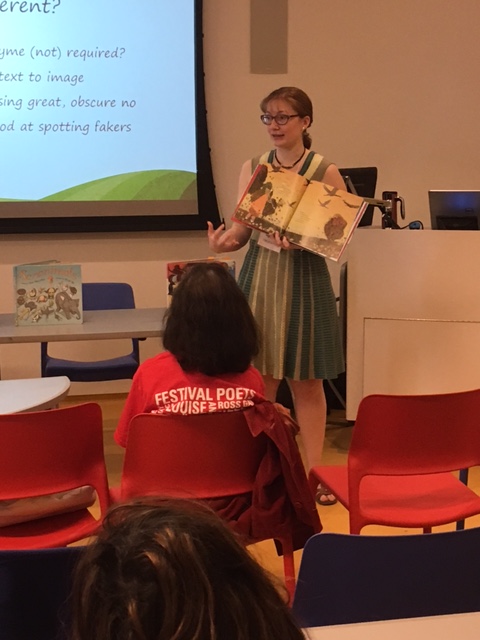
IMG_5114

The slides from the workshop are here below.  Thanks to all the hardy folks who attended on an early Sunday morning to talk and write playful poetry with me!

Uncategorized

Narratives Found: A day of surprise and serious wordsmithing

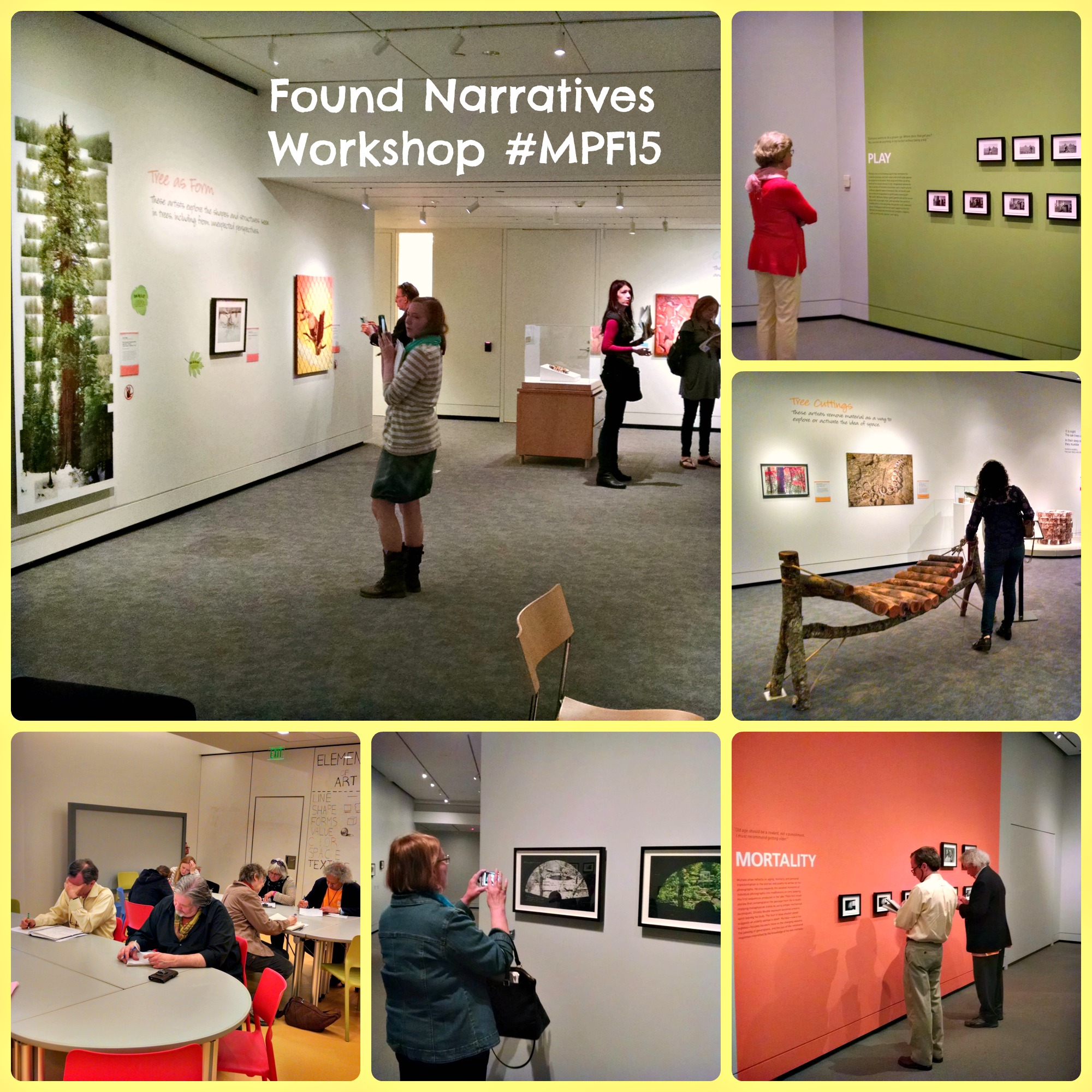
I have lots of thoughts about the last few days of the Mass Poetry Festival, so expect those in a subsequent post, but first I’d like to say ‘thanks!’ to everyone who attended my workshop “Found Narratives” on Sunday morning at the Peabody Essex Museum. I promised I’d put my presentation up online, so the slides are below, with a summary of the ideas that kicked off our writing session.

http://www.slideshare.net/mwinikates/meg-w-mapofest15foundnarratives

What is the role of curators in creating an exhibition, and how is that like (or unlike) the role of a poet?

Curators have a number of roles:

  • Caretaker/Historian/Preservationist – all exhibitions are a continuation of, response to, or rejection of previous history (art history, historical narrative, etc.)  By choosing to include objects, artworks, etc. in a show, curators demonstrate that they think these particular things are worth saving, displaying, and sharing.
  • Author/Editor – curators pick which exhibition elements will best help them tell the story of the person/place/time period/movement/historical event that they want to tell.
  • Interpreter – A good curator (through a good exhibition) poses questions, invites discussion, offers new perspectives, and has an impact on the viewers that gives them a brain-tingling set of new ideas and questions of their own.

Arguably, a poet has much the same set of roles:

  • Historian – all poetry draws inspiration from, responds to, rejects, or reworks the written (and oral!) canon and literary tradition that preceded it. Play and challenge are vital acts of the poet-as-historian.
  • Author/Editor – words are a poet’s tools, and which words you pick and which words you juxtapose, emphasize, etc. are the keys to creating a poem with impact.
  • Interpreter – “If it blows the top of my head off, I know it’s Poetry.” Emily Dickinson was right on, IMHO. Just like visual art, a good poem makes the reader think, question, observe, react, feel, breathe a little differently than before they encountered the words.

The power of both of these roles is in the choices that we make.

Blank walls, blank paper, blank screen. You can put anything there in any order, so where do you start? It all depends on the impact you want to have. Are you aiming for accessible or inscrutable? Mysterious? Open? Comforting or confronting? Your goal determines your choices as much as your natural voice does.

In the case of an exhibition, there are numerous voices involved, of course. Aside from the curator, there are exhibition designers, an interpretive editor, often an educator, all offering suggestions which will help highlight and shape the story the curator wants to tell.  The team’s choices form the bridges for the connections visitors will make when standing in the space.

Will there be long sight lines or lots of small spaces? Which pieces are in conversation with each other, whether in support or in opposition?  Do you hang them together or separately? What color are the walls?  How much extra information do you put on the labels/wall text? What style font do you use?

For poets, this correlates to choices about line length, word juxtaposition, rhyme and meter, form.  Where do you want your viewer’s/reader’s eyes to go next?

The Idea for the Workshop

All this discussion grew out of a collaborative project between myself and photographer Michele Morris, Palettes of Light, in which we paired images from two of her series and then I wrote a poem connecting the two. It seemed a natural progression to me that this would work with any pair of artworks, provided that the poet started with two pieces that resonated with them for one or more reasons.  Ekphrastic poetry has a long and proud history (Musee des Beaux Arts, anyone?), and this is a way to celebrate not only the creative efforts of the visual artist, but also the imaginative connective power of the viewer. (A workshop participant later described this exercise as ‘Next Level Ekphrasis’ and said she was going to teach it to her students, which made me very happy indeed.)

The Task: Find your Narrative

In preparation for spending time in two exhibitions, I asked the workshop participants to do the following:

  • Find 1-2 works in each of the exhibits that really sang to them, for any reason at all.
  • Brainstorm a list of words and phrases provoked by each work.
  • Take photos of the works to use for future reference.  (There was a hard limit of 10 minutes per gallery to make sure we had time to get back to the studio to write, and poetry and art appreciation both benefit from more time.)
  • Once back in the studio, find a connecting thread between the 2 works.
  • Write ‘the bridge,’ aka, draw out the connection and give it support using the inspiration from the two artworks.
  • If they hated everything from one exhibit, they could pick 2 from the same exhibit. (No one who chose to share their work at the end chose this option.)

How do we get there? The Source Material

Using Visual Thinking Strategies, we spent a few minutes in each gallery as a group looking at one art work.  I asked only three questions (“What do you see?” “Why do you say that?” and “What else?”), and let people build upon their own and others’ observations to discuss the work in front of them, then let them go to explore each gallery.

Stop 1: Duane Michals, Storyteller

I picked this show because Michals often treats his photographs as a storyboard: there’s a lot of narrative, sometimes with his own reflections, stories, memories, and poems written directly on the surface of the print. He has a playfulness to a lot of his work that I find appealing, and many of his themes tie easily into poetry (time, mortality, desire, wonder, discomfort, humor).

Stop 2: Branching Out, Trees as Art

This show focuses on the way artists use trees as both artistic material and as inspiration.  There are many more abstract works in this exhibition, and lots of themes about the ways humans relate to their environment.

On their own time, I encouraged participants to explore the rest of the museum as well and try this exercise again.
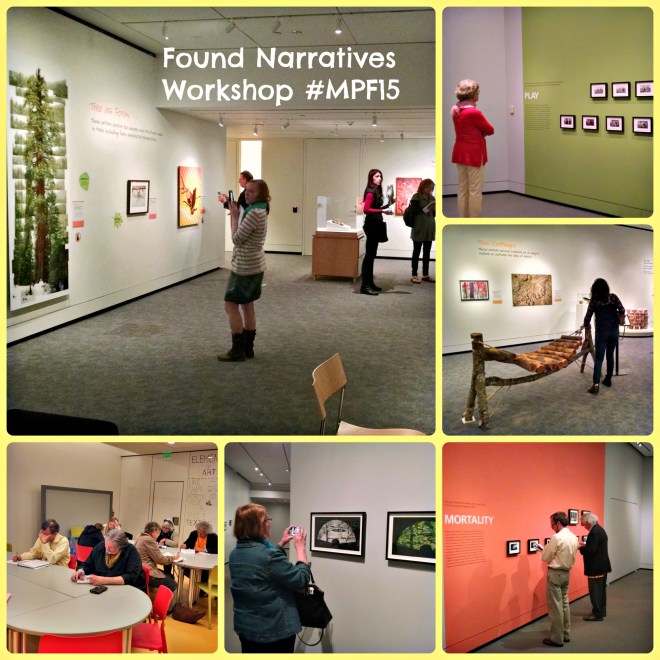
foundnarrativesmpf15

Possible Connections

There are a lot of ways to find a bridge that connects two seemingly disparate artworks.  The following list I had up on display for participants to consider as they began their writing:

  • Theme
  • Emotional reaction
  • Visual similarities
    • tone
    • texture
    • composition
    • color
    • movement
  • Resonances or dissonances
    • personal memories
    • references to artistic/literary tradition
    • using one artwork as a metaphor or frame for the other
    • timelines (cause and effect, before and after, etc.)

Participants then had about 15 minutes to work on their poems, and time at the end of the session to share their favorite lines (or the whole poem if it was short).  About half the workshop chose to share, and I was really impressed with the vivid language, the fantastic imagery, and the unusual connections they made.  I was also pleased, amused, and a little surprised that a few people chose an interactive element (an amadinda, similar to a log xylophone) instead of an artwork for their second piece.  I had, after all, asked them to find a piece that ‘sang’ to them–a few took me quite literally!

Do you find visual art a stimulus to your writing? Would you try this exercise or share it with your students/writing group? Have you tried it and do you have a result to share?  Add your thoughts to the discussion in the comments below!

Uncategorized

Spectral Shorts

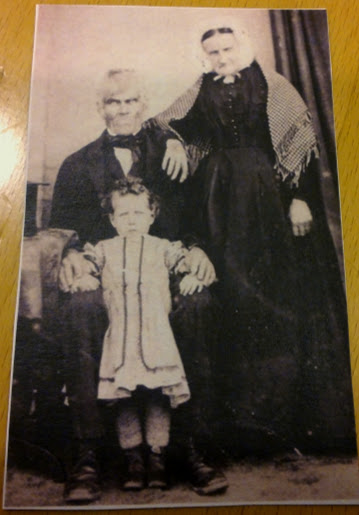
October is a good excuse to let the spooky side of your imagination have freer range than usual.  Writing prompts at group this week offered a perfect jumping off point too–this rather creepy family portrait!

Possibly once a daguerreotype?

I’ve always found the whole Portrait of Dorian Grey thing rather fascinating, so here’s  my attempt to play with that photos-capture-your-soul concept, featuring a very modern lad with a very old problem:

Camera Obscura

Casey stared at the daguerreotype in his hands in the kind of horror and fascination usually only experienced by people watching trains pitch off of bridges in disaster movies.  “No way!”  he insisted, fully aware he’d said that at least twice before, but unable to stop himself.  “That absolutely cannot be me.”

“It’s the photo that was in your file at the orphanage,” the detective –what was her name, Kerrigan?–said, way gentler than any cop in a procedural ever did.  “Casey Abbot Harrington, born 1869.  Age four at the time this image was taken.  There are records of you–aging, and forgetting, every time you hit your fifteenth birthday, and then you revert to the age you are in this photo.”

“And–are those my parents?  They’re…like zombies.”

Detective Kerrigan’s face twisted like a Tim Burton jack-o-lantern.  “We’re investigating the possibility that they were practicing some kind of magic,” she admitted.  “Or possibly were being practiced upon by someone else.  It would help explain how they look compared to you, if someone were drawing on them.”

Casey couldn’t let himself follow that line of thought too far–movie creepy was awesome, real life creepy mimicking movie creepy made him sick to his stomach.

“And what about me?  I just turned fourteen a week ago.  Do I only have a year to live?”

“We don’t know for sure.  There have been a lot of advances in forensic magic in the last decade, there may be some treatments we can try that weren’t available last time around.  And some spells do wear out, you know.”

“Why would I know that?!” Casey yelped.  “None of this was real until you fished me out of that quarry two days ago!”

Kerrigan closed the folder and put her hand over it so that Casey’s view of his really horrific baby hairdo was inaccessible, thank the gods.  “We’re here to help, Casey, just have a little faith.”  She stood and headed to the door, pausing with her hand on the handle.  “You just hang tight, okay, and I’ll see if they can send you up some lunch.”

“I’ve lost my appetite,” he grumbled, but pulled the tray table up to his waist anyway as the detective closed the door behind her.  Her voice echoed in his head and shifted to something more familiar but no more comforting as it filled in the phrase that Casey shouldn’t know, but somehow did:

Some spells do wear out, you know–but curses never do.

Uncategorized

Mental and Emotional Geography: MA Poetry Fest Reactions 2

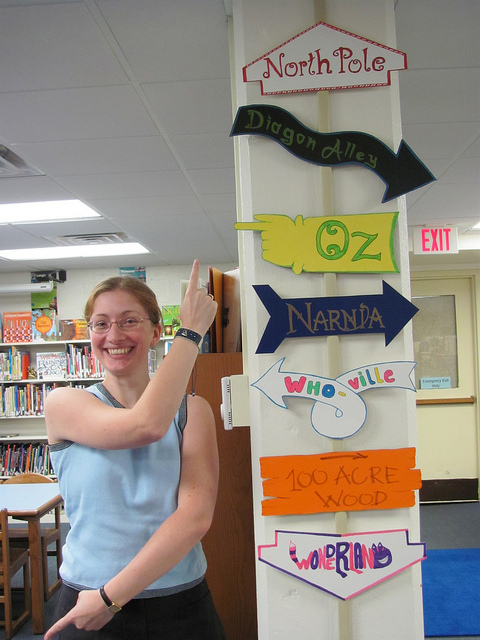
Library directionals, designed and created by Kathleen and Meg Winikates, 2012

What is it about a place that grabs hold of the imagination?  Is there some magical combination of language and  association and vista and memory that makes a place ‘real’?  Is one city the same to different people and are we the same person in one city as we are somewhere else?  Just what do we get when we gaze out over the water, anyway?

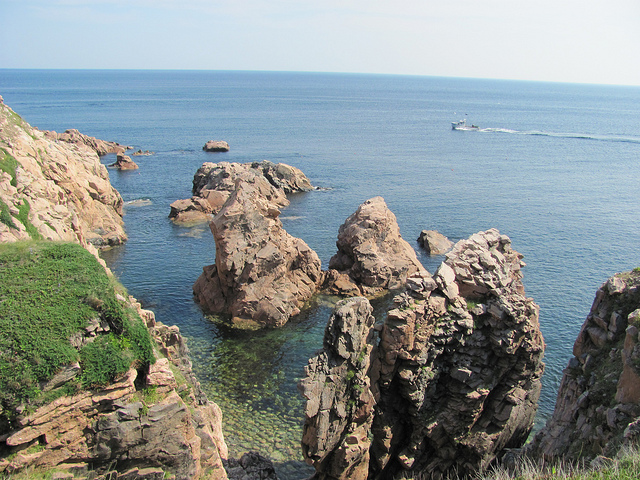
White Point, Cape Breton, by Kathleen Winikates, 2013

Two different sessions I attended at this year’s Mass Poetry Fest dealt with the themes of people in places – the reading “Poetry of Place,” with poets Cammy Thomas, Julia Lisella, Theodora Stratis, and Rosamond Zimmerman, and “Writing the Sea: Poetry of the New England Coast” with poet/professor Elisabeth Weiss Horowitz.  They were both incredibly thought provoking in their own ways.

This is the place. Stand still, my steed,
Let me review the scene,
And summon from the shadowy Past
The forms that once have been.

The Past and Present here unite
Beneath Time’s flowing tide,
Like footprints hidden by a brook,
But seen on either side.

– Henry Wadsworth Longfellow, “A Gleam of Sunshine” (excerpt)

“Poetry of Place” featured a lot of different ways to think about how we locate ourselves.  The poets involved offered readings of their own poems that dealt with place as a way to connect to memory, to family, to the present, to a collective cultural heritage, to the structures we inhabit, and even to the boundaries of our own physical bodies.

Are you still yourself in a leopard’s skin?

How does living abroad change the way you see your home and your relationship to it?

Why is New England different from New York, and why are our pasts so much more present here?

Can the paper of a poem be a place, with poems nested within each other?  (Admittedly, that last one required some brain bending on my part, but that’s what this kind of event is good for, and using color to identify an inner poem within the overarching poem was a neat experiment.)

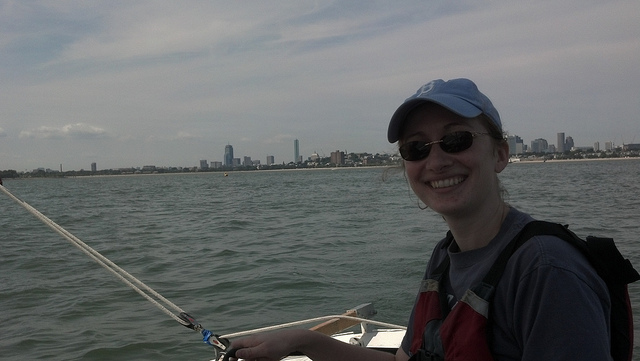
Sailing in Boston Harbor, photo by Kathleen Winikates, 2012

This session made me think a lot about the grounding I get from living here in Massachusetts, only an hour’s drive or so from where I grew up.  I’ve always been a Boston Girl, but why is that?  As I’ve been rereading and organizing my poetry for a project, the prominence of place has grown pretty evident, as I was writing about it even when I wasn’t thinking about it consciously.  I’m looking forward to going back into some of those poems to think harder about why where they are and where I am is so important.

“Writing the Sea” was definitely the most immediately effective at getting me to put pen to paper.  I’ve always been drawn to water (*squints at blog title*), and Horowitz assembled an impressive array of historical and contemporary examples of poets inspired by stints along one New England shore line or another, including riverbanks and lake sides as well as ocean beaches.  I’ll breakdown why this was such an effective workshop in my next post, but it certainly helped that she maintained an excellent balance between highlighting particular lines, themes, and commonalities within and among the poems with a set of great writing prompts.  Even the simplest instruction to write a word bank of as many water-related words as we could, from any discipline, led to my dredging up words I haven’t used since I worked at the New England Aquarium.  Some of them have a lot of evocative possibility: “pelagic,” “phytoplankton,” “undertow.”

One of my favorite prompts was inspired by an Inuit form of poetry, in which the last word of the line becomes the first word of the next, and we were asked to write a flowing poem about rivers in a handful of minutes.  This is my attempt, though in a second draft I think it would need more actual focus on the water as well:

On the Charles

I haul on the mainsail sheet,
the sheet that shivers in my hands,
these hands that rein the wind
winding through my city.
City buildings soaring high
and higher above their echoes,
echoing in slices under my hull.
Hull cupping me as I brace
the bracing wind, balanced on the mainsail.

Do you have a favorite poem that is grounded in a particular place?  Please share in the comments below, I’m always looking for the next great read!