It’s National Poetry Month again, and I am bringing you a few cool links to events and ideas that are inspiring me this April.
What happens when you gather together a bunch of politically active artists? The Poetic Address to the Nation. Happening on April 22, at 7pm, this event is an artists’ compilation of and reaction to “the interlocking crises of systemic racism, eviction, poverty, access to healthcare, and more laid bare by COVID-19” You can register for it here. (Full disclosure, this event is being co-sponsored this year by MassCreative, an advocacy organization with which I am affiliated.)
NPR wants your Twitter poems! (Or TikTok, apparently, which has turned into a hotbed of spoken word poetry, which is cool.) Use the hashtag #NPRpoetry for a chance to catch their eye and get featured on All Things Considered.
Get a look at rarely seen items from the Emily Dickinson Collection at Harvard’s Houghton Library (where they keep the cool, old, rare stuff).
Longfellow National Historic Site has released their schedule and registration for their virtual summer poetry readings.
And okay, this isn’t technically poetry, but I just can’t stop listening to Perseverance rolling across Mars. There’s definitely a poem in there somewhere.
“Something New, Something Strange:” Found Poetry Workshop
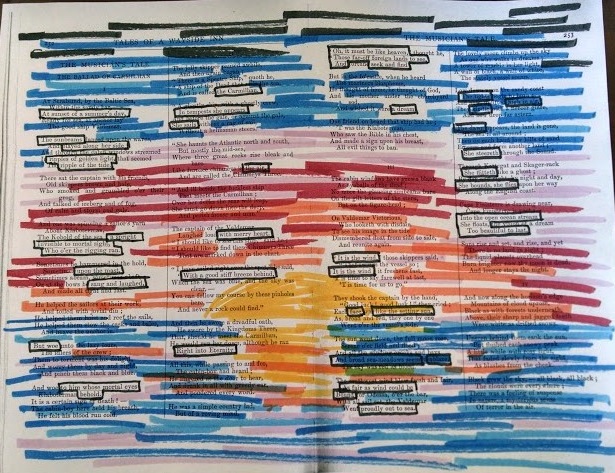
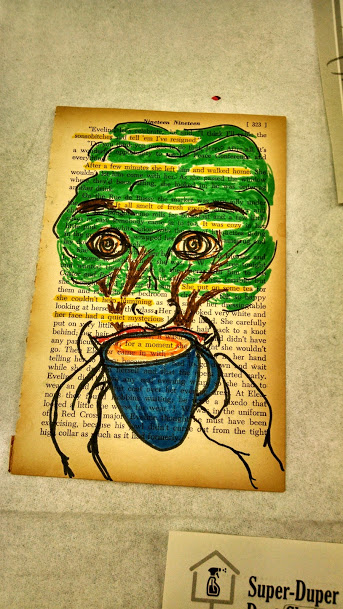
This workshop included lots of discussion of found poetry in the 21st century, including the many ways the internet has made found poetry more possible, varied, and hilarious. We tried illustrated found poetry using Henry Longfellow’s poetry, and also pages from a mystery novel and a historical fiction, and talked about fun everyday found poetry from sources like Pentametron and GooglePoetics.
My found poem of a sea sprite, from Longfellow’s “Musician’s Tale” in Tales of a Wayside Inn.
“Grace Unto Every Art:” Poetry and Visual Arts Workshop
This included getting to talk about the Longfellow family connections to the visual arts (Henry’s wife Fanny Appleton had a brother, Thomas, who was part of the founding of the MFA. Henry’s older son Charlie collected a lot of Asian art on his trip to Japan, and Henry’s younger son Ernest became a painter.) and taking a tour of the first floor of the house. Many thanks to the fabulous rangers who kept an eye on us and answered our dozens of questions as we each picked an object that inspired us to write!
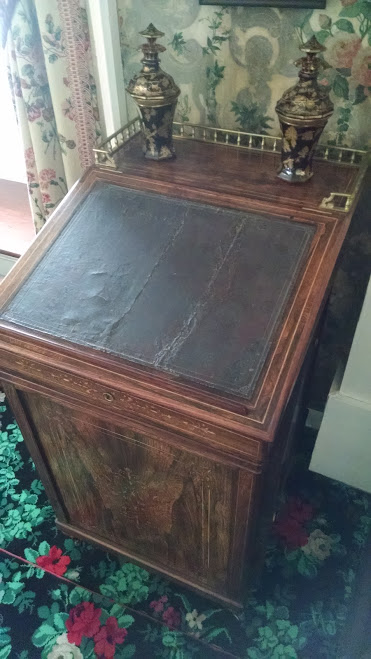
Fanny Longfellow’s writing desk in the parlor of the Longfellow National Historic Site
Inspirational Books
I brought these to the workshops for people to leaf through for inspiration; you can find them at your local library or bookstore (or museum gift shop!):
Missed out on the workshops? There’s lots of cool programs coming up at Longfellow for their summer festival, and the Mass Poetry Festival is this weekend in Salem, MA. I’ll be at the Peabody Essex Museum talking scale in poetry & art on Saturday afternoon. Hope to see you there!
It’s National Poetry Month! Lots of fun poetry news and discussion to share with you this month.
I recently re-encountered an article from 2014: “Everybody Should Write Poetry” by Peggy Rosenthal. I had bookmarked it because I was drawn to the idea that “everyone needs to nestle down inside language to get to know its ways, to get comfy with how playful it can be, how expansive, how unexpected in its openings to new experience.” It reminded me of the kinds of conversations I’ve had in the other part of my professional life, among those of us who work in museums and in education and in the arts. Participating in something; taking a class in glass fusing, for instance, gives you an appreciation for the process and the artistic choices and the intricacies of both which you keep forever, however lopsided or surprising your own* efforts turned out to be. (*Meaning, of course, my own!)
On the same day I apparently bookmarked an article with suggestions on “How to Read Poetry” – not requirements, but suggestions on ways to approach it without the apprehension of ‘getting it wrong.’ Again, a discussion that we keep having in museums and symphonies and similar venues; how do we best let people know that, barring actual destruction, there aren’t really ways to be ‘wrong’ in such spaces? (Perhaps we should take some marginalia notes ourselves.)
So what do you think? “Should” everyone write poetry? (or make art? or play music? or fix a car?) What’s your favorite way to approach a new poem or experience?
Finally, a shameless plug, because I firmly believe that while ‘shoulds’ are odious, ‘go for its!’ are necessary and beautiful. Therefore, if you feel like writing poetry, go for it! and you can even do some writing with me:
National Poetry Month is still more than a month away, but I’m already in planning mode. (Meanwhile, did you know February is Library Lover’s Month? Go hug your favorite librarian!)
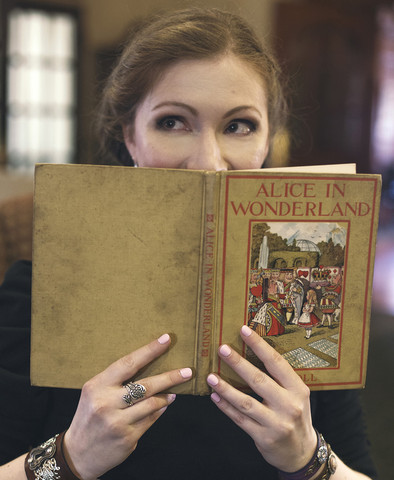
‘Found poetry’ from old books! Playing with scale in literature and art! April is going to be awesome. (Photo by Nate Buchman, http://www.natebuchman.com/ for Emporium 32, http://emporium32.com/ Go check them out if you like the jewelry I’m wearing in this photo.)
I’m very pleased to announce that I’ll be leading three poetry workshops in April! If you’re in the driving-distance-from-Boston area, I hope you’ll stop by and join me for some playing with words and art.
In Longfellow’s poem “Keramos,” a potter at his wheel says, “All things must change/To Something new, to something strange.” Recombine, illustrate, and give shape to old forms using found poetry techniques with poet and educator Meg Winikates as part of our celebration of National Poetry Month. Please call (617)876-4491 or email reservationsat105@gmail.com to reserve your spot!
Whether it was shipbuilding, smithing, sculpting, or singing, Henry Longfellow found poetry in all forms of art. Join poet and educator Meg Winikates to explore ekphrastic poetry, enjoy the Longfellows’ art collection, and write your own art-inspired pieces as part of our celebration of National Poetry Month. Please call (617)876-4491 or email reservationsat105@gmail.com to reserve your spot!
The World in a Grain of Sand – Incorporating Scale in Poetry and Art Massachusetts Poetry Festival (April 29, 30 or May 1), Peabody Essex Museum, Salem
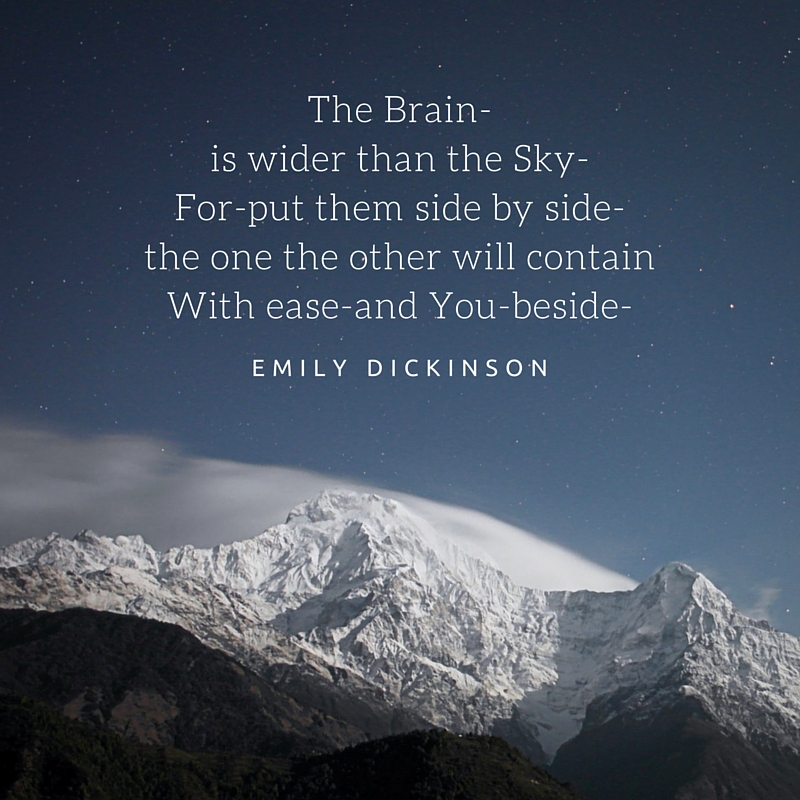
Galaxies and exoplanets, scanning electron microscopes, 4 million queries per minute on Google: in our ever expanding universe, is the human brain still ‘wider than the sky’ as Emily Dickinson said? What is the role of poet or artist in helping us understand how and where humans fit? Join poet and museum professional Meg Winikates to explore the use of scale in poetry and art in PEM’s Sizing It Upexhibition, experiment with physical and mental scale in your writing, and generate a poem idea (or three!) inspired by the artworks on view.
Buttons for the festival are not yet on sale, so keep checking the MassPoetry site for updates on button sales and scheduling!
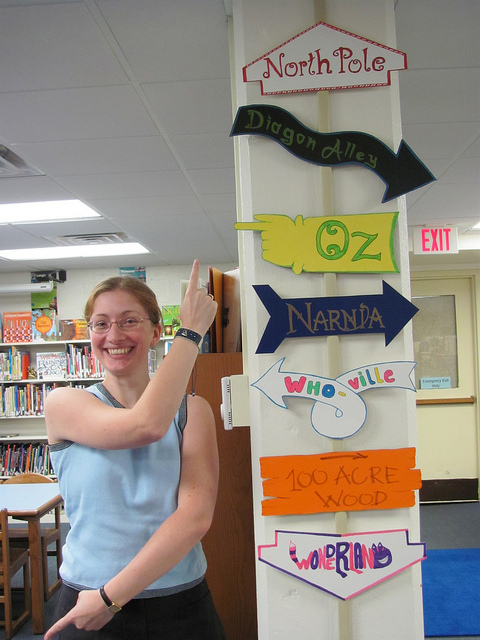
Library directionals, designed and created by Kathleen and Meg Winikates, 2012
What is it about a place that grabs hold of the imagination? Is there some magical combination of language and association and vista and memory that makes a place ‘real’? Is one city the same to different people and are we the same person in one city as we are somewhere else? Just what do we get when we gaze out over the water, anyway?
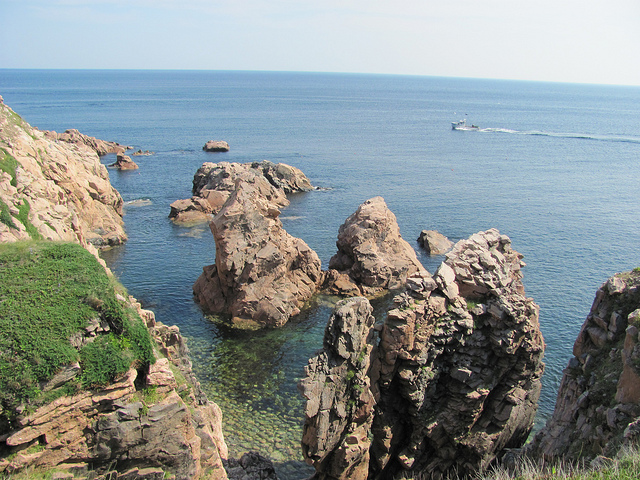
White Point, Cape Breton, by Kathleen Winikates, 2013
Two different sessions I attended at this year’s Mass Poetry Fest dealt with the themes of people in places – the reading “Poetry of Place,” with poets Cammy Thomas, Julia Lisella, Theodora Stratis, and Rosamond Zimmerman, and “Writing the Sea: Poetry of the New England Coast” with poet/professor Elisabeth Weiss Horowitz. They were both incredibly thought provoking in their own ways.
This is the place. Stand still, my steed,
Let me review the scene,
And summon from the shadowy Past
The forms that once have been.
The Past and Present here unite
Beneath Time’s flowing tide,
Like footprints hidden by a brook,
But seen on either side.
– Henry Wadsworth Longfellow, “A Gleam of Sunshine” (excerpt)
“Poetry of Place” featured a lot of different ways to think about how we locate ourselves. The poets involved offered readings of their own poems that dealt with place as a way to connect to memory, to family, to the present, to a collective cultural heritage, to the structures we inhabit, and even to the boundaries of our own physical bodies.
Are you still yourself in a leopard’s skin?
How does living abroad change the way you see your home and your relationship to it?
Why is New England different from New York, and why are our pasts so much more present here?
Can the paper of a poem be a place, with poems nested within each other? (Admittedly, that last one required some brain bending on my part, but that’s what this kind of event is good for, and using color to identify an inner poem within the overarching poem was a neat experiment.)
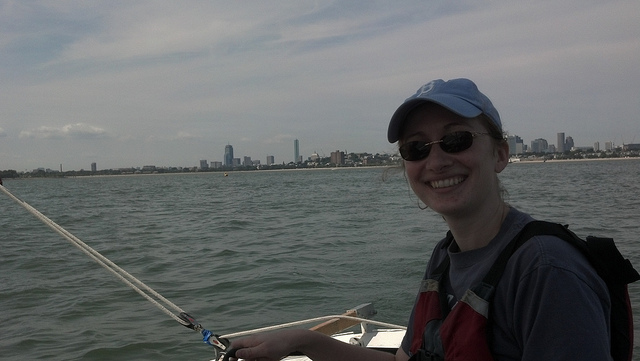
Sailing in Boston Harbor, photo by Kathleen Winikates, 2012
This session made me think a lot about the grounding I get from living here in Massachusetts, only an hour’s drive or so from where I grew up. I’ve always been a Boston Girl, but why is that? As I’ve been rereading and organizing my poetry for a project, the prominence of place has grown pretty evident, as I was writing about it even when I wasn’t thinking about it consciously. I’m looking forward to going back into some of those poems to think harder about why where they are and where I am is so important.
“Writing the Sea” was definitely the most immediately effective at getting me to put pen to paper. I’ve always been drawn to water (*squints at blog title*), and Horowitz assembled an impressive array of historical and contemporary examples of poets inspired by stints along one New England shore line or another, including riverbanks and lake sides as well as ocean beaches. I’ll breakdown why this was such an effective workshop in my next post, but it certainly helped that she maintained an excellent balance between highlighting particular lines, themes, and commonalities within and among the poems with a set of great writing prompts. Even the simplest instruction to write a word bank of as many water-related words as we could, from any discipline, led to my dredging up words I haven’t used since I worked at the New England Aquarium. Some of them have a lot of evocative possibility: “pelagic,” “phytoplankton,” “undertow.”
One of my favorite prompts was inspired by an Inuit form of poetry, in which the last word of the line becomes the first word of the next, and we were asked to write a flowing poem about rivers in a handful of minutes. This is my attempt, though in a second draft I think it would need more actual focus on the water as well:
On the Charles
I haul on the mainsail sheet,
the sheet that shivers in my hands,
these hands that rein the wind
winding through my city.
City buildings soaring high
and higher above their echoes,
echoing in slices under my hull.
Hull cupping me as I brace
the bracing wind, balanced on the mainsail.
Do you have a favorite poem that is grounded in a particular place? Please share in the comments below, I’m always looking for the next great read!
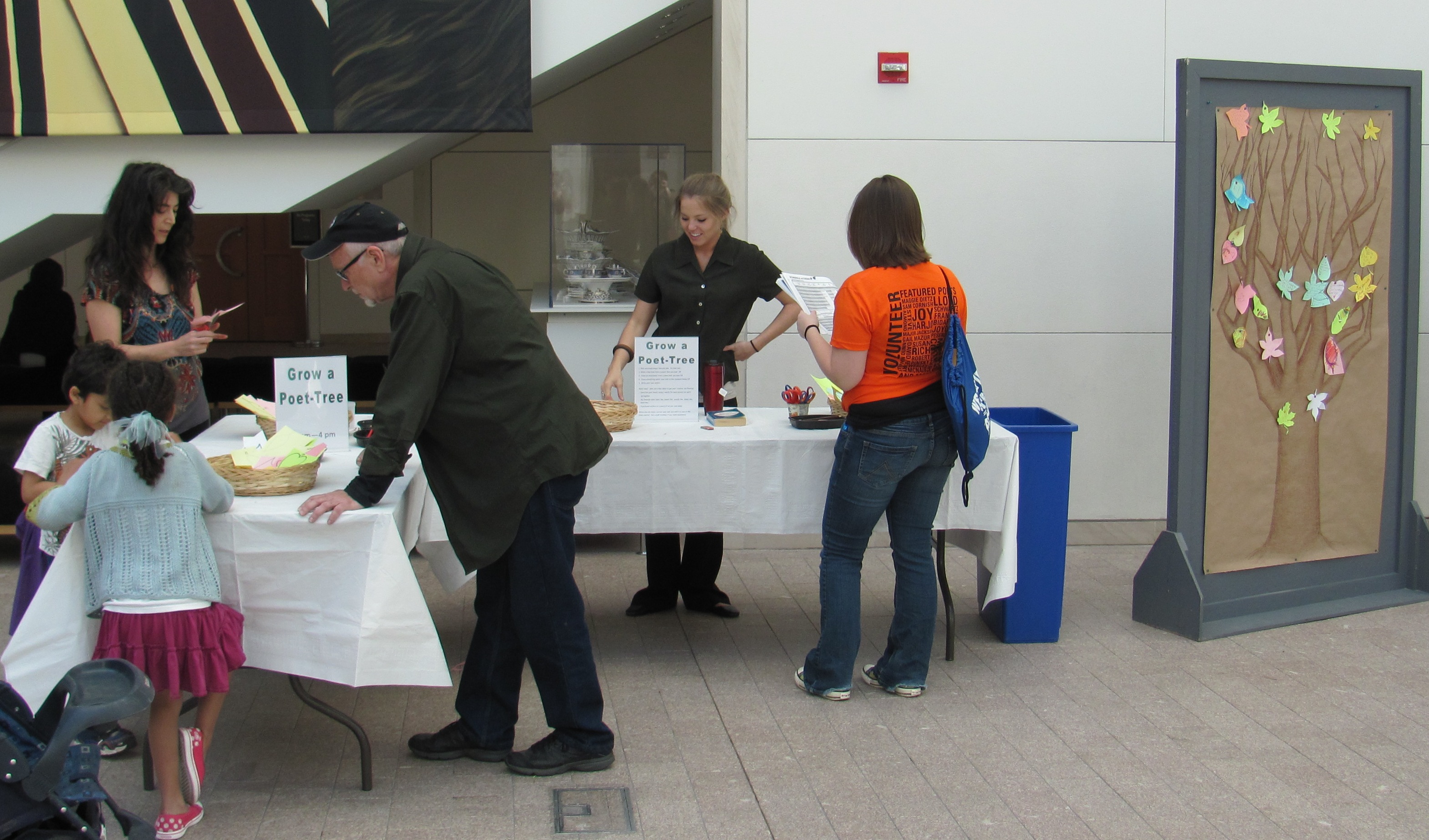
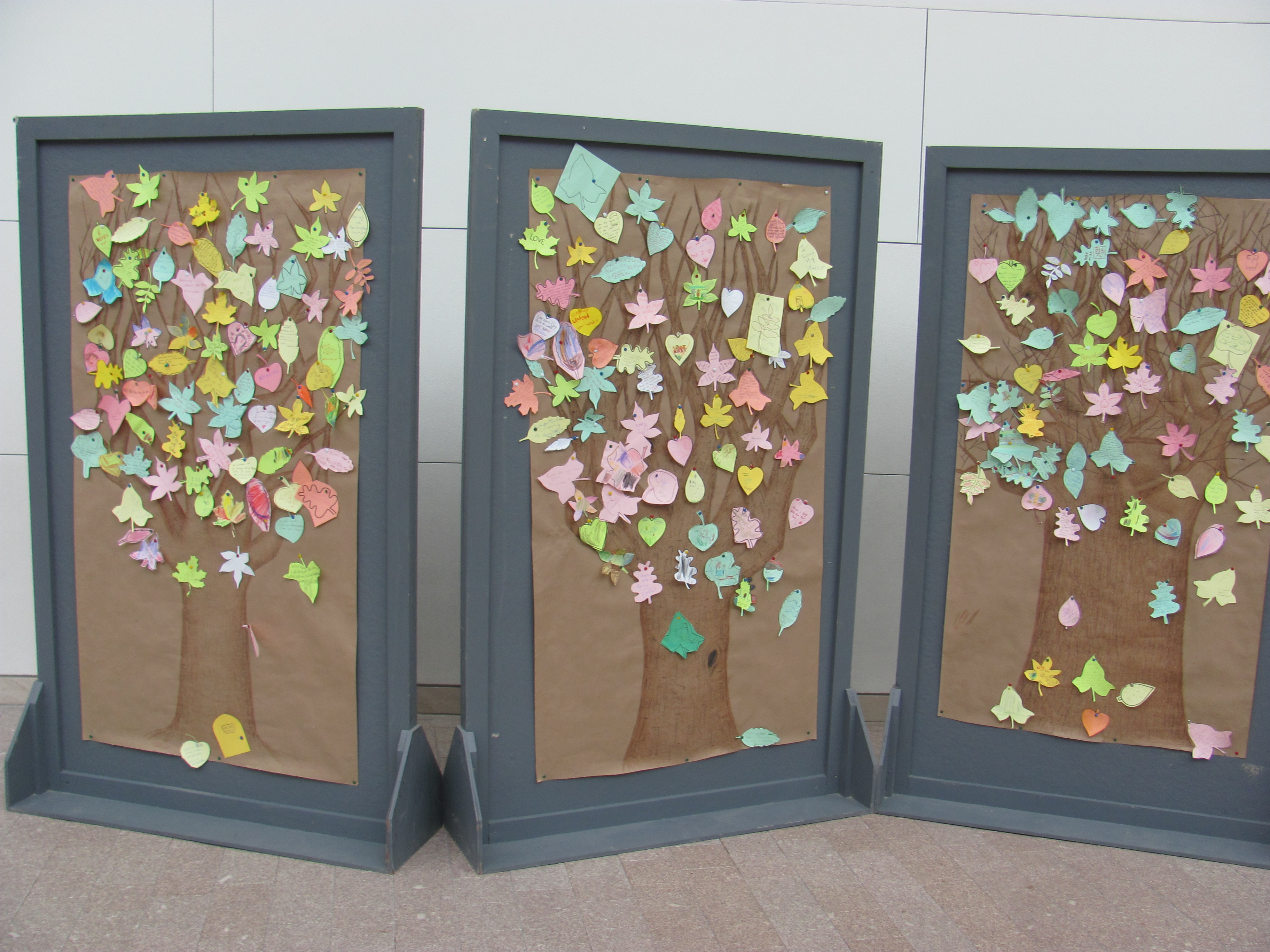
Just a few snapshots from this weekend’s drop-in art and writing activity, “Grow a Poet-Tree” at PEM for the Massachusetts Poetry Festival. Kudos to my intern Kate for drawing three beautiful trees for us to decorate with leaves of original and remembered poetry, illustration, and reflection.
Poets quoted included but were not limited to: ee cummings (the runaway favorite with at least 5 quotes on the trees), Robert Frost, Henry Wadsworth Longfellow (the runner up in popularity, and not my fault), John Masefield (okay, that was my fault), and Shel Silverstein, with a hefty sprinkling of song lyrics (“Morning has Broken” for instance, though no “Amazing Grace”) and a few ad jingles thrown in. Other messages included variations on a theme of ‘save the trees’ (clearly I do my work as an Art & Nature specialist thoroughly…), a lot of ‘I love you’s, and a few witty folk who wrote things like ‘This space intentionally left blank.’ I was most amused by the inclusion of text speak and hash-tags on several of the submissions, I think, but I was also impressed by the way some of the participants chose to address some fairly serious themes even in 2 square inches of space on a public bulletin board.
Greeting early poets and artists of all ages on Friday morning
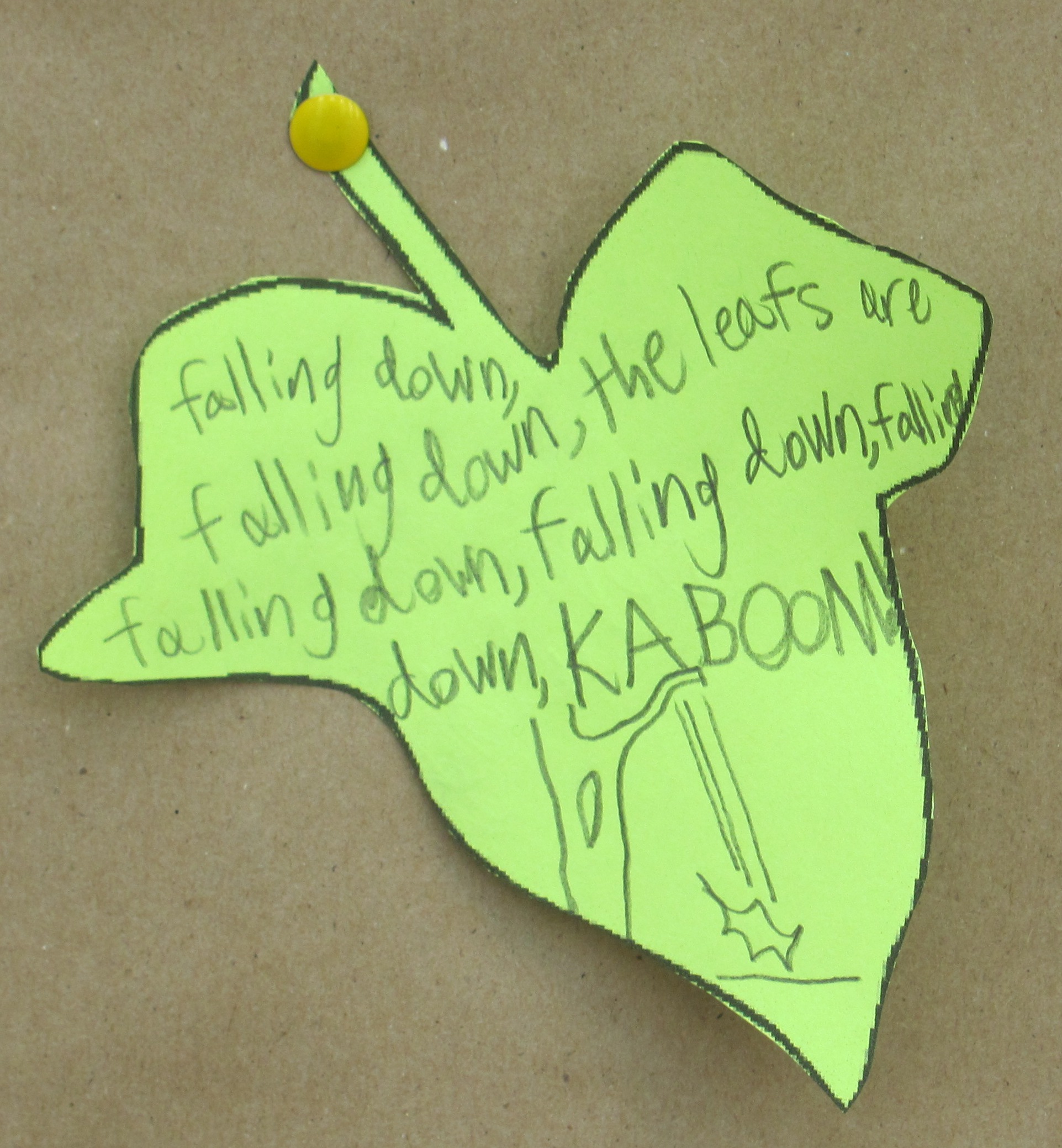
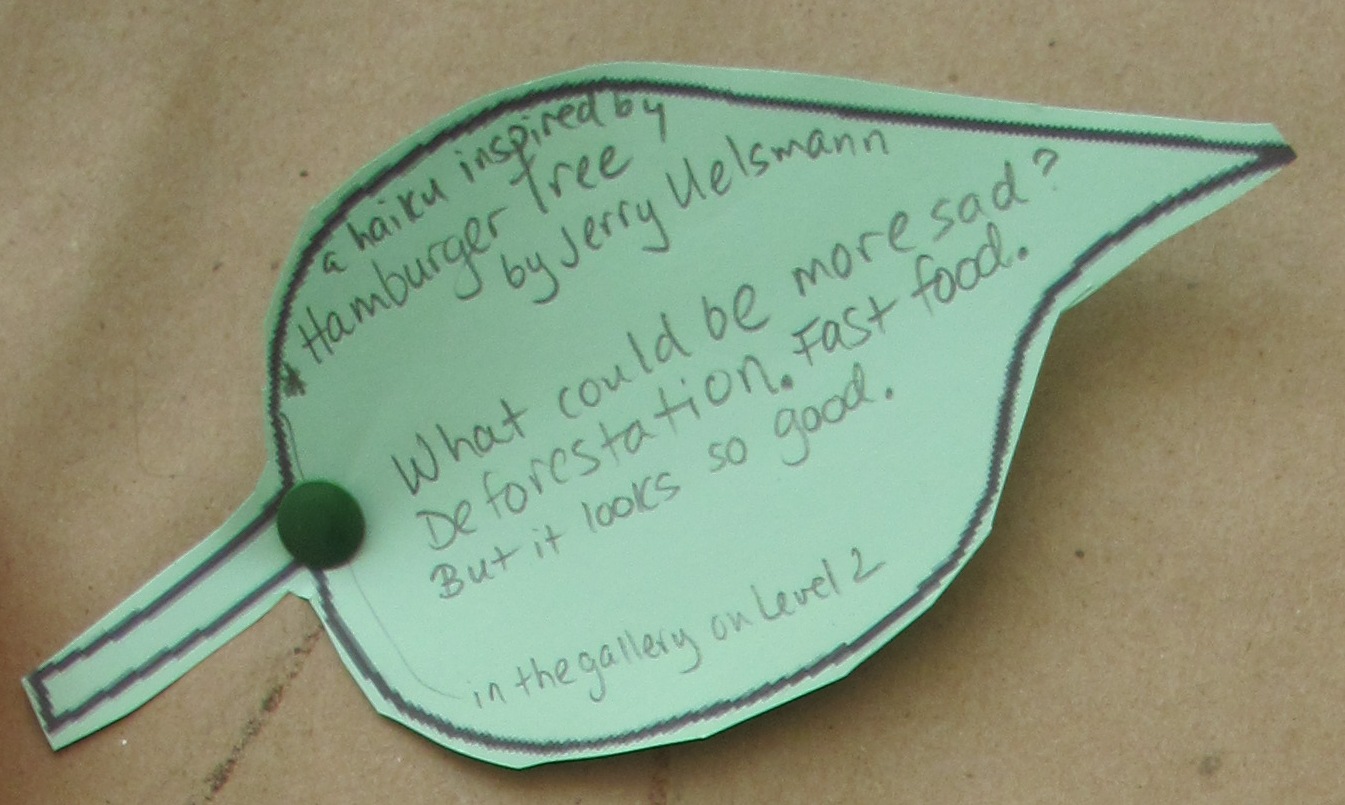
A few of my favorite additions to the Poet-Tree forest, courtesy of PEM visitors and attendees of the Poetry Festival:
Forget asking about when a tree falls in the forest--apparently even these leaves make a noticeable auditory shock upon impact!
Responding to a photomanipulated image by artist Jerry Uelsmann from a current PEM exhibit--someone went to the ekphrastic workshop!
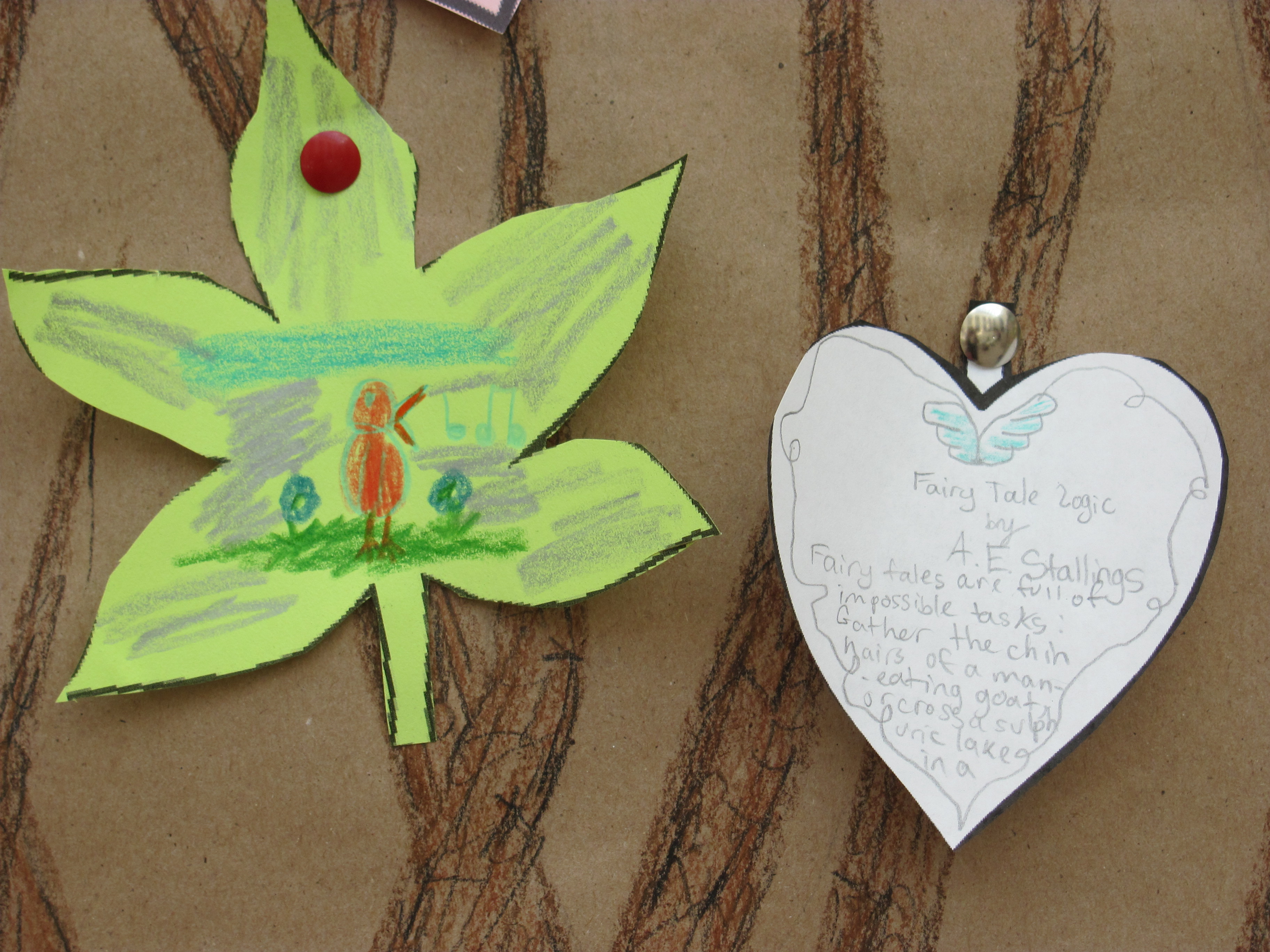
A fun illustration and a sweet poem about 'Fairy Tale Logic' (that participant was clearly my kind of whimsical!)
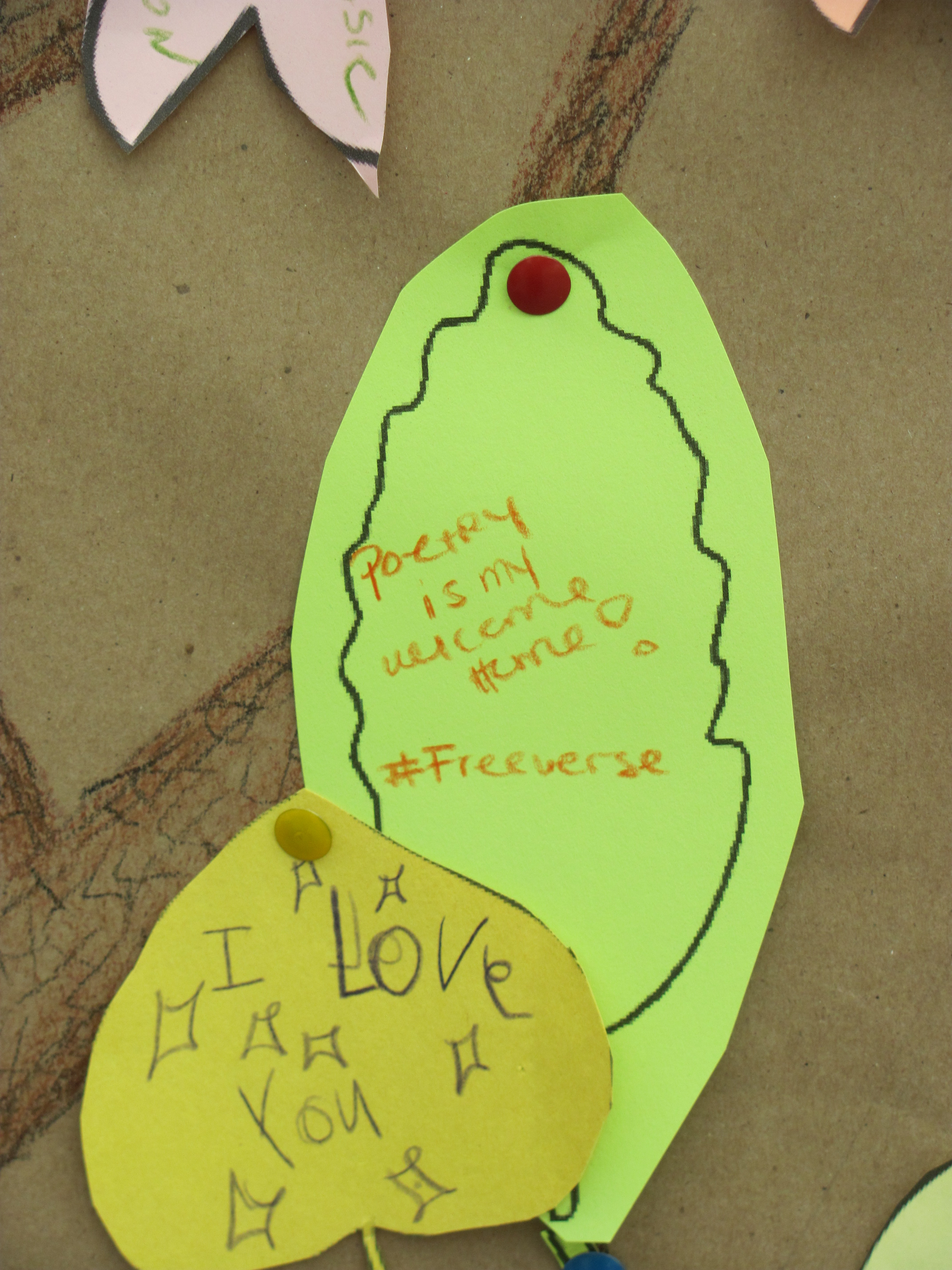
One of several #freeverse tags. Who says poetry isn't adapting to the 21st century?
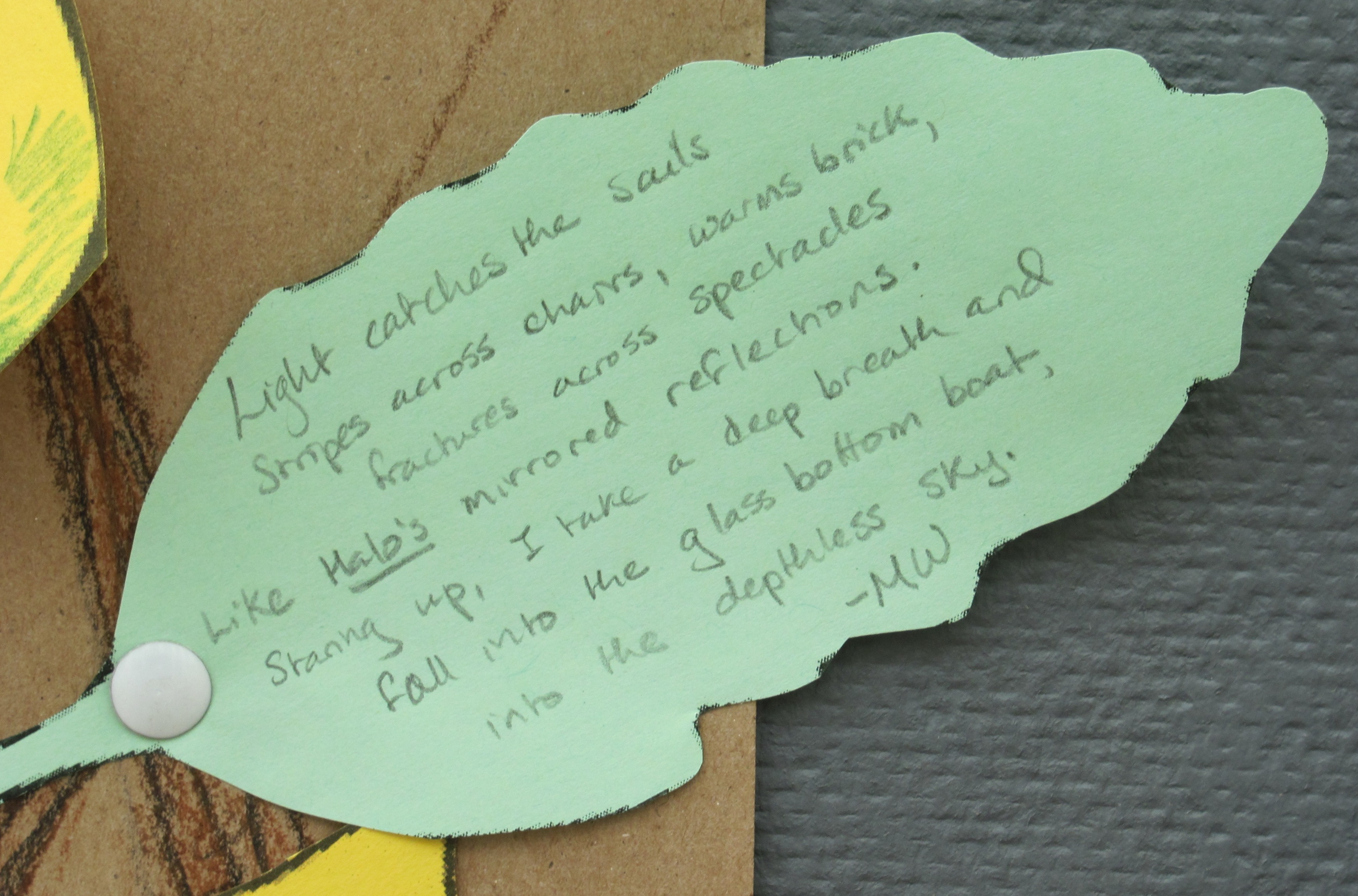
My own addition to the tree, inspired by sitting in the Atrium and appreciating the greenhouse/sailboat effect of Moshe Safdie's glass roof.
A few collected graphics to celebrate the way a few well-crafted words create such strong mental images. Huzzah for poetry!
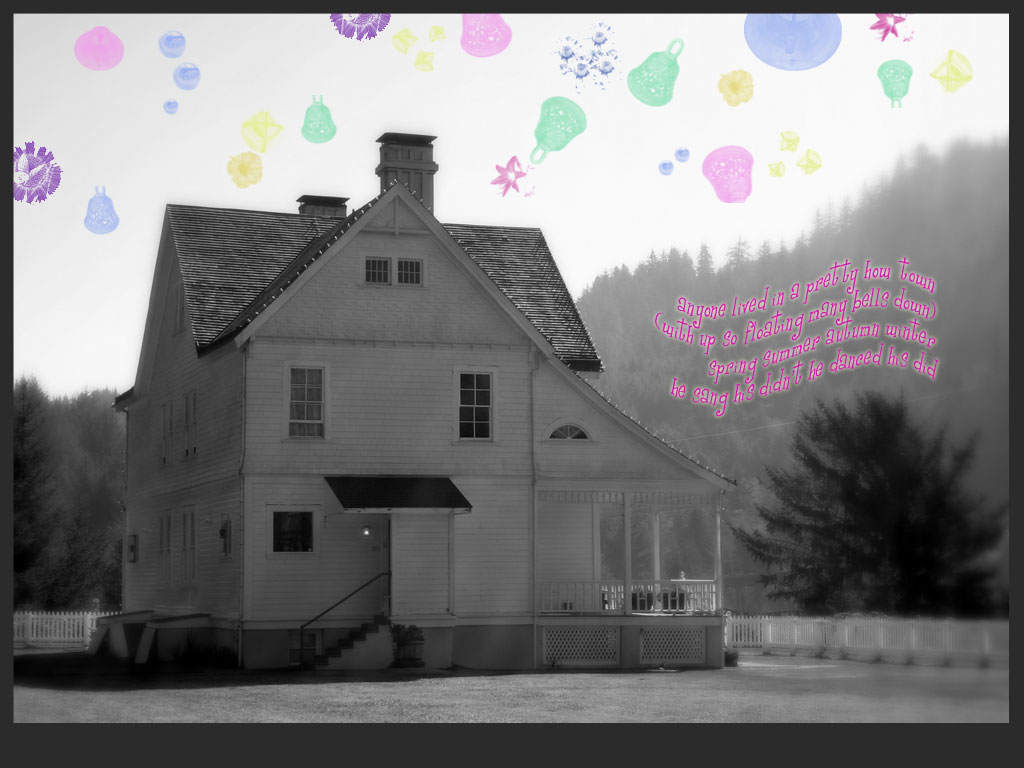
"anyone lived in a pretty how town/with up so floating many bells down" by ee cummings, graphic by me
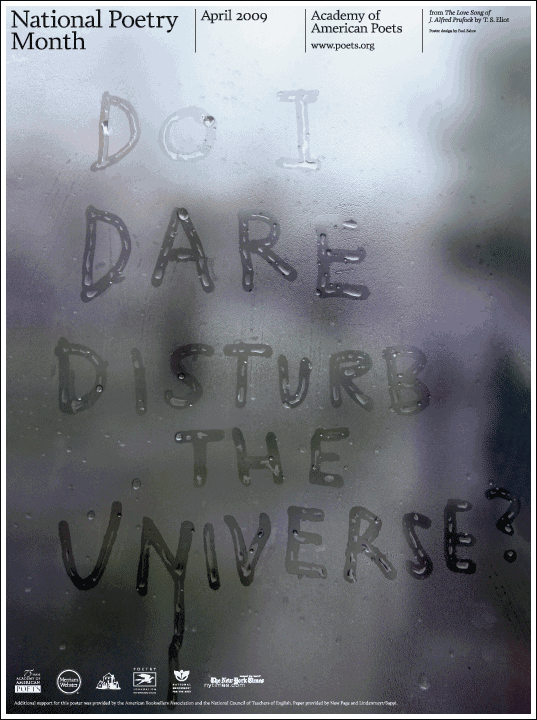
My favorite of the official National Poetry Month posters (though this poem reminds me of high school chemistry class, the teacher was a frustrated poet, I think, better that than a self-identified Prufrock) As usual, pictures are links to their sources.
2009 National Poetry Month Poster, from T.S. Eliot's "Love Song of J. Alfred Prufrock"
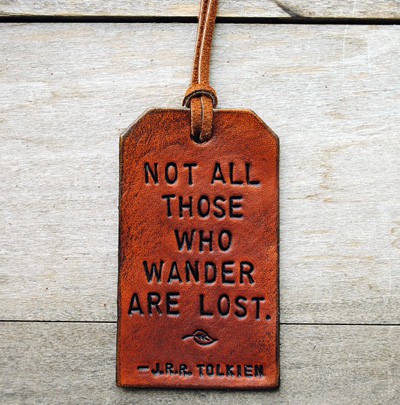
A favorite bit of Tolkien, via Pinterest (I want this luggage tag. A lot.)
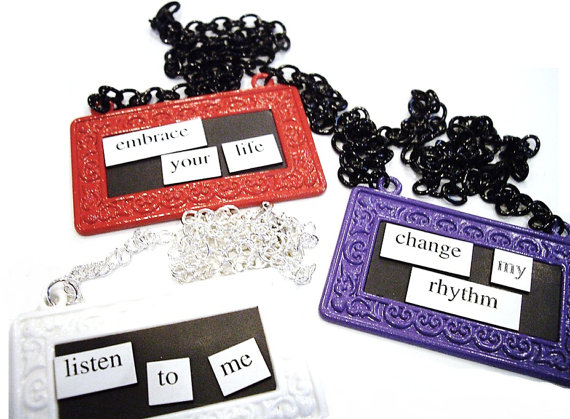
Couldn't resist including the make-your-own magnetic poetry necklace--some of several styles and options, including earrings. I'm not sure whether this is weird or hilarious or brilliant. Maybe that means I've worked at an art museum too long? Available on Etsy from VitalMadness
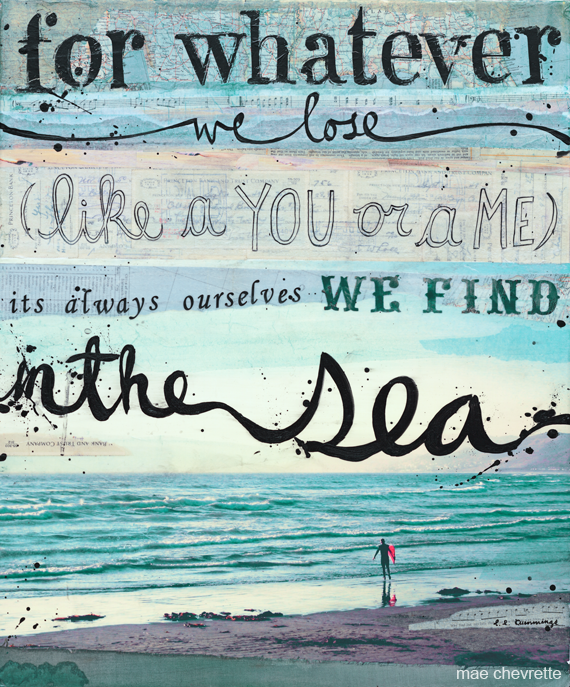
Poem by ee cummings, artwork by Mae Chevrette
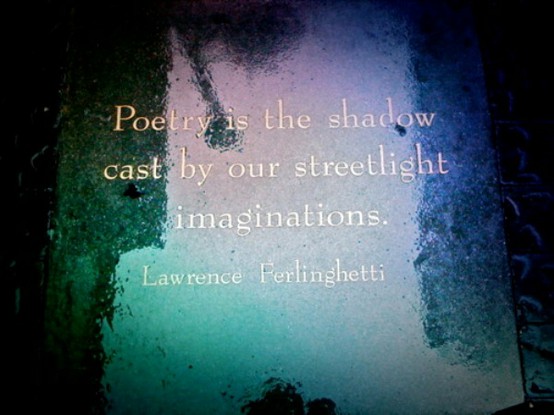
From the FreePeople blog, via Pinterest
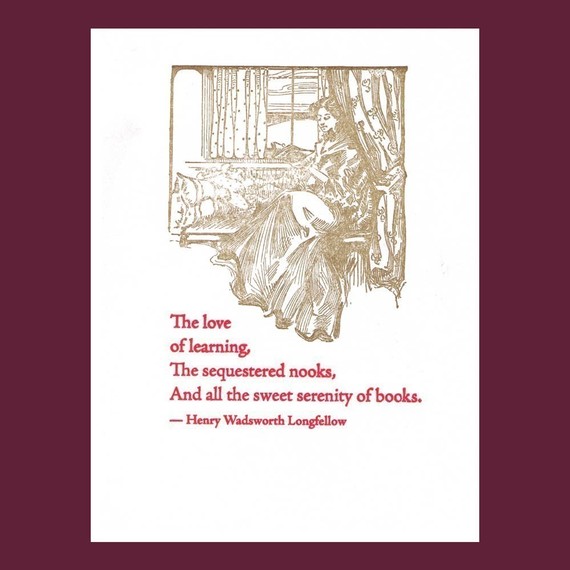
Poetry by Henry Wadsworth Longfellow (an old friend of mine), art by LetteraryPress (Etsy)
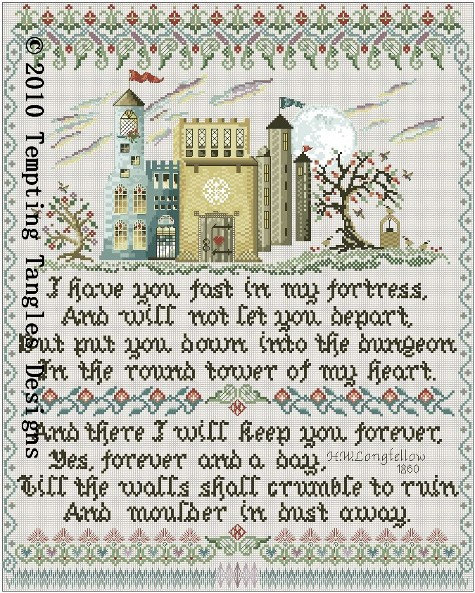
From "The Children's Hour" by Longfellow, pattern by Deborah Dick (Etsy)
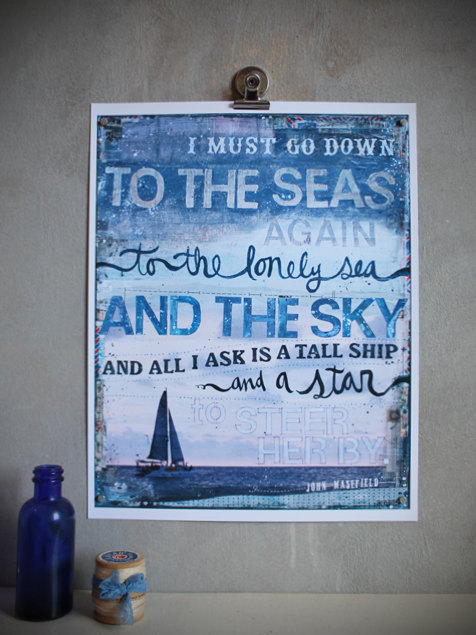
poem by John Masefield, art by Mae Chevrette (Etsy)
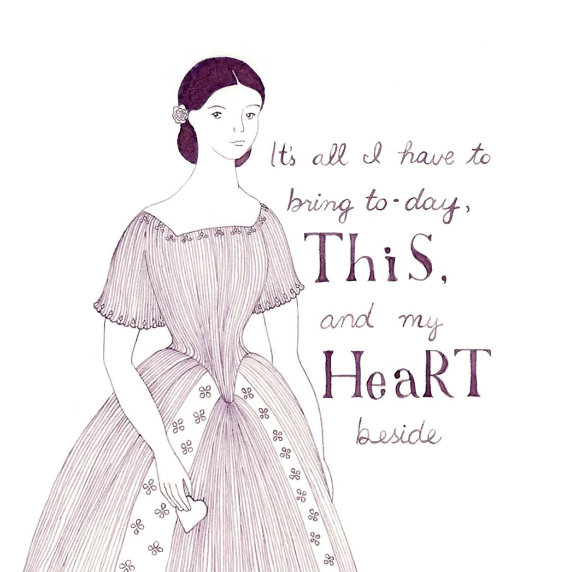
"...This, and my heart, and all the fields, And all the meadows wide." by Emily Dickinson, art by Brigida Swanson (Etsy)


 Sea Dreams and Time Machines