
Uncategorized

Highlights from Boskone

Between holidays, snow, and work commitments, this was maybe  not the ideal weekend to go to a sci-fi/fantasy convention.  I went anyway.  Last year was my first con ever, and much as I had an immensely enjoyable time at Arisia, I’d heard Boskone had a lot going for it as well, so that was this year’s adventure in geekery. (So far.  It’s only February, after all.)
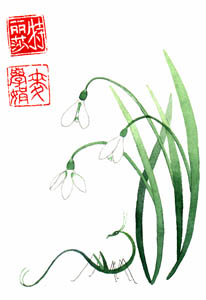
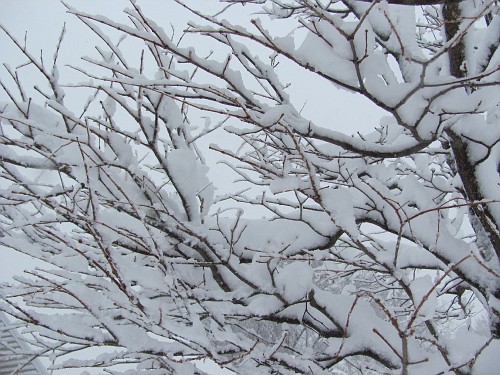
"Snow Drops" by Patricia McCracken, my favorite artist find from this year's Boskone. Click for source (and to order her lovely prints!)
“Snow Drops” by Patricia McCracken, my favorite artist find from this year’s Boskone. Click for source (and to order her lovely prints!)

One of the selling points of Boskone is the chance to have a close encounter with some pretty big names in the world of sci-fi and fantasy writing, and when I saw that this year’s guests of honor included Jane Yolen and Seanan McGuire, I was definitely sold.  I do, after all, have that thing about meeting your literary heroes, and I’ve been a fan of Yolen’s basically since I learned to read.  Though I only started reading McGuire’s Rosemary and Rue this week, I’ve been following her on Twitter and Tumblr for a while and have a lot of respect for the way she interacts with her fans and the way she stands up for inclusion and respect in geek culture.

Despite having an abbreviated stay at Boskone due to weather et al, I had a fabulous time.  It was as inspiring and entertaining as I hoped, and the worst part was that there were way more events I wanted to attend than I had time for.  These are some of my favorite moments from the weekend:

  • “Finish It!” panel on ways to cope with and defeat everything that gets between you and finishing your novel: best tips included setting yourself manageable goals like ‘write non-stop until the end of the playlist,’ and making sure to ‘touch base’ with your novel every day, even if that means writing up bits of background for minor characters or historical elements to your world instead of advancing the main story.  (With the bonus that you might get a short story or another book out of those extra elements later!)
  • “The Evolving Role of Heroes” panel on what’s beyond Joseph Campbell: lots of great questions raised about heroes outside the Eurocentric hetero male model.  Author Greer Gillman talked about how many of the female hero stories centered less on the ‘zero to hero’ trope and more on the idea of finding a way out of restrictive circumstances (labyrinths, castles overseen by older, dangerous people), finding a solution to a problem (and often rescuing a clueless boy as a side-project).  Others talked about how all heros’ journeys are about self-discovery–but some are about following the steps to taking power (Aragorn), and others are about being forced out of one’s comfort zone for the greater good (Frodo).  There was also a fun discussion of alien cultures and what would heroism look like in a collective society, what would our concepts of heroes look like to them, etc.
  • “The Light Fantastic” and “Humor in SF” panels each focused on recommending and supporting the happier, more humorous side of sf/f, and on the defense of escapism and humor as a teaching tool and cover for topics that are actually harder to take on in drama.  Bruce Coville was particularly entertaining in the SF panel, and in between admitting to having an 8 year old’s sense of humor and telling body humor jokes, handed out some great advice about emotional pacing and build-up (“three and a topper”), pleas for wit over thin parody, and ‘cute and fuzzy humor with teeth.’  Plus I got a list of new authors to check out, bonus.
  • Interview with Seanan McGuire pretty much had me laughing the entire way.  Not a lot of focus on writing technique, etc, but who knew reptile and raven rescue stories could be so funny?
  • Discussion group with Joshua Bilmes, literary agent, who took the time to answer lots of questions about networking, the search for an agent, what to look for in an agent, and to dispel myths about needing short story credits to query for a novel, etc.
  • Tea and Coffee with Jane Yolen! 45 minutes at a table with Yolen and 9 other people, in which I did not make a blithering idiot of myself and asked a few relatively intelligent questions about the market for recast fairy tales, got to hear about some of her new projects, her opinions on how authors should or should not try to tie in with the Common Core, and all kinds of other fascinating stuff.  I didn’t take notes because it was an informal conversation, but she was warm and funny and just so incredibly cool.  Definitely the summit of my con experience.

In short, chances are good I’ll be going back next year.

Uncategorized

A Month by the Pen

R2D2 mailbox from the 30th anniversary of Star Wars.  Photographed in Boston by David Heiniluoma, Jr.
R2D2 mailbox from the 30th anniversary of Star Wars. Photographed in Boston by David Heiniluoma, Jr.

Despite the eternal frustration that is slow postal delivery to my neighborhood in Salem, I really love getting snail mail.  There’s something really exciting about opening up the box and seeing a postcard or a letter that a digital inbox just doesn’t convey.  Maybe that makes me a temporal leftover, but apparently there are a lot of people that feel the same way, one of whom is an author I admire, Mary Robinette Kowal, whose Glamourist Histories I read with great glee.

A few years ago, she started the Month of Letters challenge, wherein participants mail one piece of actual mail every day that the post office is open, for the entire month of February.  It corresponds (ha!) perfectly with a month in which one would potentially be sending valentines anyway, and is a nice manageable month if one isn’t running February school vacation week programming.  (Which I am, but oh well.)  This year, she upped the game by offering to write a character letter back to anyone who wrote to either of her two main characters from the Austen-era Glamourist Histories, and that’s what made me decide to go for it.  I probably won’t manage a letter/postcard/package a day, but there are a few people with whom I do keep up a written correspondence, and I’ve owed a few of them letters anyway (looking at you, Devlin!).  Because who can turn down the opportunity for a letter from Jane, Lady Vincent?  Not I.

(This is a brilliant idea, by the way, and crazy generous of her time and attention.  I’m impressed.)

LetterMo2014square

So if you’d like a letter/note/postcard/light shippable curiosity from me, drop me a line here and let me know!  (If I don’t have your address already, you can leave it in the comments, which will be screened so it doesn’t go public.)

Uncategorized

Roma Eterna: Alternate Histories, and Missing Ones

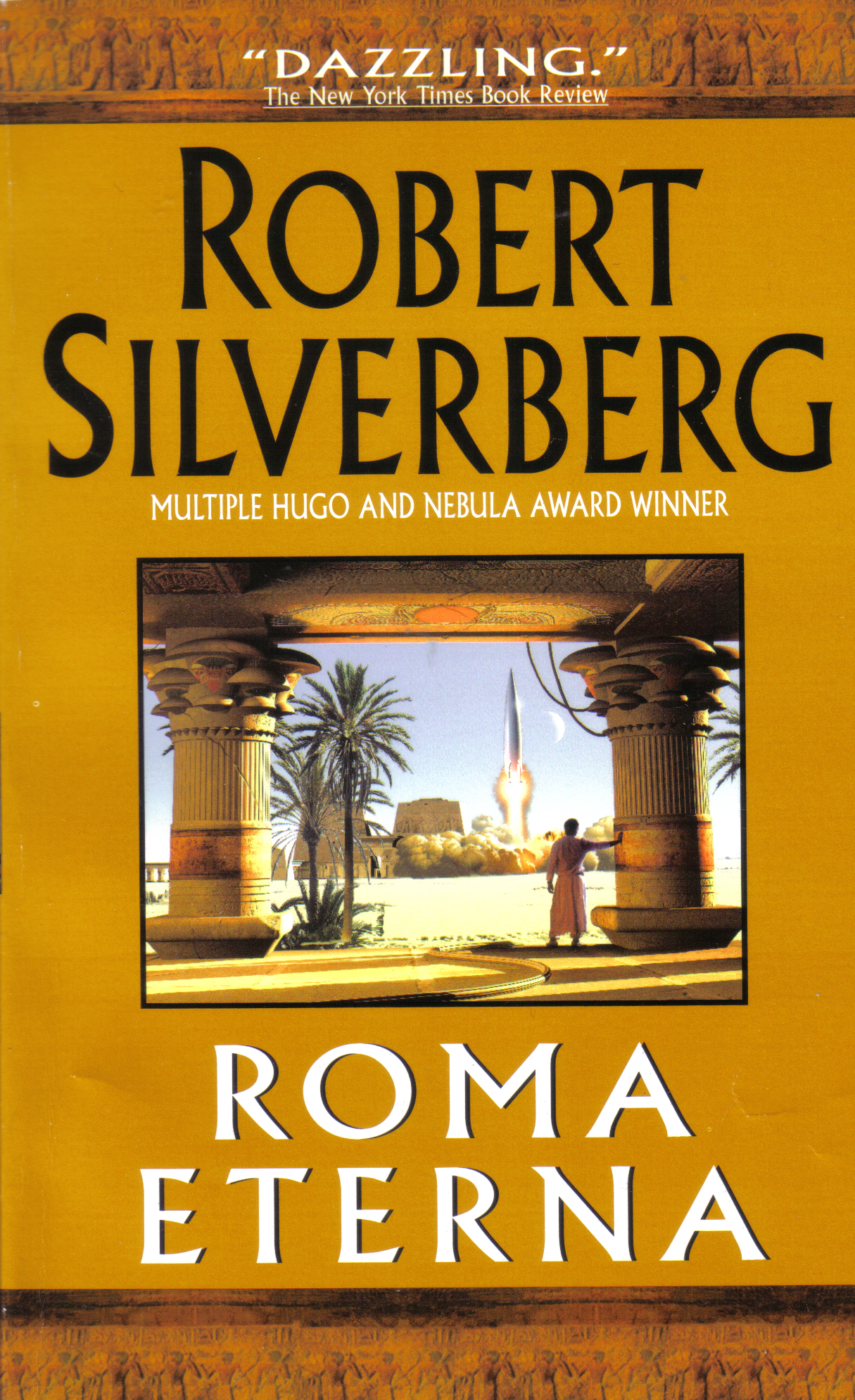
There are benefits to being stuck on the couch with a virus: my favorite is the permission to take a few consecutive hours to read, without feeling guilty about not doing something else (there’s always something else).  So today I finished Roma Eterna by Robert Silverberg.  It’s been sitting on my to-read shelf for a while, because who can turn down a book that wonders what would have happened if the Roman Empire never fell?

Not me, that’s for sure.  I love a good alternate history.  (Alternate historical fantasy too, but that’s a whole ‘nother blog post.)

roma_eterna_coverI haven’t read any other Silverberg to my knowledge, but I recognized the name and I’m always looking to get to like an author that’s new to me.  So that plus five years of studying Latin and a fondness for speculative fiction meant I was geared up for a really good read.

And I mostly got it.  Once I got in the habit of subtracting 750 years or so from all the chapter heading dates so that I could compare the alternate timeline to this reality’s history, there were some really fun comparisons and contrasts to be drawn.  Would certain events still happen, and if so, when?  Discovery/attempted conquering of the New World, exploration of the islands in the Pacific, trade agreements with Asia, those are all practically givens given what we know of the Roman Empire’s sense of manifest destiny.  But what about movements towards alternate forms of government, huge sociopolitical upheavals on the models of the French or Russian revolutions?  What about attempts towards independence?  Development of certain major world religions?  Minds like Leonardo daVinci or Einstein?  And is there a way to measure which of these historical paths is ‘better?’  And better for whom?

Do you sense a trend in these questions at all?  Because I did, and much as I enjoyed Silverberg’s well-researched and imaginative answers to them, there were entire swathes of stories I felt were *completely missing.*

Let me give you a hint: in eleven chapters, told by eleven different narrators at different eras in this expanded ‘eternal Rome,’ there was one female narrator, living in Venice, mostly interested in contemplating how willing she was to be seduced by the newest Roman proconsul, or was she more interested in being the one doing the seducing.  Aside from offering a ‘provincial’ point of view, she influenced the narrative not at all, barely witnessing the events of the era, let alone being part of them.  There were maybe two or three other female characters of any note in the whole book, seen primarily through the lens of their desirability to the narrators.

In a book spanning approximately 2,000 years of history.

Should I have been surprised?  Probably not.  Original copyright on my edition said 1989, male author, clearly more interested in telling a story about how the delayed development of Judaism was a key factor in the stagnation of the world.  (Now, that ending I was surprised by, but I can go with it, at least to a point.) Invisible privilege is a thing, and I guess I’d rather believe the author was oblivious than that he was deliberately exclusionary.

Should I be as disappointed as I was?  Am I oversensitive because of who I am and what I read?  Wasn’t the Roman Empire pretty male-dominated anyway?

1) Yes.  2) It’s an unfortunately short step from ‘oversensitive’ to ‘hysterical’ and that leads us to all sorts of Victorian places I don’t want to go. and 3) Not really, which is partly why I was surprised and partly why I was disappointed.

Look up at the cover of this book.  There’s a rocketship.  I picked this book up at a sci-fi/fantasy convention last year.  This is a genre that has given me and readers and watchers like me princesses that don’t want to be rescued from dragons, and spaceship captains that fall in love with the female souls of their ships, and female spaceship captains that bring their crews home across unfathomable distances through hostile territories, and senatorial princesses that rescue frozen smugglers with a kiss while in the middle of leading a rebellion, and dozens of other  situations in which the contributions of half the society are recognized by the other half.   Take the person who has steeped in these stories and mash her together with someone who has also read I, Claudius, and you get someone who expects that the fearsome, ambitious, clever, savvy, and otherwise remarkable women of ancient Rome will at least have a mention for the role they played (and could have continued to play) in things like determining succession in the Empire, and influencing elected politicians, and discussing strategy with military commanders.

They existed historically.  They’re nowhere in this book, even in the parts that line up perfectly with our own history.  (You know who else doesn’t get a voice? Slaves.  Any of the cultures the Romans trade with.  Any of the plebians or non-Roman citizens.  Positive queer characters, even in a universe where the Greco-Romans run the Eastern Empire for a while.)

And yes, I am *sensitive* to the issues of representations of women in books and other media.  I’m influenced by what I choose to read and who I choose to follow in the vastness of the internet (Hi, Book Smugglers and Stellar Four and Seanan McGuire and others).  I recognize that not every book can tell *everyone’s story,* because that would be either too many stories, or none at all.  But if you’re trying to give us a picture of an alternate world, how hard is it to give us a little more about half the population?  This book has 449 pages, and it couldn’t even pass the Bechdel test.  But there’s nothing wrong with being sensitive, because being sensitive is being aware, and being aware and critical of what you read makes you a better reader, and a better reader is a better writer, and someday I will be writing my alternate history epic and I will remember this book.

And I will try to do better.

Uncategorized

“Saving Mr. Banks” and the enduring power of story

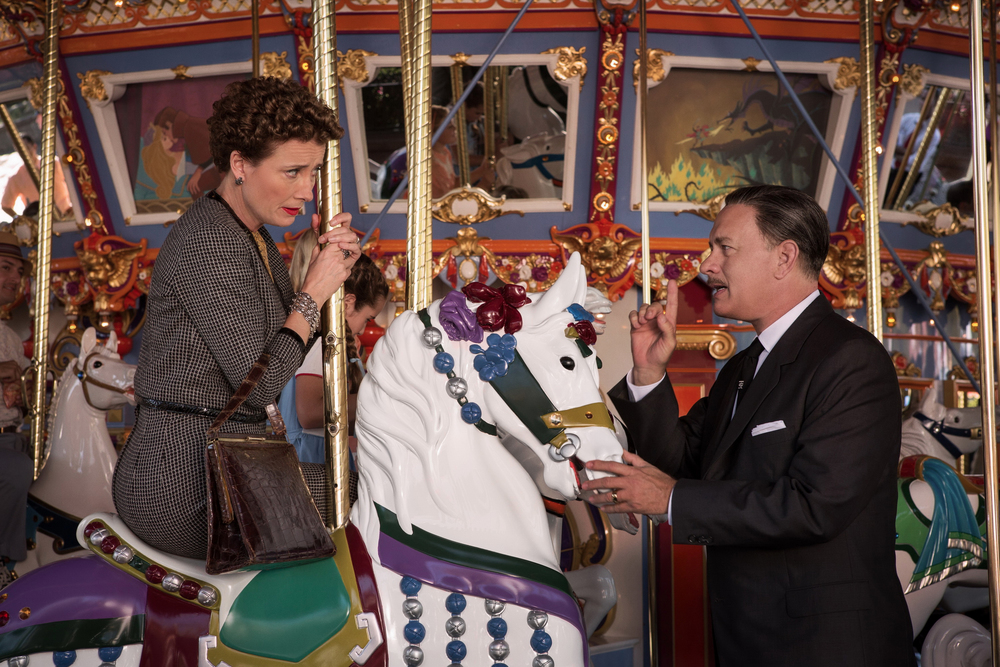
The carousel scene from Saving Mr. Banks

I’m too late on the carousel to offer a fresh perspective on Saving Mr. Banks–a good many people have written reviews already, and I have no inclination or need to echo what’s been said repeatedly (but yes, fabulous acting by the entire cast start to finish, and I’m not sure I’ve ever been so happy to see Bradley Whitford on the screen [too long since I’ve seen The West Wing, clearly]).

However, regardless of historical accuracy or good acting choices or mildly amused acknowledgement of a certain sort of self-interest in Disney producing this story in the first place, what made this movie so powerful was the way it got me right where I live.   Yes, this is an amazing story about families, and a little about keeping some of the magic that’s crucial to childhood into the way you survive adulthood too, and a lot about the clash of two intense personalities, but it’s mostly about the enduring power of story.  Tom Hanks’ Disney doesn’t win over Emma Thompson’s Travers until he not only talks about the value of story and of story tellers, but he actually puts himself out there *as a storyteller.*  She’s only really seen the actions of the business man, heard lip-service to his role as father, and bore witness to his constructed public figure–and it’s the story that finally gets through to her.   Hanks’  Disney tells the audience he’s been in her shoes when trying to protect ‘the Mouse,’ but even if we believe he has the best intentions towards her characters, she can’t see it until he offers her something real in return.  It’s brilliant, and even if I had gone into the movie with as much reluctance as the on-screen Mrs. Travers (I didn’t, I was prepared to be charmed from the first), that moment would still have gotten me.  As it was, it knocked the breath out of me instead.  Story matters, and if it matters to each of us a little differently because of who we are and where we come from, in the end it still helps us understand each other, even if we can’t agree on the dancing animated penguins.

I now have a serious (serial?) case of needing to a) rewatch Mary Poppins, b) read the original books, c) go back to Disneyworld.

…I’d call that effective story telling.  *laugh*

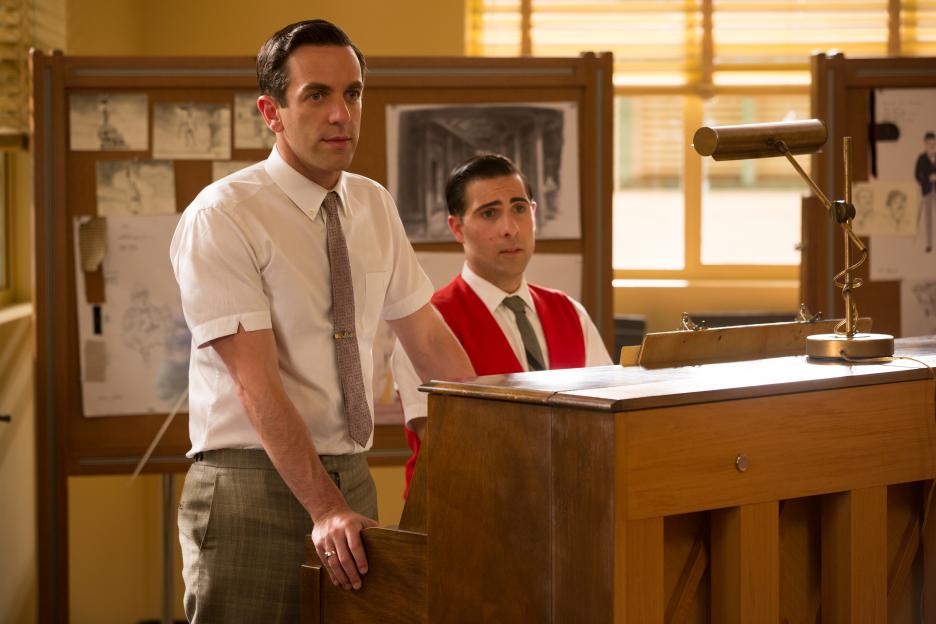
Also? I totally loved these guys.  I am always appreciative of music's storytelling power, and these two played their parts to the hilt.
Also? I totally loved these guys. I am always appreciative of music’s storytelling power, and these two played their parts to the hilt.


Uncategorized

Hazard Pay, a library tale

The following bit of fluff was written for my good friend and co-conspirator, Devlin, and rather giddily spun off our archaeological epistolary adventure.  The formal excuse for writing it was a writers’ group exercise in telling a story through letters or emails, but this particular pair of highly unusual library assistants prefers to leave each other notes on the backs of discarded card catalog cards, tucked into the split between the desk and the paneling of study carrel A23.

Hazard Pay,or, Assorted notes left in Carrel A23

Dear Clara,

Have misplaced the secret entrance to the royal academy library.  Please advise.

Ren

– – – – –

Dear Ren,

On alternate Thursdays it has a sudden maritime mood.  Did you try looking behind the Nelson biographies?

Clara

— – – –

Dear Clara,

Tried the Nelson biographies and got doused in a wave of grog.  Think it may have spread into the poetry aisle.  Suggestions?

Ren

– – – – – –

Dear Ren,

Wear a raincoat next time.  Also, grog’s not so bad, but don’t let Keats at the port, he gets morose and starts a several hour monologue about the nature of beauty.  Whitman can usually snap him out of it, but watch out.  He has wandering hands.

Clara

– – – – – –

Dear Clara,

I do not get paid enough for this.  The library entrance is hiding in classical mythology again and won’t open until all the scholars that want to access it answer three riddles.  I have already rescued two of them from being eaten by the sphinx carved into the end of the stacks.  Also, my favorite leather jacket is now missing a sleeve.  What’s next, velociraptors?

Ren

– – – – – –

Dear Ren,

I suggest swinging by the 12th century and stocking up on chain mail.  Sorry to hear about your jacket, but you’re too skinny for the Indiana Jones look anyway.  At least it didn’t eat your hat.

Stay away from the paleontology section until the new moon at least.

…I’m serious.

Clara

– – – – – – – –

Dear Clara,

Found your satchel halfway up the travel section.  Decide to go backpacking on the Giant’s Causeway again?  Hope you remembered your sweater this time.  Left  your satchel safely under sewing and notions.  Meet me in Astronomy behind the Kuiper belt later?

Ren

–  – – – –

Dear Ren,

Wondered where I’d left the satchel.  It didn’t have a pocket full of rose petals when I left it, though, I don’t think.  Been sipping that grog with Robbie Burns again?  You don’t really need his kind of help.

And yes, but not the Kuiper belt, it’s freezing there.  Last one to Verne’s complete works has to wrestle the kraken.

Clara

– – – – – – –

Dear Clara,

Joke’s on you.  I brought Keats’ port to the kraken last week and now that thing thinks I walk on water.  See you at 20,000 leagues.

Ren

Uncategorized

Why meeting your literary heroes matters

All of us, at one point or another, have answered that question about having dinner with any three people from any point in history.  My answer is always Abigail Adams, Jane Austen, and some rotating third figure depending on my mood.  Sally Ride, maybe, or Eleanor Roosevelt, or Princess Leia (what, you didn’t mean *Earth-bound* historical figures, did you?  Well in that case, Michelle Obama).

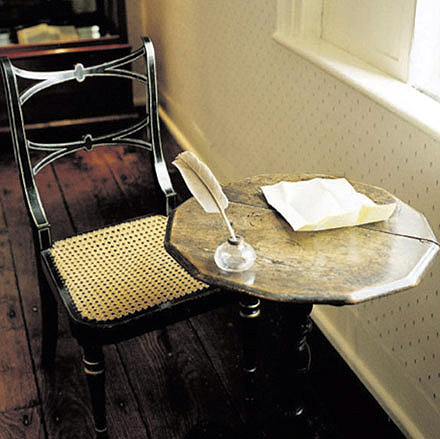
Of course, when you can't meet them, you can go stand by the window where they sat and absorb the genius vibes, instead.  Jane Austen's writing table, Chawton.
Of course, when you can’t meet them, you can go stand by the window where they sat and absorb the genius vibes, instead. Jane Austen’s writing table, Chawton.

The point is, most of us answer that question with the names of people we have no chance in this reality of ever meeting, death and the Secret Service generally being no-nonsense sorts of barriers.  It doesn’t change the fact that meeting people you admire can be an amazing kick-start to your own sense of self.

A number of years ago now, I went to a panel on ‘why write fantasy?’ hosted by the Cambridge Public Library, featuring a discussion between two of my literary heroes, Susan Cooper and Gregory Maguire.  I spent the entire two hours or so pretty much vibrating out of my seat with joy, most especially when Susan Cooper said she writes fantasy because ‘that’s just the way [her] brain works.’  She wants to write a Shakespearean historical fiction, or about Nelson and the Napoleonic wars, they turn into time travel stories.  It was among the top five most validating things I’ve ever heard in my life, and she wasn’t even talking to me.

(Mind you, when I did get a chance to talk to her, I babbled something probably incoherent about how much I love her writing and how I reread The Dark is Rising every time I need a reminder about how pacing works.  I was so not smooth.)

And then this past Sunday I had the opportunity to hear Naomi Novik read during Geek Central (Cambridge, again! Why do I not live there?).  I’ve loved her Temeraire series since the beginning, with much wailing and gnashing of teeth at the same time (dragons and Napoleon, why didn’t I think of that!?).  I’ve been to one other reading of hers, which was much more crowded, and though I felt bad she had a smaller audience this time (most of us who were there were blaming the RI Comic Con) I appreciated the fact that it meant we got to have actual conversation with her.  She read us the opening to a new fairy-tale inspired piece, and talked about finishing up the Temeraire series, what’s next after that, and who inspires her and why.  She even asked for input on potential titles for her new work, which made me grin.  (Titling is hard!)

And when it was my turn to get my book signed, I managed not to sound like an idiot (progress!).  We talked about her dragons-in-ancient-Rome short story, and discussed how cool her Anglewing dragons were, and even though I said absolutely nothing to her about being a writer myself, I came away inspired and heartened.  Because she’s not so different from me, and she reads authors I read and writes things in the genres I write, and my first drafts don’t sound so much rougher than the piece she read us all.  And since our brief conversation on Sunday I’ve managed to write over 6K words of my own current project.

So it matters, meeting the writers you admire, because while it’s easy enough to throw up your hands and say “I don’t know how they do it!” the next step is to bring those hands right back down to the keyboard.

Uncategorized

Thoughts on Boston and Camp Nano update 2

Fun things first: I’m up over 25,500 words, so I’ve already surpassed the mark I hit in November’s Nanowrimo, which feels good, even if I remain behind par.  I’ve hit the point where the plot ratchets up a notch, hoping that my pacing has been working so far given that my main antagonist has been an invisible puppetmaster.  Pacing is always one of those things I know I need to pay attention to!

Sadly, this has not been such a great week for me, my loved ones, and my city.  Though nearly everyone I know came through Monday’s bombing essentially unscathed, not all did, and the constant strain of continual coverage and bad news has taken its toll even on those of us who were nowhere near the finish line.  I’ve been trying to process through painting and poetry, and positive thoughts.  Sadly, despite my best attempts, my words remain spiralling and frenetic.  Therefore, for lack of a poem of my own worthy of sharing at the moment, since it is National Poetry Month, a poem by one of my favorites that gave me some peace this morning:

Poem of the One World
by Mary Oliver

This morning
the beautiful white heron
was floating along above the water

and then into the sky of this
the one world
we all belong to

where everything
sooner or later
is part of everything else

which thought made me feel
for a little while
quite beautiful myself.

Uncategorized

Camp Nano progress report

For those who are curious, I’m running a little below the target for total wordcount, but it’s been a good writing day: 1,710 words today.  The project I’m working on isn’t a new one, but one I’ve been really gunning to finish, so whatever the wordcount ends up being by the end of the month, fingers crossed the story draft will be entirely wrapped.

Curious?

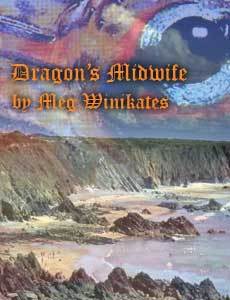
The project is Dragon’s Midwife, working synopsis:

“Erin walks through a cavern and ends up in 18th century Wales, with a dragon egg, a dangerously perceptive blacksmith, and an industrial-minded English overlord to complicate her way home.”

cover image

Excerpt from the first few pages:

There is no way to be prepared adequately for the experience of raising a dragon. I can say this definitively, because I’ve read about raising dragons, and I’ve raised a dragon, and there is absolutely no way that one prepared me for the other, except possibly by encouraging me to think it could be done.

But I’m getting far ahead of myself.

At the point where my life took a precipitate turn into the ridiculous and simultaneously sublime, I was a twenty-year-old Ivy League student and a self-professed dragon geek. I had historical prints of medieval and Asian dragons in my dorm room. I read all the versions of other people’s dragons I could find—all the Yolens, McKinleys, McCaffreys, you name it. It wasn’t what you’d call an obsession—I did other stuff too—but it was more like an underlying principle in my life. An openness, if you will, to the idea that such marvelous creatures could exist, as more than just a collective unconscious memory of dinosaurs from our teeny ratlike mammalian ancestors.

Like I said, a dragon geek. I made no apologies then, I certainly won’t now. Not after everything that’s happened.

No matter what my unrepentance costs.

= = = = = = =

So there I was, spending the summer after my junior year interning at a historical society in an unpronounceable town in Wales. Sure, I could have done something similar a hell of a lot closer to home. But can you name a single US state flag with a dragon on it?

That’s what I thought.

I loved Wales exactly as much as I thought I would. It was tiny, it was rocky, it was stuffed to the gills with music and legend, and it so far had better weather than the tour books had warned me to expect. I was learning to drive on the wrong side of the road in a ridiculously small blue car, making an unhurried study of the ales and ciders of the area, and climbing dilapidated castle towers in sheep pastures with my free moments.

And on this particular day, just before it all changed, I had given up on castles for a trip to the uncompromisingly wild Welsh seaside. It was heavenly. I had a sweater, a sketchbook, a picnic, and a towel in my backpack, and a flashlight, because my host family had told me there were some safe shallow caves to explore at the foot of the cliff.

You don’t go spelunking alone. I knew it as well as I knew all those other rules—no swimming alone, no hiking alone, unless someone knows your itinerary and how long you plan to be gone. So I should not have taken my hosts’ word for it that the caves were safe, having never been there myself. But I’ve already refused to apologize—and if the fact that I hauled myself into those caves with cheerful unconcern makes me look like the idiot that gets eaten by the monster in the opening scene, so be it. I make no excuses, but I will try to explain.

The caves called to me. The whole country did—I’d been feeling surprisingly at home here all month—but now it was like having ants crawl all over my skin, but in a good way. Like being bathed in electricity but without the imminent threat of a shock. Laugh if you want, but my skin was humming when I got into that cave. I couldn’t have turned back if you’d dragged me.

So I took my flashlight, shouldered my pack, and clambered through a cave that had many more intriguing nooks and crannies than promised, stacking pebbles when passages branched so that I would know if I were going in circles—and so I’d know my way out. When I smelled and felt the fresh air blowing on my face, I grinned. I’d found a way through to the next bay in the cliff! And if I noticed the slight shimmer to the air or the chiming noise as I broke through into the sunlight again, it was only subconsciously—I remember it now only because it haunts my dreams.

I’d like to say that the clues were obvious, that I knew immediately what had happened—but other than a vague memory of that chiming in my head, I noticed nothing.

Of course, the fact that she was lying there on the edge of where the forest met the beach sort of distracted me from everything else.

She was a dragon.

Uncategorized

And She’s at it again, Camp Nanowrimo Edition

The badge of the truly wordcount madYes, I signed up for another month of obsessive wordcounting, this time in pursuit of finishing a piece I was already working on and had laid aside for the last Nanowrimo challenge.  Schola Ariolos is still in progress, in fact I got to work on some back-story for the mysterious mentor Brian Wong last night in my writers’ group, but that particular story is playing understudy and waiting in the wings for right now so that I can (fingers crossed) finish Dragon’s Midwife instead.  Then, muses willing, May will be editing month and June will be submission city.  (And somewhere in there I will be attending pre-wedding festivities for family members and close friends, running family friendly Poetry Festival activities, and doing a bunch of that other museum education-y stuff I blog about.)

And when I need a brain break from my rapid word-spillage this month, I will be delving into The Turncoat, by the charming Donna Thorland, with whom I had a very entertaining lunch today.  Check out her seriously impressive book trailer below–someone’s film production roots are showing!

Uncategorized

To Drive the Cold Winter Away: Happy Solstice!

On The Solstice
by Meg Winikates

While the green sleeps
and the river dreams
and the bear is tucked under the hill,
Hope for new life slowly creeps
on the day the sun stands still.

By me, winter 2011
By me, winter 2011

May you have a holiday season full of warmth and well-being, and best wishes for the new year!