Uncategorized

Pondering Puddles

There was, as those of us in eastern Massachusetts know, quite a band of rain and hail that crossed through yesterday afternoon, which might be why the leader of our writers’ group last night had puddles on the brain. For one writing prompt, we were challenged to use the words ‘middle, addle, and puddle’ in a scene. My brain went from Beatrix Potter’s oft-confused Jemima Puddleduck to ee cummings’ “puddle-wonderful,” and this is what happened next.

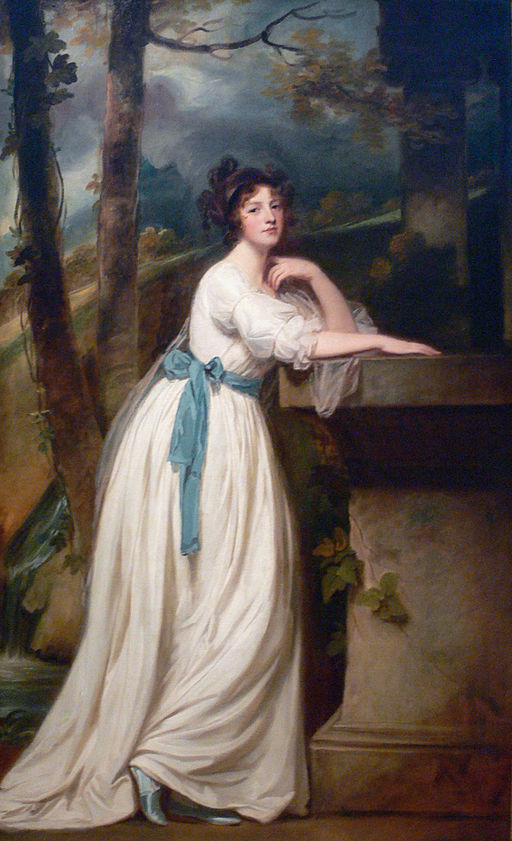
Portrait of Mrs. Andrew Reid; c. l780–1788 Kimbell Art Museum, Fort Worth, Texas; Public domain, via Wikimedia Commons,  (Looks like a puddle-splashing fan, doesn't she?)
Portrait of Mrs. Andrew Reid; c. l780–1788
Kimbell Art Museum, Fort Worth, Texas; Public domain, via Wikimedia Commons, (Looks like a puddle-splashing fan, doesn’t she?)

Promenade
by Meg Winikates

Misty morning meander to
the green in middle distance,
addle-pated chatter of a
governess’ persistence.
Mischief of a moment,
a jollity, a happenstance:
Puddles soak through petticoats!
The scold, the cold are
worth the dance,
to turn, to trip, from twenty
back to twelve,
to find beneath the formal figure
one’s former sense of elf.

Uncategorized

Sunshiny Summer News: Poems in Print!

Happy summer, all! In the wake of last week’s downright delightful Supreme Court decisions on health care and marriage equality, I have less-momentous but much more immediately personal good news; I have four poems that are being published this summer on Window Cat Press.

Window Cat is an online literary journal run by a fabulous trio of poet/artist/editors, who are dedicated to bringing the work of young & emerging poets, writers, and artists to the wider world. Their mission is to “seek to celebrate, inspire, innovate, and play.” About the poems that will appear there, they said:

“We were charmed by the interplay of light and color in Michele’s photographs and thrilled by the rhythmic beauty of your words.”

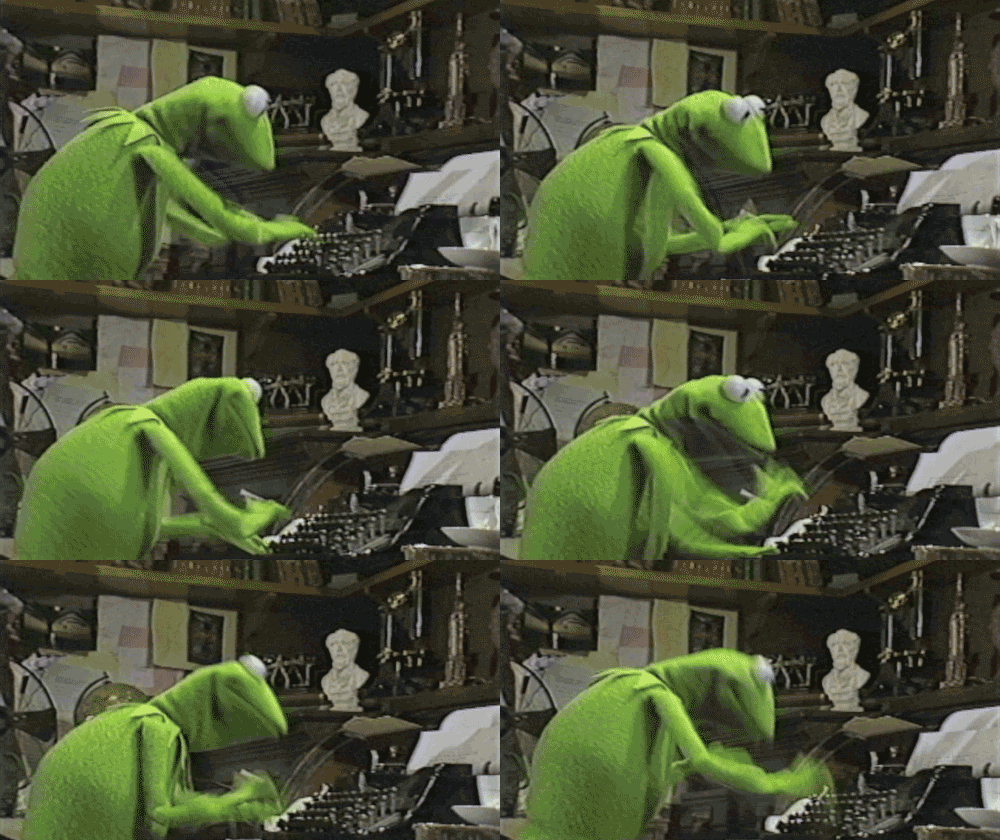
You can imagine my key-smashing delight!

kermittypes

Publication date will be sometime mid-summer; as soon as the issue is live I will be posting the link here, as well as on Palettes of Light, as several of the poems to be published are part of that collection, with integral accompanying photography by the lovely and talented Michele Morris, as mentioned above.

In other happy news, I will also be reading this fall at Mass Poetry’s U35 reading series at the Marliave in Boston, on September 22nd. Hope to see you there!

Uncategorized

Sounds, scuba, and spine-tingles: MA Poetry Fest 2015 wrap-up

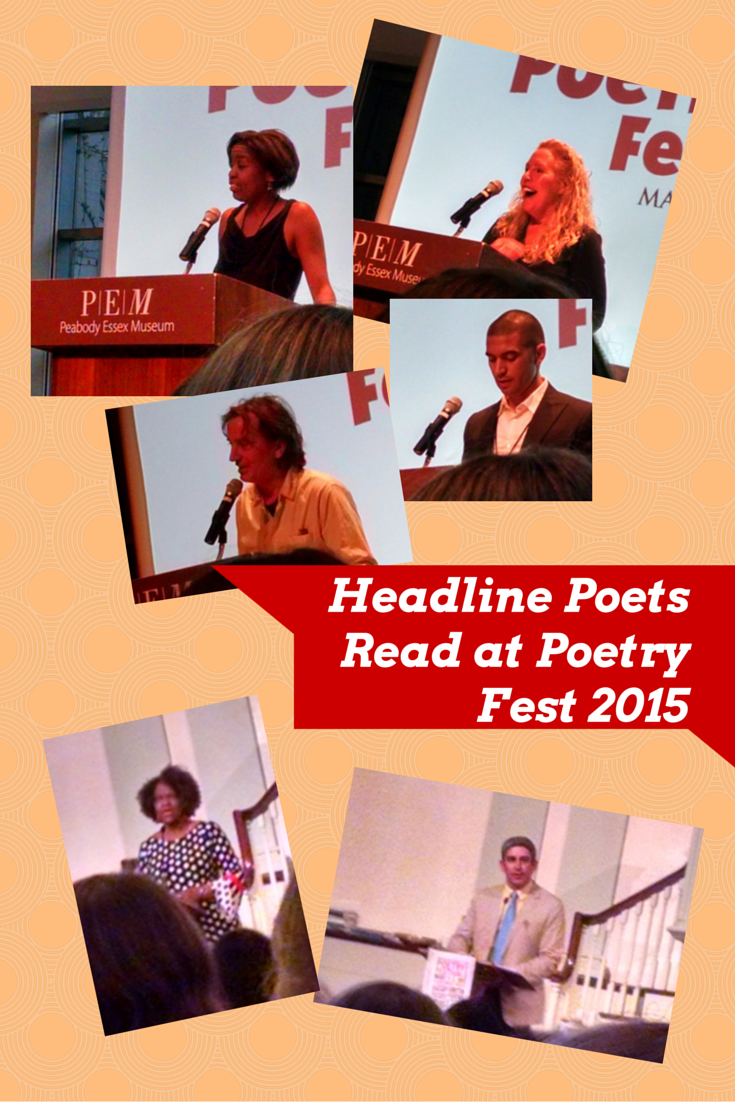
Headline Poets Read at MA Poetry Fest I have a fabulous time at the Mass Poetry Festival every year.  Every year I learn something new about writing, I am bowled over by a poet (or multiple poets) whose work I hadn’t before had a chance to appreciate, I get to spend time surrounded by people who love words as much as I do, and I come away exhilarausted, which is that peculiar state of wiped out and buzzed that comes from too much inspiration in too short a time period.

As always, the headline poets were fantastic. I didn’t make it to all the headline sessions, but both the Friday and Saturday night readings were interesting, featuring Nick Flynn, Adrian Matejka, Denise Duhamel, Rita Dove, and Richard Blanco. I was especially enamored of Rita Dove’s reading, and most particularly loved her poem “Maple Valley Branch Library, 1967,” linked below:

Full text of the poem can also be found here.

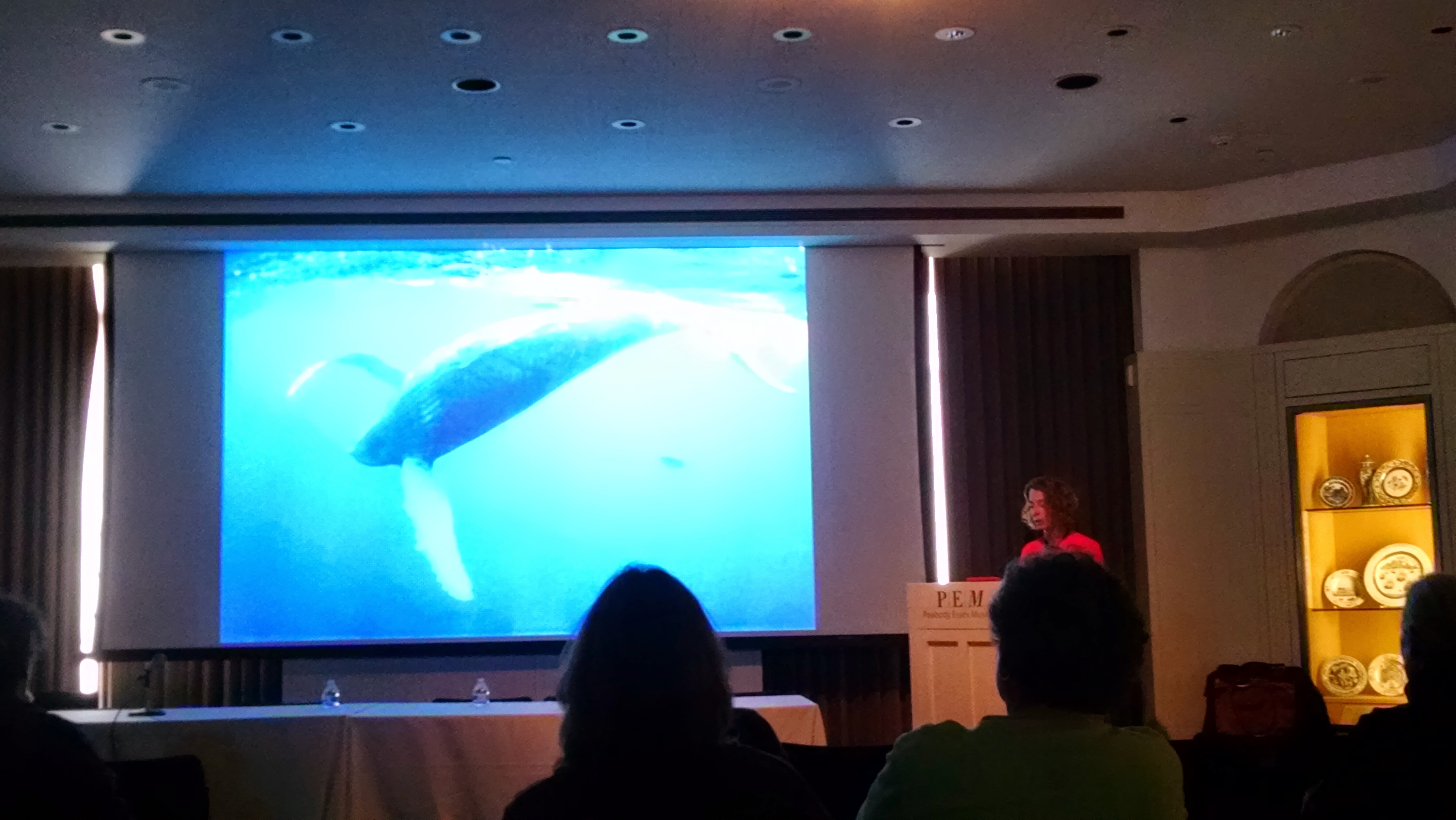
Scuba diving poet Marie Elizabeth Mali reads against a backdrop of her photography.

Other moments that caught my imagination included the reading of marine-inspired poetry to a running background of underwater photography, the highly entertaining “Digital Age Poetics” workshop from the lovely folks at Window Cat Press, and the absolutely fabulous “Writing Sound to Sound” workshop with Moira Linehan and Mary Pinard, which focused on exercises that build sound consciousness into your writing from the very start.  As someone who loves the music of language, syllable and rhythm, I found that session especially inspiring.  Overall, from humorous memes and ‘flarf’ searches to dictionary page and abecedarius poetry, I came away with a ton of new writing prompts and a few promising new poem kernels.

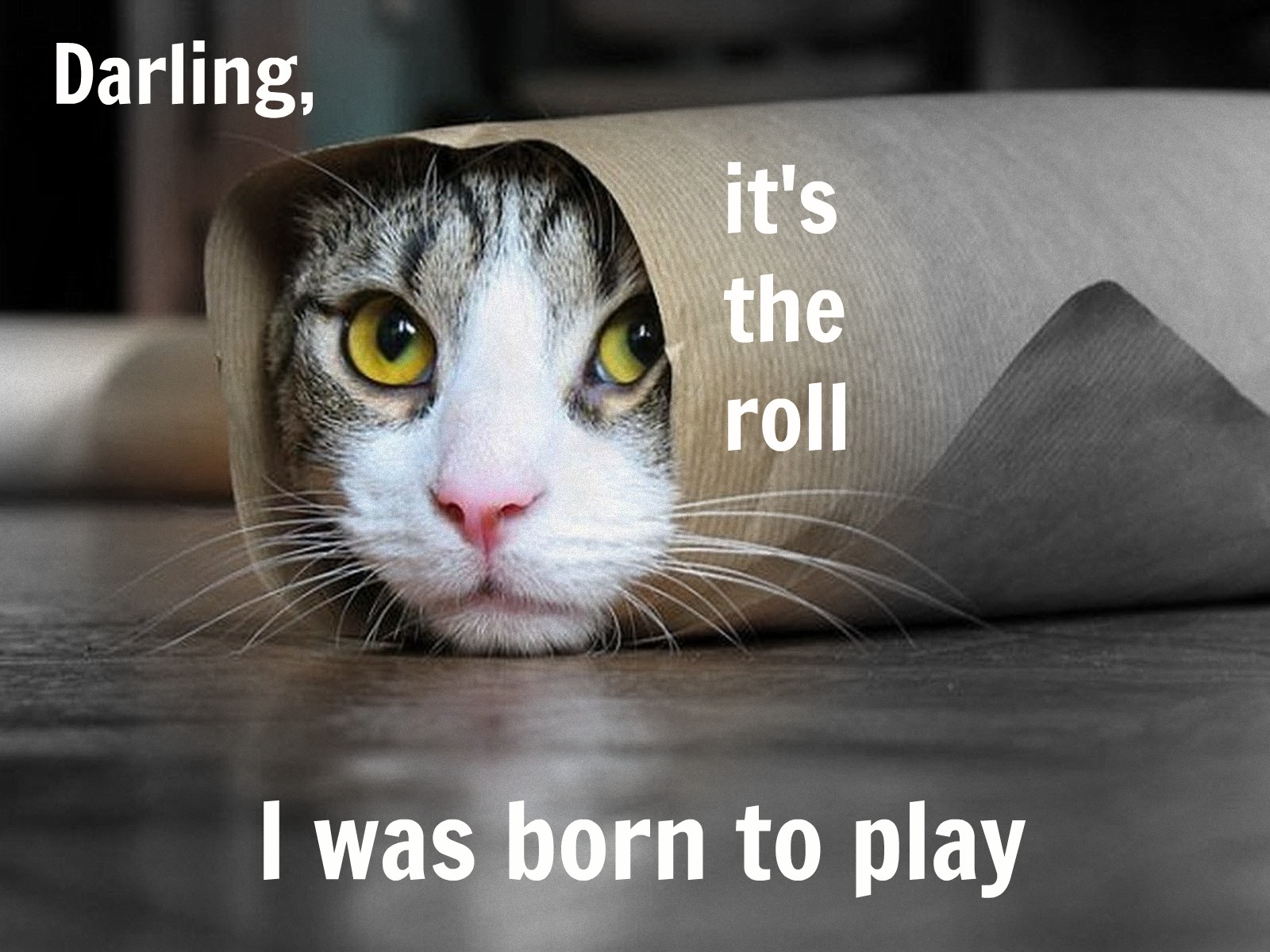
Dramatic Cat has found her role of a lifetime, courtesy of a penchant for puns.
Meme as digital poetics: Dramatic Cat has found her role of a lifetime, courtesy of a penchant for puns by yours truly.

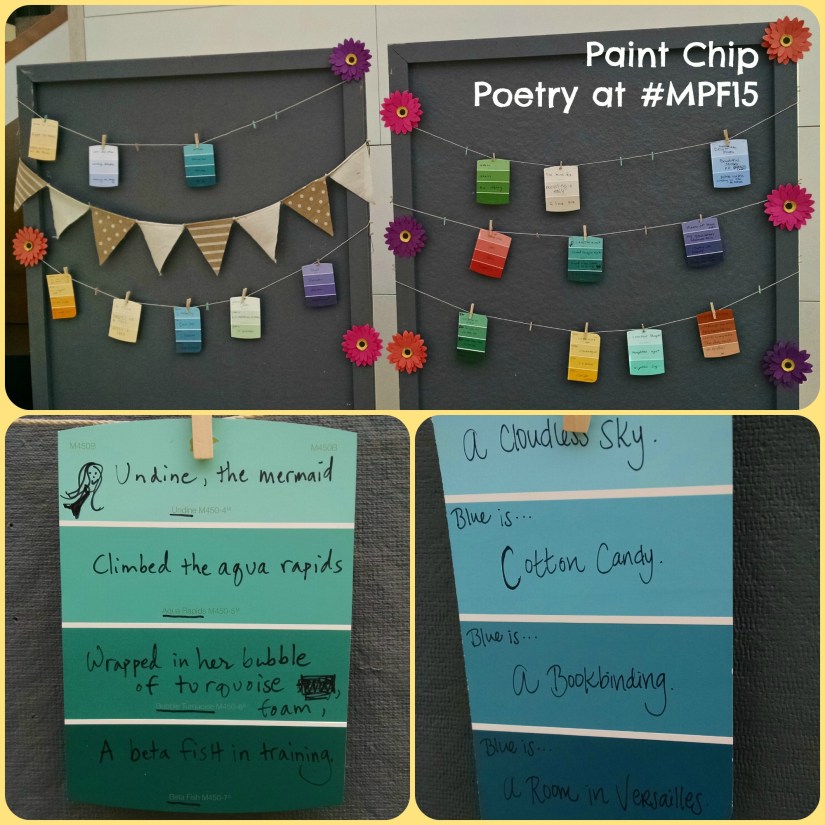
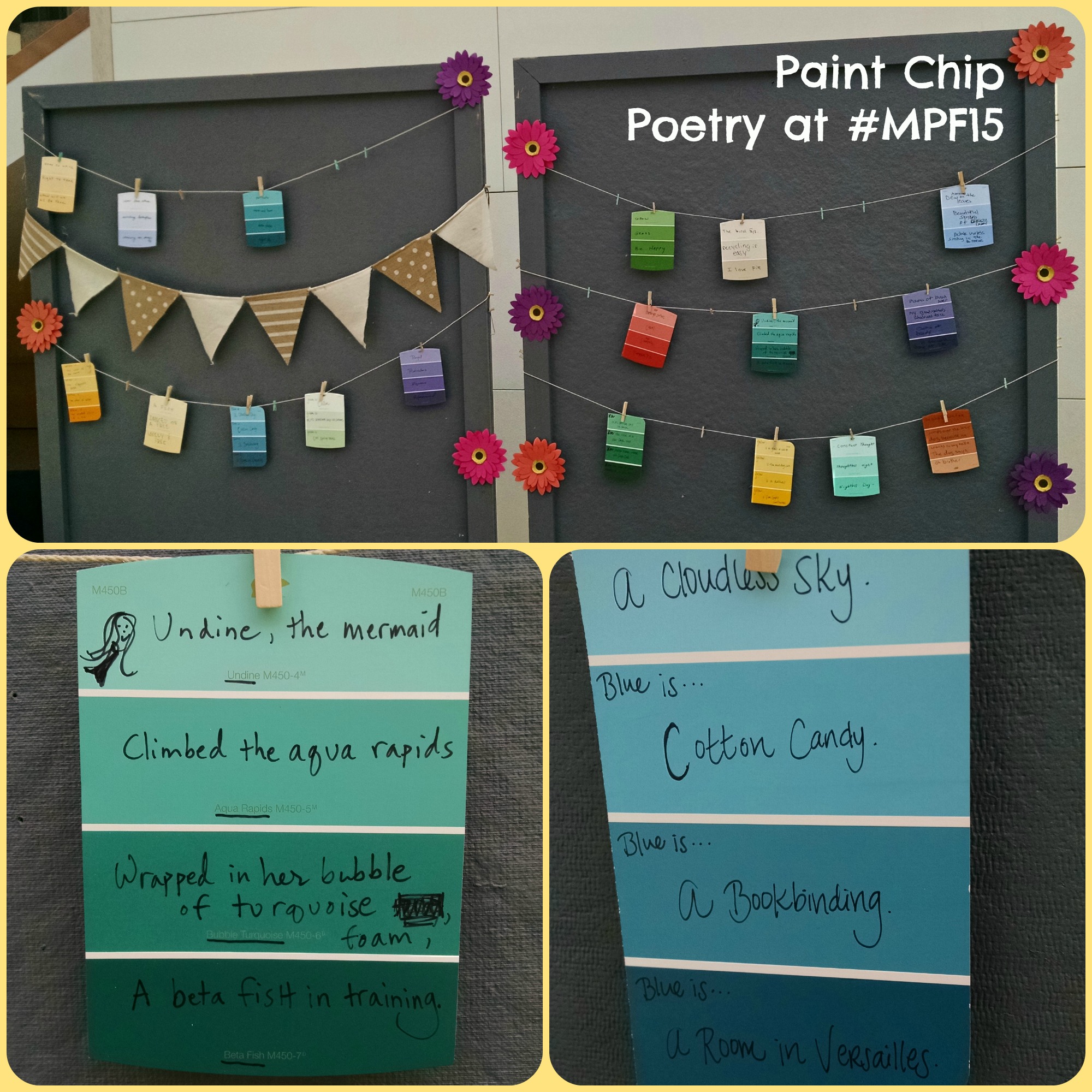
I learned about Edna St. Vincent Millay, read aloud and listened to a great collection of winter and spring poems from my fellow long-suffering New Englanders, and had many a meal with friends old and new.  Finally, I was pleased to see that PEM continued to play with words and art, featuring Mad Libs Muse prompts featuring ‘erasures’ from famous poems, paint chip poetry focused on color and brevity, and even a giant Scrabble game.

paintchippoetrympf15

Thanks and congratulations again to Michael, Jan, and Laurin for putting together another spectacular weekend!

Uncategorized

Narratives Found: A day of surprise and serious wordsmithing

I have lots of thoughts about the last few days of the Mass Poetry Festival, so expect those in a subsequent post, but first I’d like to say ‘thanks!’ to everyone who attended my workshop “Found Narratives” on Sunday morning at the Peabody Essex Museum. I promised I’d put my presentation up online, so the slides are below, with a summary of the ideas that kicked off our writing session.

http://www.slideshare.net/mwinikates/meg-w-mapofest15foundnarratives

What is the role of curators in creating an exhibition, and how is that like (or unlike) the role of a poet?

Curators have a number of roles:

  • Caretaker/Historian/Preservationist – all exhibitions are a continuation of, response to, or rejection of previous history (art history, historical narrative, etc.)  By choosing to include objects, artworks, etc. in a show, curators demonstrate that they think these particular things are worth saving, displaying, and sharing.
  • Author/Editor – curators pick which exhibition elements will best help them tell the story of the person/place/time period/movement/historical event that they want to tell.
  • Interpreter – A good curator (through a good exhibition) poses questions, invites discussion, offers new perspectives, and has an impact on the viewers that gives them a brain-tingling set of new ideas and questions of their own.

Arguably, a poet has much the same set of roles:

  • Historian – all poetry draws inspiration from, responds to, rejects, or reworks the written (and oral!) canon and literary tradition that preceded it. Play and challenge are vital acts of the poet-as-historian.
  • Author/Editor – words are a poet’s tools, and which words you pick and which words you juxtapose, emphasize, etc. are the keys to creating a poem with impact.
  • Interpreter – “If it blows the top of my head off, I know it’s Poetry.” Emily Dickinson was right on, IMHO. Just like visual art, a good poem makes the reader think, question, observe, react, feel, breathe a little differently than before they encountered the words.

The power of both of these roles is in the choices that we make.

Blank walls, blank paper, blank screen. You can put anything there in any order, so where do you start? It all depends on the impact you want to have. Are you aiming for accessible or inscrutable? Mysterious? Open? Comforting or confronting? Your goal determines your choices as much as your natural voice does.

In the case of an exhibition, there are numerous voices involved, of course. Aside from the curator, there are exhibition designers, an interpretive editor, often an educator, all offering suggestions which will help highlight and shape the story the curator wants to tell.  The team’s choices form the bridges for the connections visitors will make when standing in the space.

Will there be long sight lines or lots of small spaces? Which pieces are in conversation with each other, whether in support or in opposition?  Do you hang them together or separately? What color are the walls?  How much extra information do you put on the labels/wall text? What style font do you use?

For poets, this correlates to choices about line length, word juxtaposition, rhyme and meter, form.  Where do you want your viewer’s/reader’s eyes to go next?

The Idea for the Workshop

All this discussion grew out of a collaborative project between myself and photographer Michele Morris, Palettes of Light, in which we paired images from two of her series and then I wrote a poem connecting the two. It seemed a natural progression to me that this would work with any pair of artworks, provided that the poet started with two pieces that resonated with them for one or more reasons.  Ekphrastic poetry has a long and proud history (Musee des Beaux Arts, anyone?), and this is a way to celebrate not only the creative efforts of the visual artist, but also the imaginative connective power of the viewer. (A workshop participant later described this exercise as ‘Next Level Ekphrasis’ and said she was going to teach it to her students, which made me very happy indeed.)

The Task: Find your Narrative

In preparation for spending time in two exhibitions, I asked the workshop participants to do the following:

  • Find 1-2 works in each of the exhibits that really sang to them, for any reason at all.
  • Brainstorm a list of words and phrases provoked by each work.
  • Take photos of the works to use for future reference.  (There was a hard limit of 10 minutes per gallery to make sure we had time to get back to the studio to write, and poetry and art appreciation both benefit from more time.)
  • Once back in the studio, find a connecting thread between the 2 works.
  • Write ‘the bridge,’ aka, draw out the connection and give it support using the inspiration from the two artworks.
  • If they hated everything from one exhibit, they could pick 2 from the same exhibit. (No one who chose to share their work at the end chose this option.)

How do we get there? The Source Material

Using Visual Thinking Strategies, we spent a few minutes in each gallery as a group looking at one art work.  I asked only three questions (“What do you see?” “Why do you say that?” and “What else?”), and let people build upon their own and others’ observations to discuss the work in front of them, then let them go to explore each gallery.

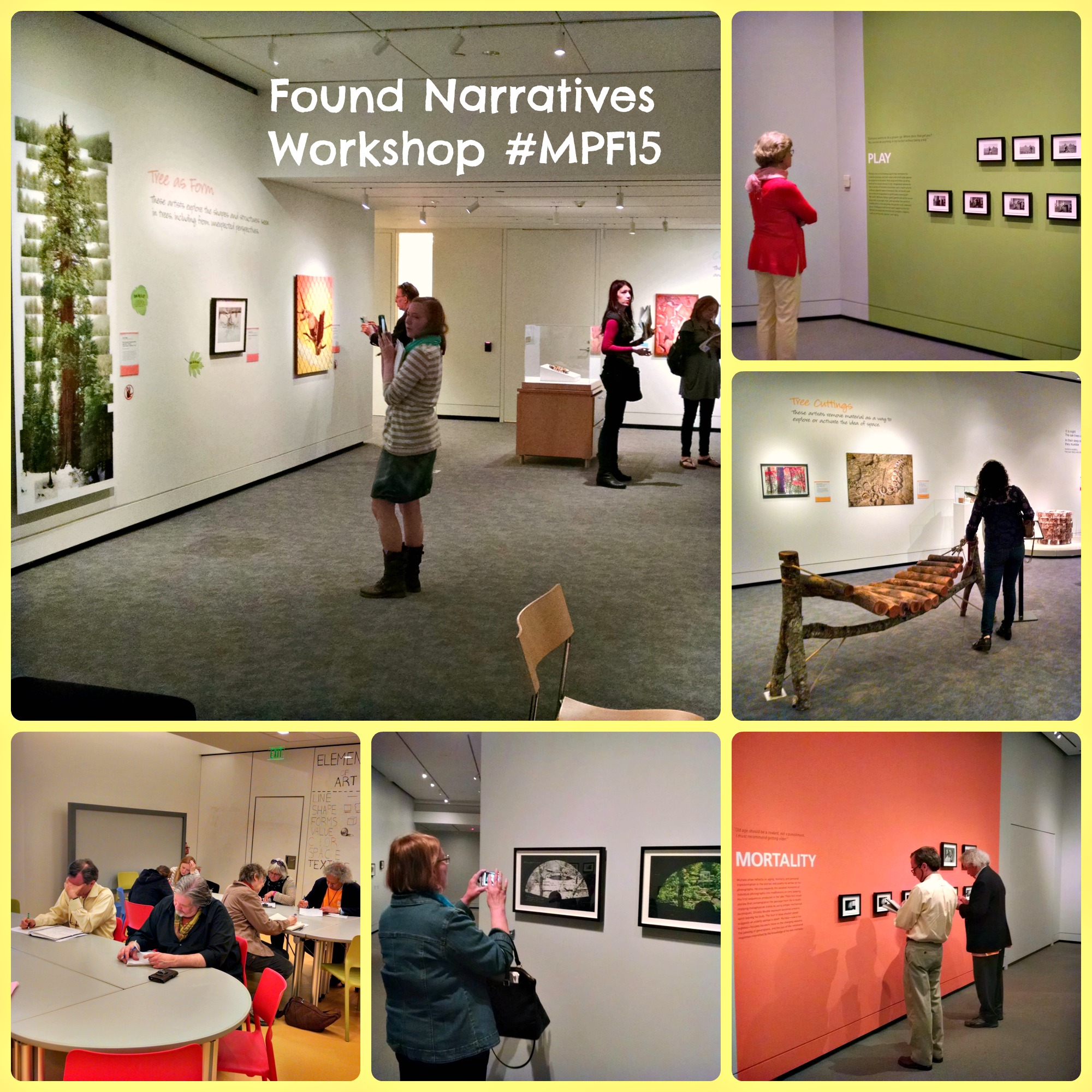
Stop 1: Duane Michals, Storyteller

I picked this show because Michals often treats his photographs as a storyboard: there’s a lot of narrative, sometimes with his own reflections, stories, memories, and poems written directly on the surface of the print. He has a playfulness to a lot of his work that I find appealing, and many of his themes tie easily into poetry (time, mortality, desire, wonder, discomfort, humor).

Stop 2: Branching Out, Trees as Art

This show focuses on the way artists use trees as both artistic material and as inspiration.  There are many more abstract works in this exhibition, and lots of themes about the ways humans relate to their environment.

On their own time, I encouraged participants to explore the rest of the museum as well and try this exercise again.
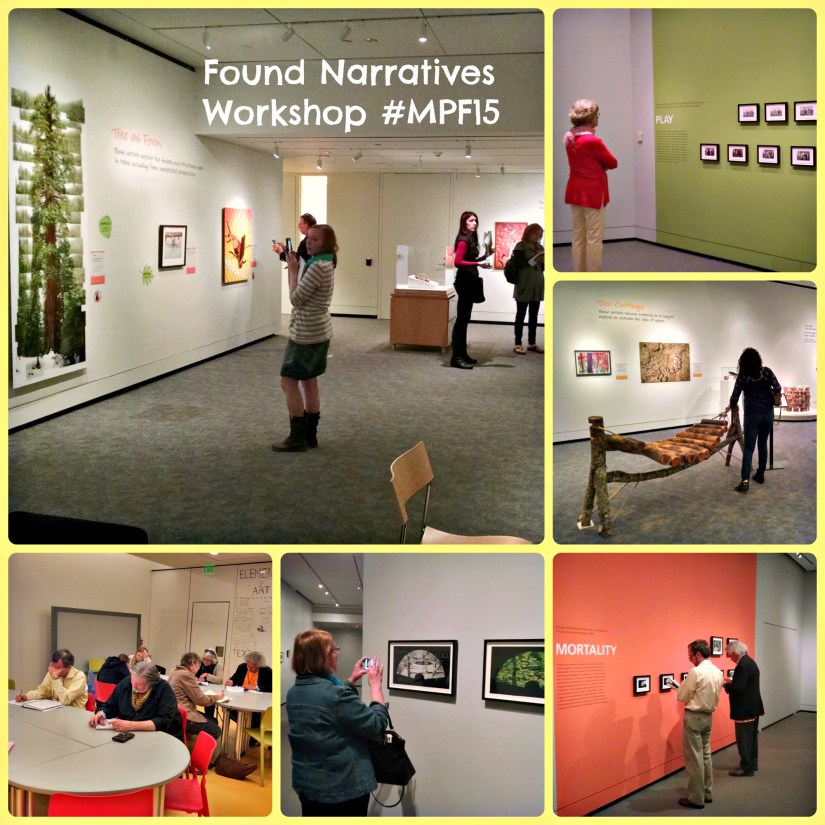
foundnarrativesmpf15

Possible Connections

There are a lot of ways to find a bridge that connects two seemingly disparate artworks.  The following list I had up on display for participants to consider as they began their writing:

  • Theme
  • Emotional reaction
  • Visual similarities
    • tone
    • texture
    • composition
    • color
    • movement
  • Resonances or dissonances
    • personal memories
    • references to artistic/literary tradition
    • using one artwork as a metaphor or frame for the other
    • timelines (cause and effect, before and after, etc.)

Participants then had about 15 minutes to work on their poems, and time at the end of the session to share their favorite lines (or the whole poem if it was short).  About half the workshop chose to share, and I was really impressed with the vivid language, the fantastic imagery, and the unusual connections they made.  I was also pleased, amused, and a little surprised that a few people chose an interactive element (an amadinda, similar to a log xylophone) instead of an artwork for their second piece.  I had, after all, asked them to find a piece that ‘sang’ to them–a few took me quite literally!

Do you find visual art a stimulus to your writing? Would you try this exercise or share it with your students/writing group? Have you tried it and do you have a result to share?  Add your thoughts to the discussion in the comments below!

Uncategorized

May 1-3: Poetry, the sea, and me

masspofest15logoThe Massachusetts Poetry Festival is this weekend, and I’m geared up and ready to go! If you’ll be in Salem for the festival, here are places to find me:*

Friday

1:15 pm – “Because, the Internet” workshop
3:30 pm – Poetry meetup at Howling Wolf
7:30 pm – Headliner reading with Denise Duhamel, Nick Flynn, and Adrian Matejka

Saturday

9:30 am – “Edna St. Vincent Millay’s Massachusetts Poetry” workshop
11:00 am – “Writing Sound to Sound” workshop
sometime between 11 am – 2 pm – Poetry Carnival
12:15 pm – “From Zero to One” panel
2:00 pm – “Narrative Poetry” workshop with Naugatuck River Review
3:15 pm – either “Flatline Poetry” or “Aloha, Winter. Aloha, Spring.” readings
7:30 pm – Headliner reading with Rita Dove and Richard Blanco

Sunday

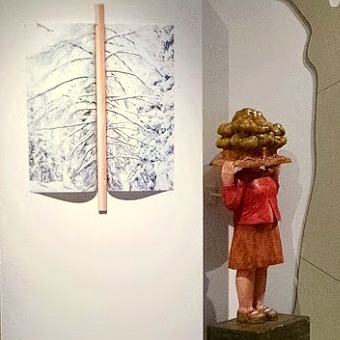
A view of Branching Out: Trees as Art from the Peabody Essex Museum
A view of Branching Out: Trees as Art from the Peabody Essex Museum. Photo by Meg Winikates.

10ish am – Paint Chip Poetry and other art activity drop-ins at PEM

11:30 am – “Found Narratives” workshop led by me! The workshop is currently sold out, but there’s a waitlist available, and it’s always worth turning up day-of in case there are no-shows.  Hope to see you there!

1 pm – either Rita Dove reading or “Shakespeare’s *itches, a Poetry Musical”
2:30 pm – Headliner Jorie Graham and Stephen Burt reading

If I’m not where I’ve said I’ll be, I may be hanging out at the art activities, or walking down to the waterfront for a brain break, because when the ocean’s that close, why not take it in?

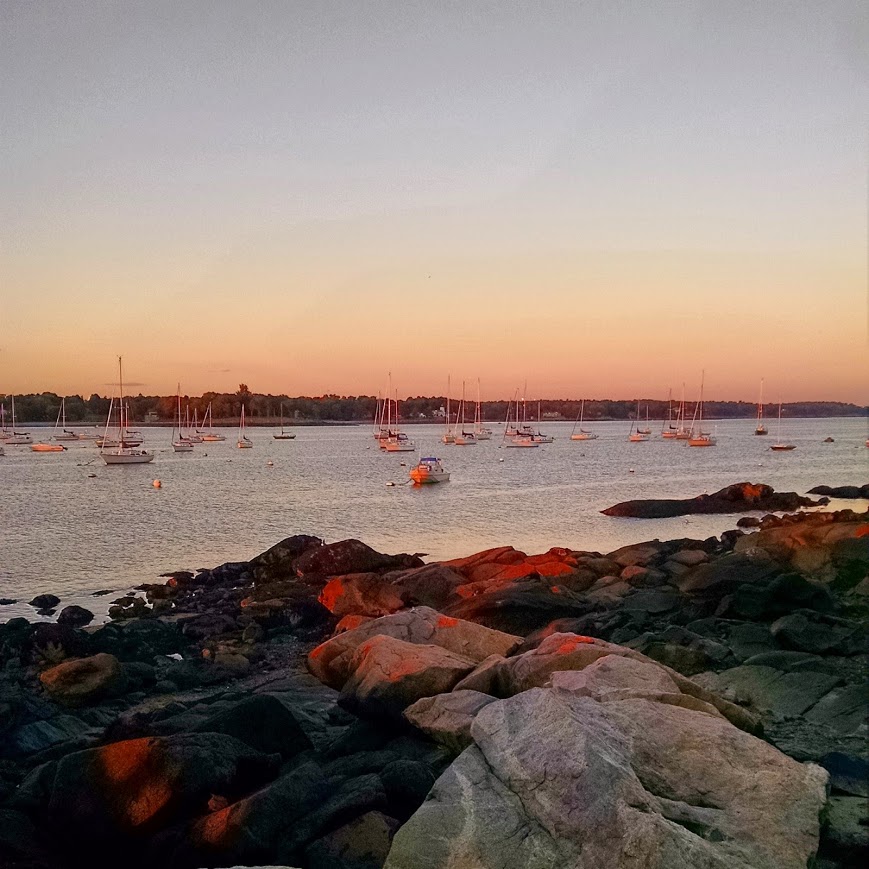
salemwillowssunset
A view from the Willows in Salem, September 2014. Photo by Meg Winikates.

*As with any festival kind of event, a schedule is more of a guideline than actual rules. I reserve the right to be a poetry pirate and sail off on a different tack if that’s how the wind blows on the day.  🙂

Uncategorized

“Mill Brook” & Happy National Poetry Month

You didn’t think I’d let more than a few days of National Poetry Month pass without comment, did you? I celebrated the first week by diving headfirst into Mary Oliver’s latest volume, Blue Horses, which I adored, and also I’m gearing up for leading my session “Found Narratives” at the Mass Poetry Fest in May.  Finally, I’m doing my best to participate in the ‘poem a day’ challenge.  While I have been taking some of my themes from the challenge they’re hosting at Writers’ Digest, I’ve also been going where my whimsy takes me, so here’s a piece I’m fairly happy with from this month’s early efforts:

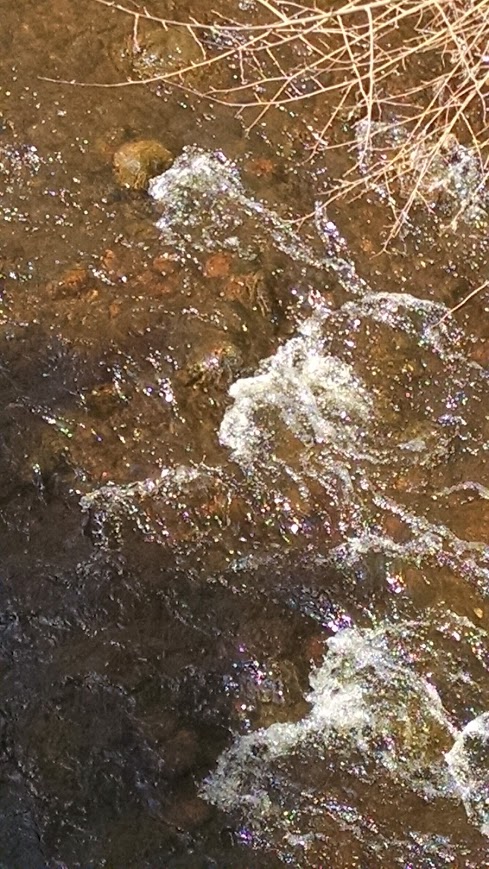
Mill Brook, from the Mill Street Bridge, Arlington, MA.  Photo by Meg Winikates
Mill Brook, from the Mill Street Bridge, Arlington, MA. Photo by Meg Winikates

Mill Brook
By Meg Winikates, April 2015

Missing the ocean, I have decided
to adopt the brook.
It is not especially approachable,
high-banked and fenced,
a little cantankerous at times
with the culverts and cobblestones
the city has gifted it.
But I am determined
to love its brown burbling,
its occasional patient mallard,
as we all await
the timid spring.

Uncategorized

Poetry and Photography: A Pair with Pop!

Last spring, I had a very intriguing conversation with my cousin, photographer and producer Michele Morris.  She was looking to put together a book of her photography and wanted to give it some extra spice–preferably with poetry.  Out of that conversation grew a number of ideas, several of which coalesced into our collaborative project, Palettes of Light.  (You may have seen me talking about this project elsewhere, if so, sorry for the repetition!  I’m working on this multi-platform social media balancing act.)

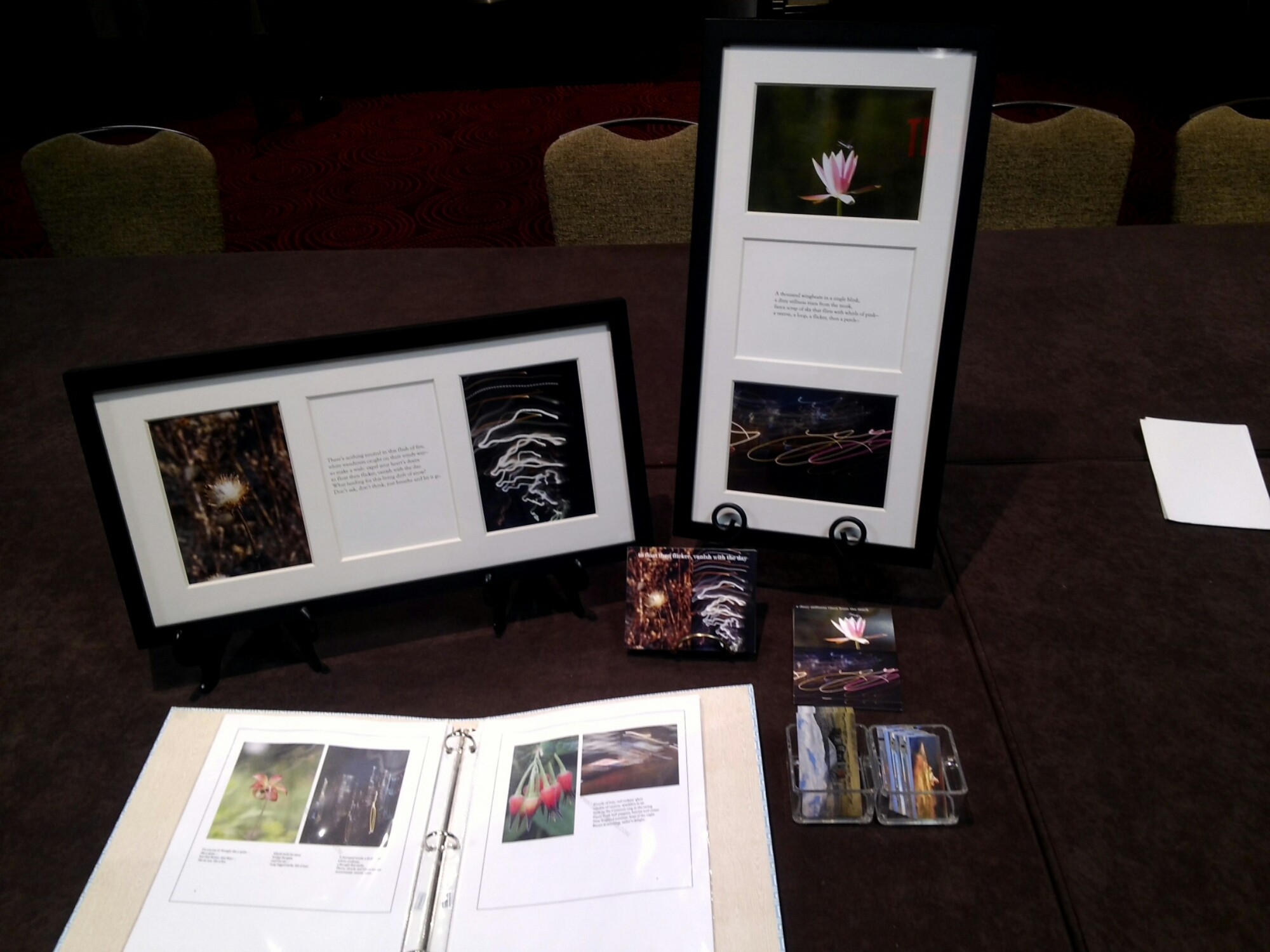
This project pairs Michele’s photos from two very different photography series based on colors, moods, and motion, and then incorporates my poetry as a way to tie the two together and provide a different way of looking at them individually.  So far, one of our triptychs has been part of the Venice Arts 21st Anniversary gala show, and we’re working hard on finalizing the book’s layout.

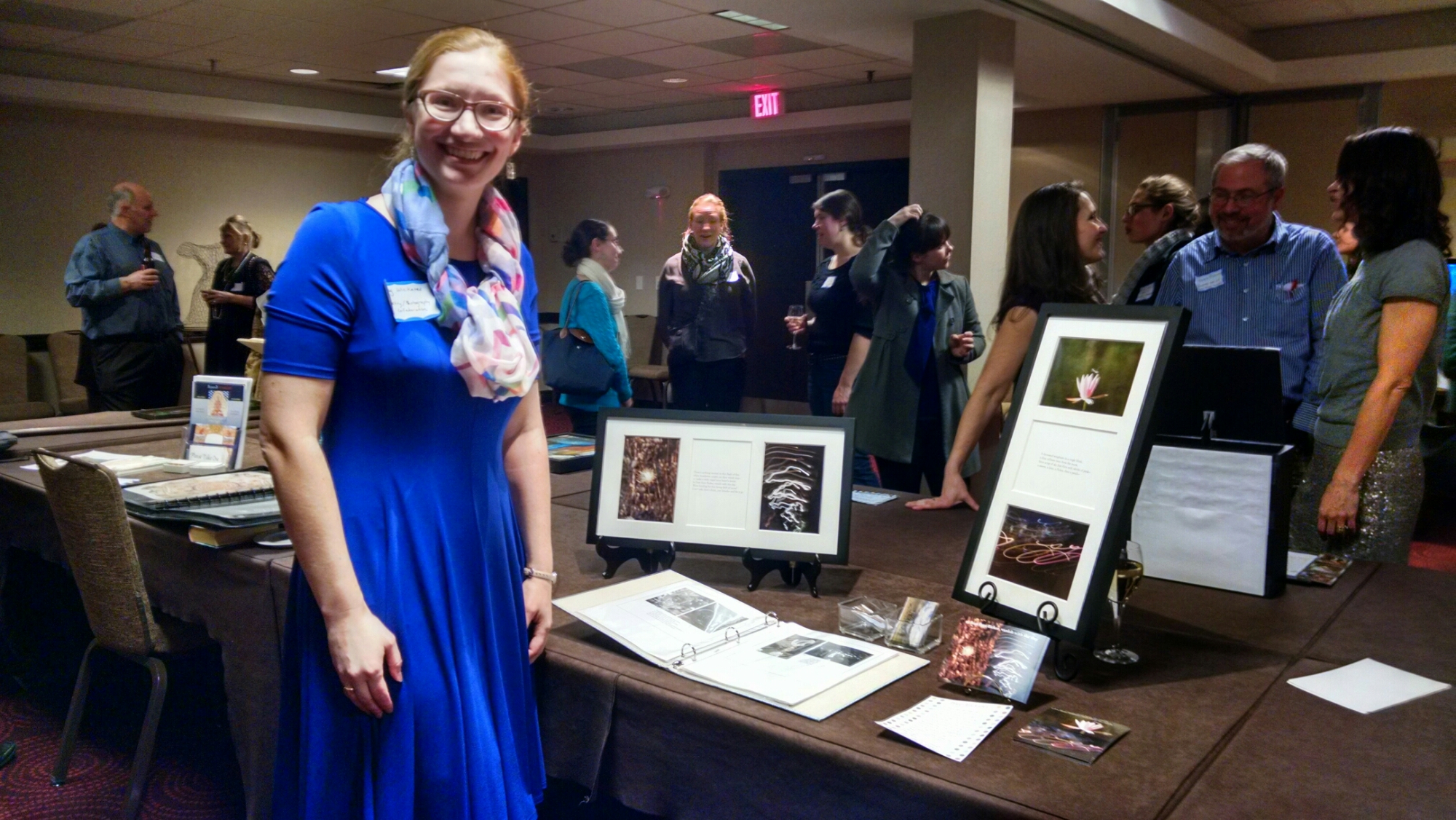
I also got to play a little ‘show and tell’ about Palettes of Light at the New England Museum Association’s ‘Pop-Up Museum’ event last night.  I’ll be posting about the Pop-Up Museum experience as a museum/education thing over on Brain Popcorn, but I wanted to get to do the author/poet geeking out here.

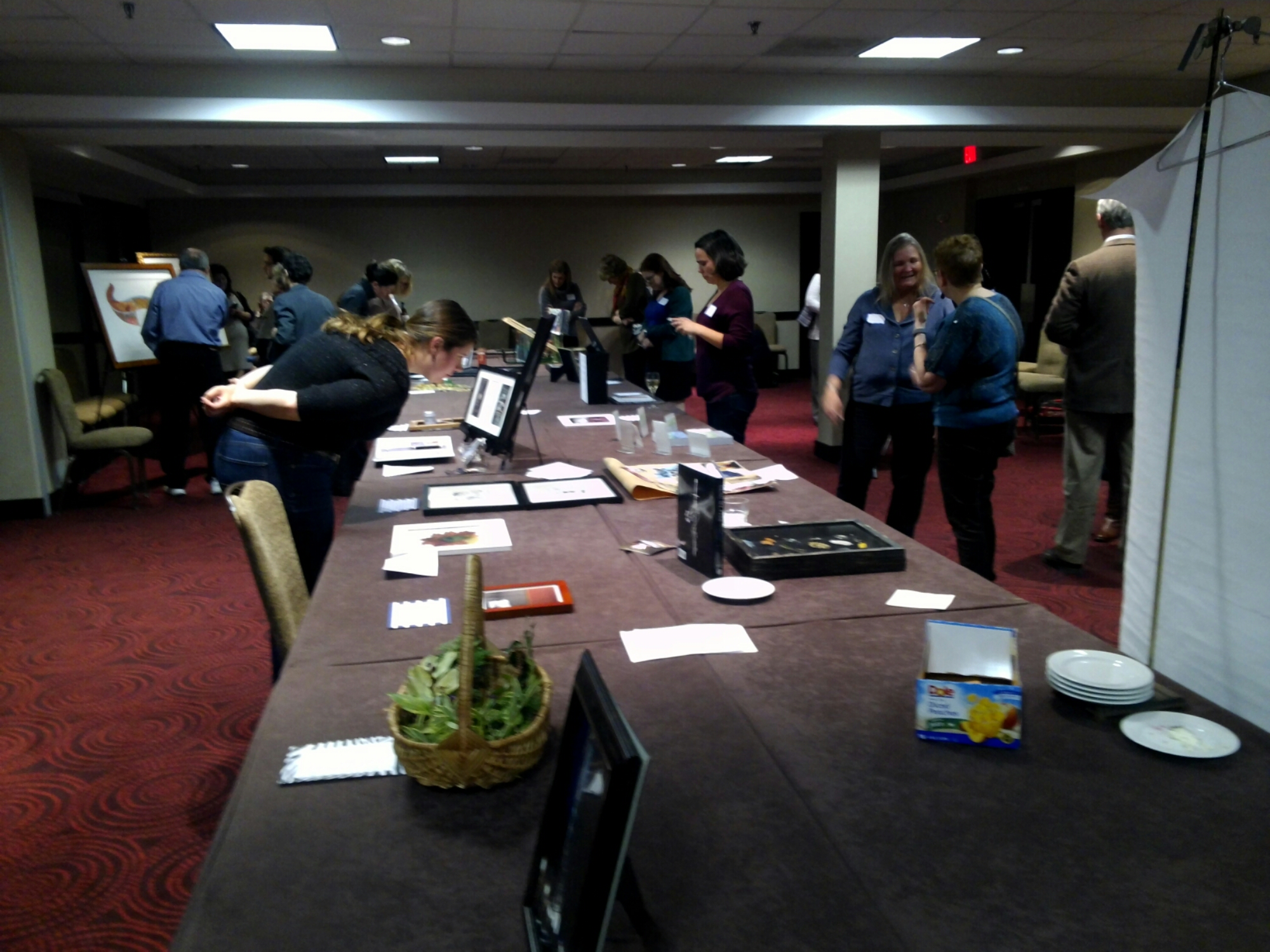
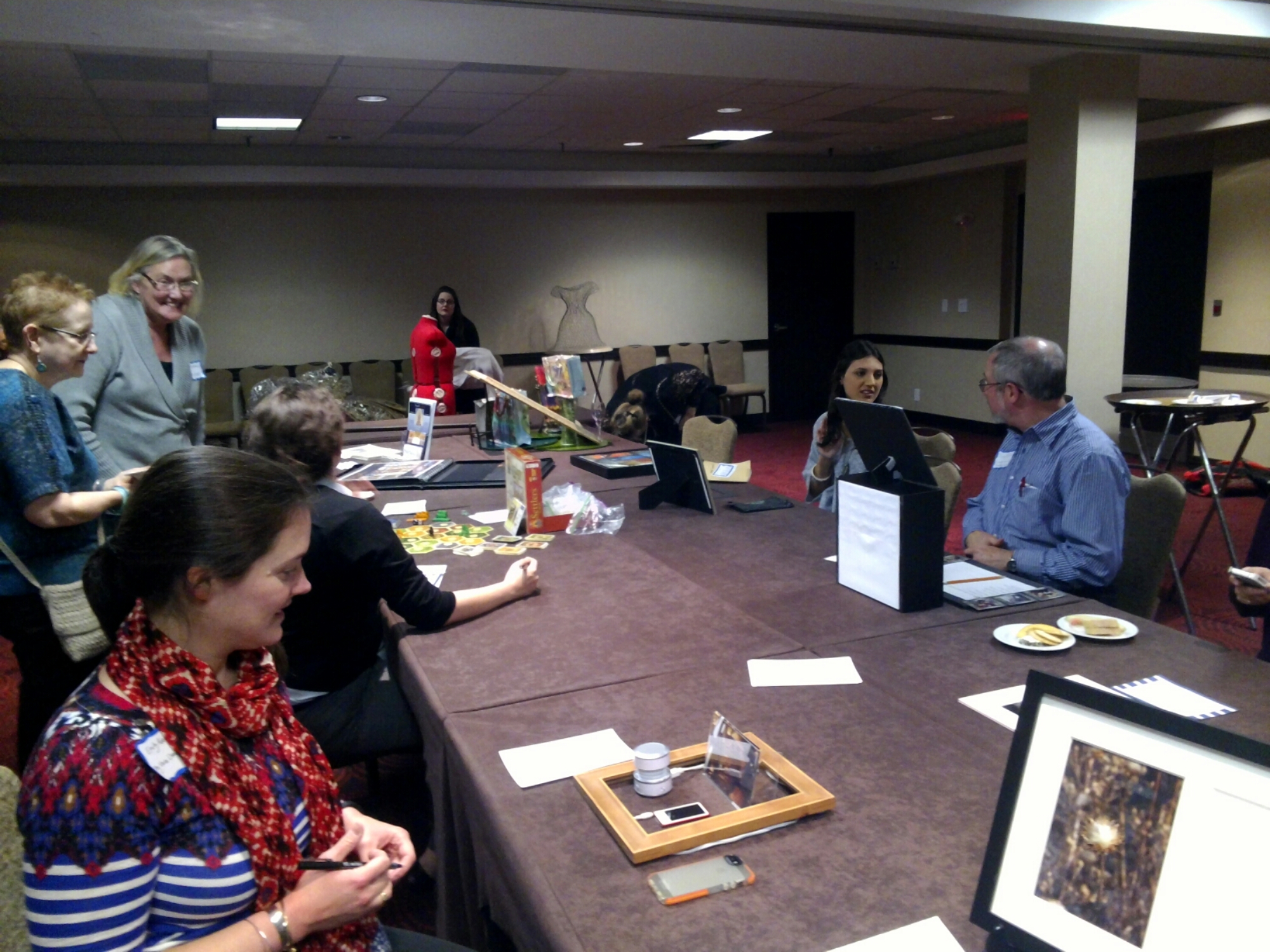
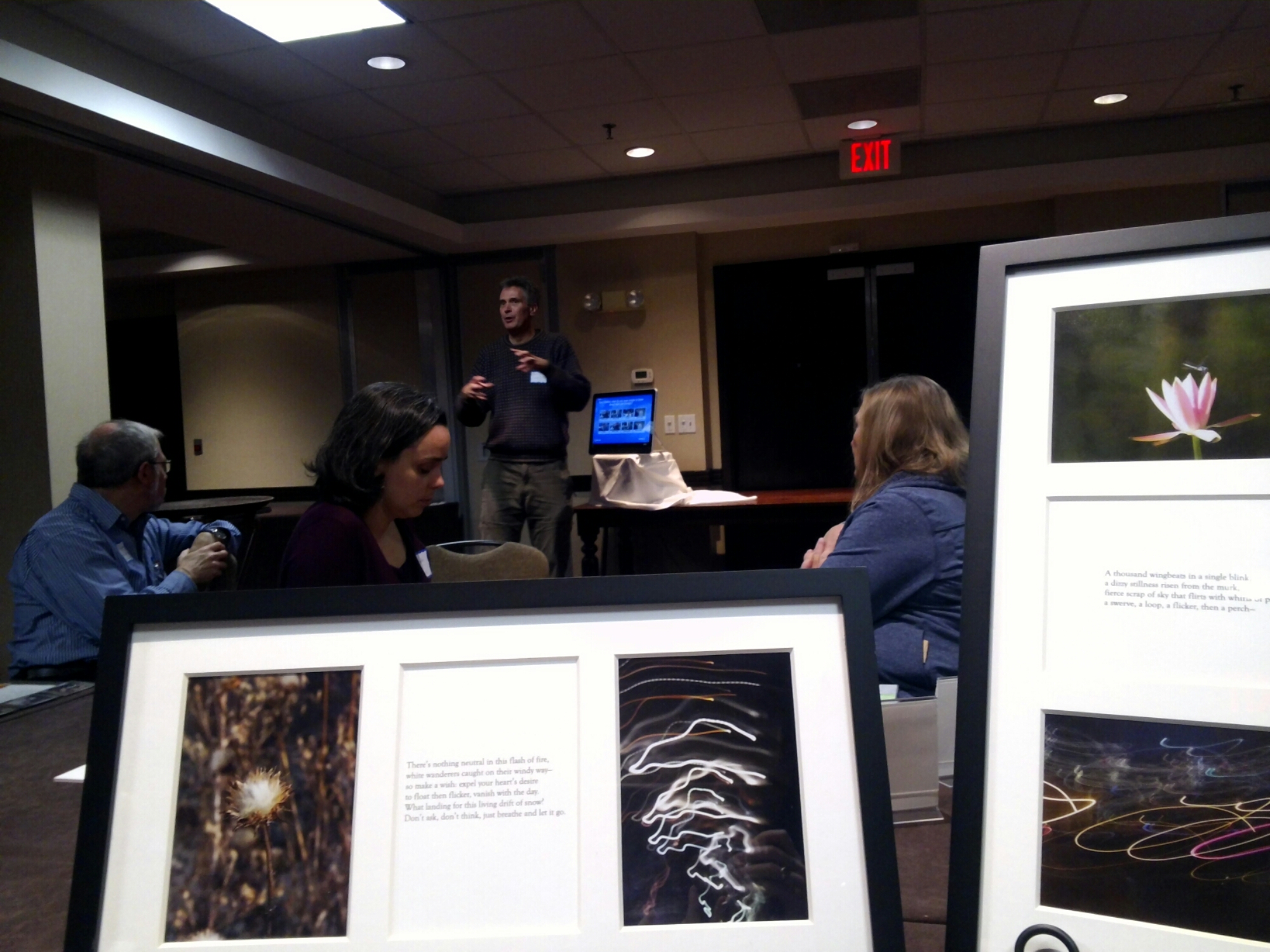
It was a real pleasure to get to see all the creative means of expression people brought with them: everything from a collection of Bond novels to Settlers of Cataan, from knitted handwarmers to a fully authentic 18th century dress and undergarments, from photography to painting to a playlist of radio and exhibition voiceovers. In such an eclectic mix, a pairing of photography and poetry fit right in, and it was fun to toast to the submission process with a painter, to talk haiku cycles with an interactive media designer, and to discuss dramatic diction with a science museum staffer. And, of course, to share Palettes of Light with people, which was really gratifying.

Here are a few photos from the event:
image

image

image

image

image

Uncategorized

Happy National Poetry Day

Muse of Poetry by Alphonse Mucha, file courtesy of wikimedia commons

A good friend informed me that it is National Poetry Day in the UK today.  It’s a long time until April, so one might as well enjoy a day while waiting for the month, therefore happy National Poetry Day to you all, UK denizen or otherwise.  This year’s theme is ‘Remember,’ and if you’re interested in finding out what they’ve got planned to celebrate in the UK, here are a few handy resources for you:

National Poetry Day’s Twitter, @PoetryDayUK
Official event pages from the Forward Arts Foundation and The Poetry Society
Nice opinion piece from the Guardian on “Why poetry belongs to us all.”

It looks like they’re taking the ‘remembering’ theme both ways–‘which poems do you remember by heart?’  and also ‘poems with a theme of remembrance.’  As sometimes happens in autumn I’m feeling a bit sentimental today, so here’s a snippet of a poem I’ve been working on, remembering my grandmother.

Anne Rita Carter
Anne Rita Carter

Nana’s Bathrobe
by Meg Winikates

Could probably use a wash by now,
but I’d rather inhale last year’s
germs than lose you again,
curious scent of cookies and
old cotton, the bath powder you
opened with a gleeful
“Won’t I stink pretty?”

A sentiment I never understood
until I wrapped myself in fuzzy blue,
years after your last hug.

Uncategorized

“At the Info Desk (Logan Airport, 10 pm)”

I always appreciate it when my writers’ group offers up a prompt that makes you  consider a new perspective.  This week’s best prompt was to write from the point of view of “someone who works at an airport.”

"Logan Airport, Terminal A at night" by Alan Myles.  Creative Commons, click for source
“Logan Airport, Terminal A at night” by Alan Myles. Creative Commons, click for source

At the Info Desk (Logan Airport, 10 pm)
by Meg Winikates

Departures, arrivals, wheels up, wheels down,
conveyor belts creak round and round,
handles up, wheels down.
“Cup of coffee? That’s three fifty,”
and her sigh’s a lonely sound–
Ten pm at Logan: parking up, buses down.
“Did I miss the Silver Line?”
“Five more minutes, head on down–
last exit on the left,” and
the wheels go round and round.
“Left my passport at the hotel!”
Customs up, taxis down.
Peculiar sort of silence as
the last flight touches down
and the echoes of the travelers
pulse like heartbeats round and round.


Uncategorized

The Power of Improbable Places

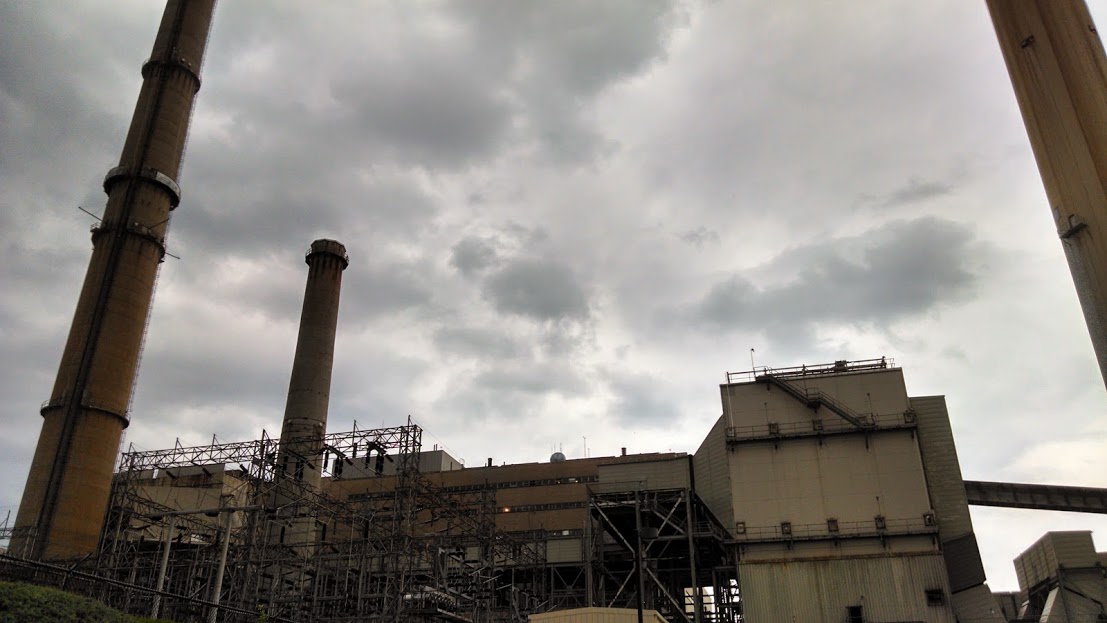
Poet Colleen Michaels is the brain behind the Montserrat College of Art’s Improbable Places Poetry Tour.  And this past Thursday, the improbable location for the latest set of poetry readings was Footprint Power’s recently decommissioned power plant on the edge of Salem Harbor.

Thunderclouds gloom over the quiet power plant.  Photo by me.
Thunderclouds gloom over the quiet power plant. Photo by me.

I was initially dubious and simultaneously drawn.  Having lived in Salem for over 4 years, just on the opposite side of Collins’ Cove from the familiar smokestacks, I’ve absorbed their shadows into the folds of my understanding of the local landscape, and grumbled occasionally about wind direction and sooty windows.  Like most people I know around here though, I’d never been inside.  Hydroelectric plants and windmills at Niagara and in the Netherlands and elsewhere?  Sure!  Coal and oil-fired behemoth in my backyard?  Nope.

So while I wasn’t sure what an evening of readings about ‘the work of power and the power of work’ would sound like, I was totally in for the chance to tour.

As it turned out, the readings were a fantastic variety.  Ranging from reflections on both the grit and the worth of daily grind to the concept of living on or off ‘the grid’ to poems inspired by this very power plant and the future of energy in the 21st century, the poems and poets offered a beautiful and thought-provoking set of mental images.

Check out more of the ‘cathedral of steel’ and its unusual evening occupants in the gallery below:

This slideshow requires JavaScript.

Local poet January O’Neil also has a nice write-up of the event, where she too highlights one of my favorite moments: the reading ended, not with a headliner or a speech, but a moment of silence that was filled by a recording of the actual crackle-rumble-hum of the turbines when the plant was operating.  It was a very cool kind of ghostly and really made me want to go home and write.

In the meantime, however, have a draft of a poem inspired by my own workplace, and what it’s like on a festival weekend as the visitors are heading out and you’re waiting for that last performer to finish packing up their gear, thinking about attendance numbers and what you’ll put in your program evaluation come Monday…

8 days a week

By Meg Winikates

I tell myself it’s a good ache,
the dull burn in my heels that says
the miles I’ve walked circularly
over this granite floor have made
a lasting impression on me.

My calves recall the frequent dash,
sore hands avert another crash
ff child and chair, of floor and phone,
and whisking fingers vamoose trash—
rub buzzing ears, block joyous drone.

Duty’s done, but wonder lingers—
Did I meet just eyes and fingers?
Save one bad day, help one smile grow?
Made one growler’s heart a singer’s?
Or worn my footprints on this stone?
Enough would be one ‘yes’ alone.

Have you ever encountered poetry or art in an unusual place that helped you to look at it differently?  What places inspire you?