…And signups are now available for my two workshops, among many other fantastic looking offerings, here. As always, there’s a great diversity of poets, styles, forms, and ideas represented in the schedule, and I’m really looking forward to attending this year, as well as leading the two workshops on Sunday morning.
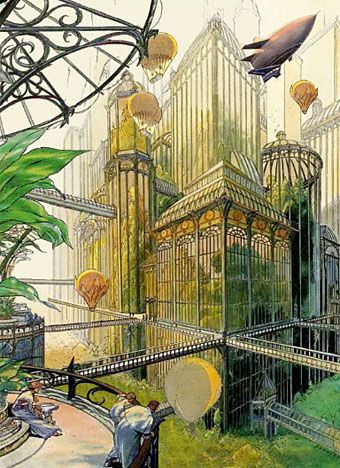
Solarpunk, the optimistic, eco-conscious, sci-fi of the near future, is a great fit for the imagination and whimsy of a poet. We’ll look at some examples of poems old and new that reflect the solarpunk ideals, and experiment with writing prompts. Bring your futurist dreams of conversing with whales, living in a treehouse, and using solar sails to reach Mars to this workshop.
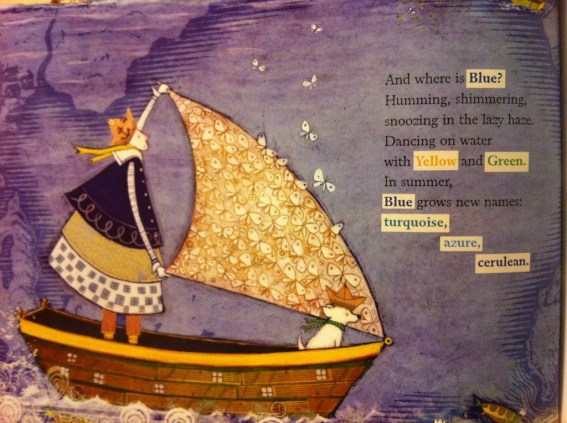
What makes a poem for children successful? Does it have to rhyme? Use short words? Feature at least one thing to gross you out? We’ll look at examples from a number of poets who write for younger audiences, and try out some of their techniques with a selection of writing prompts. Feel free to bring an example of one of your favorite poems for kids to add to the discussion!
Page from Red Sings from Treetops, written by Joyce Sidman and illustrated by Pamela Zagarenski
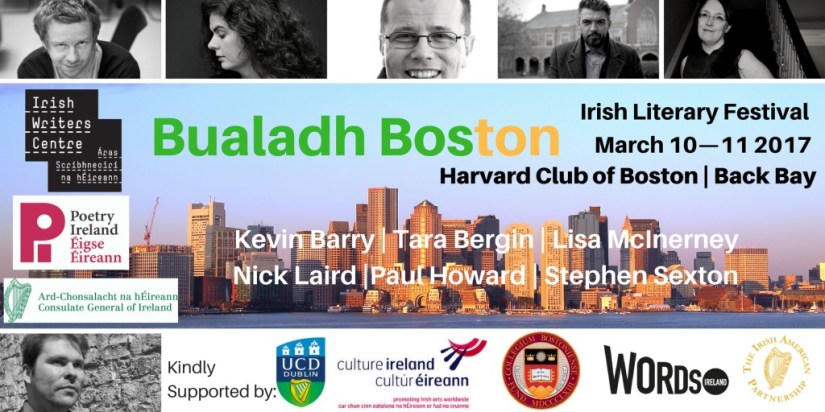
Apparently, “Bualadh Bos” is a phrase in Irish that means applause, and there was plenty of cause for cheers at the recent Irish Literary Festival, held for the first time at the Harvard Club in downtown Boston and arranged by a whole bunch of clever cultural ambassadors from the Irish Writers’ Centre, Poetry Ireland, and the Consul General of Ireland to Boston, Fionnuala Quinlan (@IrelandBoston). (My companion and I had a lovely conversation with Ms. Quinlan during the reception on Friday, and she’s delightful. I hope she has reason to remain posted in Boston and help arrange many such events in the future.)
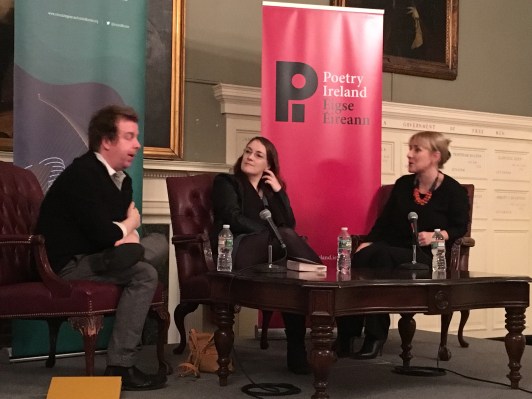
Kevin Barry, Lisa McInerney, and Fionnuala Quinlan in conversation during Friday’s opening event.
Barry read a section of one of his short stories, and McInerney from her recent award-winning novel, The Glorious Heresies. Both authors were excellent readers of their own work; funny, dramatic, and engaged with both the text and the audience, which meant that my companion and I both left the evening more interested in reading more of their work, rather than less, which can be the case with less skillful presenters.
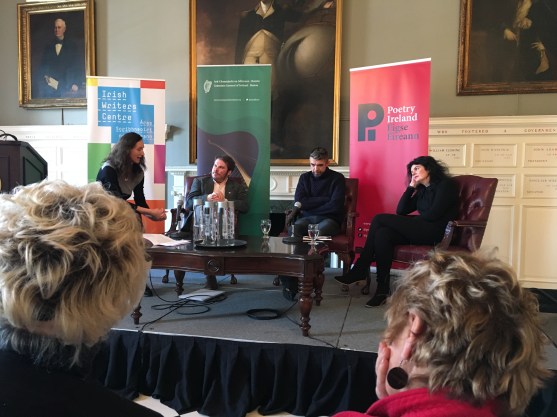
From right, Tara Bergin, Nick Laird, and Stephen Sexton in conversation with Maureen Kennelly of Poetry Ireland.
The next day we got to hear readings of some fantastic poetry from Tara Bergin, Nick Laird, and Stephen Sexton. Bergin’s poetry is lyrical, with an element of folklore-sound to it without ever directly referencing specific legends. You can read a review of her debut book, This is Yarrow, here. Laird’s poetry was sharp and wound round itself like an ammonite, and frequently referenced current events and recent scientific thought. You can read his article “Why Poetry is the perfect weapon to fight Donald Trump” here. Sexton’s poetry was often, though not solely, humorous; he noted as he began that when picking his poems for the event he discovered “[he had] a lot of hobbies for about three weeks,” which was long enough to work them into a poem or two before going on to something new. You can read one of the poems he read that day here: “The Curfew.”
Though my companion and I bought several books at the event, which I am reading with great pleasure, I also went and found more of their poetry after the event. My current favorite is Bergin’s “Appointment with Jane Austen,” especially appropriate as I shall shortly be undertaking a literary pilgrimage to Austen’s country myself.
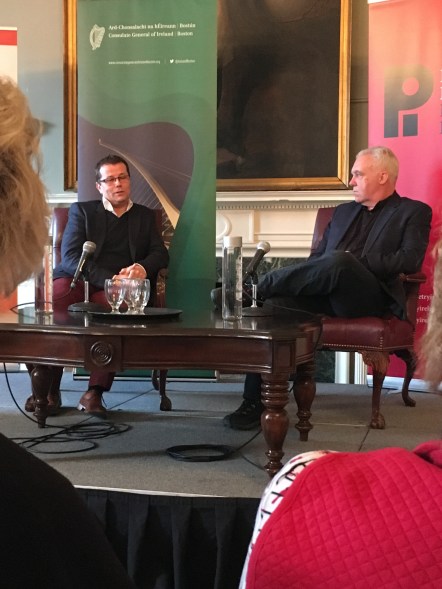
Paul Howard and Kevin Cullen
The last event of the weekend was Boston Globe columnist and journalist Kevin Cullen interviewing journalist and novelist Paul Howard. They spoke of everything from sports journalism and doping scandals to the success of Howard’s satirical main character, Ross O’Carroll-Kelly, in whose Homer-Simpson-esque adventures and foibles Howard keeps a running commentary on current events in Dublin and to a lesser extent, the wider world.
Overall it was a fascinating weekend, and I was only sorry that it seemed the event had not been widely enough publicized, as the room was moderately full but deserved to be more so on each of the two days. As it seemed many in the audience, like myself, were being introduced to most of these writers for the first time, the event definitely succeeded in its stated purpose to use Ireland’s literary offerings as a bridge to new audiences and new opportunities, and Boston was a perfect place to hold such a gathering. I will be keeping my eyes out for announcements of next year’s Irish Literary Festival, for sure.
So Arisia was a big, busy, beautiful mess of a weekend. I didn’t make it to all the panels I intended, I accidentally ended up in sessions that were awesome, and John Scalzi made me cry (in the good way).
I am not going to even try to cover everything, but here are a few highlights from this past weekend:
Nonstandard Paths to Magic
Honestly, I thought there would be more discussion of cool non-Latinate, non-Hogwarts, non-Western magic systems, but it was mostly a series of thought-provoking questions about the assumptions we make about magic, how it works, and who uses it. Some of my favorites:
Is magic transformative? If so, how does it change the user? How big are the changes, and how much of that depends on where in society the magic user starts?
Magic as ‘spiritual technology’ – do you have to believe in the tools to make them work?
How does magic-as-mystery (Tolkien) stack up against magic-as-textbook (Sanderson) and what are the strengths and weaknesses of each? When can you get a magical solution to a non-magical problem, or a non-magical solution to a magical problem (haul that ring to the volcano and throw it in, ’cause nothing else will unmake it!)?
Do you always need the good/evil dichotomy, when referring either to magic or to the people that use it? Where is the line between them, and is it the same for all people in that system?
Standard magic almost always comes with a price; should it? Is it a human thing, to feel like things ought to have a price attached? [and a corollary not discussed in the panel, but which I want to explore now: what if magic were an exhaustible resource, like fossil fuels, rather than renewable/constant/growing like the Force?]
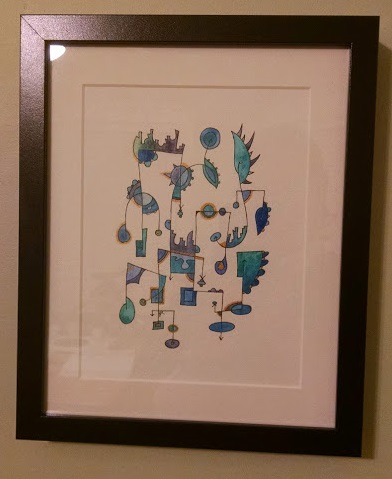
My new watercolor by Julia of Pelagiella Designs (link below)
Shifting the Language of SF
If you’re not super into the geekiness of language, scroll on. I *am* into the super geekiness of language, and there were points when I wanted to just throw up my hands and ask what the Klingon word for ‘surrender’ was. (I don’t actually think there is one, come to that. Klingons are not into surrender.)
This panel ranged wildly all over the discussion of language, from why you shouldn’t try to write dialect out phonetically, to the poetics of rhythm in language from different time periods, to what English might sound like if the Normans had never invaded (apparently you should read ‘Uncleftish Beholding‘ if you want to find out).
Here are a few of the panelists’ suggested ‘shortcuts’ to making your language not sound like 21st century English (with or without Tumblr-speak, a variation on netlanguage they didn’t get around to discussing, but I heard used by panelists in other sessions, because language):
Take an element of your speculative fiction (McDonald’s takes over the Western world and thus this fiction is all about fast food and consumer culture) and incorporate the ticks of that existing ‘language’ to create your new McPolitics, McFashion, and McTech.
Make it sound like a historical period instead. Have your aliens speak like Shakespeare, or your warp field engineers write reports like Fitzwilliam Darcy.
Use a poetic meter not standard to English (hexameter instead of pentameter). Caveat: Do not ever make your characters speak in rhyme, or your audience will hunt you down, if your editor doesn’t do it first.
Consider what the street slang of your alien/future tongue sounds like, as well as the cultured spaceship captain’s commands.
Mess around with the ‘easy’ grammar; change up prepositions, use synonyms not common in daily speech, use similes that don’t exist yet (“Your hair smells like freeze-dried rheolene fibers”). Use only the 1000 top words in the language and build the words you need additively like German does (‘glove’ translates to ‘hand-shoe,’ and no, I am not making that up).
Complexities of Voice
This built really nicely off the above language panel, and also one I went to on character interactions, which was a little basic but still interesting. (One did get the feeling that some of the folks in the audience asking questions were young, and as interested in getting ideas on how to interact in real life as they were trying to get their characters to talk to each other.) The best tips from this panel:
Read your work aloud. Have someone else read it aloud. Can you tell the characters apart?
Use styles that suit the kind of character you’re building. Think about levels of formality, slang and syntax, long sentences or short ones, incomplete thoughts or run-ons and tangents. Put all that info in your character cheat sheets with eye color, favorite food, and all that other background you need.
‘Borrow’ a real-world person for your voice (may want/need to ask permission, if you know them personally!) or ‘fancast’ your characters with appropriate actors. Does your character sound like Alan Rickman? Maggie Smith? Will Smith?
Avoid infodumps and mansplaining. Even if it ‘sounds’ like your character, very few people get away with talking in paragraphs.
Find and then listen to/read the stories and conversations of people who come from the background you’re trying to write. The Smithsonian, NPR’s StoryCorps, and the Library of Congress are all good places to start for free oral history sources.
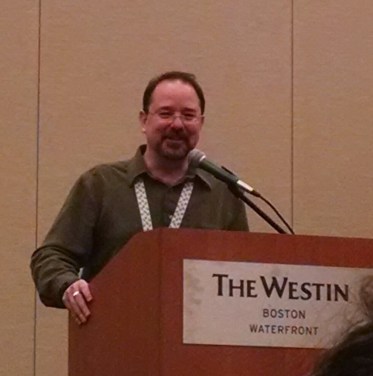
Listening to John Scalzi read hilarious excerpts from some cool new projects we’re forbidden to talk about, and then hearing him read “Raising Strong Women,” which is the part where I cried. (So did he.)
I bought one of Julia Burns Liberman‘s beautiful abstract story/watercolor paintings (looks awesome in my dining room!)
Saw an incredibly cool wood-turning demo by artist guest of honor Johnna Klukas
Got a great list of recommendations for places to read speculative poetry (and some specific poems/poets to follow) from the folks on the “Speculative Poetry is Awesome!” panel. You can find a bunch of those recommendations collated on Twitter under the hashtag #poetrypanel (though some of the tweets seem to have disappeared? If you click through to AJ Odasso’s individual feed, they’re still there)
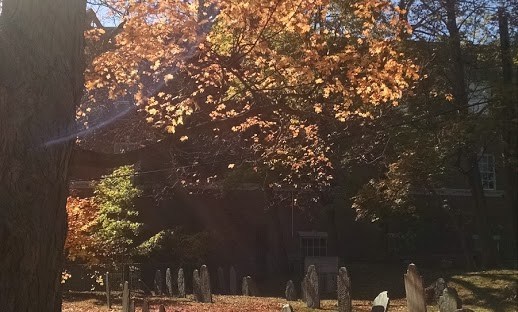
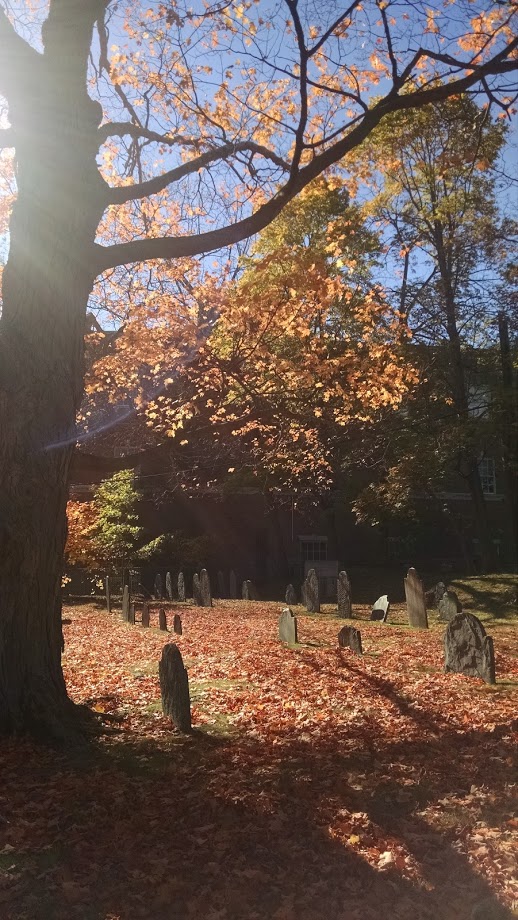
Graveyard, Arlington MA, October 2015. Photo by Meg Winikates
It’s autumn, and despite being an agreeably insane sort of busy right now, I had a chance to go out at lunch today and take in the seasonal delights. Peak foliage around town was actually probably the end of last week, but there’s still a lot of gorgeous to be had, and that brilliant invigorating bite in the breeze today is the sort that makes me glad to be alive.
And so in celebration of my favorite season, have a poem by fellow New Englander Emily Dickinson!
Besides the Autumn poets sing (131)
Emily Dickinson, 1830 – 1886
Besides the Autumn poets sing,
A few prosaic days
A little this side of the snow
And that side of the Haze –
A few incisive mornings –
A few Ascetic eves –
Gone – Mr Bryant’s “Golden Rod” –
And Mr Thomson’s “sheaves.”
Still, is the bustle in the brook –
Sealed are the spicy valves –
Mesmeric fingers softly touch
The eyes of many Elves –
Perhaps a squirrel may remain –
My sentiments to share –
Grant me, Oh Lord, a sunny mind –
Thy windy will to bear!
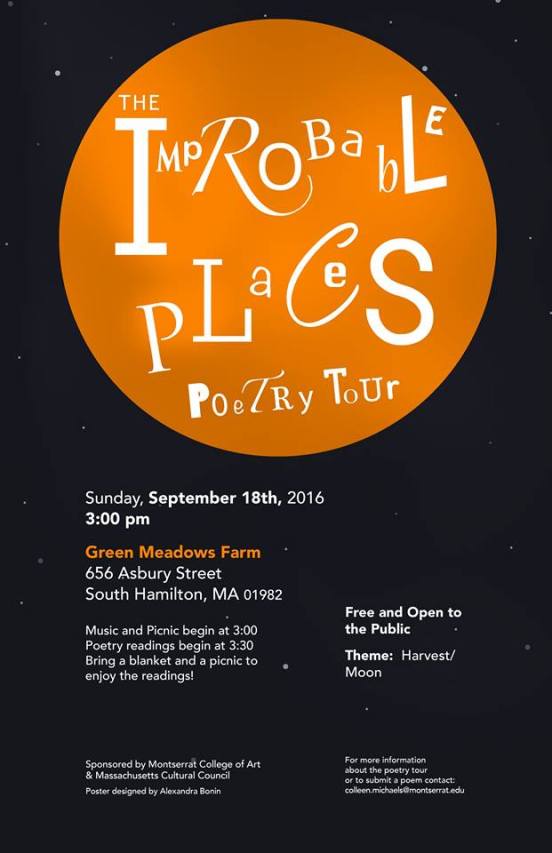
If you’re hungry for more autumnal poetry, you might want to check out this Wednesday’s Improbable Places Poetry Tour. Imagined, organized, and hosted by poet and Montserrat professor Colleen Michaels, this month’s stop on the tour is at Green Meadows Farm in South Hamilton, MA, and a gathering of poets will be reading a selection of their works on the theme of “Harvest/Moon”– including me!
I’ll be there to listen, bask by the bonfire under the moon, and read one of my own night sky pieces. Hope to see you there!
Happy summer, all! In the wake of last week’s downright delightful Supreme Court decisions on health care and marriage equality, I have less-momentous but much more immediately personal good news; I have four poems that are being published this summer on Window Cat Press.
Window Cat is an online literary journal run by a fabulous trio of poet/artist/editors, who are dedicated to bringing the work of young & emerging poets, writers, and artists to the wider world. Their mission is to “seek to celebrate, inspire, innovate, and play.” About the poems that will appear there, they said:
“We were charmed by the interplay of light and color in Michele’s photographs and thrilled by the rhythmic beauty of your words.”
You can imagine my key-smashing delight!
Publication date will be sometime mid-summer; as soon as the issue is live I will be posting the link here, as well as on Palettes of Light, as several of the poems to be published are part of that collection, with integral accompanying photography by the lovely and talented Michele Morris, as mentioned above.
In other happy news, I will also be reading this fall at Mass Poetry’s U35 reading series at the Marliave in Boston, on September 22nd. Hope to see you there!
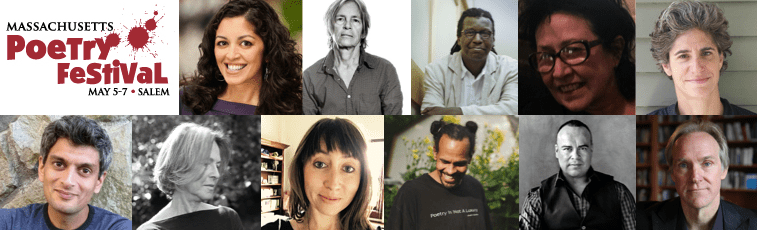
The Massachusetts Poetry Festival is this weekend, and I’m geared up and ready to go! If you’ll be in Salem for the festival, here are places to find me:*
Friday
1:15 pm – “Because, the Internet” workshop
3:30 pm – Poetry meetup at Howling Wolf
7:30 pm – Headliner reading with Denise Duhamel, Nick Flynn, and Adrian Matejka
Saturday
9:30 am – “Edna St. Vincent Millay’s Massachusetts Poetry” workshop
11:00 am – “Writing Sound to Sound” workshop
sometime between 11 am – 2 pm – Poetry Carnival
12:15 pm – “From Zero to One” panel
2:00 pm – “Narrative Poetry” workshop with Naugatuck River Review
3:15 pm – either “Flatline Poetry” or “Aloha, Winter. Aloha, Spring.” readings
7:30 pm – Headliner reading with Rita Dove and Richard Blanco
Sunday
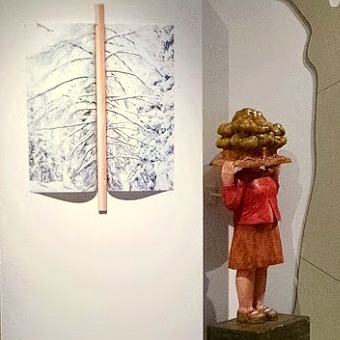
A view of Branching Out: Trees as Art from the Peabody Essex Museum. Photo by Meg Winikates.
10ish am – Paint Chip Poetry and other art activity drop-ins at PEM
1 pm – either Rita Dove reading or “Shakespeare’s *itches, a Poetry Musical”
2:30 pm – Headliner Jorie Graham and Stephen Burt reading
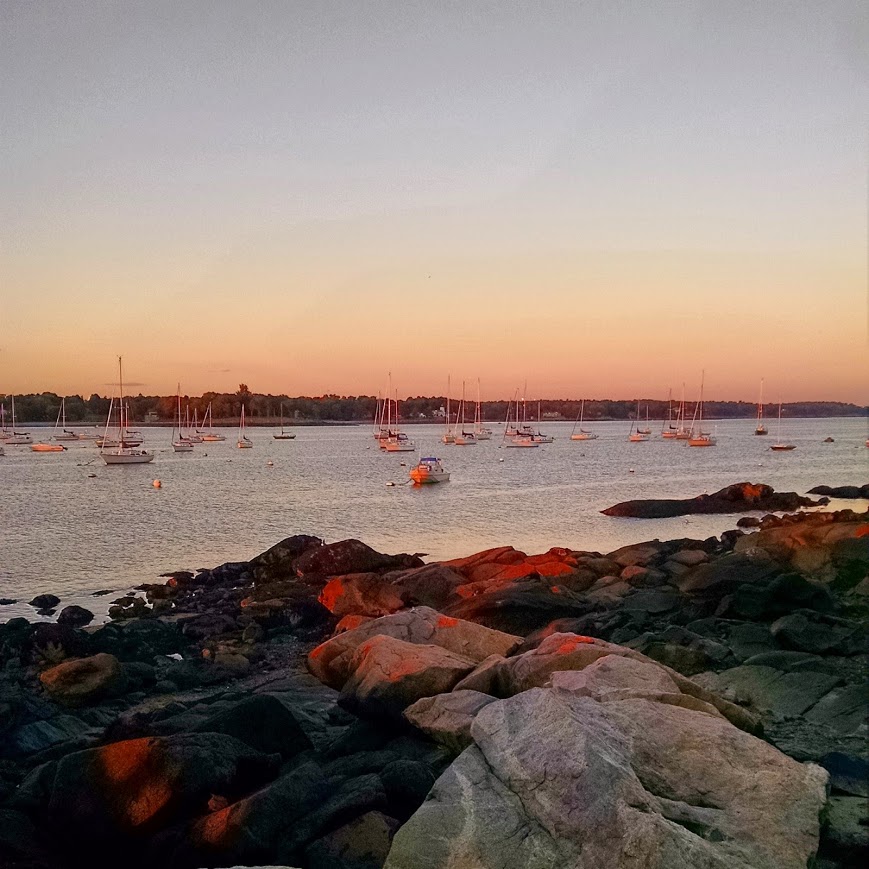
If I’m not where I’ve said I’ll be, I may be hanging out at the art activities, or walking down to the waterfront for a brain break, because when the ocean’s that close, why not take it in?
A view from the Willows in Salem, September 2014. Photo by Meg Winikates.
*As with any festival kind of event, a schedule is more of a guideline than actual rules. I reserve the right to be a poetry pirate and sail off on a different tack if that’s how the wind blows on the day. 🙂
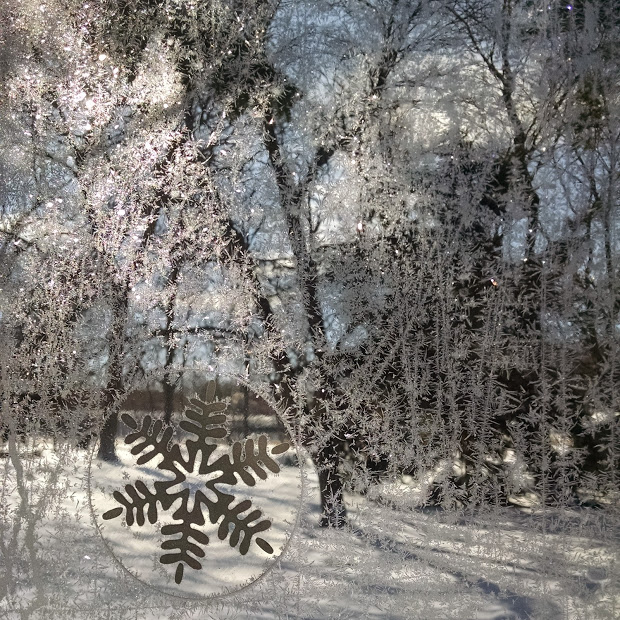
A shimmering visit from Jack Frost on the back porch last week. Photo by Meg Winikates.
February is here, and with it comes not only a shocking pile of snow, but also one of my favorite parts of the geeky side of the calendar: Boskone. Last year I got to have tea and coffee with Jane Yolen (wow!) and Bruce Coville (also wow!).
This year, if you have the time available, there’s a bunch of free programming on Friday afternoon (2/13), which looks like a really cool selection of stuff. I’m starting a new job so I won’t be able to make it before Friday evening at the earliest, but there’s no shortage of neat stuff to see the rest of the weekend. (Link above also goes to the rest of the weekend’s program.)
If you should happen to be at the convention on Sunday morning, don’t miss the Flashfic read-aloud competition at 9:30! 11 writers get 3 minutes each to read a story, get critiqued, and compete for the top spot, yours truly included. Last year’s stories were all fun and incredibly varied, and I’m looking forward to being part of the action this year. Hope to see you there!
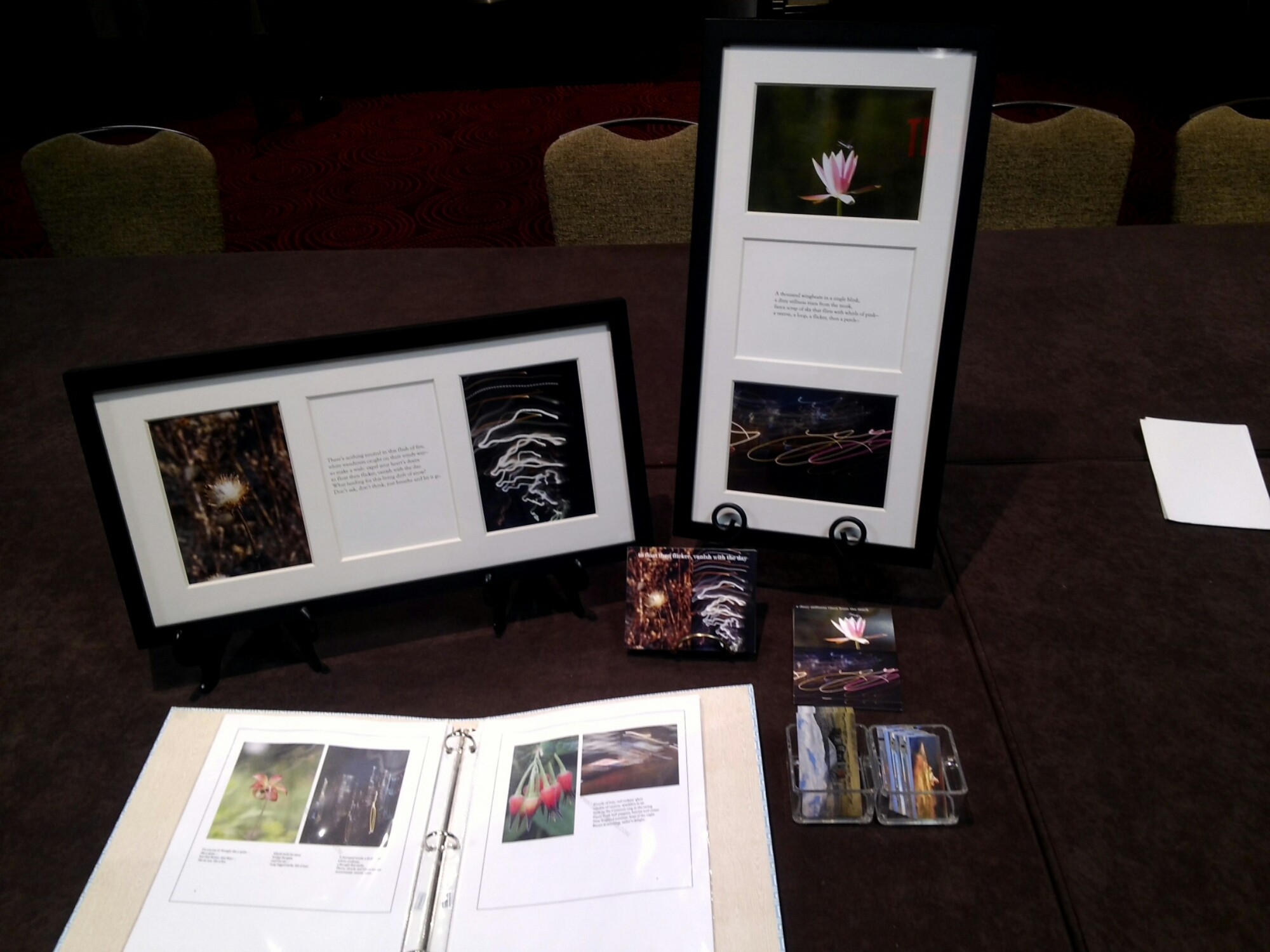
Last spring, I had a very intriguing conversation with my cousin, photographer and producer Michele Morris. She was looking to put together a book of her photography and wanted to give it some extra spice–preferably with poetry. Out of that conversation grew a number of ideas, several of which coalesced into our collaborative project, Palettes of Light. (You may have seen me talking about this project elsewhere, if so, sorry for the repetition! I’m working on this multi-platform social media balancing act.)
This project pairs Michele’s photos from two very different photography series based on colors, moods, and motion, and then incorporates my poetry as a way to tie the two together and provide a different way of looking at them individually. So far, one of our triptychs has been part of the Venice Arts 21st Anniversary gala show, and we’re working hard on finalizing the book’s layout.
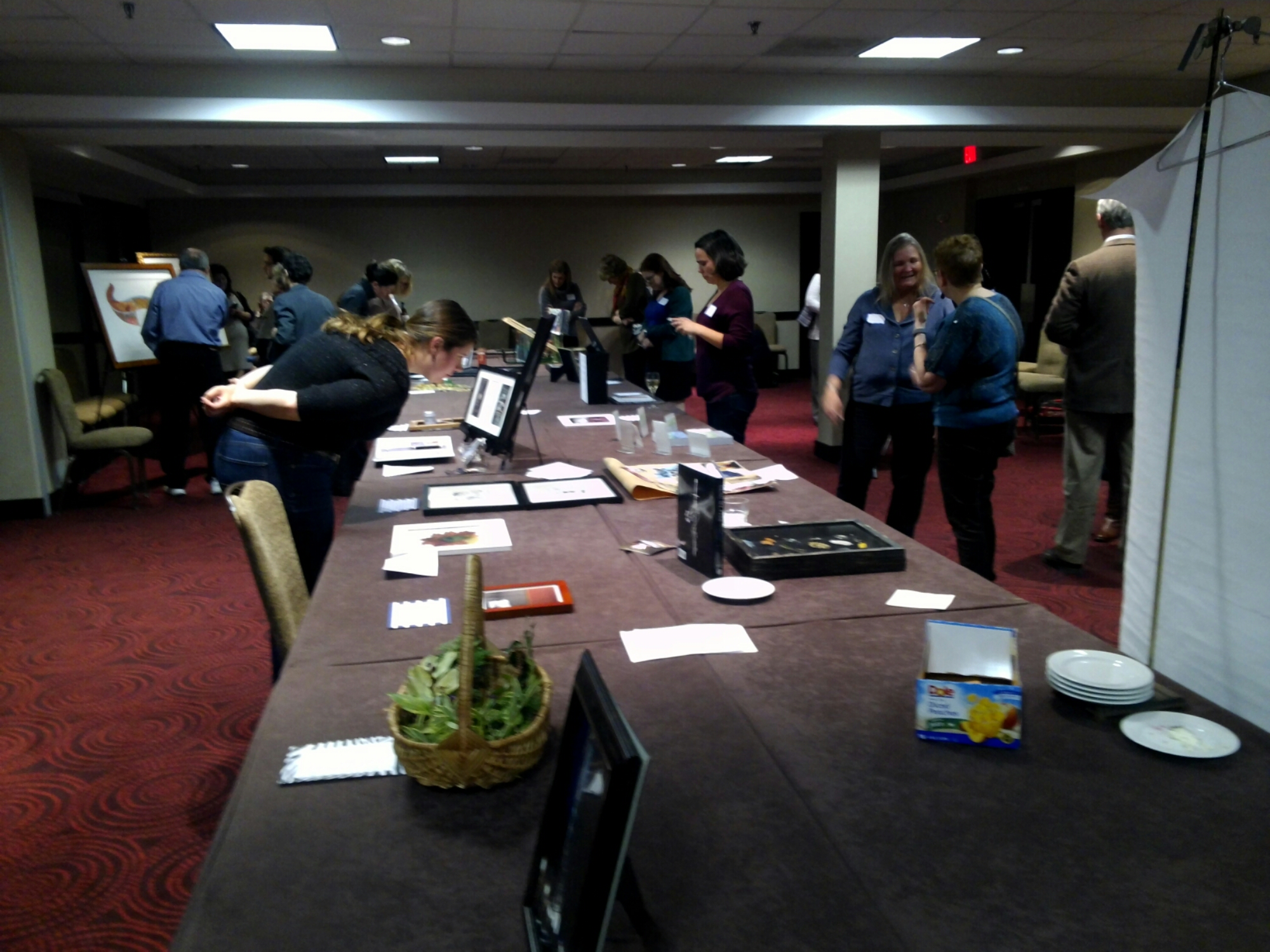
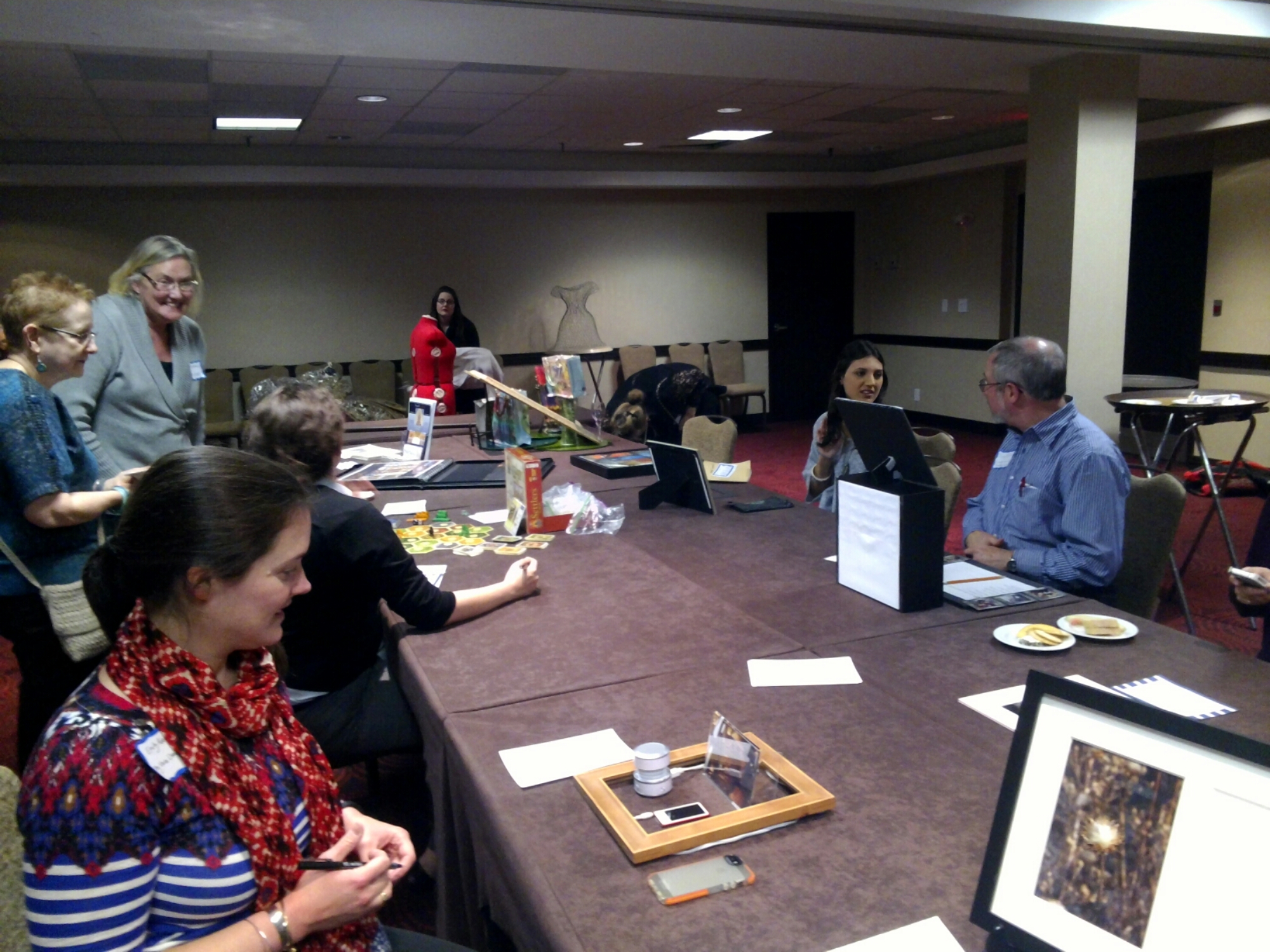
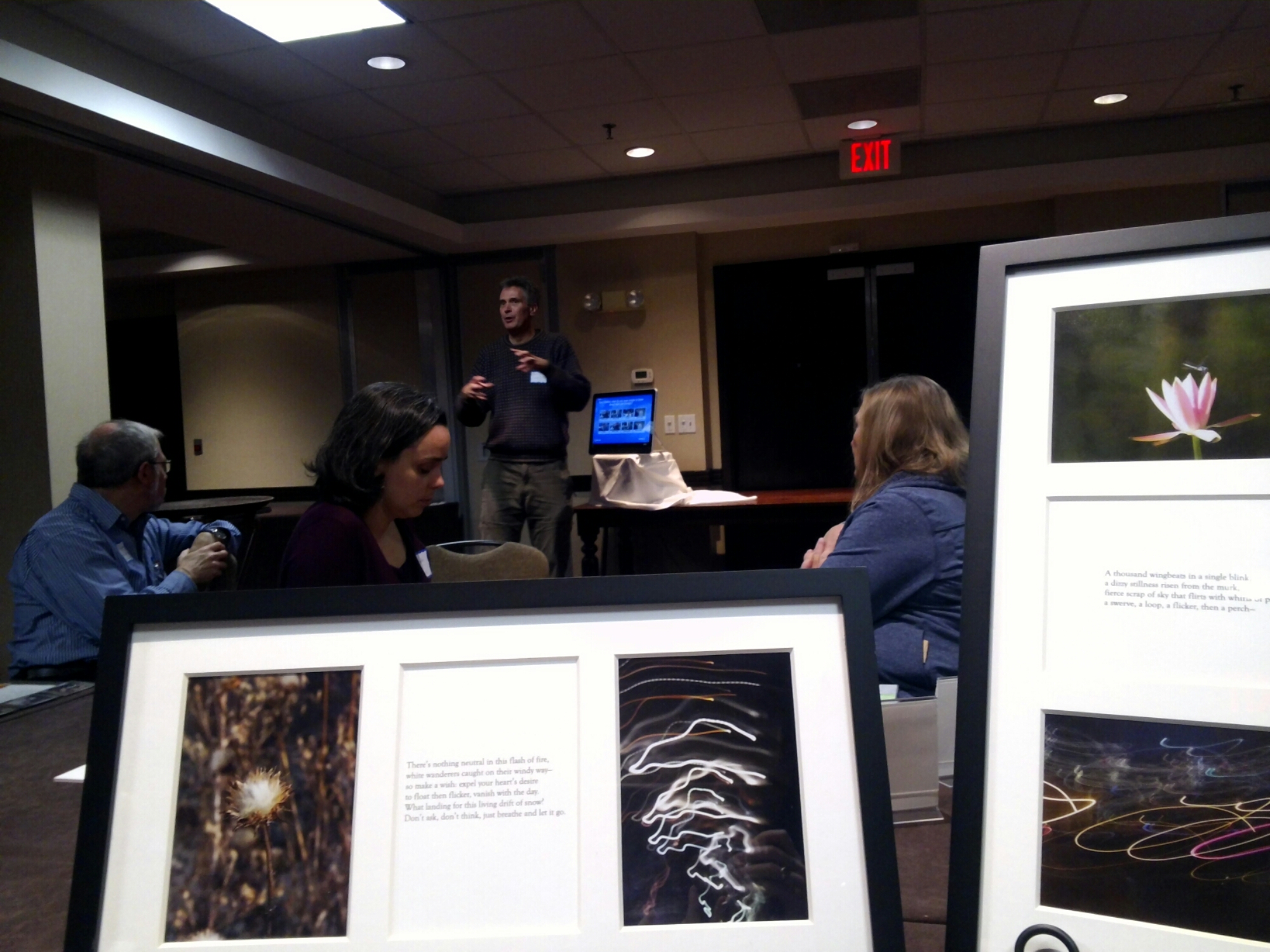
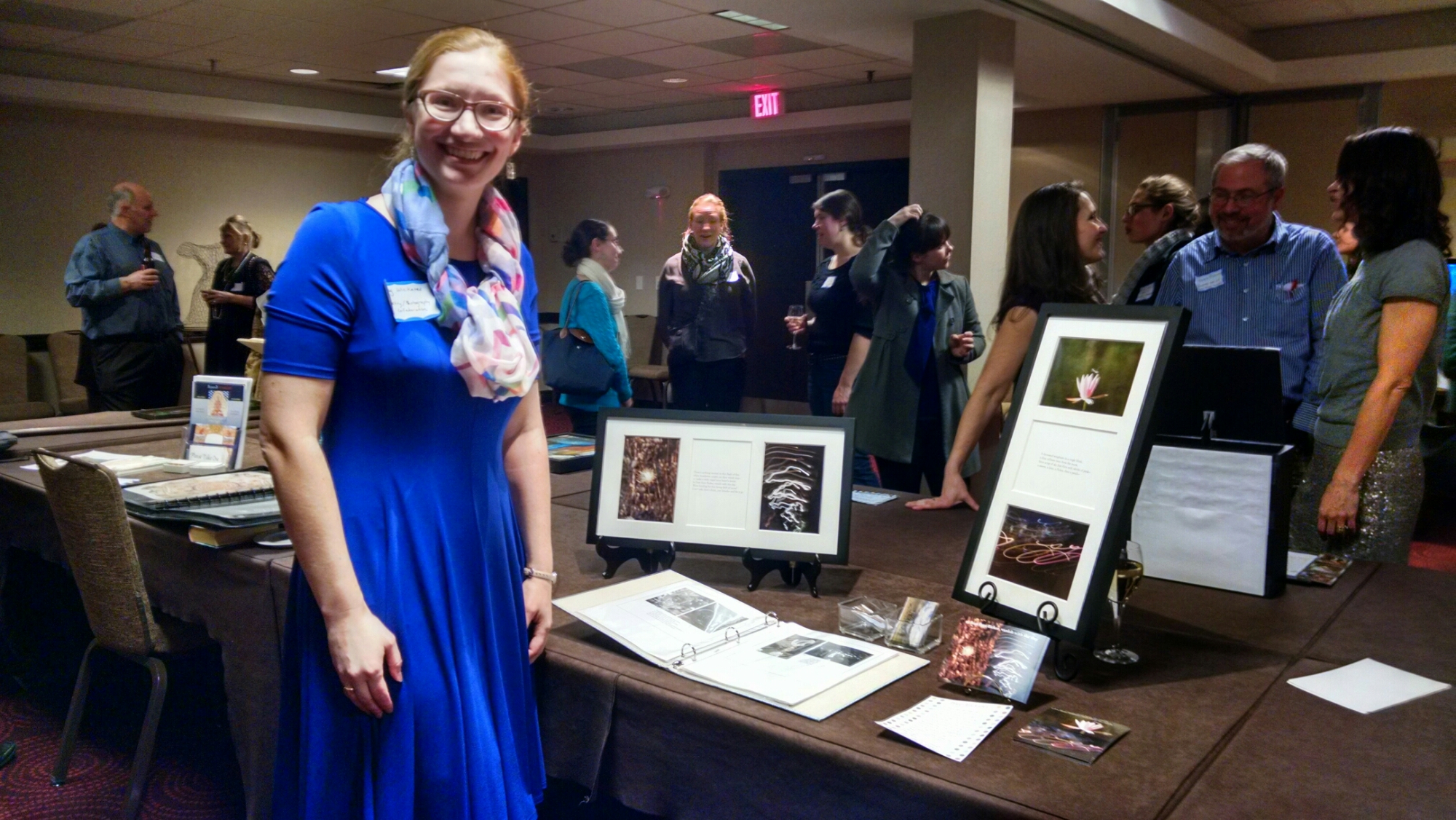
I also got to play a little ‘show and tell’ about Palettes of Light at the New England Museum Association’s ‘Pop-Up Museum’ event last night. I’ll be posting about the Pop-Up Museum experience as a museum/education thing over on Brain Popcorn, but I wanted to get to do the author/poet geeking out here.
It was a real pleasure to get to see all the creative means of expression people brought with them: everything from a collection of Bond novels to Settlers of Cataan, from knitted handwarmers to a fully authentic 18th century dress and undergarments, from photography to painting to a playlist of radio and exhibition voiceovers. In such an eclectic mix, a pairing of photography and poetry fit right in, and it was fun to toast to the submission process with a painter, to talk haiku cycles with an interactive media designer, and to discuss dramatic diction with a science museum staffer. And, of course, to share Palettes of Light with people, which was really gratifying.


 Sea Dreams and Time Machines