In my sixth year of attending the Massachusetts Poetry Festival, I once again listened to amazing poets that were new to me, reconnected with friends and colleagues, and came away with several pages of thoughts on poems I want to write (even a few scribbled draftlets!).
I also led two workshops on Sunday morning of the festival, the first of which was “On Beyond Giggles: Writing Children’s Poetry.”
Several of the folks in the room currently write poetry for children, others were interested in getting into writing for a younger audience, and all of us spent a little time thinking about who we were as children to get in the right mindset for the rest of the workshop.
Who were you when you were five years old? What did five year old you like to play? Who were your friends? Did you have a favorite toy or hideout or joke? Did you have siblings to play with, fight with, or play jokes on?
Who were you when you were seven? Did you have the same friends or new ones? The same fights? The same favorite color?
Who were you when you were ten? Were you out exploring your neighborhood? Getting into reading or sports or board games? Who were your friends? What were you afraid of? What made you laugh?
After calling our kid-selves back to the surface, we looked at some examples of great and effective children’s poetry, and talked about the poems we remembered from childhood ourselves, or from our kids’ favorites. Then we wrote, inspired by several prompts from one of my favorite kids’ poets, Jack Prelutsky. People came up with some fantastic verse, rhyming and free verse, inventive and imaginative, silly and sweet (and bittersweet too).
The slides from the workshop are here below. Thanks to all the hardy folks who attended on an early Sunday morning to talk and write playful poetry with me!
It’s spring, and I celebrated “Aprille with his shoures soote” by heading to England for a dose of literary pilgrimage, much in the spirit of my third and latest essay for all the sins, “And I must follow, if I can.” (Issue 3 is up in its entirety, and it’s great, go check it out!)
We hit London, Bath, Lyme Regis, Portsmouth, and Brighton in 6 days (whew!). Literary moments included seeing the musical of Matilda (Roald Dahl), a walking tour of literary London in Bloomsbury (Virginia Woolf and her cohort, Dorothy Sayers, Randolph Caldecott, TS Eliot, and more), saying hi to Shakespeare and Austen in the National Portrait Gallery, more Shakespeare, not to mention Beatles lyrics and more in the British Library, and that was just in the first two days. We also visited the Jane Austen Centre, the Assembly Rooms, and the Circus and Crescent in Bath, strolled the Cobb in Lyme Regis, and said “A little seabathing would set me up forever!” at least twice in Brighton. And I had a lot of Horatio Hornblower (CS Forester) feels at the Portsmouth Historic Dockyard. We also drank a lot of tea, and ate a lot of scones and Welsh rarebit. It was a stupendous trip.
Here are a handful of snapshots of some of the gorgeous, inspiring, hilarious, and memorable moments from my whirlwind Jane-Austen-inspired vacation:
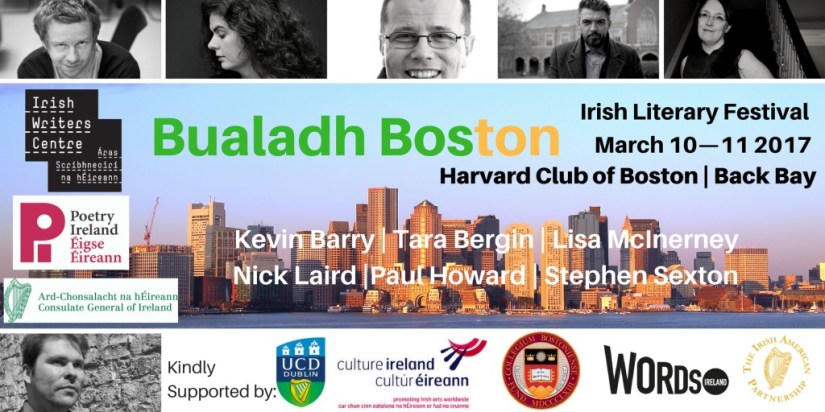
Apparently, “Bualadh Bos” is a phrase in Irish that means applause, and there was plenty of cause for cheers at the recent Irish Literary Festival, held for the first time at the Harvard Club in downtown Boston and arranged by a whole bunch of clever cultural ambassadors from the Irish Writers’ Centre, Poetry Ireland, and the Consul General of Ireland to Boston, Fionnuala Quinlan (@IrelandBoston). (My companion and I had a lovely conversation with Ms. Quinlan during the reception on Friday, and she’s delightful. I hope she has reason to remain posted in Boston and help arrange many such events in the future.)
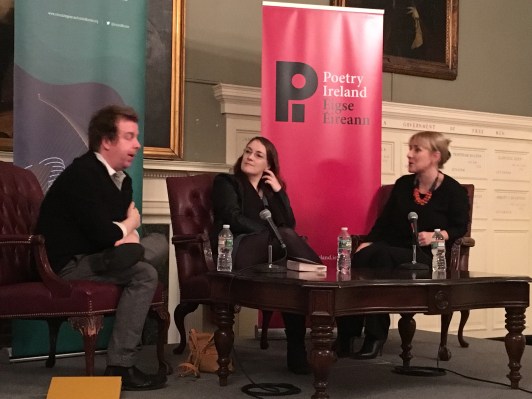
Kevin Barry, Lisa McInerney, and Fionnuala Quinlan in conversation during Friday’s opening event.
Barry read a section of one of his short stories, and McInerney from her recent award-winning novel, The Glorious Heresies. Both authors were excellent readers of their own work; funny, dramatic, and engaged with both the text and the audience, which meant that my companion and I both left the evening more interested in reading more of their work, rather than less, which can be the case with less skillful presenters.
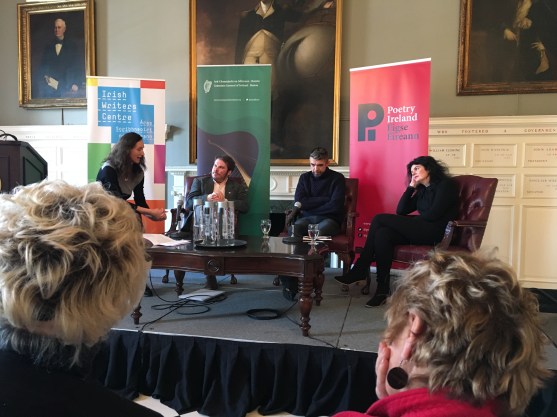
From right, Tara Bergin, Nick Laird, and Stephen Sexton in conversation with Maureen Kennelly of Poetry Ireland.
The next day we got to hear readings of some fantastic poetry from Tara Bergin, Nick Laird, and Stephen Sexton. Bergin’s poetry is lyrical, with an element of folklore-sound to it without ever directly referencing specific legends. You can read a review of her debut book, This is Yarrow, here. Laird’s poetry was sharp and wound round itself like an ammonite, and frequently referenced current events and recent scientific thought. You can read his article “Why Poetry is the perfect weapon to fight Donald Trump” here. Sexton’s poetry was often, though not solely, humorous; he noted as he began that when picking his poems for the event he discovered “[he had] a lot of hobbies for about three weeks,” which was long enough to work them into a poem or two before going on to something new. You can read one of the poems he read that day here: “The Curfew.”
Though my companion and I bought several books at the event, which I am reading with great pleasure, I also went and found more of their poetry after the event. My current favorite is Bergin’s “Appointment with Jane Austen,” especially appropriate as I shall shortly be undertaking a literary pilgrimage to Austen’s country myself.
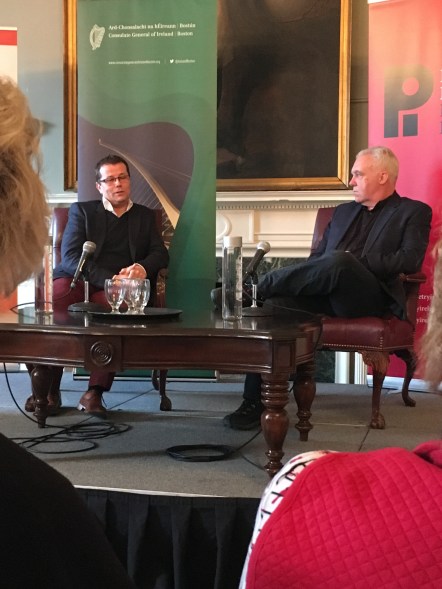
Paul Howard and Kevin Cullen
The last event of the weekend was Boston Globe columnist and journalist Kevin Cullen interviewing journalist and novelist Paul Howard. They spoke of everything from sports journalism and doping scandals to the success of Howard’s satirical main character, Ross O’Carroll-Kelly, in whose Homer-Simpson-esque adventures and foibles Howard keeps a running commentary on current events in Dublin and to a lesser extent, the wider world.
Overall it was a fascinating weekend, and I was only sorry that it seemed the event had not been widely enough publicized, as the room was moderately full but deserved to be more so on each of the two days. As it seemed many in the audience, like myself, were being introduced to most of these writers for the first time, the event definitely succeeded in its stated purpose to use Ireland’s literary offerings as a bridge to new audiences and new opportunities, and Boston was a perfect place to hold such a gathering. I will be keeping my eyes out for announcements of next year’s Irish Literary Festival, for sure.
I had a fantastic time at Readercon, so much so, in fact, that I totally failed to take pictures or tweet more than about twice. I did take about a thousand pages worth of notes, not just of the thought-provoking things people were saying, but of ideas that I was generating for stories, and things to keep in mind when revising stories I’m already working on. And clearly, there was a lot to absorb, which is why it’s taken me nearly a week to write up my reactions.
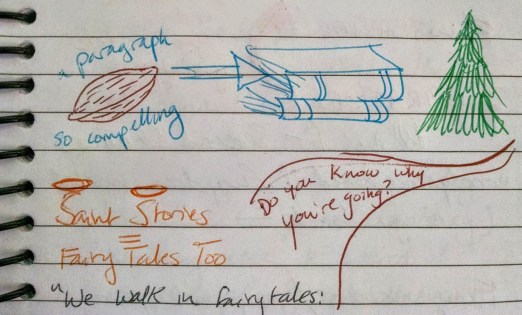
Not all my notes are this pretty. Many of them do contain doodles of rocketships, though.
Readercon is, of course, run by humans, well-intentioned yet possessed of blind spots, so there were a few moments in panels I attended where I winced. Others have covered those moments with more authority than I, however, and overall I was positively impressed with the level of dialogue and discussion in the panels I attended. (I wasn’t at some of the others that caused raised eyebrows.) Given Readercon’s reputation for listening to and responding to feedback, I hope next year will be better. Meanwhile, all my personal interactions with folks were fabulous, and I particularly enjoyed my two shifts at the Broad Universe table in the Bookstore room, getting to know my fellow New England broads.
The highest hilarity of the weekend for me was the “My Character Ate What?” game show on sci-fi fantasy and food. I went because I so enjoyed watching that video of Mary Robinette Kowalbreaking Pat Rothfuss’s brain, and I was sure she would not disappoint here either. She didn’t, and the rest of the panel of author ‘experts’ were equally hilarious, earnest, and full of beans in turn. (Both this and the engineering panel were led by Fran Wilde who also gets kudos for being a spiffing moderator.)
Guest of Honor Catherynne Valente was gracious, snarky, and inspiring by turns, and I thoroughly enjoyed all the panels I attended that she was on, as well as her solo reading. I even managed to get a couple of books signed and say ‘hi’ without making a complete fool of myself, so go me. (Author-encounter word-vomit is a thing, I’m sorry to say, but I did avoid it this weekend.)
I won’t attempt to transcribe my gazillion notes for you, but here are some highlights and particularly cool thoughts from some of the panels I attended.
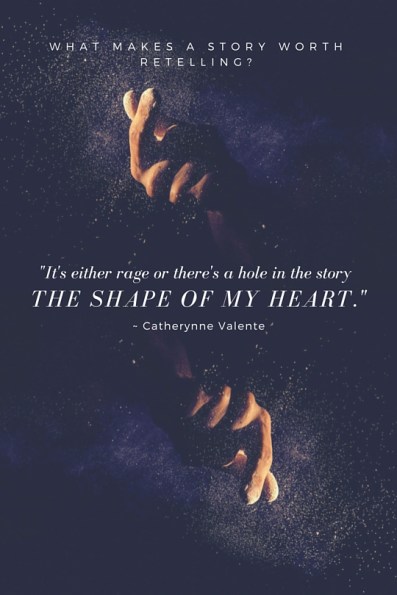
Speculative Retellings – Fabulous kickoff to the con for me. Retellings of myths and fairytales and folklore are *so* much fun, and the folks on the panel clearly agreed. The quote from Cat Valente above was from this panel, as is the picture of my notebook. The conversation ranged from superheroes to saints, origin stories galore, the retelling opportunities present in both senses of identification with a story and senses of confusion or other-ness (‘this story isn’t really meant for me, but what if it was?’). We re-tell stories either because we love them or we hate them and want to fix them (hello, fandom!). Frustration as inspiration, and questions about the currency of sacrifice–what are you willing to give up, to walk the path of the hero? What are the stories or characters that need second chances? Or choices? (Cat Valente pointed out that no one ever asked Eurydice if she *wanted* to leave the underworld with Orpheus, after all. Maybe she wanted to stay…)
Strong Female Characters and ‘Lady Bromances’ aka Female Friendships in Literature – I’m lumping my summary of these two panels together, because for me one fed into the other. There was a lot in here, and there’s room for more. I liked Mikki Kendall‘s point about Zoe Washburn in Firefly, and how she’s a perfect example of how the fact that women who possess the ability to compartmentalize in crisis are often not given the narrative room to have their grief or other emotional reactions once the crisis is passed. This is a trope that disproportionately affects black female characters; based on the evidence of Melinda May in the Marvel Universe and a few others I would think it affects other female characters of color as well. After all, Peggy Carter (whom I love, even recognizing the flaws in the show) gets a very rare but very real and necessary moment of grief for her roommate, who dies in the first episode after about 2.5 minutes of screen time. It’s a great moment, and more characters regardless of gender or race deserve the narrative space to be fully-rounded human beings. In counterpoint, the discussion of female friendships was great, because friends are part of what help make us fully rounded characters, and show different sides than might otherwise come across. Girlhood friends, adult friends, intergenerational friends; it was a good list of stories and characters that the panelists mentioned, and there were both books I now have to read and stories I now have to write.
Engineering in Fantasy – Definitely one of my favorite panels of the weekend. “Buildings have to get built, regardless,” said John Chu, and from there it was off to the role of engineering in worldbuilding (more than just how people get around; not only on what, but do they have roads? irrigation? cartographers?) and the way good engineering is invisible until it breaks. This means breaking your engineering is a good story point; when something fails, what takes its place? Was it working for its original purpose and only broke when it was repurposed? What happens to a society’s structure when new tech is introduced? How much engineering can your world have without the theoretical science to back it up? (Because you can make things work without knowing why…) What about social engineering, the structures that make feudal systems and militaries work, among other things? What about a kind of educational and cultural infrastructure, the role of political and religious elites in spreading and sharing knowledge? Plus there are the benefits of looking at the way different cultures find different ways to solve the same problems and what that tells you about them, which is engineering as a kind of cultural shorthand, ie. the bridges of the Elves vs. the bridges of the Dwarves in Tolkien. (Several people in that session now want to write the story about “OSHA goes to Moria…”) Many kudos to both the panelists and the people in the audience who asked brilliant follow up questions!
Magic in Space – Jedi are space wizards, and that’s a very fine thing. But who else is writing cool magic in traditionally sci-fi milieus? This was a really fun panel talking about working mythology and magic systems into sci-fi: techno-mages, for instance, or mythical monsters in charge of alien planets, the concept of interstellar travel as its own sort of epic fantasy. Mikki Kendall said something interesting about how the differences in sci-fi versus fantasy are essentially just a matter of tone: “You have power. Period. How you choose to use that power is up to you,” which led to a neat discussion about spellcasting equivalents to computer programming, fears as inspirations, about magic being about control or accepting the loss of same, and when is magic a science (part of the rules of how that universe works) or something else (which breaks or bends the established rules of that universe). Does magic or sci-fi better answer the questions of why we seem to be alone in the universe? Is it just because the scale of space and time is just so vast, or are we being avoided? Will we recognize life when we find it? What about that space-jellyfish in Star Trek? Hasn’t there been magic in sci-fi all along? And isn’t it an example of magical thinking just to imagine the ways that life could be better or different, the way sci-fi writers naturally do?
Keytars in SF – Music is such an integral part to culture; it’s as worth considering (or considering its deliberate lack) in worldbuilding as engineering is. Discussion in this panel included everything from Earth music of past times being re-interpreted in the future (Star Trek TNG‘s Riker plays jazz and Data plays classical violin, Doctor Who declared Britney Spears the fitting soundtrack to the final explosion of the Earth) to alien instruments (Spock’s lute/harp thing, Dixieland-style music in Star Wars ANH‘s cantina) to the challenges and benefits of describing music and mood and enviroment as opposed to being able to show/play it in live media. The major thought-provoking statement from this panel for me (which I’m pretty sure was one of Cat Valente’s points) was thinking about music starting point being in the body; dance, rhythm, the physical requirements of instruments that need breath or digits or tentacles. (Now I want to write about an alien rock band…)
Mary Robinette Kowal’s “Short Story Structure (for Novelists)” workshop/lecture was a real writers’ craft highlight. Unfortunately, as she said in the beginning, she had ‘2 hours worth of content and only an hour to deliver;’ had the program wizards given her a 2 hour block, we would surely all have stayed. [Much as I appreciate the rapid-fire blocks of 50 minute sessions, I’d actually argue for a few more longer sessions for this level of quality content.] Fortunately, she did get through all the content delivery, though our ‘workshop’ was limited to ‘write down a whizzbang idea.’ She did, however, mention that she has writing exercises available on her website, which I intend to use. The diagnostic tools she introduced (average wordcounts for introducing locations and characters, levels of complexity involved in number of plot elements) were really helpful; looking back at some of my stories that have ballooned past what could reasonably be considered ‘short’ I can now tell why! I will definitely be using the plot sequencing idea (open and close your plot threads like html tags) to revise some of my short stories as well.
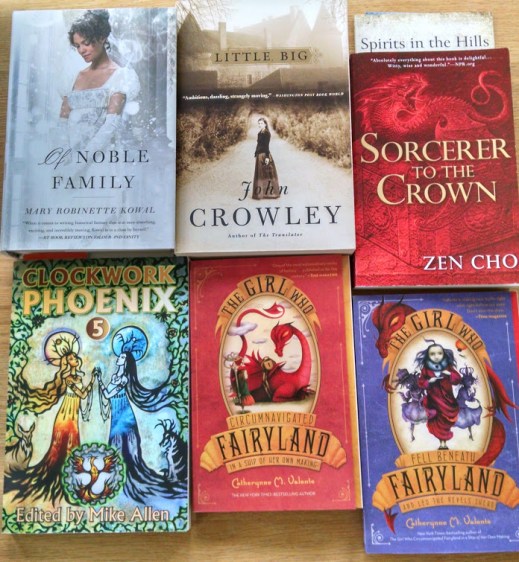
Books I either acquired this weekend or brought along to get autographs. My to-be-read pile just never gets any shorter…
It’s difficult as a thinking, feeling, breathing human being not to be incredibly distressed by the needless violence of the last week, from the horrific ISIS bombings in Medina and Baghdad to the senseless deaths of both civilians and cops here in the US. Life is messy, and people can be horrible, and standing in my place of privilege and safety much of what I can do is put my donations and my vote behind the people I believe have the best interests of the whole country, the wider world, and safety and peace for all at heart. So that’s what I’m doing. Also, please register to vote, if you’re eligible and you’re not registered yet. One person, one voice, one action can make a difference. (Just look at Brexit. Let’s not be Brexit, okay?)
In the meantime, this weekend there’s a chance to celebrate imagining better, more inclusive, more positive worlds, so I’m going to Readercon. If you too should happen to be in Quincy, MA this weekend, here are some of the places you may find me:
Friday
4 pm “Speculative Retellings” or “Harry Potter Goes to Grad School and Gets a Job”
5 pm “Clockwork Phoenix Group Reading” or autographs with Catherynne Valente
6 pm Guest of Honor reading by Catherynne Valente
7 pm “Single Wise Advisor Seeks Same”
Saturday
10 am “Instant Communication in Genre Fiction” or the Odyssey Writing Workshop intro session
11 am “Beyond Strong Female Characters” or “Colonization and Beyond: The fiction and science of exoplanets”
Noon “Engineering in Fantasy”
1 pm “I Pass the Test: the depictions, meanings, and consequences of magical tests and trials” or “If Thor can hang out with Iron Man, why can’t Harry Dresden use a computer?”
3 pm “Ladybromances”
4 pm “Interview with Catherynne Valente”
Sunday
10 am “Magic! In! Spaaaaaaaaace!”
Noon “Short Stories Explained for the Novelist” with Mary Robinette Kowal (yay!)
1 pm “Keytars in Science Fiction”
2 pm “Science Fiction and Fantasy Fashion” or “The No-Good, Very Bad Antagonist”
Any other time:
The Broad Universe table in the Bookstore – this is a great and welcoming group of folks who support women writers in sci-fi, fantasy, and horror. And truthfully, possibly you’ll find me anywhere else in the Bookstore as well. That does happen on a fairly regular basis, after all.
If I get sick of panels I will go to readings. There are lots of cool looking readings!
So Arisia was a big, busy, beautiful mess of a weekend. I didn’t make it to all the panels I intended, I accidentally ended up in sessions that were awesome, and John Scalzi made me cry (in the good way).
I am not going to even try to cover everything, but here are a few highlights from this past weekend:
Nonstandard Paths to Magic
Honestly, I thought there would be more discussion of cool non-Latinate, non-Hogwarts, non-Western magic systems, but it was mostly a series of thought-provoking questions about the assumptions we make about magic, how it works, and who uses it. Some of my favorites:
Is magic transformative? If so, how does it change the user? How big are the changes, and how much of that depends on where in society the magic user starts?
Magic as ‘spiritual technology’ – do you have to believe in the tools to make them work?
How does magic-as-mystery (Tolkien) stack up against magic-as-textbook (Sanderson) and what are the strengths and weaknesses of each? When can you get a magical solution to a non-magical problem, or a non-magical solution to a magical problem (haul that ring to the volcano and throw it in, ’cause nothing else will unmake it!)?
Do you always need the good/evil dichotomy, when referring either to magic or to the people that use it? Where is the line between them, and is it the same for all people in that system?
Standard magic almost always comes with a price; should it? Is it a human thing, to feel like things ought to have a price attached? [and a corollary not discussed in the panel, but which I want to explore now: what if magic were an exhaustible resource, like fossil fuels, rather than renewable/constant/growing like the Force?]
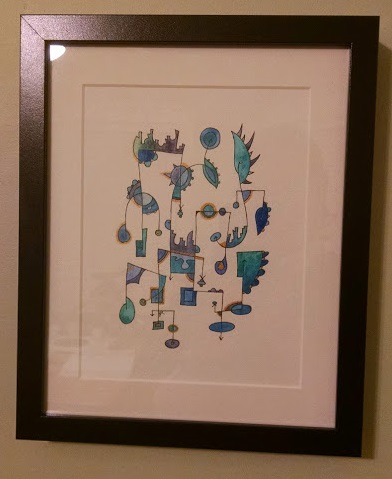
My new watercolor by Julia of Pelagiella Designs (link below)
Shifting the Language of SF
If you’re not super into the geekiness of language, scroll on. I *am* into the super geekiness of language, and there were points when I wanted to just throw up my hands and ask what the Klingon word for ‘surrender’ was. (I don’t actually think there is one, come to that. Klingons are not into surrender.)
This panel ranged wildly all over the discussion of language, from why you shouldn’t try to write dialect out phonetically, to the poetics of rhythm in language from different time periods, to what English might sound like if the Normans had never invaded (apparently you should read ‘Uncleftish Beholding‘ if you want to find out).
Here are a few of the panelists’ suggested ‘shortcuts’ to making your language not sound like 21st century English (with or without Tumblr-speak, a variation on netlanguage they didn’t get around to discussing, but I heard used by panelists in other sessions, because language):
Take an element of your speculative fiction (McDonald’s takes over the Western world and thus this fiction is all about fast food and consumer culture) and incorporate the ticks of that existing ‘language’ to create your new McPolitics, McFashion, and McTech.
Make it sound like a historical period instead. Have your aliens speak like Shakespeare, or your warp field engineers write reports like Fitzwilliam Darcy.
Use a poetic meter not standard to English (hexameter instead of pentameter). Caveat: Do not ever make your characters speak in rhyme, or your audience will hunt you down, if your editor doesn’t do it first.
Consider what the street slang of your alien/future tongue sounds like, as well as the cultured spaceship captain’s commands.
Mess around with the ‘easy’ grammar; change up prepositions, use synonyms not common in daily speech, use similes that don’t exist yet (“Your hair smells like freeze-dried rheolene fibers”). Use only the 1000 top words in the language and build the words you need additively like German does (‘glove’ translates to ‘hand-shoe,’ and no, I am not making that up).
Complexities of Voice
This built really nicely off the above language panel, and also one I went to on character interactions, which was a little basic but still interesting. (One did get the feeling that some of the folks in the audience asking questions were young, and as interested in getting ideas on how to interact in real life as they were trying to get their characters to talk to each other.) The best tips from this panel:
Read your work aloud. Have someone else read it aloud. Can you tell the characters apart?
Use styles that suit the kind of character you’re building. Think about levels of formality, slang and syntax, long sentences or short ones, incomplete thoughts or run-ons and tangents. Put all that info in your character cheat sheets with eye color, favorite food, and all that other background you need.
‘Borrow’ a real-world person for your voice (may want/need to ask permission, if you know them personally!) or ‘fancast’ your characters with appropriate actors. Does your character sound like Alan Rickman? Maggie Smith? Will Smith?
Avoid infodumps and mansplaining. Even if it ‘sounds’ like your character, very few people get away with talking in paragraphs.
Find and then listen to/read the stories and conversations of people who come from the background you’re trying to write. The Smithsonian, NPR’s StoryCorps, and the Library of Congress are all good places to start for free oral history sources.
Listening to John Scalzi read hilarious excerpts from some cool new projects we’re forbidden to talk about, and then hearing him read “Raising Strong Women,” which is the part where I cried. (So did he.)
I bought one of Julia Burns Liberman‘s beautiful abstract story/watercolor paintings (looks awesome in my dining room!)
Saw an incredibly cool wood-turning demo by artist guest of honor Johnna Klukas
Got a great list of recommendations for places to read speculative poetry (and some specific poems/poets to follow) from the folks on the “Speculative Poetry is Awesome!” panel. You can find a bunch of those recommendations collated on Twitter under the hashtag #poetrypanel (though some of the tweets seem to have disappeared? If you click through to AJ Odasso’s individual feed, they’re still there)
For the last several years I’ve tried to make it to either Arisia or Boskone, to get a full weekend’s worth of geekery, inspiration, and writing research. Last year’s trip to Boskone got a little dicey thanks to the blizzard (1 of…14 or so, thanks, global warming). I’m keeping my fingers crossed for more beneficent weather this time around.
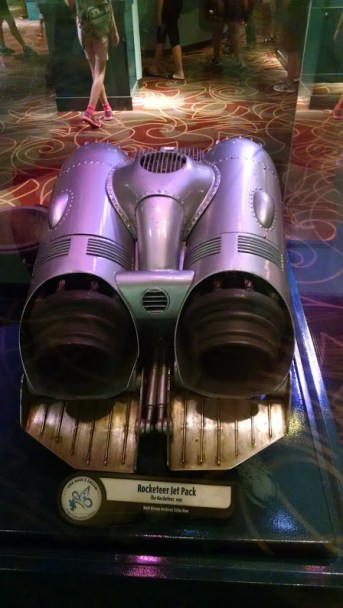
Maybe I can borrow this to get to the con? (Jet pack from The Rocketeer, as seen in One Man’s Dream at Walt Disney World. Photo by me, Nov. 2015)
As always, there seem to be more options than time, but here’s where you’ll likely find me if you too happen to be at the con this weekend:
Friday
7 pm: “How Lord of the Rings Stunted Fantasy’s Growth” (Interesting premise, fairly sure I disagree, but I want to hear why they think so)
8 pm: “Mrs. Hawking: A Steampunk Play” (Sounds like fun, and I’m always up for a good performance. If I miss it on Friday I think it repeats later in the weekend)
Saturday
10 am: Oh, who knows. It will either be “The Founding Mothers of SF/F,” “Constructing Languages,” or watching the artist guest of honor make wood-turned rocketships on a lathe, which sounds awesome.
11: 30 am: “Nonstandard Paths to Magic” (If you didn’t know I was a fantasy writer, would you assume that this was ‘how to sneak into Hogwarts?’ Because I might)
1 pm: Short Story Contest
4 pm: John Scalzi Reading (there were a few other good looking sessions in this block, but I can’t *not* go to the Scalzi reading.)
Evening: Who knows (part 2)? Depends on how much energy I have left and how far I have to go to find food.
Sunday
10 am: Broad Universe rapid-fire reading (though “Headcanon and SF/F” looks good too, so I may end up there if the BU panel is full)
11:30 am: “Complexities of Voice” most likely, though I have the art director’s tour of the art show and NASA documentary films as back-up options.
1 pm: “Vivat Regina: Mrs. Hawking Part II”
2:30 pm: “Science Year in Review” (with “Themes of Afrofuturism in SF” as backup)
4 pm: “Everything I say is a lie” ie. the unreliable narrator panel, not a declaration of intent or challenge.
5:30 pm: “Worldbuilding with the Soft Sciences” unless I get in a mood, in which case I may end up in “Lesser Known Tropes v. Women in SF/F”
Evening: Ditto from Saturday. Might go swing dancing at 7:30?
Monday
10 am: “Inside Out: Pixar Gets Smart”
11:30 am: “Speculative Poetry is Awesome” or “Humor in Writing” No idea how I’m going to pick on that one.
2:30 pm: “The Story within the Story” or “Don’t Quit Your Day Job” (good advice, I like my day job!)
Chances are good if I’m *not* any of these places, I’ll be down in the vendors’ hall hanging out with my ever-talented friends from Emporium 32.
As January gets into swing and we’re all readjusted to the demands of the school and work week, I thought it would be nice to take a moment to reflect on some of what was awesome about the holidays, and the good feelings, things, and ideas that I’m carrying into the new year. (I invite you to do the same in the comments below!)
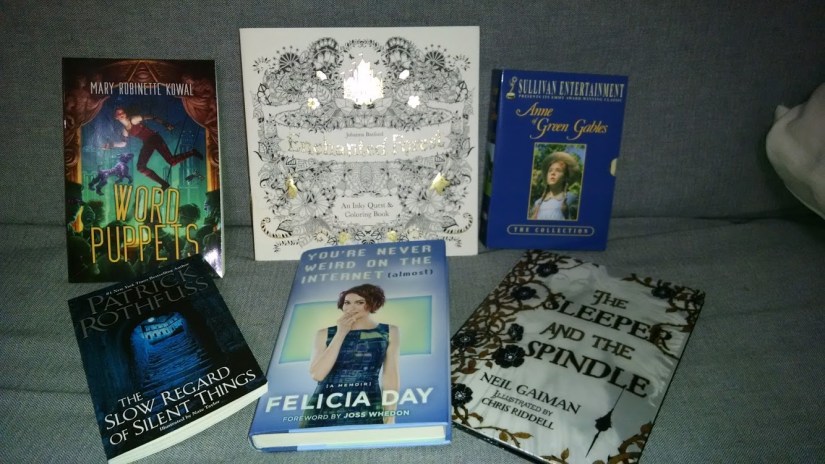
I had a very literary Christmas, which was awesome. Being the daughter of a librarian, I can always count on getting books for gift-giving occasions, and this year was no exception.
As you can see, this was a glorious occasion for bookish and literary-adjacent gifts (and writing tools not pictured like a planbook and beautiful hand-bound blank book to tote about with me in my rambles). I have to admit, I already finished Felicia Day’s memoir, and it was excellent; funny, brave, insightful, and inspiring. I’m pacing myself on picking up the others so I don’t run through them too fast.
In the spirit of starting the new year right, I decided this year I’d actually attempt Goodreads’ book challenge, where you can set your own goal for how many books you want to read in 2016. Inspired by Stellar Four’s 52 books/year challenge, I went for 52; we’ll see how it goes. Feel free to friend me on Goodreads to keep me honest. (I’ll also be setting some creative goals for 2016, but I’m giving myself the rest of this month to get organized on them first!)
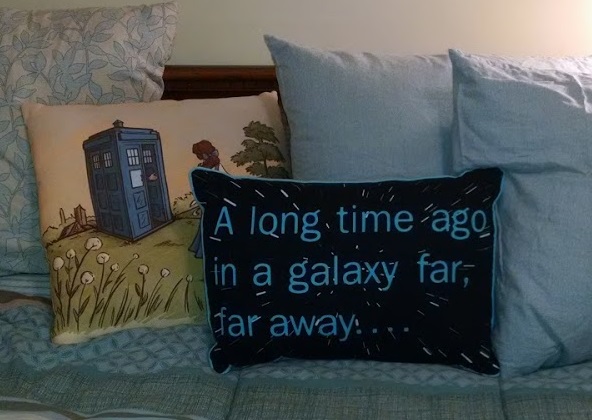
It must be noted that in addition to the genre-filled Bookmas, I had a very Merry Geekmas as well. I would post pictures of my Star Wars, Agent Carter and other geeky spoils, but I don’t want to make you all too jealous. Suffice it to say that I can now wear, carry, and otherwise use my fannishness in many happy-making ways.
Speaking of geekery, I’ll be heading to Arisia down at the Boston waterfront this weekend, so I’ll post a list of what I’m hoping to attend a little later in the week. If you have suggestions, as always, please fill me in.
What creative treasures, projects, or inspirations are you excited about in 2016? Tell me all about them!
I have a fabulous time at the Mass Poetry Festival every year. Every year I learn something new about writing, I am bowled over by a poet (or multiple poets) whose work I hadn’t before had a chance to appreciate, I get to spend time surrounded by people who love words as much as I do, and I come away exhilarausted, which is that peculiar state of wiped out and buzzed that comes from too much inspiration in too short a time period.
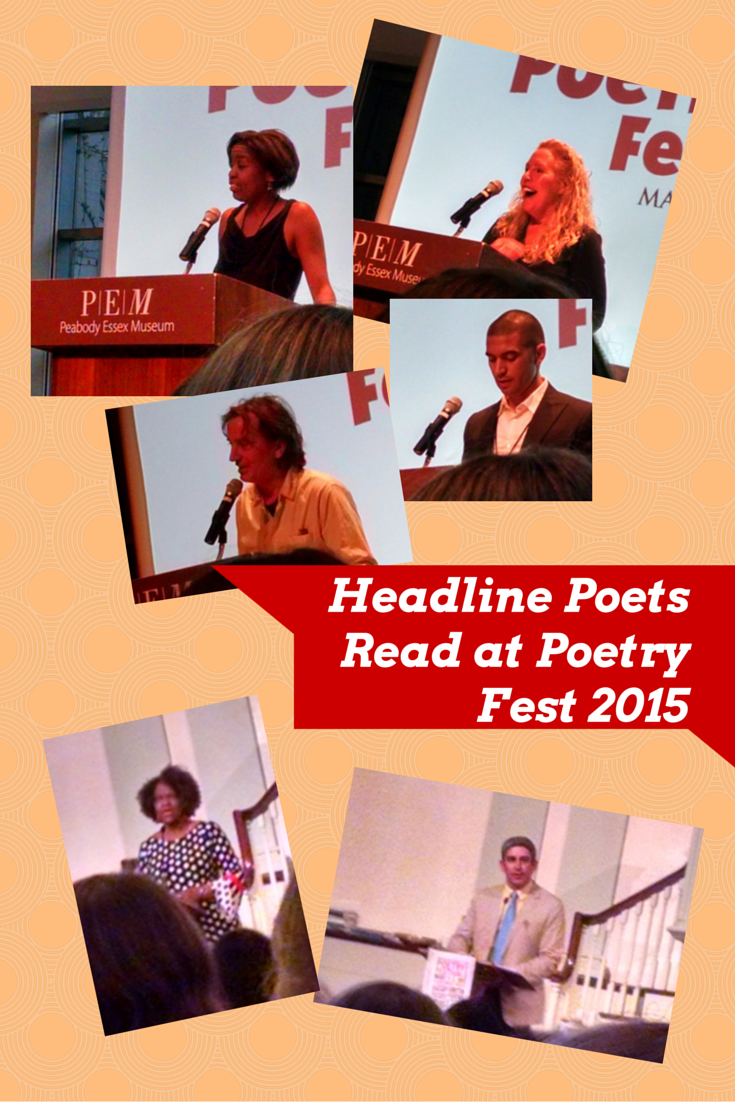
As always, the headline poets were fantastic. I didn’t make it to all the headline sessions, but both the Friday and Saturday night readings were interesting, featuring Nick Flynn, Adrian Matejka, Denise Duhamel, Rita Dove, and Richard Blanco. I was especially enamored of Rita Dove’s reading, and most particularly loved her poem “Maple Valley Branch Library, 1967,” linked below:
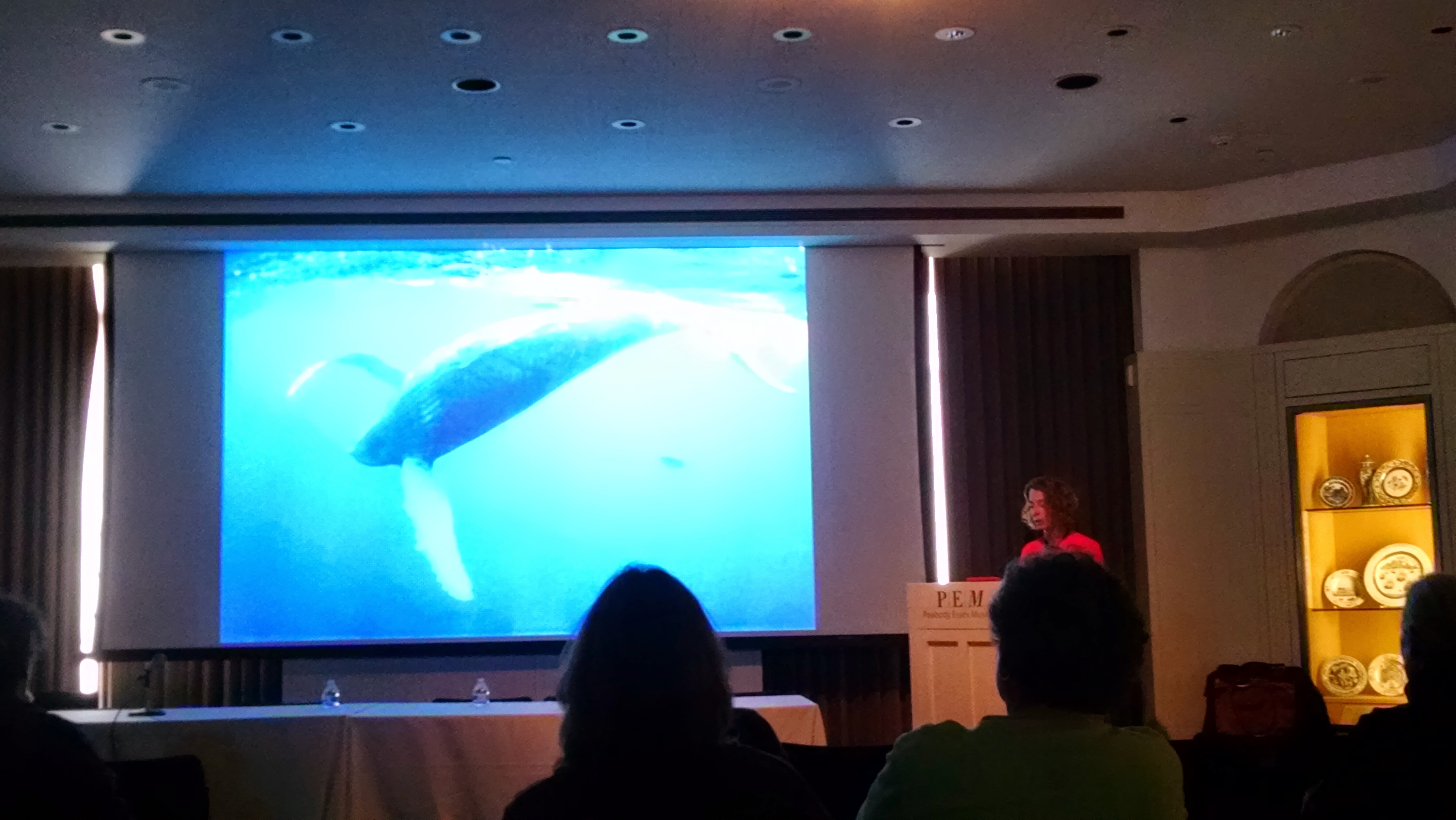
Scuba diving poet Marie Elizabeth Mali reads against a backdrop of her photography.
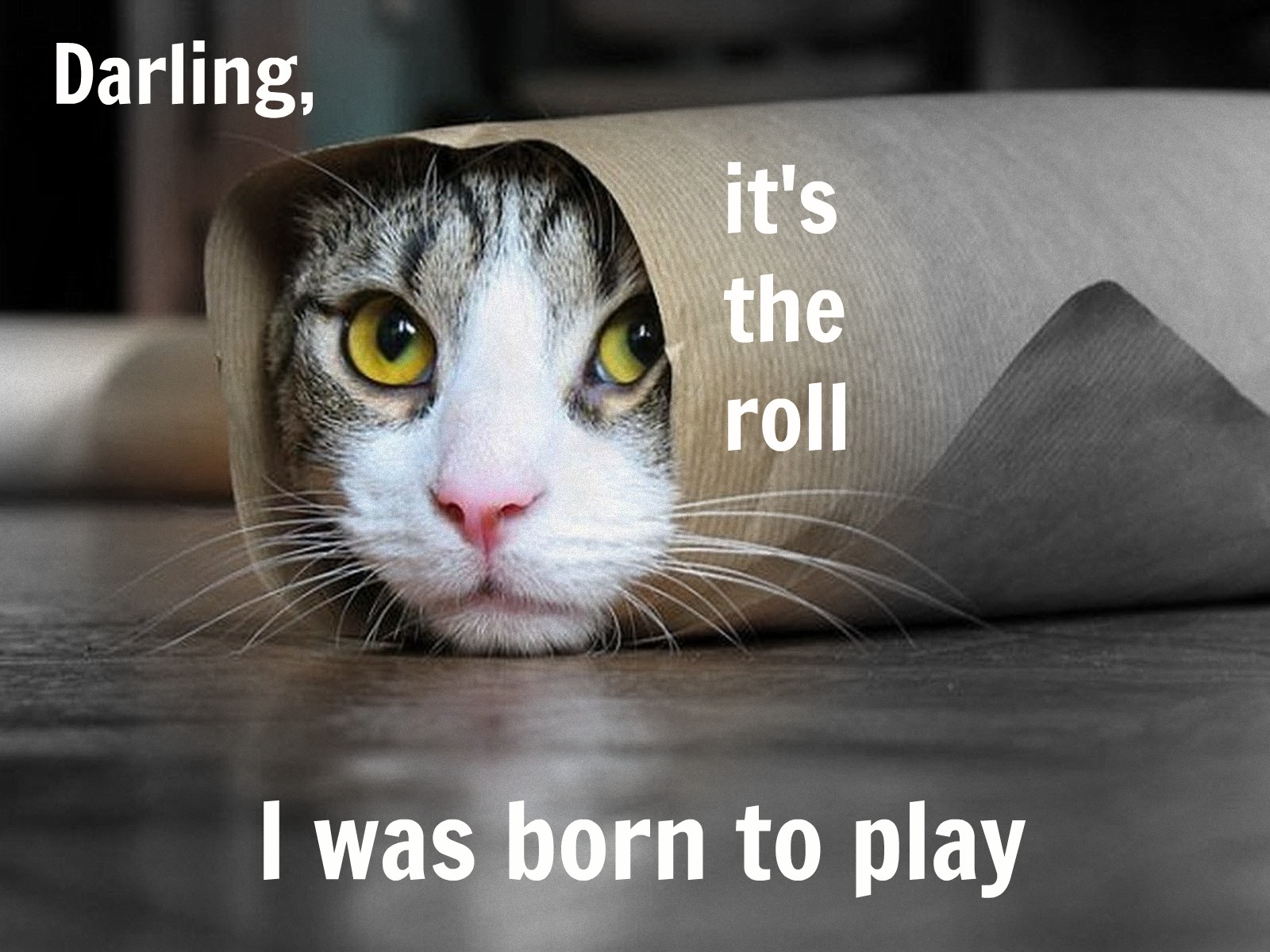
Other moments that caught my imagination included the reading of marine-inspired poetry to a running background of underwater photography, the highly entertaining “Digital Age Poetics” workshop from the lovely folks at Window Cat Press, and the absolutely fabulous “Writing Sound to Sound” workshop with Moira Linehan and Mary Pinard, which focused on exercises that build sound consciousness into your writing from the very start. As someone who loves the music of language, syllable and rhythm, I found that session especially inspiring. Overall, from humorous memes and ‘flarf’ searches to dictionary page and abecedarius poetry, I came away with a ton of new writing prompts and a few promising new poem kernels.
Meme as digital poetics: Dramatic Cat has found her role of a lifetime, courtesy of a penchant for puns by yours truly.
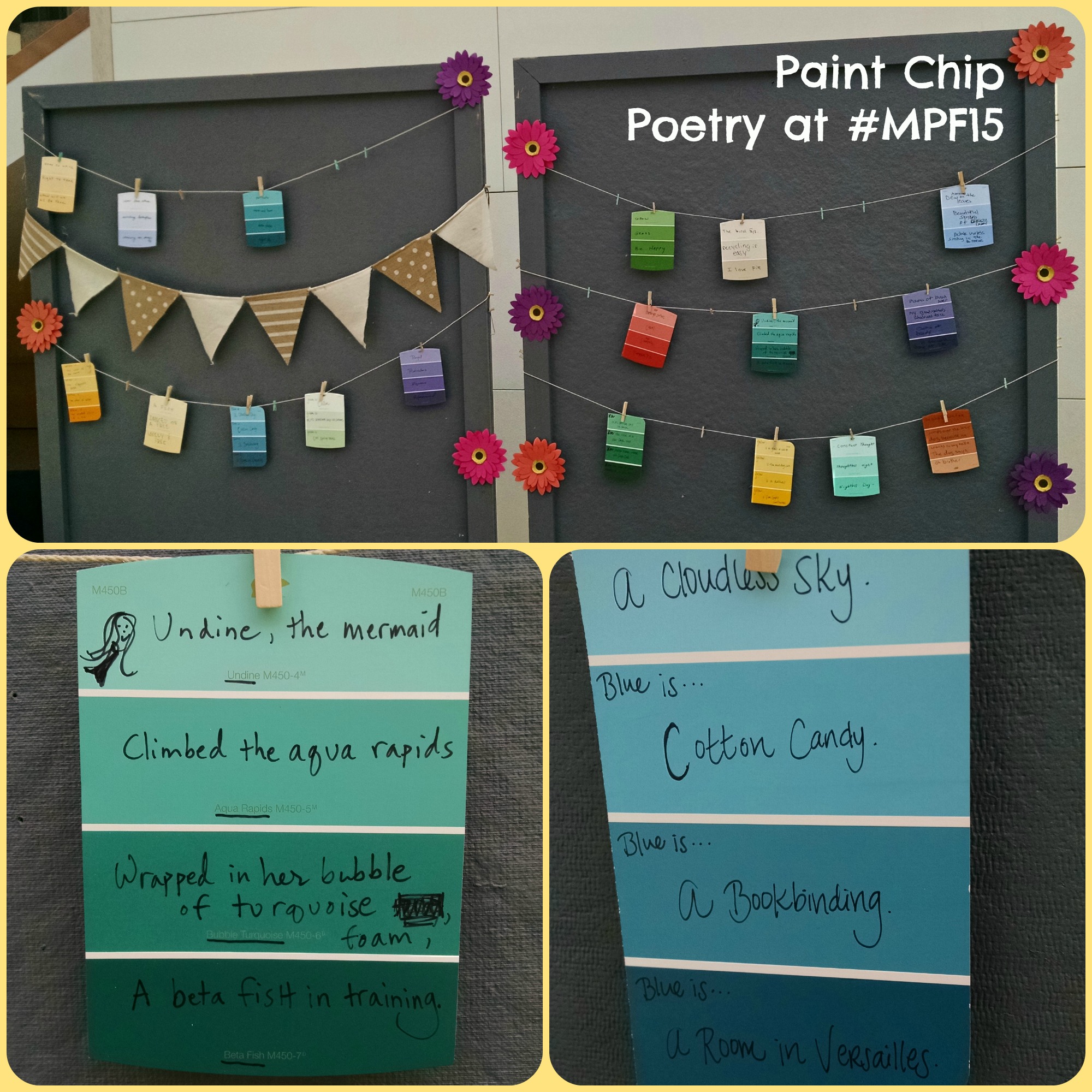
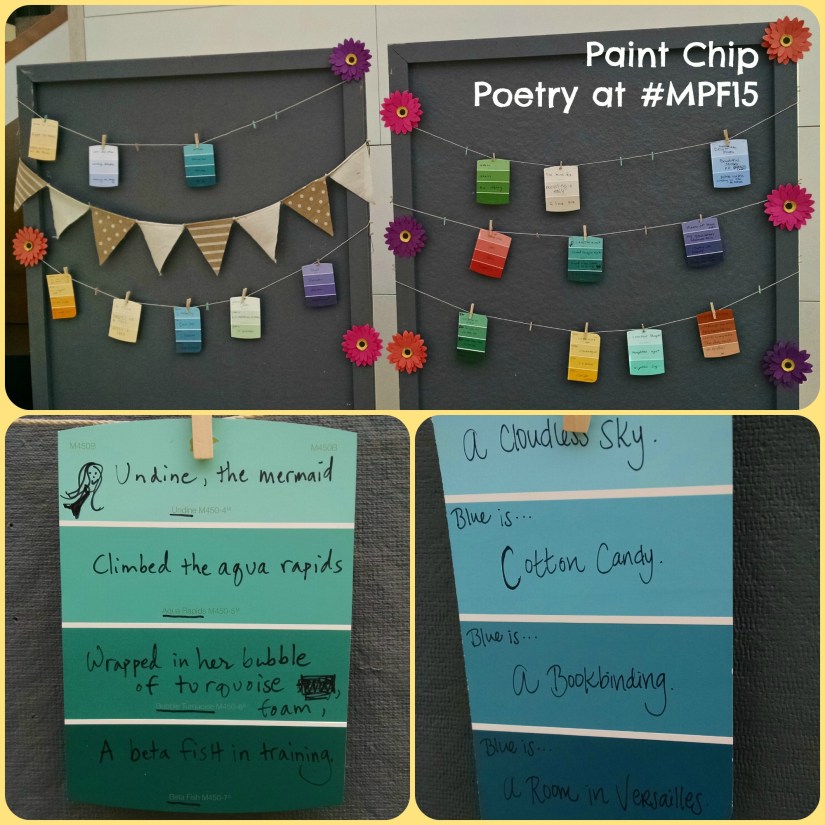
I learned about Edna St. Vincent Millay, read aloud and listened to a great collection of winter and spring poems from my fellow long-suffering New Englanders, and had many a meal with friends old and new. Finally, I was pleased to see that PEM continued to play with words and art, featuring Mad Libs Muse prompts featuring ‘erasures’ from famous poems, paint chip poetry focused on color and brevity, and even a giant Scrabble game.
Thanks and congratulations again to Michael, Jan, and Laurin for putting together another spectacular weekend!
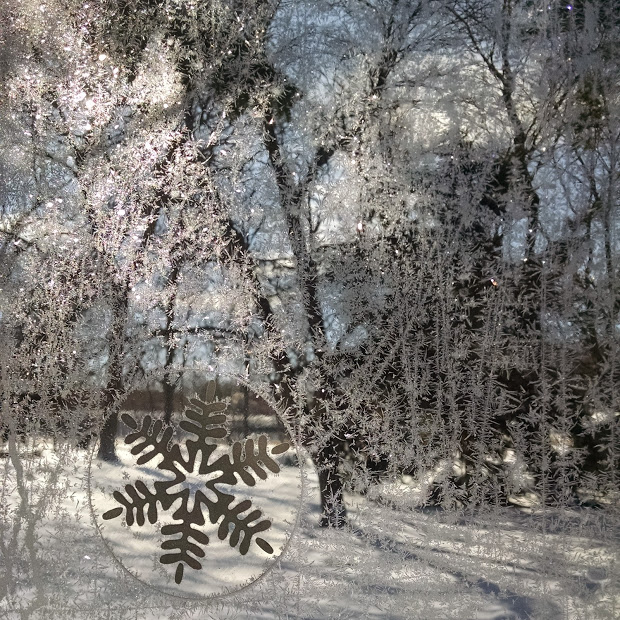
A shimmering visit from Jack Frost on the back porch last week. Photo by Meg Winikates.
February is here, and with it comes not only a shocking pile of snow, but also one of my favorite parts of the geeky side of the calendar: Boskone. Last year I got to have tea and coffee with Jane Yolen (wow!) and Bruce Coville (also wow!).
This year, if you have the time available, there’s a bunch of free programming on Friday afternoon (2/13), which looks like a really cool selection of stuff. I’m starting a new job so I won’t be able to make it before Friday evening at the earliest, but there’s no shortage of neat stuff to see the rest of the weekend. (Link above also goes to the rest of the weekend’s program.)
If you should happen to be at the convention on Sunday morning, don’t miss the Flashfic read-aloud competition at 9:30! 11 writers get 3 minutes each to read a story, get critiqued, and compete for the top spot, yours truly included. Last year’s stories were all fun and incredibly varied, and I’m looking forward to being part of the action this year. Hope to see you there!


 Sea Dreams and Time Machines