

Uncategorized

Songs for a New (Old) Spring

photo credit to ember999

Tomorrow is the first official day of spring, which is delightful to my somewhat pagan heart. And, as someone who occasionally (or often, depending on whom you ask) feels she’s living in the wrong time period, I take this opportunity to wish you a happy Vernal Equinox. May you, like the Sphinx at Giza, orient yourself towards the sun tomorrow and have a bright and promising kind of day. (Or at least look forward to the weekend.)

And should you need a soundtrack for your celebration of spring, I am here to answer the question: “Just what kind of music does one listen do when suffering from temporal instability?” If you, like I, have ever been told you are a ‘living anachronism,’ you use ‘archaic’ or ‘funny old’ language in your daily speech, or merely have an irrepressible desire to shout ‘Huzzah!’ then I recommend a dose of Renaissance Rock.

Renaissance what?

Rock. No, seriously. Mix together a healthy dose of escapism, a passing acquaintance with Shakespeare, a quartet of teal kilts, and some guitars and fiddles, and you end up with The Lost Boys, a group of temporal travelers at least twice as crazy as I am. I treated myself to their newest album a few weeks ago (Heroes and Scoundrels, though their other relatively new album, the Teal album is also excellent) and have been happily humming “Warriors for the Working Day” and other excerpts pretty much ever since. Humorous skits about the escapades of a bunch of rowdy minstrels escaping the Tower, consorting with Merlin, and entertaining the occupants of taverns are interspersed among the music, and while it’s not exactly what I’d call soothing background music, there’s a fun assortment of musical styles involved. The Lost Boys throw together Renaissance-era and traditional folk songs set to new instrumentation, modern rock songs with anachronistic lyrics, and a bunch of original works that are extremely catchy, like my favorites, “Life is Good,” and “Scoundrels.”

If you’re looking for further ways to indulge a bit of temporal instability, I also recommend the Mediaeval Baebes*, and for a more authentic experience, Sting’s Songs from the Labyrinth, a collection of lute works by Elizabethan composer John Dowland.

*Watch out, their website has automatic-play music of some of their works, which are lovely, but I don’t know if there’s a way to turn it off.
Uncategorized

Future’s looking bright

I find myself alternately intrigued, amused, and inspired by Outshine (http://twitter.com/Outshine).

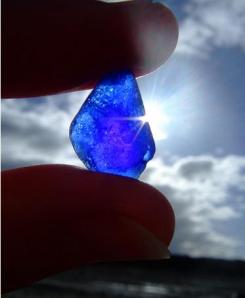
seaglassshine-lisaluvz

It describes itself as ‘A Twitterzine for optimistic, near future prose poems.’ Twitter posts include serious inspirational quotes on Mondays, lighter ones on Fridays, feel good ‘window on the next 50 years’ Sci-Fi prose poems on Wednesdays, and humorous ones usually on Saturdays. Most are really fun, often quirky, and generally quite clever. The 140 character restriction is problematic for a genre which often seems to require a lot of exposition, but it forces pithy description and vivid imagery which is a fun challenge. It reminds me a little of my poetry professor in college challenging us to write a poem which fit on half an index card.

Outshine is a mini-branch of Shine, a Sci-Fi anthology (http://shineanthology.wordpress.com/).

Uncategorized

Happy Birthday, Henry W. Longfellow

In his lifetime, Henry Wadsworth Longfellow was the most beloved poet in America, internationally acclaimed for his poetry, his translations (he spoke or read at least 12 languages), and his open-minded gentlemanly regard for all the cultures and visitors that crossed his path. He lived most of his adult life in Cambridge, MA, in a gorgeous house that dated back to before the Revolutionary War, and had in fact been the headquarters for Gen. George Washington during the siege of Boston in 1775-76. His house is now a National Park, and is still entirely furnished with the belongings of himself and his family.

I worked there for 2 seasons and fell utterly in love with Henry and his family, not to mention the rangers who work in the house. It’s a crying shame that cryptic and difficult seems to be the preference for modern poetry, because the musicality, optimism, and love for language with which Longfellow’s poems overflow are sadly underappreciated today. And in that spirit, I give you one of my favorite Henry poems, which I used to open and close my tour on “Longfellow: Creator of Memory.”

The Builders

All are architects of Fate,
Working in these walls of Time;
Some with massive deeds and great,
Some with ornaments of rhyme.

Nothing useless is, or low;
Each thing in its place is best;
And what seems but idle show
Strengthens and supports the rest.

For the structure that we raise,
Time is with materials filled;
Our to-days and yesterdays
Are the blocks with which we build.

Truly shape and fashion these;
Leave no yawning gaps between;
Think not, because no man sees,
Such things will remain unseen.

In the elder days of Art,
Builders wrought with greatest care
Each minute and unseen part;
For the Gods see everywhere.

Let us do our work as well,
Both the unseen and the seen;
Make the house, where Gods may dwell,
Beautiful, entire, and clean.

Else our lives are incomplete,
Standing in these walls of Time,
Broken stairways, where the feet
Stumble as they seek to climb.

Build to-day, then, strong and sure,
With a firm and ample base;
And ascending and secure
Shall to-morrow find its place.

Thus alone can we attain
To those turrets, where the eye
Sees the world as one vast plain,
And one boundless reach of sky.

Uncategorized

Fish Girl Upon the Currents

Despite running into a number of roadblocks, including a fussy printer and a number of magazines which have ceased operation, I managed to get “Fish Girl and the Kapok Spirits” out in the mail today!

Given the number of closed magazines in the last few months and also how ‘plugged in’ the sci-fi/fantasy crowd is in general, I am also interested in looking at submitting to webzines. Does anyone have any leads on where I’d start that kind of search? Writer’s Market only covers periodicals which have printed editions.

Uncategorized

Fish Girl Take 2

I believe this rewrite has worked out the worst weaknesses of the previous draft. I’ve got a list of places to send it, along with my other ocean story, “Shimmers and Sea Stars,” so that’s part of my plan for tomorrow. I’m working the weekend so Thursday is going to be writing/marketing day, with a break to sand my new (old!) desk. I’m looking forward to having my new (antique) writing space, and promise to take a picture of it when it’s all set up in front of the window.

Below, an excerpt from the rewritten first scene of “Fish Girl and the Kapok Spirits.”
Continue reading “Fish Girl Take 2”

Uncategorized

Save the Words

Being a massive word-hound, I was incredibly tickled by this site when my brother sent it to me. (Many thanks, by the way!) http://www.savethewords.org/

I have so far decided that I need to find ways to use antipelargy (‘reciprocal or mutual kindness, the love of a child for a parent’), hirquitalliency (‘strength of voice’), and stibogram (‘a graphic record of footprints’).

And for other word-joy, I recommend A.Word.A.Day newsletter, delivered straight to your inbox courtesy of wordsmith.org

Uncategorized

Happy Tolkien’s and Cicero’s Birthday

Cicero was the bane of my years at Boston Latin–that man was better at hiding a main verb than any author I have ever met.  After surviving Latin 3H, I developed a grudging respect for him, and frankly highly recommend Imperium by Robert Harris as a fantastic novel which humanizes the great orator and even gives him a small amount of humor.

However, anyone who knows me knows that my love for JRR Tolkien is lasting, and deep, and immutable.  So I offer to you three of my poems which were directly inspired by his world of Middle Earth, and the formal cadences so beloved by his Elves.

Continue reading “Happy Tolkien’s and Cicero’s Birthday”

Uncategorized

Progressing Swimmingly

The second draft of “Fish Girl and the Kapok Spirits” is going well, thanks to some very thoughtful comments from my raft of first-draft readers.  Apparently I need to get rid of some ‘and’s, some exposition, and punch up some of the drama in the key moments.  This is all extremely doable, so I’m feeling pretty good about it.  Editing is really tough for me, as I suspect it is for most authors.  I fall in love with a story the way it stands, and some of my favorite passages don’t neccessarily translate well out of my head and onto the paper, so I’m working on telling myself that the more I treat my short stories like my poetry, where each word has to carry more weight than its body size, the less it hurts to get rid of the ones that don’t carry their load.  “Fish Girl” was already a short work for me, so finding the excess and filling out the thin spots is a definite learning experience.

Also exciting news on the modern epistolary project with the delightful exDevlin.  I love collaborating with authors/friends whose style and creativity I admire, and I think this one is going to be a fascinating endeavor and hopefully a fairly unique concept.  Her Clara and my Ren have the skeletons of some wonderful characters, and it’s going to be a blast working with her to flesh them out, along with the world in which they live.  (I’m half-hoping to convince her to incorporate a little art into this project too, though that’s definitely a conversation for much further into the planning process.)   But the good news is that this project is getting off the ground, and looking like immense fun, so stay tuned.

Uncategorized

A Penny to Bury the Wren

I’ve always been fascinated and impressed by the way authors such as Susan Cooper or Lloyd Alexander borrow copiously from mythology and folklore, especially from the British Isles, and weave such fantastic stories from those bits and half-explained pieces, which become an entirely new set of myths.

One scene that I’ve returned to a number of times is the “Hunting of the Wren” from The Dark is Rising.  In that scene, Cooper describes a procession of boys with musical instruments and a branch-covered bier, upon which lies a wren which turns out also to be the Lady.  The Lady, in Cooper’s mythology as of that point in the series, is a benevolent, powerful but not invincible force for the Light, extremely aged even among the Old Ones, whose presence is feared and detested by the forces of the Dark.  The Hunting of the Wren scene occurs not long after she has exhausted her strength fighting against the Dark, and symbolizes her imminent return.  I’ve always wanted to know where that piece of lore originates.

Imagine my joy this week, then, while listening to the Clancy Brothers’ Christmas in my car, when I heard them singing “The Wren Song.”  There’s no reference to Cooper’s Lady, but there’s a lot about ‘the king of all birds’ and St. Stephen’s day, and soliciting pennies to bury the wren.  (Which sounds like ‘ran’ in this case, and I’m going to hope that’s the reason that I’ve never made the connection before now.)   It turns out there’s a pageant which happens mostly in Ireland with the “Wren Boys” on St. Stephen’s day, which is the day after Christmas.  (There are a couple of decent references in my delicious tags, under ‘research’ or ‘travel, I believe.)  I have decided I love this idea, particularly the pagan references to ‘the king of all birds,’ and will add it to my pile of references and ideas for the Fairy Tale Project.

Merry Christmas, All!

The Wren Song (2)

The wren, the wren, the king of all birds,
St. Stephen's day was caught in the furze,
Although he was little his honour was great
Jump up, me lads, and give hima treat.

cho: Up with the kettle and down with the pan
     And give us a penny to bury the wren.

As I was gone to Killenaule
I met a wren upon a wall,
Up with me wattle and knocked him down
And brought him into Carrick town.

Droolin, droolin, where's your nest?
'Tis in the bush that I love best
In the tree, the holly tree
Where all the boys do follow me.

We followed the wren three miles or more
Three miles or more, three miles or more,
Followed the wren three miles or more
At six o'clock in the morning.

We have a little box under me hand (arm),
Under me hand, under me hand,
We have a little box under me hand,
A penny a tuppence will do it no harm.

Missus Clancy's a very good woman
A very good woman, a very good woman
Missus Clancy's a very good woman
She gave us a penny to bury the wren.

From The Irish Songbook, Clancy Brothers and Tommy Makem
Uncategorized

Happy Jane Austen’s Birthday!

Whether you’re an Elizabeth, an Elinor, an Edward, or an Emma, (not to mention a Wickham, a Willoughby, or a Weston!), I wish you a happy Austen-day, where the clever have room to spar, the silly are given their due, and deserving gents (often with large estates) end up with lovely, sensible wives.