Writing that is strongly situated in its setting has always appealed to me, as a place-based writer. So when I saw the call for submissions for “landscapes” from all the sins, I had a lot of fun looking through my ‘ready for sending’ folder and hit ‘submit’ faster than the Flash on a sugar rush. To my great glee, one of my personal favorite poems also caught the editors’ eyes, and is now published in Issue 5 of all the sins: contemporary landscapes.
Guillaume Vogels, De vijver in de winter, 1885, oil on canvas. Currently owned by Stedelijke Musea Sint-Niklaas, used with creative commons permission.
I wrote “Belgian Skylight” when I was living abroad, teaching kindergarten in Brussels. It was a phenomenal year in which I learned a lot and traveled a lot and spent a lot of time watching the light change out my window in my garret bedroom at the top of the house I shared with two other teachers. There’s a kind of light in a Brussels winter that was especially conducive to writing, probably because it was the kind of blank white that was reminiscent of a page waiting for words, both promising and melancholy. As we head into the cold season (finally!) here in New England, it’s lovely timing for this piece to come to life.
I highly recommend the whole of issue 5; there are some gorgeous pieces of art within, both visual and literary, so do go check it out!
It’s spring, and I celebrated “Aprille with his shoures soote” by heading to England for a dose of literary pilgrimage, much in the spirit of my third and latest essay for all the sins, “And I must follow, if I can.” (Issue 3 is up in its entirety, and it’s great, go check it out!)
We hit London, Bath, Lyme Regis, Portsmouth, and Brighton in 6 days (whew!). Literary moments included seeing the musical of Matilda (Roald Dahl), a walking tour of literary London in Bloomsbury (Virginia Woolf and her cohort, Dorothy Sayers, Randolph Caldecott, TS Eliot, and more), saying hi to Shakespeare and Austen in the National Portrait Gallery, more Shakespeare, not to mention Beatles lyrics and more in the British Library, and that was just in the first two days. We also visited the Jane Austen Centre, the Assembly Rooms, and the Circus and Crescent in Bath, strolled the Cobb in Lyme Regis, and said “A little seabathing would set me up forever!” at least twice in Brighton. And I had a lot of Horatio Hornblower (CS Forester) feels at the Portsmouth Historic Dockyard. We also drank a lot of tea, and ate a lot of scones and Welsh rarebit. It was a stupendous trip.
Here are a handful of snapshots of some of the gorgeous, inspiring, hilarious, and memorable moments from my whirlwind Jane-Austen-inspired vacation:
In August of this year, the Mass Cultural Council approved the creation of a ‘cultural district’ in Boston dedicated to the literary arts. Cultural districts are a way of raising awareness about the various arts organizations and resources in an area, and are meant to have an economic impact as well, attracting businesses and creative professionals to a designated area. There are currently 26 designated cultural districts in Massachusetts, and I find a lot to like in the definition the MCC provides:
It is a walkable, compact area that is easily identifiable to visitors and residents and serves as a center of cultural, artistic and economic activity. The Massachusetts Cultural Council recognizes that each community is unique and that no two cultural districts will be alike.
That seems like a set of very achievable guidelines, given that much of New England falls into the ‘walkable, compact’ category already, and the rest of the definition of ‘culture’ is left open to the strengths of the city/town that applies.
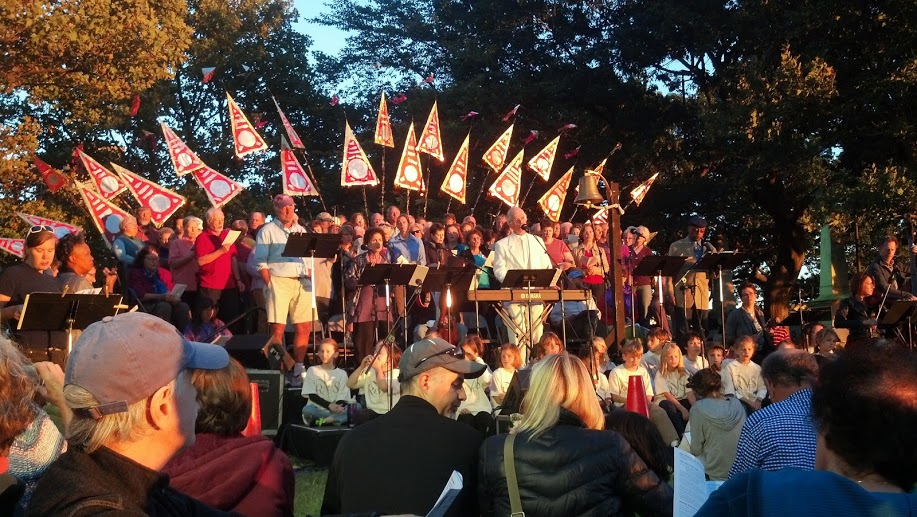
Revels’ River Sing on the banks of the Charles. Photo by Meg Winikates. Many cultural districts seem to feature recurring music and dance festivals like this one, as well as the local waterfront, for understandable reasons. (Though the current Cambridge cultural district is in Central Square, up the road from where this celebration of the autumnal equinox occurs.)
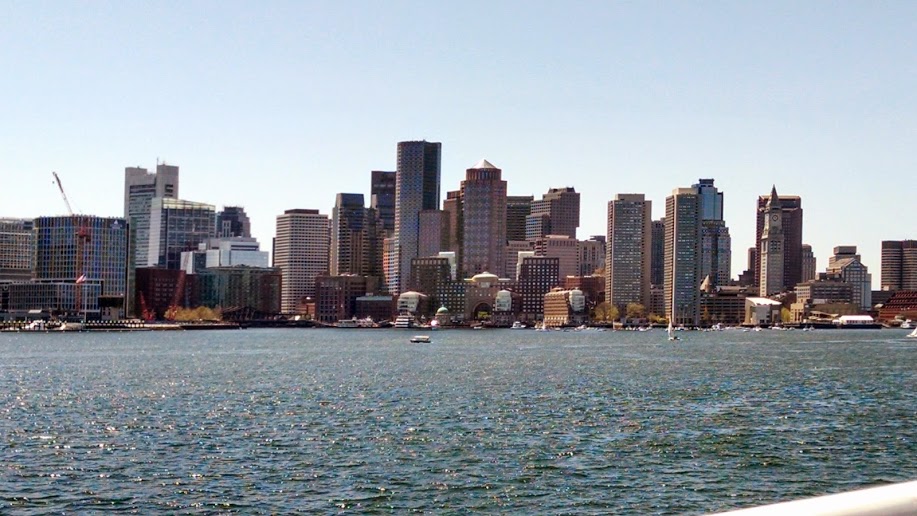
So what makes the Boston Literary District (the only one of its kind in MA and the only district specifically geared to one arts discipline) fit the bill?
Mass Poetry recently interviewed Larry Lindner, the Literary District’s coordinator, who enthused about his hope that “the Lit District website becomes for Boston what Time Out is for people who go to London — a kind of what’s-going-on-in-the world-of-literature in Boston” and mentioned plans for an app to help explore the District in 2015. And the physical district itself? By making the sites and events more visible, accessible, and tangible, Lindner hopes to encourage timid readers as well as those already deep in the reading and writing world. He also suggests that associate partnerships with organizations and businesses outside the District’s official borders can help their visibility as well, and bring some of the benefits of the district designation to other areas of the city that need it. (Even events outside the city get a chance to be included on the District’s events calendar, such as a public art/poetry event in Newton earlier this month.)
The thing I love best about perusing the map of the district is the number of surprises it holds, even for someone who has lived all but 2 years of her life in and around this city, who has worked at a local literary/historical site (2 if you count the Paul Revere house and his own poetical connections), and who was an English major to boot. For instance, did I know that E.B. White’s The Trumpet of the Swan was set in Boston’s Public Garden? Maybe when I read it when I was nine, but I certainly didn’t remember the scene with Louis playing his trumpet on the actual existing bridge over the pond. Nor could I have named even half the writers and poets listed as having ever been Boston residents. (I love learning new things about my city!)
A few of the sites listed do seem like a stretch (there’s a small bookshop on the ground floor of the State House, really?) and some a bit vague (the Old City Hall listing says ‘Legend has it that that’s the setting for Edwin O’Connor’s novel The Last Hurrah‘) but on the other hand, one can choose to take that as a plus. Some of these places had to really *try* to connect to the literary district. It was worth the effort to find the thread, the history, the destroyed address that this modern building now stands over–and that’s kind of awesome, that people want to be a part of it. I know next time I’m free to wander a bit downtown, I’ll be keeping my eye out for some of the literary landmarks listed.
Boston Public Garden (and Louis’ bridge!) Photo by Captain Tucker, used under creative commons license. Click for source.
And if you can’t make it to Boston to check out what’s going on on the bookish byways, take a stroll down Author Avenue or Fantasy Street as you check out this virtual literary district at My Independent Bookshop. This site is a visually appealing compilation of people’s book recommendations which are then linked to independent bookstores. I haven’t set up a ‘bookstore’ of my own yet, but it does look like a fun community and a fairly intuitive interface. (Don’t forget to scroll sideways as well as down, though!)





 Sea Dreams and Time Machines