
Uncategorized

Book Recommendation: The Heroine’s Journey

This Christmas I wished for and received a copy of The Heroine’s Journey by Gail Carriger, and having read it, I have been bending the ear of anyone I know remotely interested in story structure, literary or pop culture analysis, or who has been simply willing to let me enthuse in their general direction for 5-10 minutes.

Like a lot of people, I ran across (and I think I wrote a paper on?) Joseph Campbell and “the hero’s journey” in late high school or early college, and have run across it with reasonable frequency ever since. Granted, I took a fairly high number of mythology and folklore classes in college, and have been going to sci-fi and fantasy readers’ and writers’ conventions in the years since, so my exposure has been higher than your average duck, but still. The Hero’s Journey saturates a lot of narratives in the popular imagination, with perfectly good reasons. Individuals triumphing through adversity, going on journeys, learning self-reliance, rescuing and losing people and causes along the way, all very exciting.

However, I first heard mention of an alternate narrative, the Heroine’s Journey, at a writing panel a few years ago, and was instantly fascinated, so when I found out there was a book, by a hilarious and clever writer to boot, I had to read it.

To hear the author describe the differences herself, I recommend this excellent podcast (transcript also provided for those who’d rather read). The short list of differences, however, boils down to motivation, strength, and resolution. Heroes (whatever their gender) often need a push to get going, are seeking an external reward, see seeking help as a weakness and civilization as a hindrance, “must do this alone,” and often end up, even when victorious, still alone. Heroines are prompted by a loss or separation within their family, often start out alone because their pleas for help go unanswered, and then collect knowledge, friends, found family, and other assistance along the way, seeking reunion, compromise, and connection as ultimate goals. Heroes go on inspiring, exciting, but often bittersweet or downright depressing journeys. Heroines go on journeys that have more room for humor, connection, and comfort, and are most often found in genres and story forms that have been traditionally undervalued in modern Western/European cultures.

Where things get really interesting, from the point of view of writing or story structure analysis, is what happens when you get mashups of the two story structures. In Marvel’s recent movie, The Eternals, for instance, Ikaris is on a hero’s journey and Sersi is on a heroine’s journey. Ikaris can’t adapt to be part of the victory of the heroine’s journey and accept reconciliation, and so literally flies himself into the sun. (Waste of a good actor, but oh well.) In Carriger’s book, she posits that Harry Potter is on a heroine’s journey, and that much of the conflict many readers have with Dumbledore’s actions towards Harry stems from the fact that Dumbledore is trying to play the role of mentor to a hero, not a heroine. He seems to be positioning Harry for the road of lonely sacrifice, when Harry’s inclinations and strengths all come from relying on his friends and extended network.

Like so many people, I’ve found my creative work stymied by the stresses of the pandemic, but reading this book has helped me think through some of my stories in progress, and given me new energy to get back to them. Whether you’re a writer or just like to think about the themes, tropes and structures of the media you consume, I highly recommend this book!
Uncategorized

Literary Podcasts: My Current Favorites

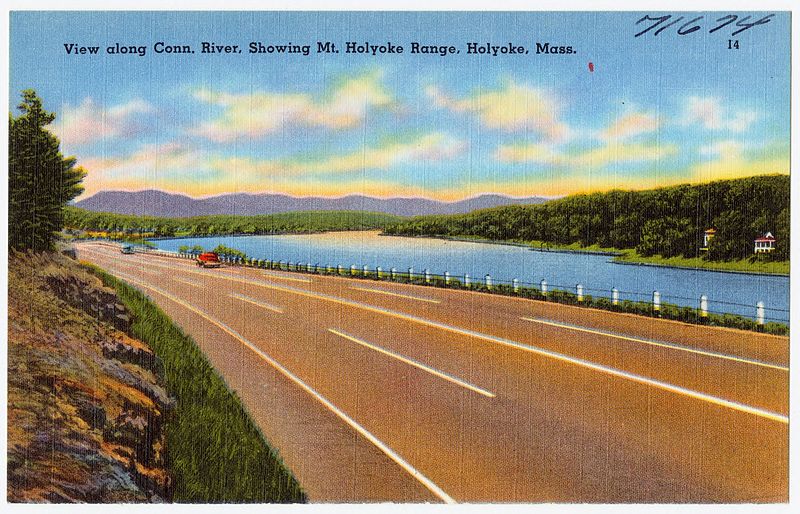
Now it's Route 91 and it's still pretty but so much busier...
Postcard view of the Connecticut River Valley circa 1930-1945, Boston Public Library Tichnor Brothers collection #71674. Courtesy of Wikimedia Commons: https://commons.wikimedia.org/wiki/File:View_along_Conn._River,_showing_Mt._Holyoke_Range,_Holyoke,_Mass_(71674).jpg

I spend a lot of time on the road these days, and though I never used to be much of a podcast listener, I’ve become a convert, largely thanks to these several podcasts that keep me company on my peregrinations:

For a short thoughtful dose of poetry

  • The Slowdown, with Tracie K. Smith – a 5-minute daily dose of personal reflection and a single poem, read by a US Poet Laureate. She usually talks more about what the poem makes her think of, rather than the technicalities of the poemcraft, but sometimes there’s a bit of that too.

For the joy of listening to stories, with great voice acting and diverse authors/cultures

  • Levar Burton Reads – Reading Rainbow for grown-ups.  Mostly speculative fiction, but with a dash of anything and everything else, with introductions and conclusions where Burton talks about what draws him to these short stories. (Dangerous to listen to on late night drives because his voice is so warm and comfortable it’s like a bedtime story, but great for keeping calm in rush hour traffic!)
  • Circle Round – Hosted by WBUR with the tagline “Where storytime happens all the time,” this is kid-safe folktales and fairytales, from many cultures, with fabulous guest actors/readers and great sound and music effects. It’s more like a radio play than a single-reader storytime, and while it’s pitched to kid listeners, with suggestions for conversations and activities to do with one’s family/friends after each story, the stories themselves are ageless.

For story-craft, author interviews, etc

  • Cooking the Books – Hosted by two authors, Fran Wilde and Aliette de Bodard, ‘where genre fiction meets food,’ each episode features an interview with an author talking about a recently published or about to be published book, with questions mostly focused on food and worldbuilding, but with fun departures into other parts of storycraft, personal interests, etc. I add a lot of books to my TBR list from this podcast. They also have a recipe from each author on the website, which is fun.
  • Imaginary Worlds – Hosted by Eric Molinsky, a show about the worlds we create, how, and why.  It’s both about creators and fans, the experience of fandom in many forms, and across many platforms, including books, movies, games, and more. Not every episode speaks ‘to me,’ but there’s humor and interesting things to think about in every episode, even the ones that are initially more of a stretch for me to appreciate.

For word-geekery

  • Lingthusiasm – “A podcast that’s enthusiastic about linguistics by Gretchen McCulloch and Lauren Gawne.” I’ve always been fascinated with words and languages, and in another reality there’s likely a version of me that decided linguistics was the way to go. This universe’s version of me enjoys listening to people who know what they’re talking about be excited about things like the sounds you stop hearing once you’re no longer a baby, or the way concepts of color are constructed in languages around the world, or that ‘every word is a real word.’ It gives me thoughts about world-building, of course, but it’s also just fun and gives you random cool facts to bring up at the dinner table.
Uncategorized

“Saving Mr. Banks” and the enduring power of story

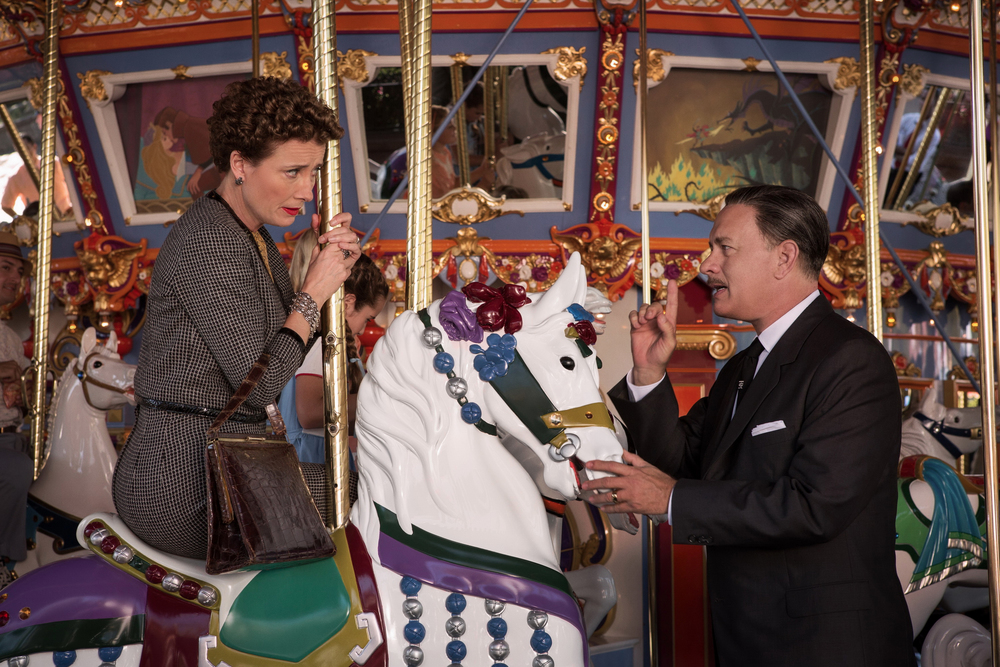
The carousel scene from Saving Mr. Banks

I’m too late on the carousel to offer a fresh perspective on Saving Mr. Banks–a good many people have written reviews already, and I have no inclination or need to echo what’s been said repeatedly (but yes, fabulous acting by the entire cast start to finish, and I’m not sure I’ve ever been so happy to see Bradley Whitford on the screen [too long since I’ve seen The West Wing, clearly]).

However, regardless of historical accuracy or good acting choices or mildly amused acknowledgement of a certain sort of self-interest in Disney producing this story in the first place, what made this movie so powerful was the way it got me right where I live.   Yes, this is an amazing story about families, and a little about keeping some of the magic that’s crucial to childhood into the way you survive adulthood too, and a lot about the clash of two intense personalities, but it’s mostly about the enduring power of story.  Tom Hanks’ Disney doesn’t win over Emma Thompson’s Travers until he not only talks about the value of story and of story tellers, but he actually puts himself out there *as a storyteller.*  She’s only really seen the actions of the business man, heard lip-service to his role as father, and bore witness to his constructed public figure–and it’s the story that finally gets through to her.   Hanks’  Disney tells the audience he’s been in her shoes when trying to protect ‘the Mouse,’ but even if we believe he has the best intentions towards her characters, she can’t see it until he offers her something real in return.  It’s brilliant, and even if I had gone into the movie with as much reluctance as the on-screen Mrs. Travers (I didn’t, I was prepared to be charmed from the first), that moment would still have gotten me.  As it was, it knocked the breath out of me instead.  Story matters, and if it matters to each of us a little differently because of who we are and where we come from, in the end it still helps us understand each other, even if we can’t agree on the dancing animated penguins.

I now have a serious (serial?) case of needing to a) rewatch Mary Poppins, b) read the original books, c) go back to Disneyworld.

…I’d call that effective story telling.  *laugh*

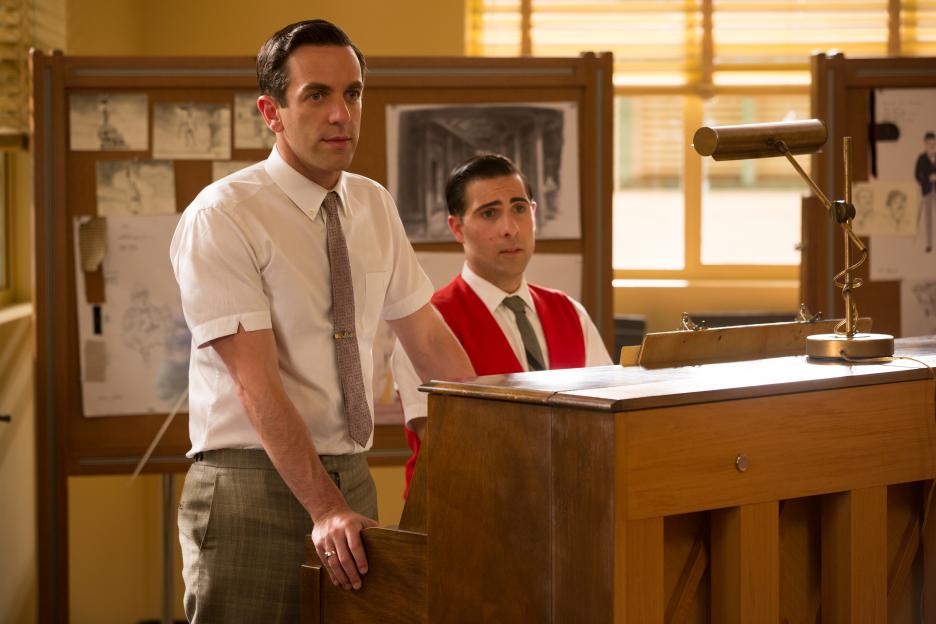
Also? I totally loved these guys.  I am always appreciative of music's storytelling power, and these two played their parts to the hilt.
Also? I totally loved these guys. I am always appreciative of music’s storytelling power, and these two played their parts to the hilt.