
Uncategorized

A theory about Luke Skywalker, fan reactions, and story structure

I don’t write about a lot of fannish things here, but anyone who knows me knows that I grew up a Star Wars fan, and certain stories at certain times have a really formative effect on the way you see and create stories from there on. As my witness, see all those Pixar artists and storytellers who are my age and grew up on R2-D2, C-3PO, Johnny 5 of Short Circuit, and various other tragi-comic helpful robots of the 1980’s (SpaceCamp and Flight of the Navigator and Asimov’s Norby series)…and who then went on to create Wall-E.

So some stories really stick with you, and good books do too, and since reading Carriger’s The Heroine’s Journey I have not been able to stop thinking about it in relation to that first deep love of mine, Luke Skywalker and his rebel space family. Luke has been the epitome of ‘heroic’ to me since I was tiny; kind, hopeful, sometimes clever and sometimes just lucky, a bit of a mix of brash and bashful as the situation demands, and–most importantly–to a fault loyal to his friends and family, regardless of their species or model number. (“Your droid’s pretty beat up, want a new one?” “Not on your life, that little droid and I have been through a lot together.”)
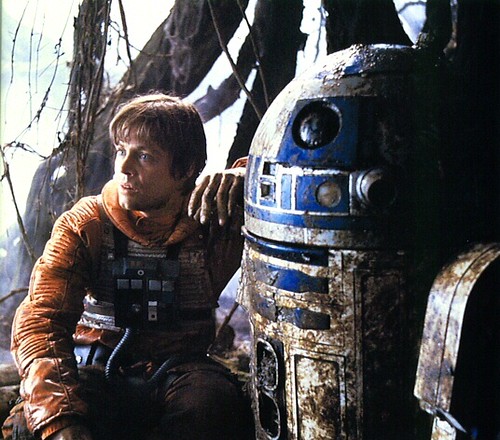
Scene from Empire Strikes Back: Luke  Skywalker in orange flightsuit is sitting next to R2D2. Both are muddy in the aftermath of the droid's near-ingestion by swamp shark.
Very glad the swamp shark didn’t eat you, my friend.

In the fannish corners of the internet that I occasionally haunt, there was a lot of upset about Luke’s arc in The Last Jedi, followed by some breaths of relief and recognition in his brief appearance at the end of The Mandalorian Season 2. People (including Mark Hamill, apparently) didn’t feel like the Luke they saw hiding out on that wild Irish island reflected the Luke of the original trilogy. He was too bitter, too cynical, too lonely, and too judgmental to feel like the same man who tossed his lightsaber away in the face of hatred and greed personified, who saved and forgave his father, and who never lost faith in his friends. There was hope, then, when he seemed a little more familiar as he came to collect Grogu to become a Jedi student.

And those same corners of the internet were not terribly happy with Luke’s characterization in last week’s episode of The Book of Boba Fett, even as there were justified giggles of glee over Force-skipping Grogu on a walk through a bamboo forest. Fans (myself included) who love Luke Skywalker for the gentleness, forgiveness, and hope that he embodies in the original trilogy were not super keen to see him forced into the same failings of previous Jedi generations, making a functional toddler attempt to choose between the traditional (lonely, failed) Jedi path and his affection for Din Djarin, walking disaster and accidental space dad. People watching this storyline felt betrayed.

And here’s where we get to my theory. Carriger says in her book that one of the best way to lose your readers (viewers, listeners) is to make them think they’re in for one kind of story, and then giving them something that doesn’t follow the signposts they expect. Story structures, themes, tropes, they all help build expectations that support and explain character growth, plot decisions, etc.

George Lucas has repeatedly talked about the influence of Joseph Campbell and the Hero’s Journey on his writing of Star Wars, and people map that journey onto Luke Skywalker all the time. Refusing the call (“I’m not going to Alderaan, I’ve got to stay here and take care of the harvest…”), magical aid (“your father’s lightsaber”), journey to the Underworld (trash compactor), death of the mentor (Obi-Wan’s sacrifice), and victorious battle/showdown (blowing up the Death Star) are just a few of the traditional signposts of a Hero’s Journey.

However, in the ultimate run of the trilogy, I would argue that Luke is a Heroine, not a Hero. Certain elements appear in both journeys, including trips to the underworld, gaining and losing of allies and power, delays, and ultimate confrontations – but the motivations and the strengths of the hero and heroine are different, not to mention the resolutions. Luke is constantly relying on and returning to his friends when they’ve been separated over the course of the original trilogy, and some of them are nearly inseparable regardless (hi, Artoo!). He prioritizes rescuing his friends from Cloud City over his training with Yoda, against both Yoda’s and Obi-Wan’s advice. He chooses to leave Han, Leia, and company on Endor and go to the second Death Star, not out of a ‘I must do this alone’ motivation of a Hero, who prioritizes isolation and individual strength, but because he’s the best person to try to reach Vader and reawaken Anakin Skywalker, rebuilding a family connection. Plus, he trusts his friends to complete their parts of the mission with their own strengths. That faith in his friends, so strong that the Emperor cannot help but needle him for it, is the same strength that lets him throw away his lightsaber and seek reconciliation with his father rather than revenge. That is a pure Heroine’s Journey resolution — compromise, forgiveness, rather than destruction. And in the last scene, when it looks like Luke might end up alone in the forest with the Force Ghosts, it’s his family who draw him back into the (fire)light. Subtle, that symbolism is not, especially in the light of the prequels that posit ‘family’ as Anakin’s reason for his fall into darkness (oversimplification, but still).

In summary: ultimately it’s Anakin who has the Hero’s Journey here, not Luke.
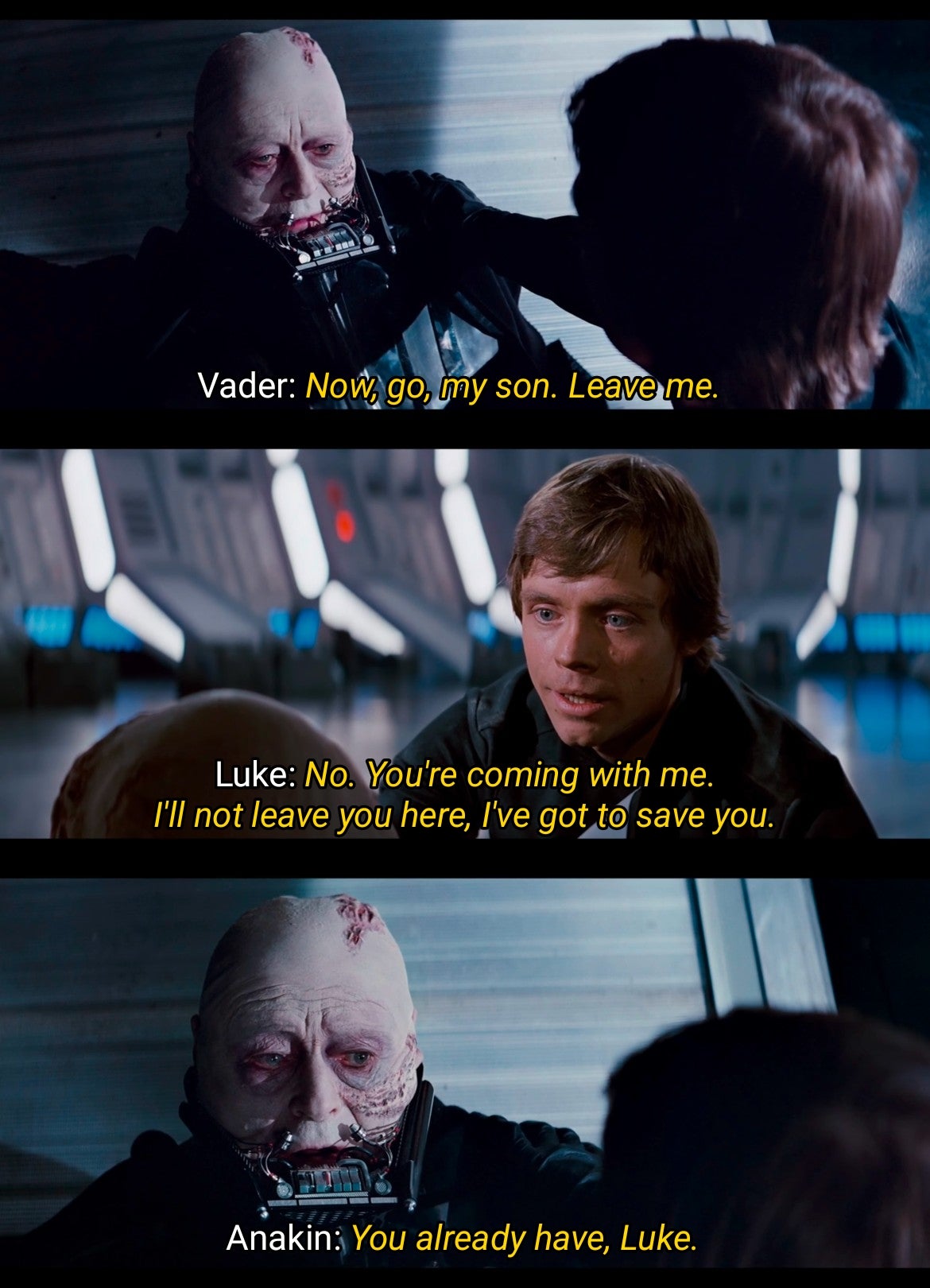
Three panels from the end of Return of the Jedi. Darth Vader, maskless, rests on the ramp of a shuttle, covered in scars. Luke's hand is on his shoulder and Luke looks concerned. Captions of the dialogue read: "Now go, my son, leave me." "No, you're coming with me. I'll not leave you here, I've got to save you." "You already have, Luke."
I’m not crying, you’re crying.

And so we get back to how betrayed and annoyed Luke Skywalker fans are right now. Because Dave Filoni, who directed the episode in question, clearly thinks George Lucas hangs the moon, and I would venture to guess has completely bought into the “Luke is on the Hero’s Journey” idea. (I can’t explain Rian Johnson beyond the impression that his directorial motivation was that meme about “I will pee on everything you love.” There were a handful of good things in that movie, my favorite was the little stablehand holding their broom like a lightsaber, my second favorite was the potential of Rose Tico, and that’s another post entirely. But still: they let someone who hates Star Wars direct Star Wars and that was dumb.)

So fans are expecting Luke post-Return of the Jedi, the triumphant heroine who supports his family (found and otherwise), values connections, prioritizes understanding and forgiveness, who has learned something from the mistakes of his mentors. And in the recent Book of Boba Fett episode they are getting…the opposite of that. Luke looks to be going down the same (Hero’s) lonely and repressed road as that of the Jedi at the end of the New Republic, asking ridiculous emotional sacrifices of children too young to understand the choices they’re being asked to make, training a new generation of Heroes who think attachment is a weakness and solitude a strength.

(Honestly, it would serve *this* version of Luke right if Grogu decided to go back to the Mandalorian and ride along in the starfighter-with-babyseat. Do you know any toddler who will pick a shiny toy over their parental figures when the chips are really down? There’s a reason parents everywhere lament being unable to use the restroom in peace.)

I’m writing this Tuesday night, so there’s still hope they turn it around for the end of this series/season. We’ll see what tomorrow’s episode brings. Like Luke (and, because I cannot end this post without saying so, like Leia, whom I love equally), I choose hope.
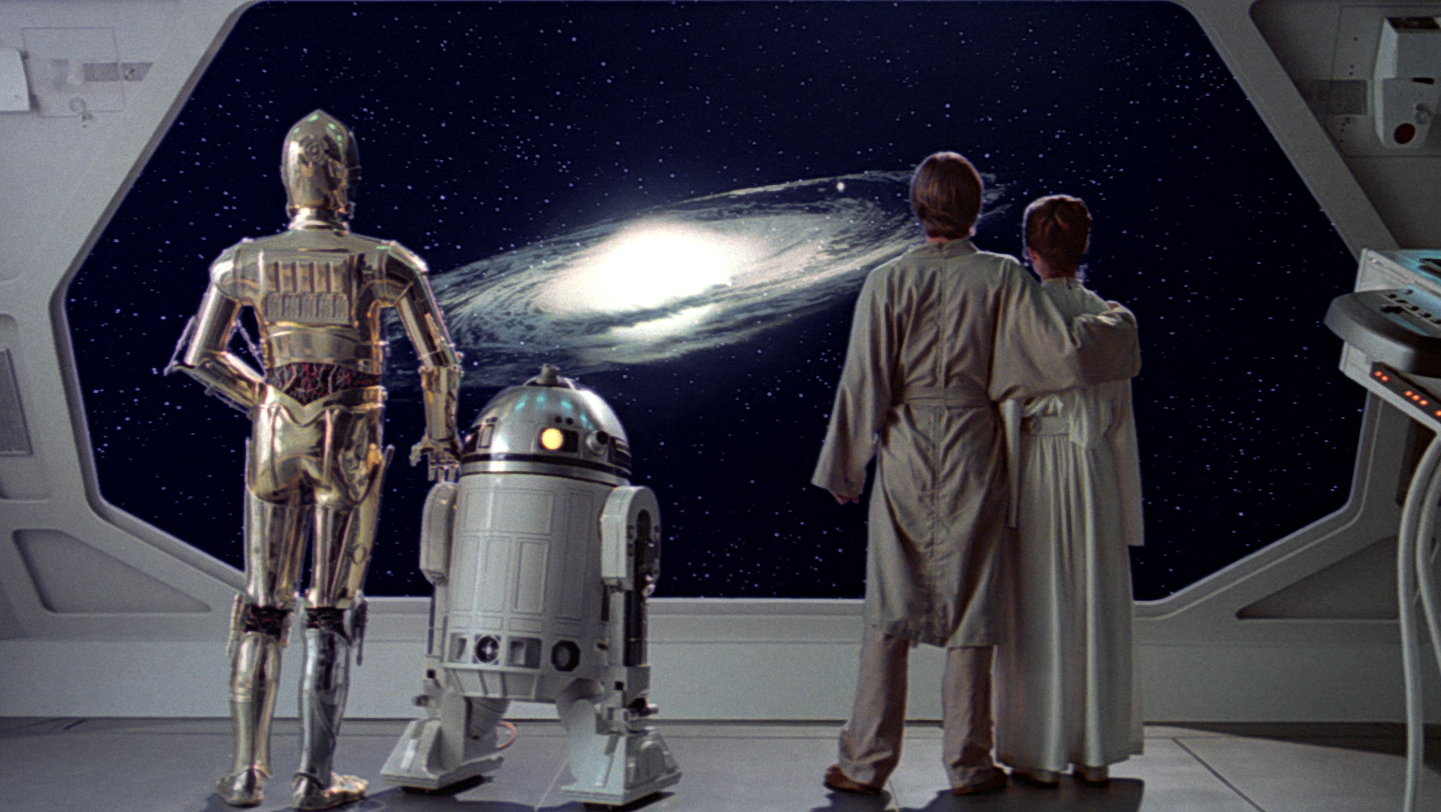
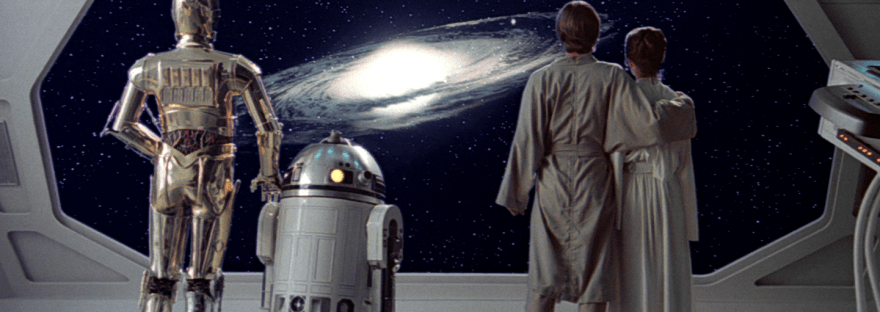
End shot from Empire Strikes Back. C3PO, R2D2, Luke, and Leia stand at a starship window looking out at a spiral galaxy. Luke's arm is around Leia's shoulders, and C3PO is similarly resting a hand on R2D2. It is both sad and hopeful as they contemplate rescuing Han from the clutches of Jabba the Hutt.
When things look bad, Heroines rely on each other.
Uncategorized

At home in a galaxy, far far away

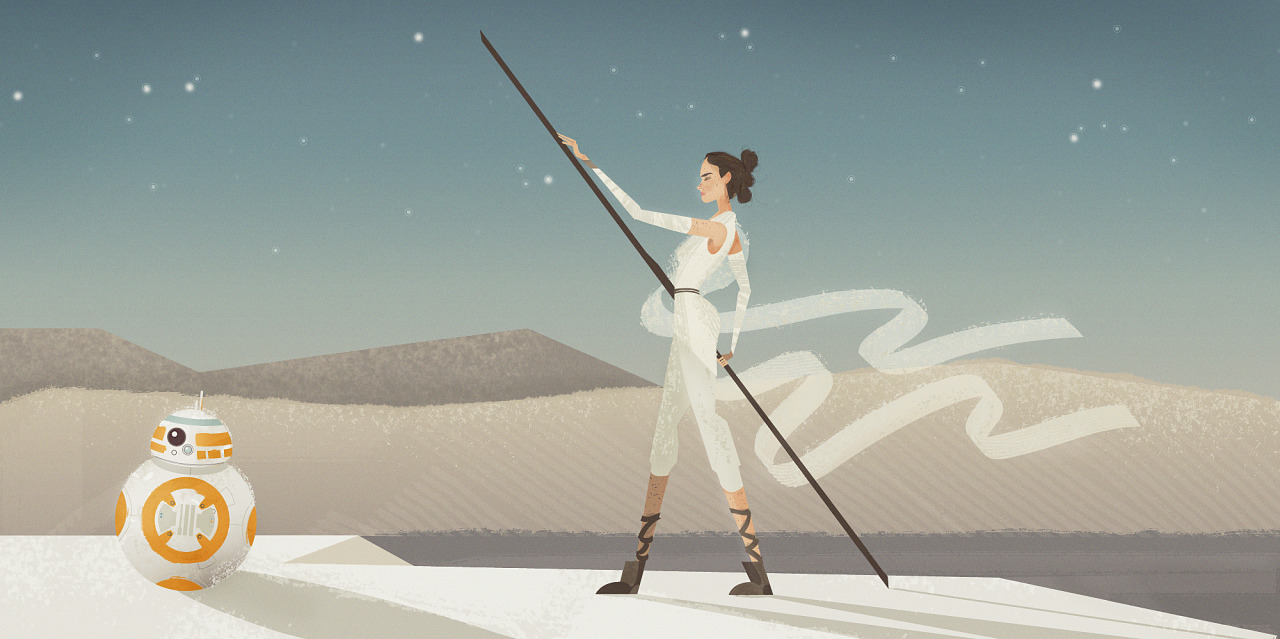
The Force Awakens is everywhere! I promise this isn’t about to become a Star Wars blog (I know, Brain Popcorn has already felt the Force.) However, I have been a Star Wars fan for all my conscious life, so the past few weeks have been really awesome for me. I’ve watched the movie twice now, and have been enjoying the reactions, speculations, and energy exploding all over the internet, my friends’ and family’s conversations, and also my pile of Christmas presents. (It was a Merry Geekmas, indeed!)

james jeffers tfa illustration
Illustration by James Jeffers, http://jamesjeffers.tumblr.com

Why is Star Wars a story that so many people dedicate so much passion and attention to? Some of its appeal has to lie in the way the characters and the story fit certain archetypes, while telling universal stories of love and loyalty, curiosity and courage, hope and betrayal and redemption. In fact, in the first round of media coverage, a young Mark Hamill described Star Wars as “The Stuff Fairytales are Made Of.”

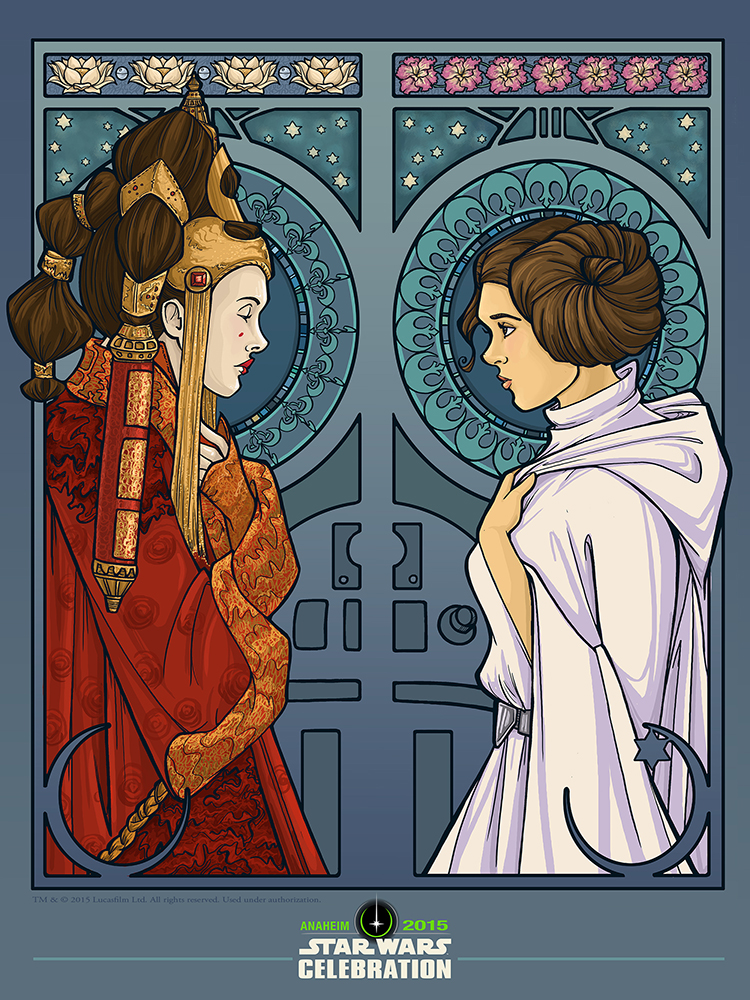
karen hallion padme leia
Illustration by the epic Karen Hallion, http://karenhallion.tumblr.com

As an avid fairy tale fan myself, I have to agree.  And in honor of the way Star Wars hearkens to some very old methods of storytelling, here is a poem I wrote for a high school English assignment (a long time ago in a galaxy approximately 35 minutes away by MBTA).  We were told to write an epic story using the literary style of Beowulf, including alliteration, assonance, and kennings. (We were also told that rhyme was unnecessary, but I was bad at avoiding rhyme in high school, so take it up with 15-year-old me.)

Any epic story would do, and therefore…

The Destruction of the Death Star

Now the dreaded Death Star drew near,
and the rebels, brave and bold,
fearlessly flew to fight their foe.
Luke Skywalker, our hero young,
was one of those who made the run
through narrow trench, with twists and turns,
escaping death from laser burns.

Though many tried, their fighters frail
could save them not from deadly hail.
In screaming-balls and flying-crosses
they burst in burning balls of gases.
Darth Vader, evil robot-breather
singled out Skywalker’s ship,
but Force-protected on Luke flew
pursued by Vader’s implacable ire.

Handsome Han Solo, sarcastic smuggler
spun vanquished Vader to space’s void,
leaving Luke alone to finally fire
the deadly blast to the dark-moon’s heart.
With the Death Star destroyed, the duo landed
greeted by lovely Princess Leia
giving them both due glory and fame,
the heroes of the new rebel era.

orig trio

What literary style would you use to tell the story of the new Star Wars cast of characters? Have you got a good kenning for BB-8? Share your best scavenger-meets-stormtrooper couplet below!

Uncategorized

Recent Reads (and a moment of cute)

As much reading and writing as I do in front of a screen these days, it’s still nice to curl up in a sunny corner that has *just enough* shade and enjoy the feel of a book in hand.  (I get so much reading done in the spring!)  Here are a few of the books I’ve read and enjoyed in the last week or two:

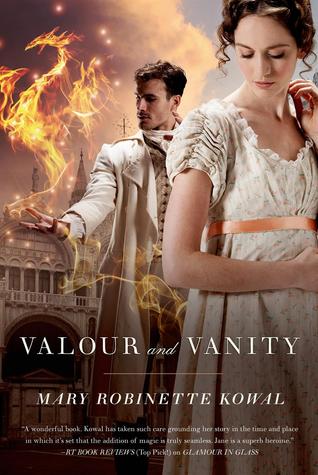
valour and vanity

Valour and Vanity by Mary Robinette Kowal – I’ve loved this series from the beginning (Shades of Milk and Honey), and this latest installment was just as entertaining, full of the joy of someone who really loves both the period and the universe she’s created within it.  Unlike some authors who lose interest in their characters once they’re married, Kowal gives us a plot with well developed characters undergoing understandable relationship growing pains even well into a married partnership.  Jane and Vincent have always reminded me of the best of Elizabeth Peters’ Amelia Peabody and ‘the irascible Emerson,’ so it was fun to return to their dynamic.  Plus, heists! Cons! A Doctor Who cameo!  As a bit of light reading after a steady diet of poetry for the last several weeks, it was perfect.   I highly recommend it if you’re fond of historical fantasy, Regency England, bonus Venice and glassblowing, and/or magic.  Plus, Kowal is the mind behind the awesome Month of Letters I’ve mentioned before, and she wrote me a really awesome response to the letter I sent her main character, Jane, Lady Vincent.

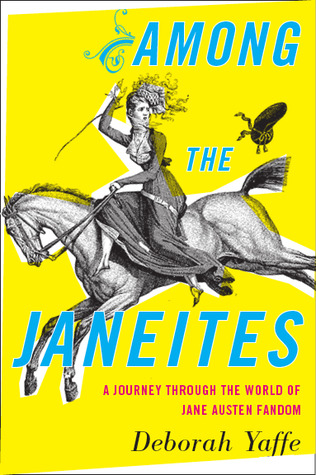
among the janeites

Among the Janeites by Deborah Yaffe – I do a fair amount of research at work, so when I’m off duty I tend not to read a ton of nonfiction, but a friend lent me this book and I was excessively diverted.  While not purporting to explore the entirety of Austen’s popularity, her fans, or global fandom, this book did a pretty admirable job of exploring the many ways people relate to Austen and her work, the possible reasons they are drawn to her, and the history of the founding, growth, and eventual membership explosion of the Jane Austen Society North American branch.  Fandom history is always entertaining to me, and while I did not recognize a ‘me’ style fan in Yaffe’s accounts, I certainly have encountered some similar personalities among other Austen fans or fans in general.  (I did, after all, declare in high school that ‘Everything in life relates to Jane Austen.  Or Star Wars.  And possibly both.’)  If you have any affection for Austen’s work or any curiosity about the phenomenon that is her pop culture presence, this is a quick and enjoyable read.

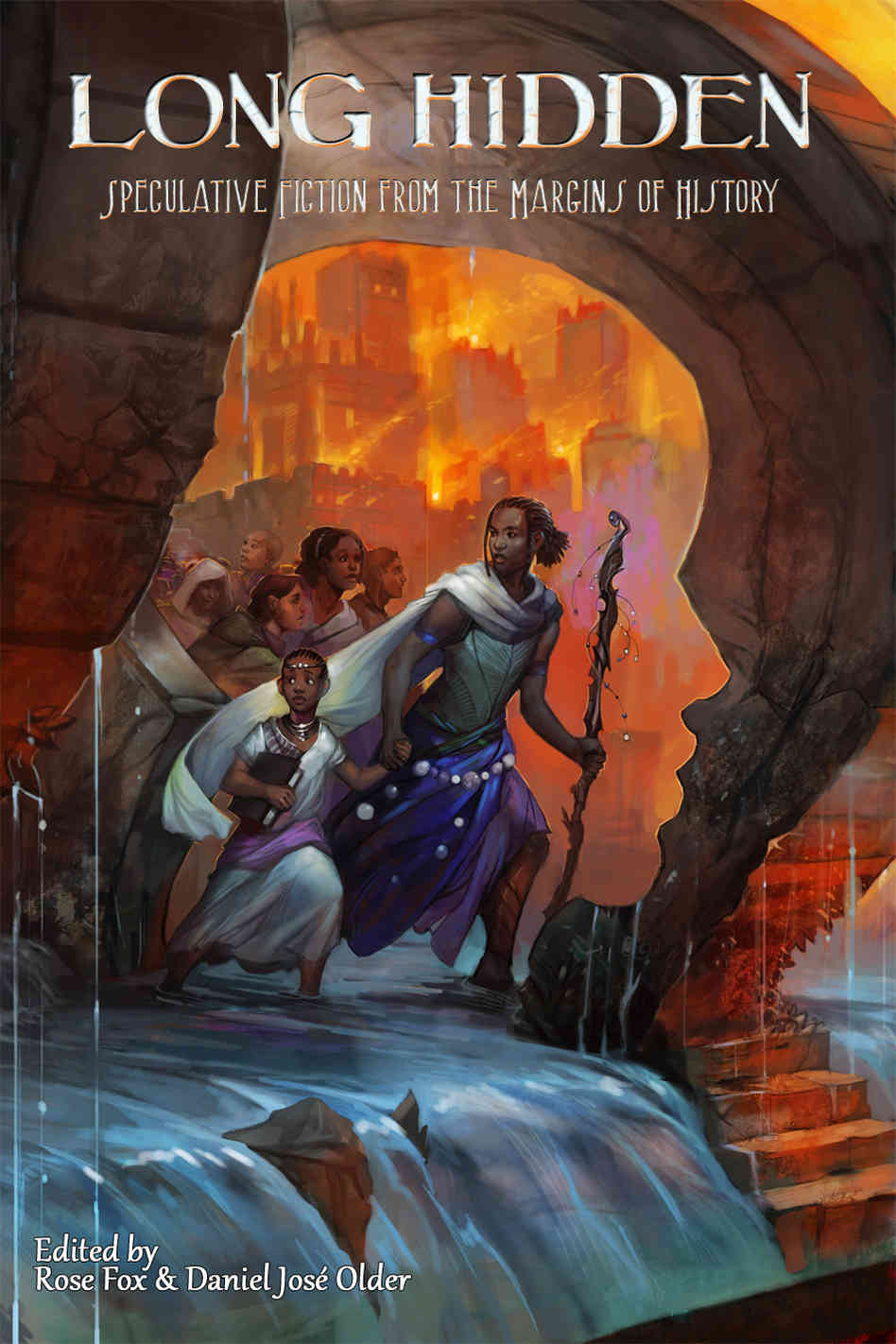
long hidden

 Long Hidden short story anthology from Crossed Genres – I’m actually only partway through this anthology so far, but I’m having a fascinating time while reading.  The voices are as diverse as the editors proclaimed, the vocabulary rich, and the assorted magic systems and other fantastical elements so far have a lot of emphasis placed on dreaming.  I can’t tell yet whether that last element’s due to editorial bias, something that non-Western stories have in common, the product of small sample size, or simply what happens when the author/main character exists in a tradition where their voices and actions are belittled in a prejudiced or oppressive society.  It’s certainly giving me a lot to think about!  My one quibble with the anthology so far is physical–the margins on each page are nearly nonexistent, meaning one opens the book to a wall of text with little white space for either ocular rest or helpful marginalia.  I don’t write in my books much, but I can see where one might be prompted to with a collection like this, and would be forced to resort to post-its instead.

Did you get through all that?  Then I present to you, a moment of cute:

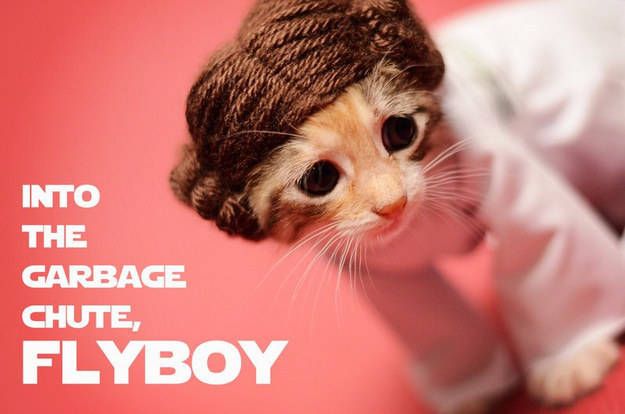
kitten leiaKittens dressed as fantasy characters.  You’re welcome.

What have you been reading recently?  I’m always looking for the next page turner…