
Uncategorized

Should everyone write poetry?

It’s National Poetry Month! Lots of fun poetry news and discussion to share with you this month.

I recently re-encountered an article from 2014: “Everybody Should Write Poetry” by Peggy Rosenthal. I had bookmarked it because I was drawn to the idea that “everyone needs to nestle down inside language to get to know its ways, to get comfy with how playful it can be, how expansive, how unexpected in its openings to new experience.” It reminded me of the kinds of conversations I’ve had in the other part of my professional life, among those of us who work in museums and in education and in the arts. Participating in something; taking a class in glass fusing, for instance, gives you an appreciation for the process and the artistic choices and the intricacies of both which you keep forever, however lopsided or surprising your own* efforts turned out to be. (*Meaning, of course, my own!)

On the same day I apparently bookmarked an article with suggestions on “How to Read Poetry” – not requirements, but suggestions on ways to approach it without the apprehension of ‘getting it wrong.’ Again, a discussion that we keep having in museums and symphonies and similar venues; how do we best let people know that, barring actual destruction, there aren’t really ways to be ‘wrong’ in such spaces? (Perhaps we should take some marginalia notes ourselves.)

So what do you think? “Should” everyone write poetry? (or make art? or play music? or fix a car?) What’s your favorite way to approach a new poem or experience?

Finally, a shameless plug, because I firmly believe that while ‘shoulds’ are odious, ‘go for its!’ are necessary and beautiful.  Therefore, if you feel like writing poetry, go for it! and you can even do some writing with me:

“Something New, Something Strange: Found Poetry” at Longfellow National Historic Site, this Thursday, 4/7, at 6:30 pm
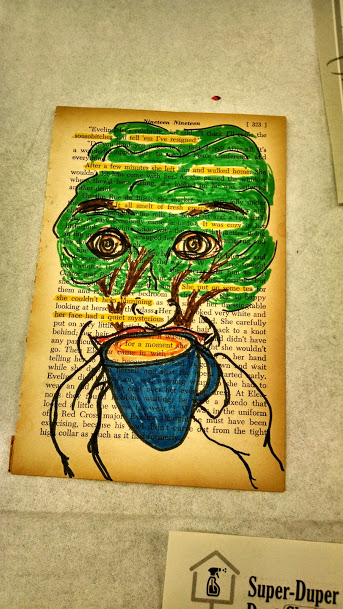
visitor altered page at PEM

“Grace Unto Every Art: Poetry from Visual Art” also at Longfellow National Historic Site, Saturday, 4/16, at 2 pm
p5250054

“The World in a Grain of Sand: Incorporating Scale in Poetry and Art” at the Peabody Essex Museum, Saturday, 4/30, at 3:15 pm (Part of the Mass Poetry Festival!)
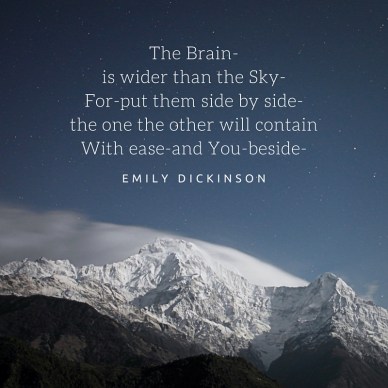
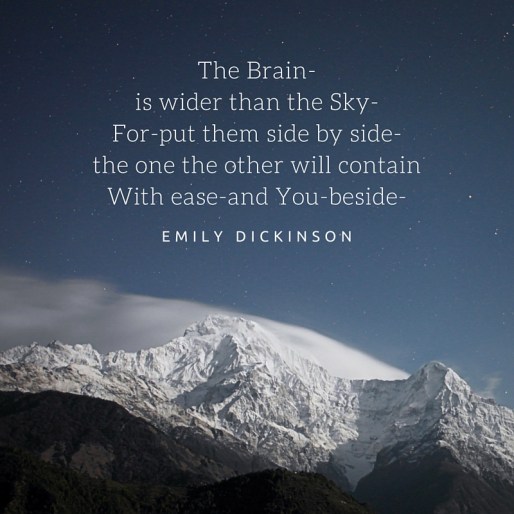
The Brain-is wider than the Sky-For-put them side by side-the one the other will containWith ease-and You-beside-

Uncategorized

Poetry Ahoy! Upcoming Workshops

National Poetry Month is still more than a month away, but I’m already in planning mode. (Meanwhile, did you know February is Library Lover’s Month? Go hug your favorite librarian!)

meg for emporium32 2015
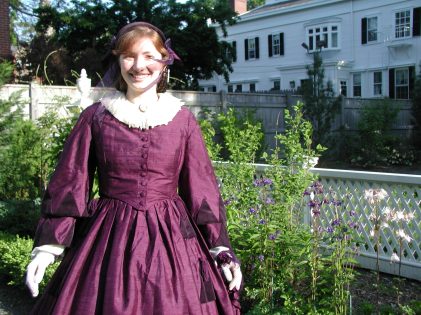
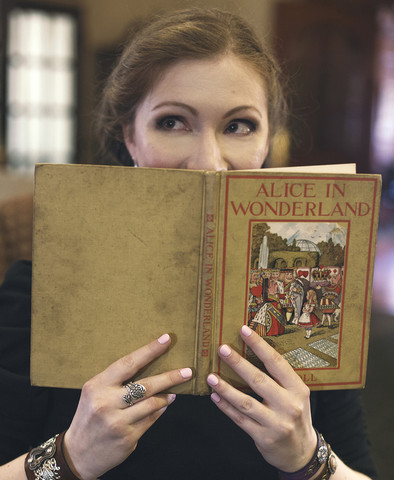
‘Found poetry’ from old books! Playing with scale in literature and art! April is going to be awesome. (Photo by Nate Buchman, http://www.natebuchman.com/ for Emporium 32, http://emporium32.com/ Go check them out if you like the jewelry I’m wearing in this photo.)

I’m very pleased to announce that I’ll be leading three poetry workshops in April!  If you’re in the driving-distance-from-Boston area, I hope you’ll stop by and join me for some playing with words and art.

Something New, Something Strange: Found Poetry
April 7, 6:30 pm, Longfellow National Historic Site, Cambridge

In Longfellow’s poem “Keramos,” a potter at his wheel says, “All things must change/To Something new, to something strange.” Recombine, illustrate, and give shape to old forms using found poetry techniques with poet and educator Meg Winikates as part of our celebration of National Poetry Month. Please call (617)876-4491 or email reservationsat105@gmail.com to reserve your spot!

Grace Unto Every Art: Poetry from Visual Art
April 16, 2:00 pm, Longfellow National Historic Site, Cambridge

Whether it was shipbuilding, smithing, sculpting, or singing, Henry Longfellow found poetry in all forms of art. Join poet and educator Meg Winikates to explore ekphrastic poetry, enjoy the Longfellows’ art collection, and write your own art-inspired pieces as part of our celebration of National Poetry Month. Please call (617)876-4491 or email reservationsat105@gmail.com to reserve your spot!

The Brain-is wider than the Sky-For-put them side by side-the one the other will containWith ease-and You-beside-

The World in a Grain of Sand – Incorporating Scale in Poetry and Art
Massachusetts Poetry Festival (April 29, 30 or May 1), Peabody Essex Museum, Salem

Galaxies and exoplanets, scanning electron microscopes, 4 million queries per minute on Google: in our ever expanding universe, is the human brain still ‘wider than the sky’ as Emily Dickinson said? What is the role of poet or artist in helping us understand how and where humans fit? Join poet and museum professional Meg Winikates to explore the use of scale in poetry and art in PEM’s Sizing It Up exhibition, experiment with physical and mental scale in your writing, and generate a poem idea (or three!) inspired by the artworks on view.
Buttons for the festival are not yet on sale, so keep checking the MassPoetry site for updates on button sales and scheduling!


Uncategorized

The Power of Improbable Places

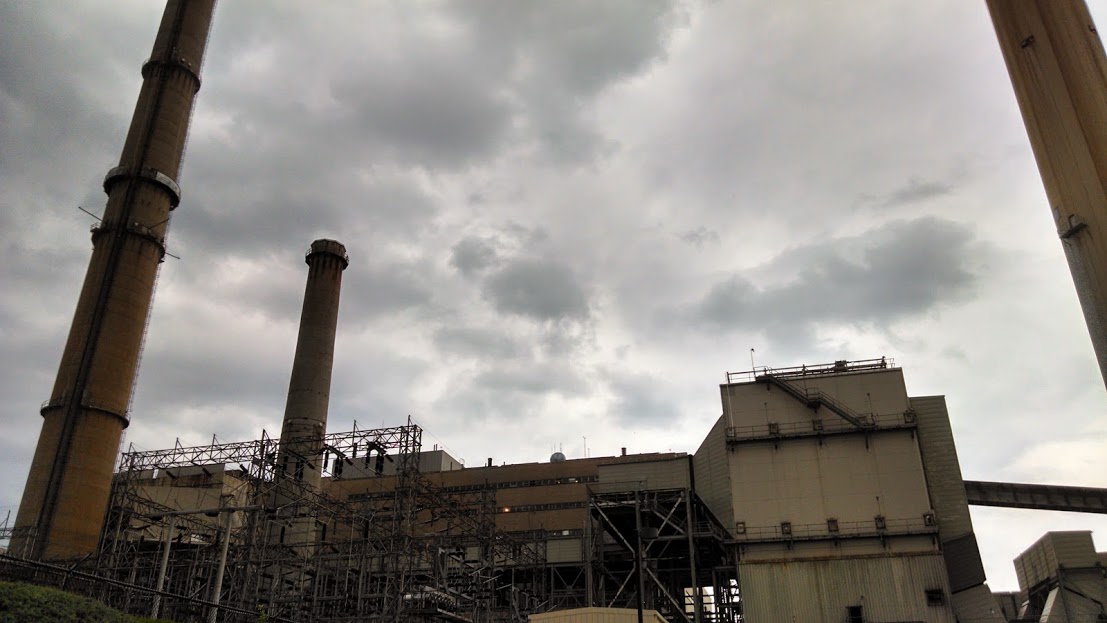
Poet Colleen Michaels is the brain behind the Montserrat College of Art’s Improbable Places Poetry Tour.  And this past Thursday, the improbable location for the latest set of poetry readings was Footprint Power’s recently decommissioned power plant on the edge of Salem Harbor.

Thunderclouds gloom over the quiet power plant.  Photo by me.
Thunderclouds gloom over the quiet power plant. Photo by me.

I was initially dubious and simultaneously drawn.  Having lived in Salem for over 4 years, just on the opposite side of Collins’ Cove from the familiar smokestacks, I’ve absorbed their shadows into the folds of my understanding of the local landscape, and grumbled occasionally about wind direction and sooty windows.  Like most people I know around here though, I’d never been inside.  Hydroelectric plants and windmills at Niagara and in the Netherlands and elsewhere?  Sure!  Coal and oil-fired behemoth in my backyard?  Nope.

So while I wasn’t sure what an evening of readings about ‘the work of power and the power of work’ would sound like, I was totally in for the chance to tour.

As it turned out, the readings were a fantastic variety.  Ranging from reflections on both the grit and the worth of daily grind to the concept of living on or off ‘the grid’ to poems inspired by this very power plant and the future of energy in the 21st century, the poems and poets offered a beautiful and thought-provoking set of mental images.

Check out more of the ‘cathedral of steel’ and its unusual evening occupants in the gallery below:

This slideshow requires JavaScript.

Local poet January O’Neil also has a nice write-up of the event, where she too highlights one of my favorite moments: the reading ended, not with a headliner or a speech, but a moment of silence that was filled by a recording of the actual crackle-rumble-hum of the turbines when the plant was operating.  It was a very cool kind of ghostly and really made me want to go home and write.

In the meantime, however, have a draft of a poem inspired by my own workplace, and what it’s like on a festival weekend as the visitors are heading out and you’re waiting for that last performer to finish packing up their gear, thinking about attendance numbers and what you’ll put in your program evaluation come Monday…

8 days a week

By Meg Winikates

I tell myself it’s a good ache,
the dull burn in my heels that says
the miles I’ve walked circularly
over this granite floor have made
a lasting impression on me.

My calves recall the frequent dash,
sore hands avert another crash
ff child and chair, of floor and phone,
and whisking fingers vamoose trash—
rub buzzing ears, block joyous drone.

Duty’s done, but wonder lingers—
Did I meet just eyes and fingers?
Save one bad day, help one smile grow?
Made one growler’s heart a singer’s?
Or worn my footprints on this stone?
Enough would be one ‘yes’ alone.

Have you ever encountered poetry or art in an unusual place that helped you to look at it differently?  What places inspire you?