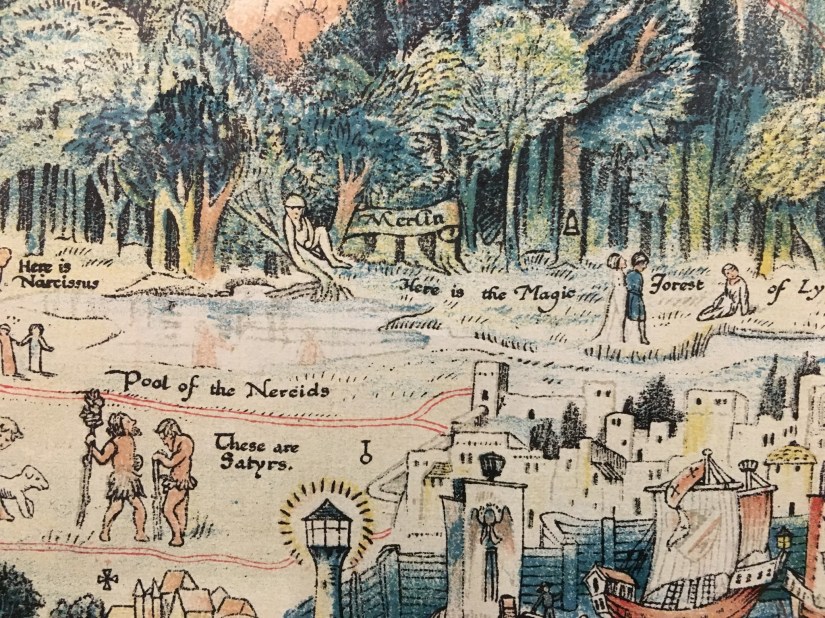
Detail from a map in the collection of the Boston Public Library’s Norman B. Leventhal Map Center.
A few weeks ago, all the sins published my reflections on and exhortations to the wonders of gathering artistic inspiration in museums. (If you missed it, you can find it here.)
This week, they’re back with my best suggestions on how to outfit yourself for a museum exploration. Matthew Henson didn’t head for the North Pole without a coat, after all!
So if you’re suffering writer’s block, or it’s been ages since you went on that school trip to your local historical society, here are my 5 tips on using museums for inspiration.
…Inspiration can come from a fossil in a natural history collection, a scrap of wallpaper in a historic house, the view from a national park peak. What would a taxidermied specimen have to say to its collector? What words still resonate in the walls of an old structure? Whose hands molded the pot whose shards sit in that case, and how do the pieces evoke the whole?
My features essay, “Art Heists for Art’s Sake,” is now up to kick off Issue 3 of the lovely UK literary journal, all the sins!
…the day I stood in front of that Breugel painting and talked poetry with my mother was a turning point for me. Since then, I’ve worked inspiration from other art forms into my creative writing, both poetry and prose, both consciously and unconsciously. Museums have also become my career, both as a museum educator and as a museum advocate. Fortunately, one creative practice informs the other in a rewarding cycle.
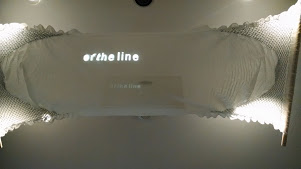
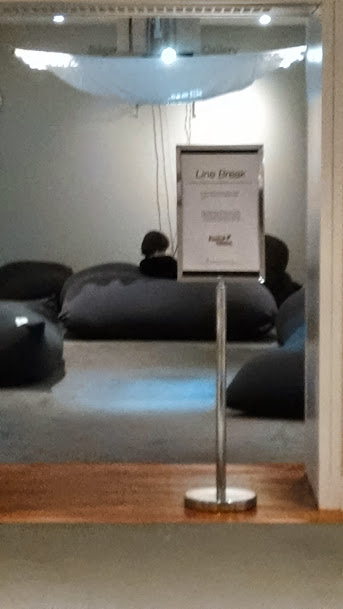
Leading up to the Line Break room at PEM, installation by Colleen Michaels and Lillian Harden
You know that a public space is inviting if there are people in there every time you walk by. When that space is a quiet area in a back corner of a museum set aside for poetic contemplation and respite, you make invisible fist pumps of joy and plan to come back later when you can abuse your staff privilege of getting in there before it opens to the public.
This is exactly what happened with Line Break, an installation at PEM for the Mass Poetry Festival. (Read more about the background of the two artists and plans for the space here: Line Break on masspoetry.org)
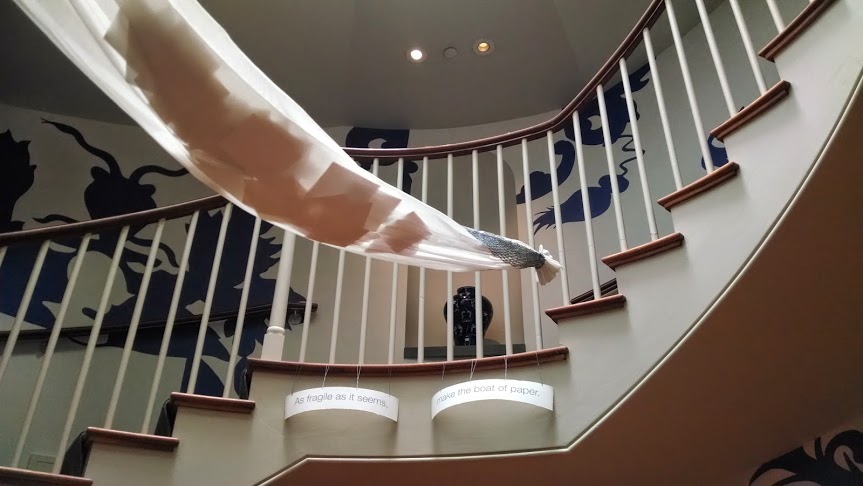
When Colleen and Lillian first approached my colleague and I about a poetry installation during the festival, we were eager to try to make it happen, but neither of us suspected, I think, how successful they would be at creating the atmosphere they described: the soft hum and click of an old slide projector, the feeling of floating as you lay beneath the hammock of words, the wordless invitation of blank books and pure white pencils.
(Blank books always call to me, I always answer.)
Poetry hammock catches words in Line Break
My favorite lines I saw float across the net/hammock were:
“if your net
were knit
by bloom
would it feel
like raised hands?”
And, based off another quote from a few lines later, I wrote this poemlet:
Transformations
Almost feather, almost fin
almost heaven, almost in.
Almost always, almost lost–
What’s the danger? What’s the cost?
Almost sorry, almost wise,
almost perfect in your eyes.
Really, the floor cushions were the part my inner child liked best.
If you follow me on Twitter, you know I spent the past weekend in a whirlwind of poetry and art during the Mass Poetry Festival. It’s my fourth year attending the festival, and the third I’ve been in charge of running family friendly activities that stand at the intersection of the visual and verbal arts. Each year it’s been an interesting challenge to balance my role as a museum educator with my interests as a writer, but I always end the weekend inspired. This year was no different.
As with any good conference, I ended up with days’ worth of things to think about out of a few packed hours, so my next few posts will be reactions to some of the sessions I attended, but I thought I’d start by sharing some favorite moments from select readings I heard.
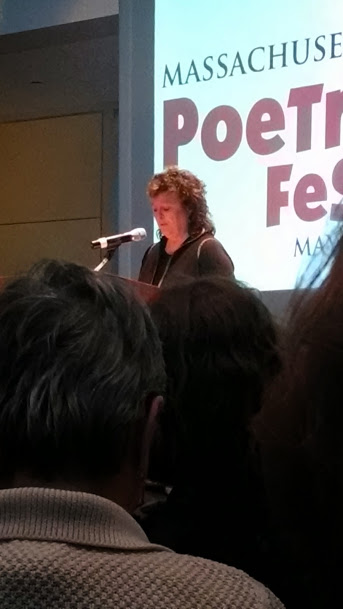
Carol Ann Duffy at Mass Poetry Fest 2014
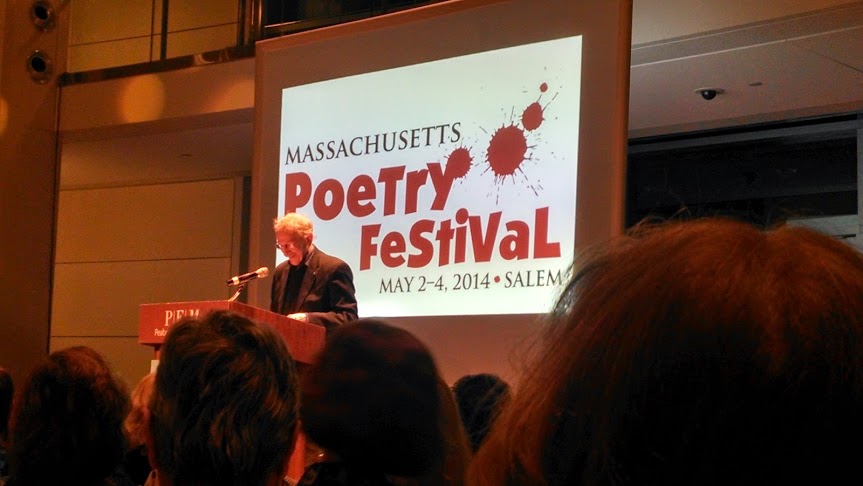
Friday’s headline reading, with Carol Ann Duffy, Phillip Levine, and Heather Treseler was amazing. There was a packed house in PEM’s Atrium, with lots of great energy, and the readings were fantastic. I’ve been an admirer of Carol Ann Duffy since first reading some of her work when she was named the British Poet Laureate, so I expected to enjoy her pieces, but Phillip Levine was a pleasant surprise–I’ve never thought that his poems had a lot to say to me, but there were a few he read that won me over, as did his manner and humor from the podium. I’ve linked to two of my favorite poems I heard that night below:
Phillip Levine’s “Gospel” (Source of the lovely quote used in the post title above!)
Carol Ann Duffy’s “Mrs. Midas” (Brought the whole atrium to a sort of rueful laughter)
Phillip Levine at Mass Poetry Fest 2014
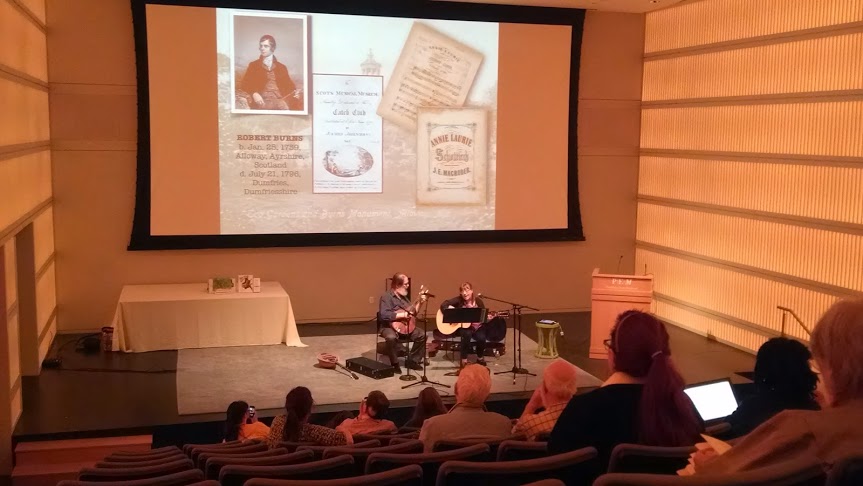
And though I unfortunately didn’t get to hear the entire session as I was about to be running a haiku story time of my own, I really enjoyed the “Celtic Songs” selections read and sung by Jim and Maggi Dalton. They invited audience participation (always an interesting risk!), and had I had a little more time, I would have read this one:
The part of the session I heard was heavy on the Robbie Burns–never a bad choice when one is talking about Celtic poetry and song, and I was amazed and impressed by the sheer volume of instruments the two of them were able to play. Made me want to pick up my flute again!
Jim and Maggi Dalton perform a selection of Celtic music and poetry at Mass Poetry Fest 2014
Still to come: thoughts on ‘poetry of place,’ the connections between poets and water, art installation as breathing space, demystifying the book making process, and what makes for a frustrating or successful workshop experience in this kind of setting!
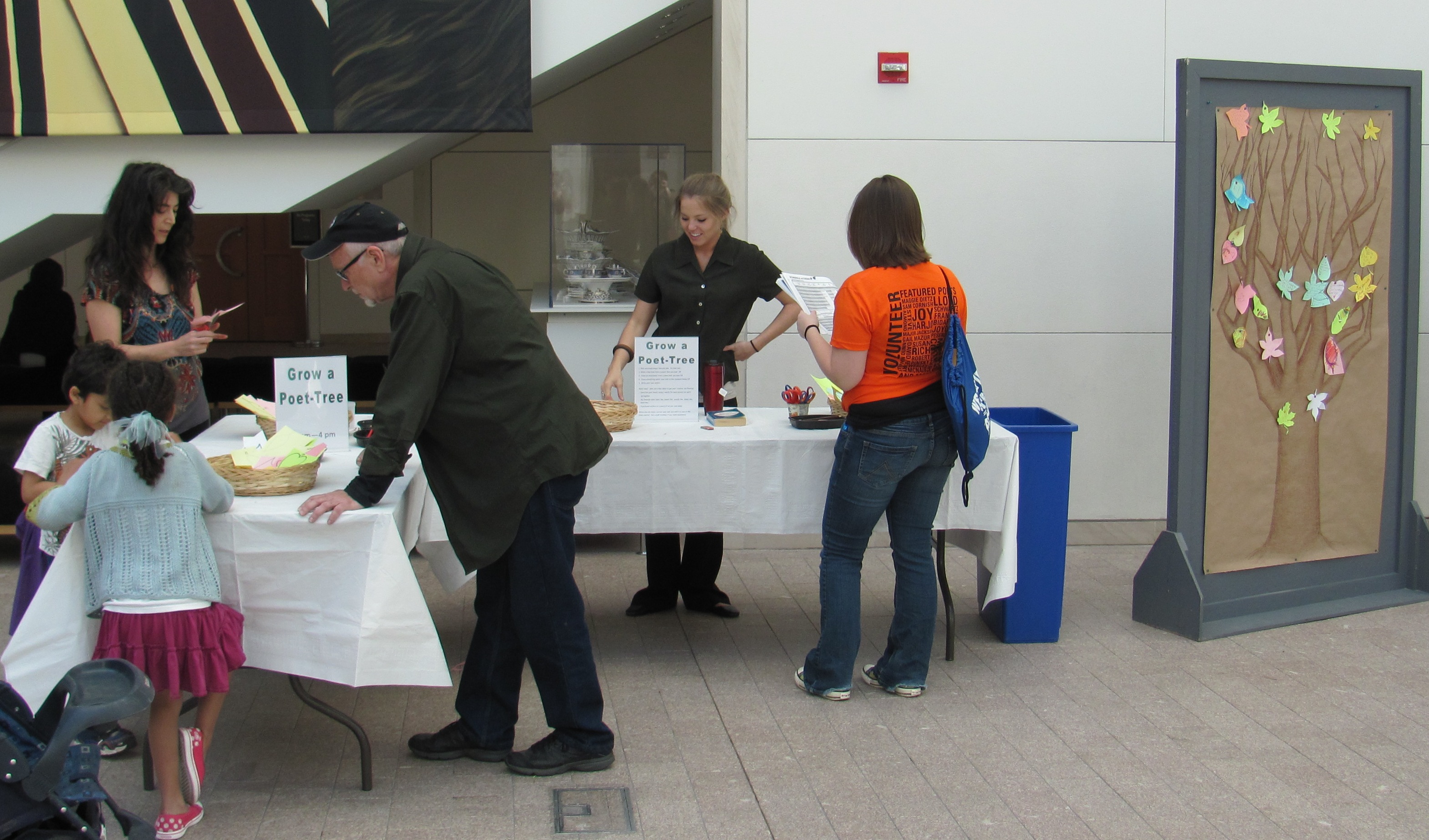
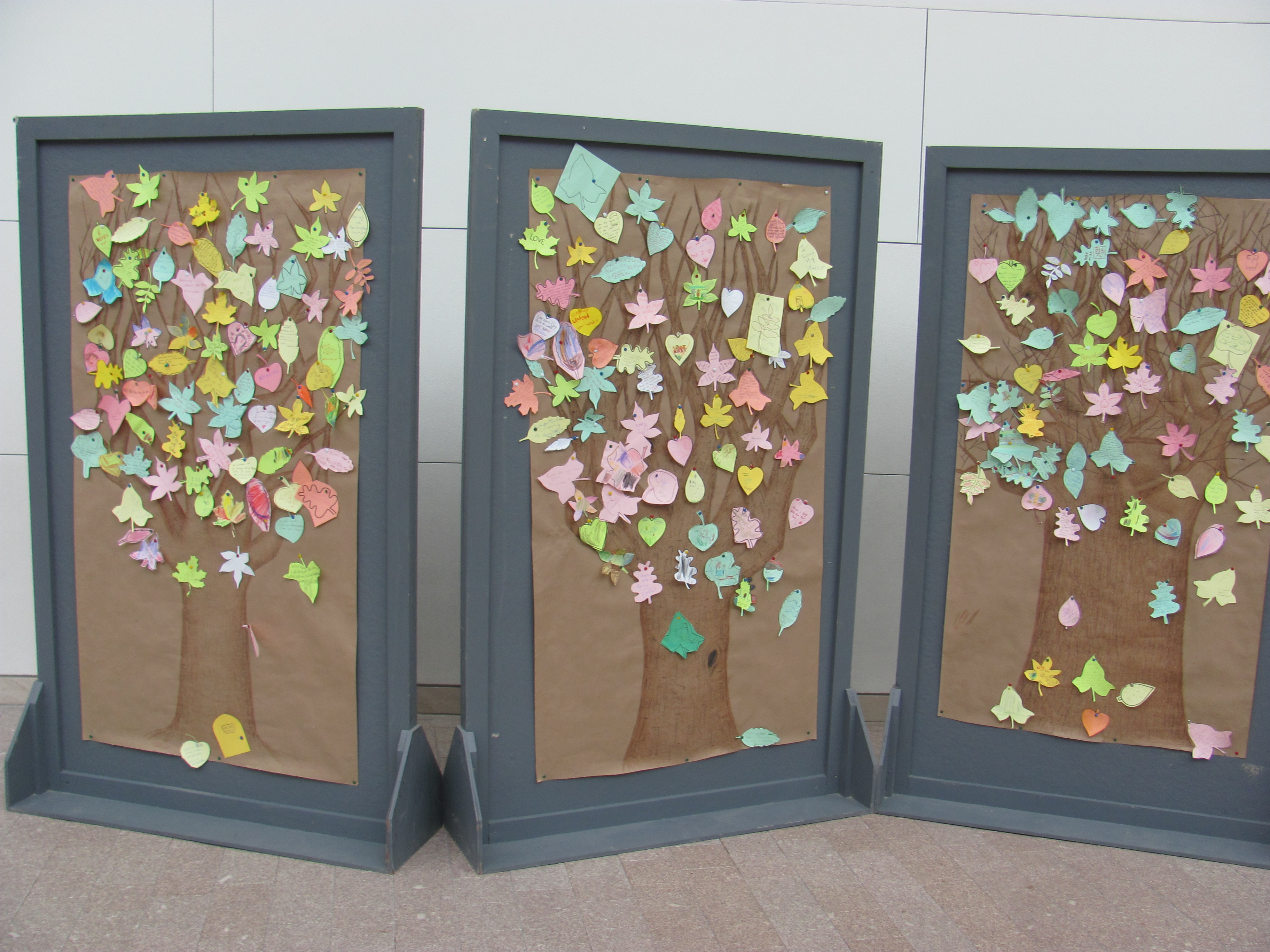
Just a few snapshots from this weekend’s drop-in art and writing activity, “Grow a Poet-Tree” at PEM for the Massachusetts Poetry Festival. Kudos to my intern Kate for drawing three beautiful trees for us to decorate with leaves of original and remembered poetry, illustration, and reflection.
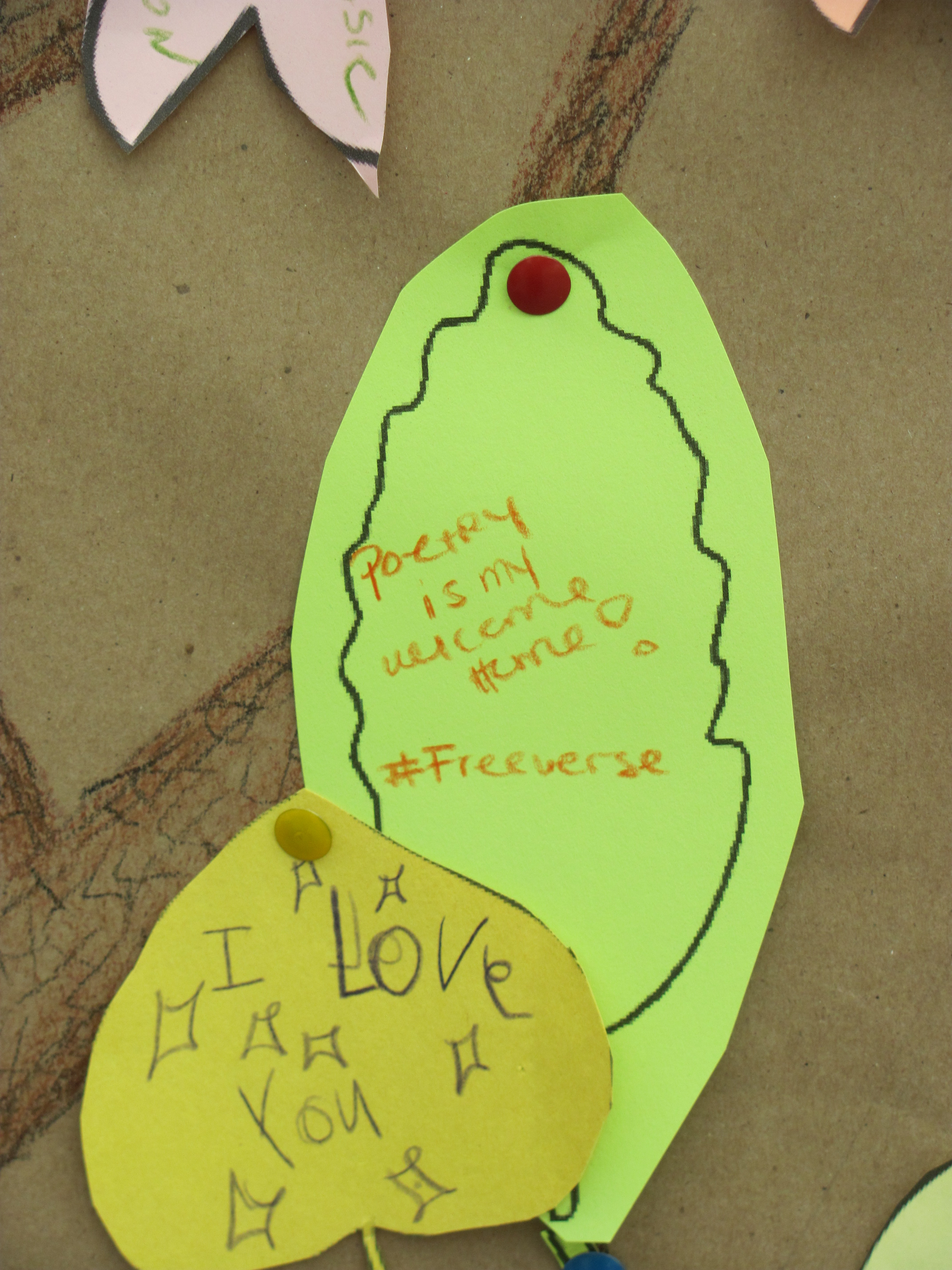
Poets quoted included but were not limited to: ee cummings (the runaway favorite with at least 5 quotes on the trees), Robert Frost, Henry Wadsworth Longfellow (the runner up in popularity, and not my fault), John Masefield (okay, that was my fault), and Shel Silverstein, with a hefty sprinkling of song lyrics (“Morning has Broken” for instance, though no “Amazing Grace”) and a few ad jingles thrown in. Other messages included variations on a theme of ‘save the trees’ (clearly I do my work as an Art & Nature specialist thoroughly…), a lot of ‘I love you’s, and a few witty folk who wrote things like ‘This space intentionally left blank.’ I was most amused by the inclusion of text speak and hash-tags on several of the submissions, I think, but I was also impressed by the way some of the participants chose to address some fairly serious themes even in 2 square inches of space on a public bulletin board.
Greeting early poets and artists of all ages on Friday morning
A few of my favorite additions to the Poet-Tree forest, courtesy of PEM visitors and attendees of the Poetry Festival:
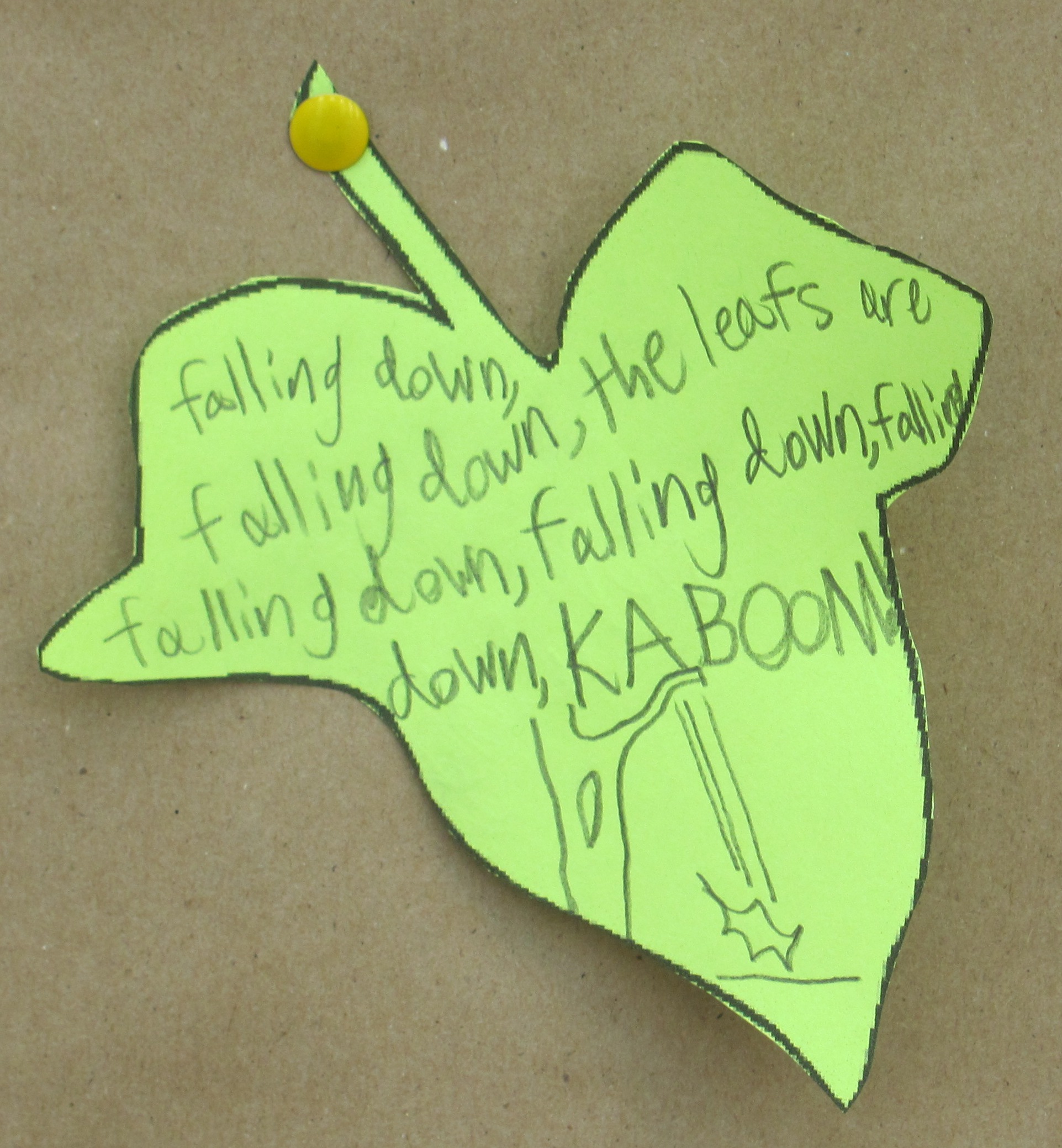
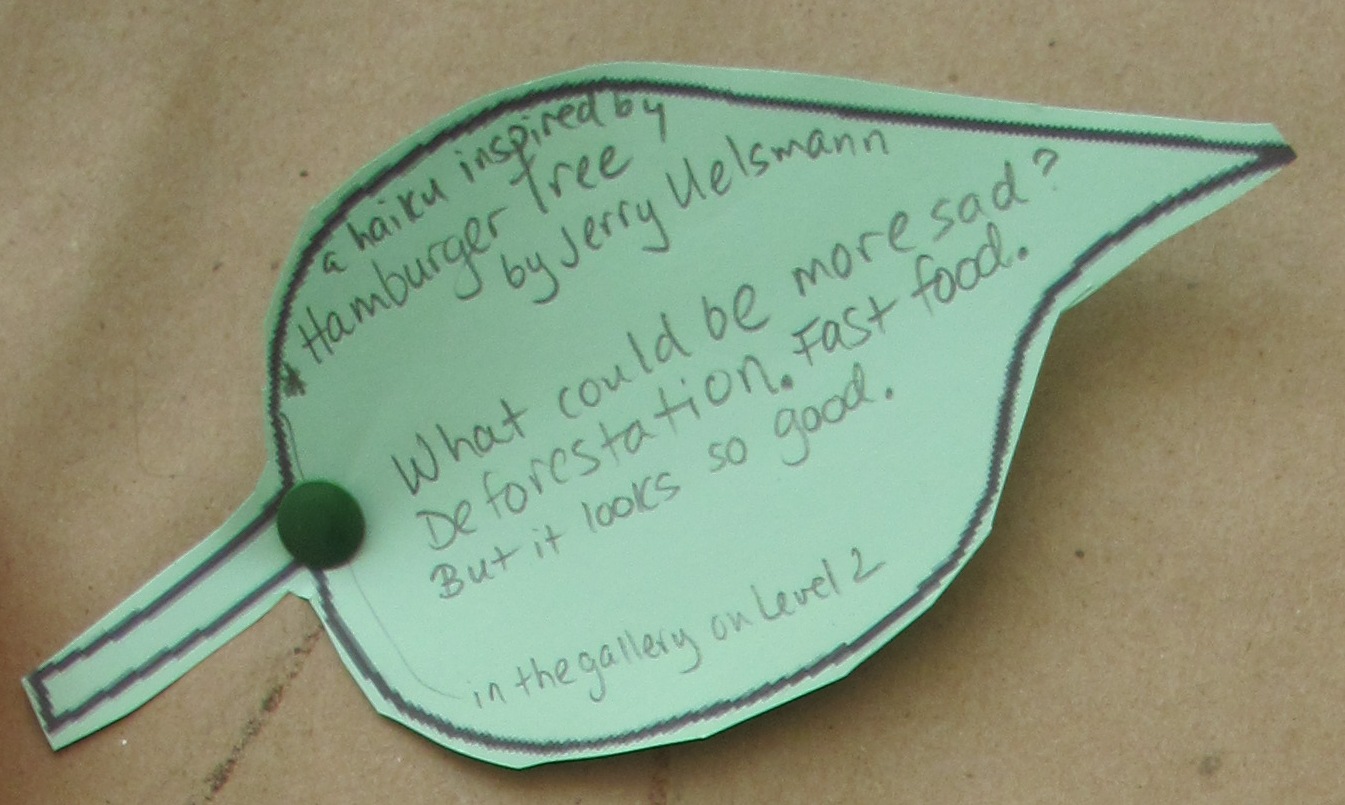
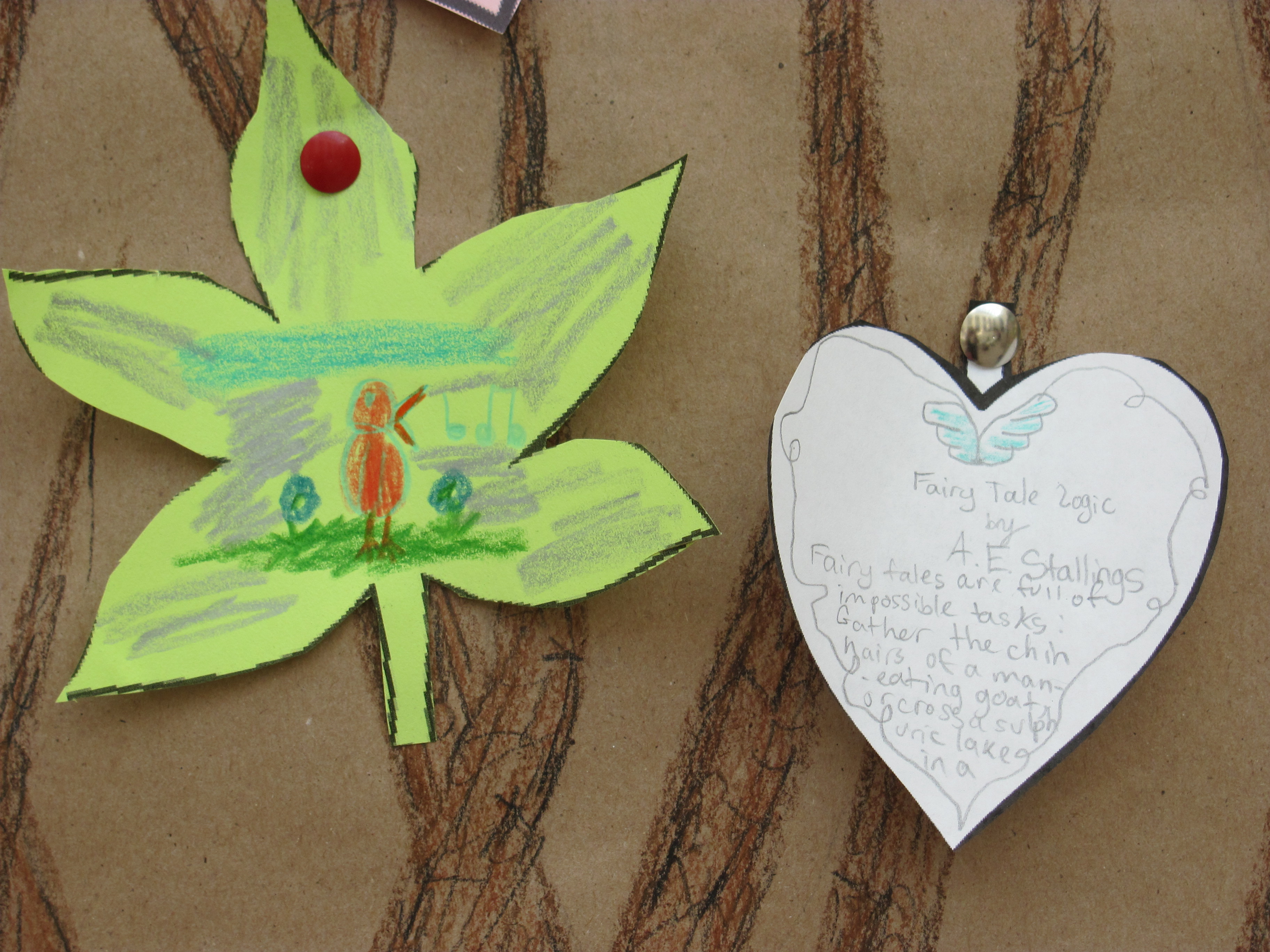
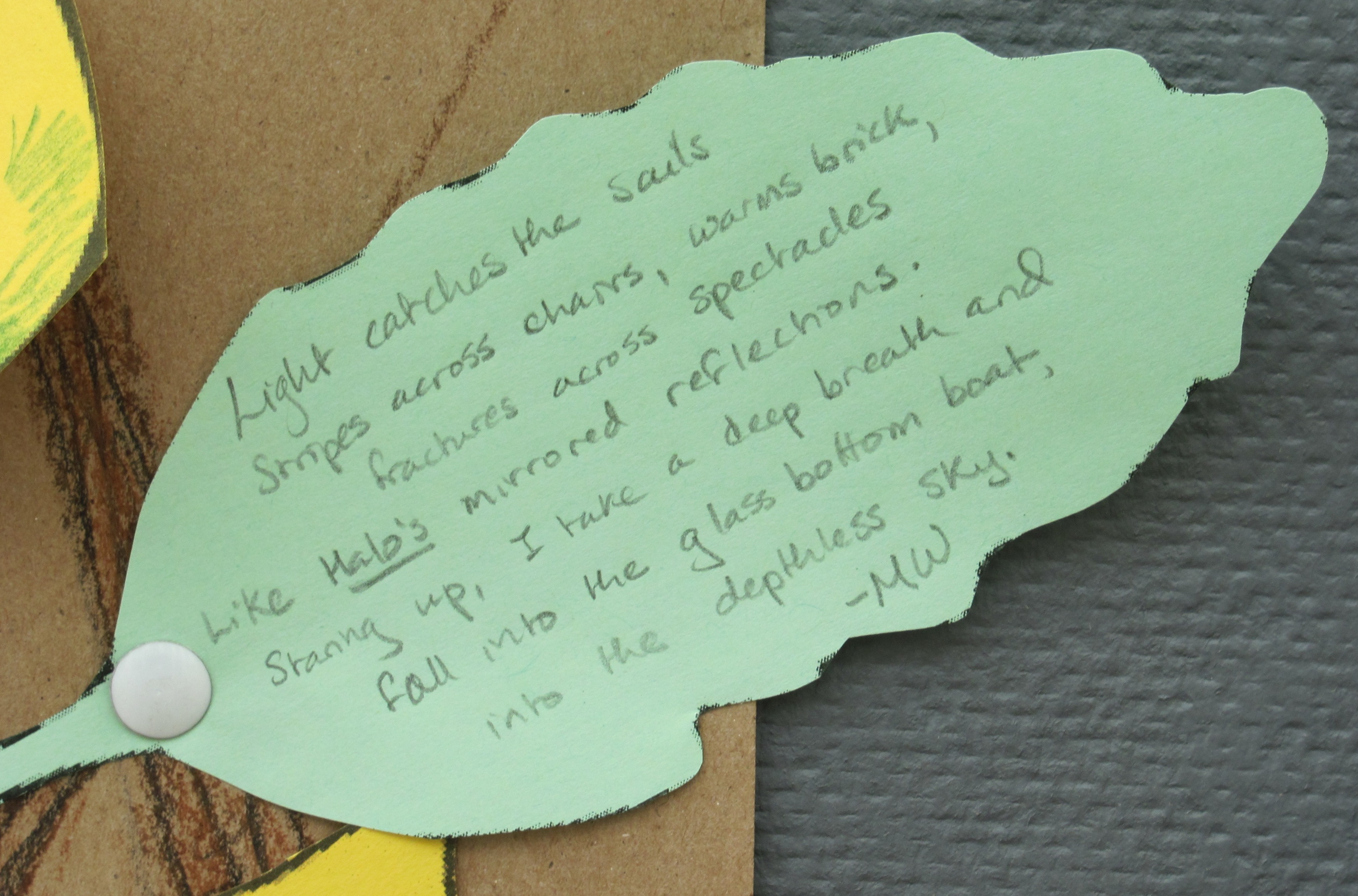
Forget asking about when a tree falls in the forest--apparently even these leaves make a noticeable auditory shock upon impact!Responding to a photomanipulated image by artist Jerry Uelsmann from a current PEM exhibit--someone went to the ekphrastic workshop!A fun illustration and a sweet poem about 'Fairy Tale Logic' (that participant was clearly my kind of whimsical!)One of several #freeverse tags. Who says poetry isn't adapting to the 21st century?My own addition to the tree, inspired by sitting in the Atrium and appreciating the greenhouse/sailboat effect of Moshe Safdie's glass roof.The final product


 Sea Dreams and Time Machines