Uncategorized

Readercon Wrap-Up

I had a fantastic time at Readercon, so much so, in fact, that I totally failed to take pictures or tweet more than about twice. I did take about a thousand pages worth of notes, not just of the thought-provoking things people were saying, but of ideas that I was generating for stories, and things to keep in mind when revising stories I’m already working on. And clearly, there was a lot to absorb, which is why it’s taken me nearly a week to write up my reactions.
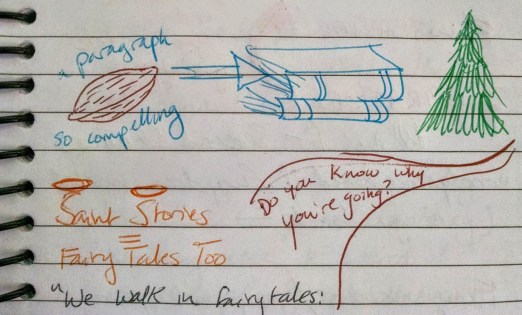
readercon notes
Not all my notes are this pretty. Many of them do contain doodles of rocketships, though.

Readercon is, of course, run by humans, well-intentioned yet possessed of blind spots, so there were a few moments in panels I attended where I winced. Others have covered those moments with more authority than I, however, and overall I was positively impressed with the level of dialogue and discussion in the panels I attended. (I wasn’t at some of the others that caused raised eyebrows.) Given Readercon’s reputation for listening to and responding to feedback, I hope next year will be better. Meanwhile, all my personal interactions with folks were fabulous, and I particularly enjoyed  my two shifts at the Broad Universe table in the Bookstore room, getting to know my fellow New England broads.

The highest hilarity of the weekend for me was the “My Character Ate What?” game show on sci-fi fantasy and food. I went because I so enjoyed watching that video of Mary Robinette Kowal breaking Pat Rothfuss’s brain, and I was sure she would not disappoint here either. She didn’t, and the rest of the panel of author ‘experts’ were equally hilarious, earnest, and full of beans in turn. (Both this and the engineering panel were led by Fran Wilde who also gets kudos for being a spiffing moderator.)
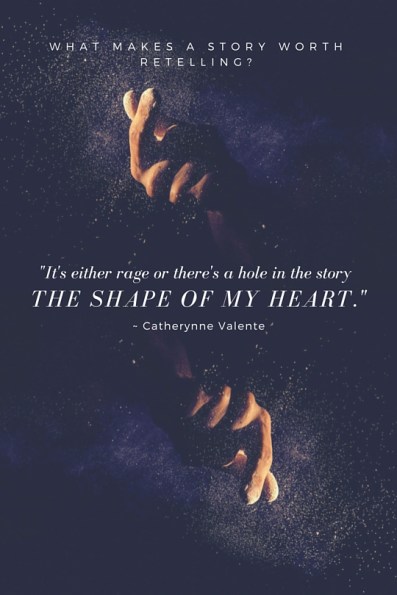
What makes a story worth retelling_

Guest of Honor Catherynne Valente was gracious, snarky, and inspiring by turns, and I thoroughly enjoyed all the panels I attended that she was on, as well as her solo reading. I even managed to get a couple of books signed and say ‘hi’ without making a complete fool of myself, so go me. (Author-encounter word-vomit is a thing, I’m sorry to say, but I did avoid it this weekend.)

I won’t attempt to transcribe my gazillion notes for you, but here are some highlights and particularly cool thoughts from some of the panels I attended.

Speculative Retellings – Fabulous kickoff to the con for me. Retellings of myths and fairytales and folklore are *so* much fun, and the folks on the panel clearly agreed. The quote from Cat Valente above was from this panel, as is the picture of my notebook. The conversation ranged from superheroes to saints, origin stories galore, the retelling  opportunities present in both senses of identification with a story and senses of confusion or other-ness (‘this story isn’t really meant for me, but what if it was?’).  We re-tell stories either because we love them or we hate them and want to fix them (hello, fandom!). Frustration as inspiration, and questions about the currency of sacrifice–what are you willing to give up, to walk the path of the hero? What are the stories or characters that need second chances? Or choices? (Cat Valente pointed out that no one ever asked Eurydice if she *wanted* to leave the underworld with Orpheus, after all. Maybe she wanted to stay…)

Strong Female Characters and ‘Lady Bromances’ aka Female Friendships in Literature – I’m lumping my summary of these two panels together, because for me one fed into the other. There was a lot in here, and there’s room for more. I liked Mikki Kendall‘s point about Zoe Washburn in Firefly, and how she’s a perfect example of how the fact that women who possess the ability to compartmentalize in crisis are often not given the narrative room to have their grief or other emotional reactions once the crisis is passed. This is a trope that disproportionately affects black female characters; based on the evidence of Melinda May in the Marvel Universe and a few others I would think it affects other female characters of color as well. After all, Peggy Carter (whom I love, even recognizing the flaws in the show) gets a very rare but very real and necessary moment of grief for her roommate, who dies in the first episode after about 2.5 minutes of screen time. It’s a great moment, and more characters regardless of gender or race deserve the narrative space to be fully-rounded human beings. In counterpoint, the discussion of female friendships was great, because friends are part of what help make us fully rounded characters, and show different sides than might otherwise come across. Girlhood friends, adult friends, intergenerational friends; it was a good list of stories and characters that the panelists mentioned, and there were both books I now have to read and stories I now have to write.

Engineering in Fantasy – Definitely one of my favorite panels of the weekend. “Buildings have to get built, regardless,” said  John Chu, and from there it was off to the role of engineering in worldbuilding (more than just how people get around; not only on what, but do they have roads? irrigation? cartographers?) and the way good engineering is invisible until it breaks. This means breaking your engineering is a good story point; when something fails, what takes its place? Was it working for its original purpose and only broke when it was repurposed? What happens to a society’s structure when new tech is introduced? How much engineering can your world have without the theoretical science to back it up? (Because you can make things work without knowing why…) What about social engineering, the structures that make feudal systems and militaries work, among other things? What about a kind of educational and cultural infrastructure, the role of political and religious elites in spreading and sharing knowledge? Plus there are the benefits of looking at the way different cultures find different ways to solve the same problems and what that tells you about them, which is engineering as a kind of cultural shorthand, ie. the bridges of the Elves vs. the bridges of the Dwarves in Tolkien. (Several people in that session now want to write the story about “OSHA goes to Moria…”) Many kudos to both the panelists and the people in the audience who asked brilliant follow up questions!

Magic in Space – Jedi are space wizards, and that’s a very fine thing. But who else is writing cool magic in traditionally sci-fi milieus? This was a really fun panel talking about working mythology and magic systems into sci-fi: techno-mages, for instance, or mythical monsters in charge of alien planets, the concept of interstellar travel as its own sort of epic fantasy. Mikki Kendall said something interesting about how the differences in sci-fi versus fantasy are essentially just a matter of tone: “You have power. Period. How you choose to use that power is up to you,” which led to a neat discussion about spellcasting equivalents to computer programming, fears as inspirations, about magic being about control or accepting the loss of same, and when is magic a science (part of the rules of how that universe works) or something else (which breaks or bends the established rules of that universe). Does magic or sci-fi better answer the questions of why we seem to be alone in the universe? Is it just because the scale of space and time is just so vast, or are we being avoided? Will we recognize life when we find it? What about that space-jellyfish in Star Trek? Hasn’t there been magic in sci-fi all along? And isn’t it an example of magical thinking just to imagine the ways that life could be better or different, the way sci-fi writers naturally do?

Keytars in SF – Music is such an integral part to culture; it’s as worth considering (or considering its deliberate lack) in worldbuilding as engineering is. Discussion in this panel included everything from Earth music of past times being re-interpreted in the future (Star Trek TNG‘s Riker plays jazz and Data plays classical violin, Doctor Who declared Britney Spears the fitting soundtrack to the final explosion of the Earth) to alien instruments (Spock’s lute/harp thing, Dixieland-style music in Star Wars ANH‘s cantina) to the challenges and benefits of describing music and mood and enviroment as opposed to being able to show/play it in live media. The major thought-provoking statement from this panel for me (which I’m pretty sure was one of Cat Valente’s points) was thinking about music starting point being in the body; dance, rhythm, the physical requirements of instruments that need breath or digits or tentacles. (Now I want to write about an alien rock band…)

Mary Robinette Kowal’s “Short Story Structure (for Novelists)” workshop/lecture was a real writers’ craft highlight. Unfortunately, as she said in the beginning, she had ‘2 hours worth of content and only an hour to deliver;’ had the program wizards given her a 2 hour block, we would surely all have stayed. [Much as I appreciate the rapid-fire blocks of 50 minute sessions, I’d actually argue for a few more longer sessions for this level of quality content.] Fortunately, she did get through all the content delivery, though our ‘workshop’ was limited to ‘write down a whizzbang idea.’ She did, however, mention that she has writing exercises available on her website, which I intend to use. The diagnostic tools she introduced (average wordcounts for introducing locations and characters, levels of complexity involved in number of plot elements) were really helpful; looking back at some of my stories that have ballooned past what could reasonably be considered ‘short’ I can now tell why! I will definitely be using the plot sequencing idea (open and close your plot threads like html tags) to revise some of my short stories as well.
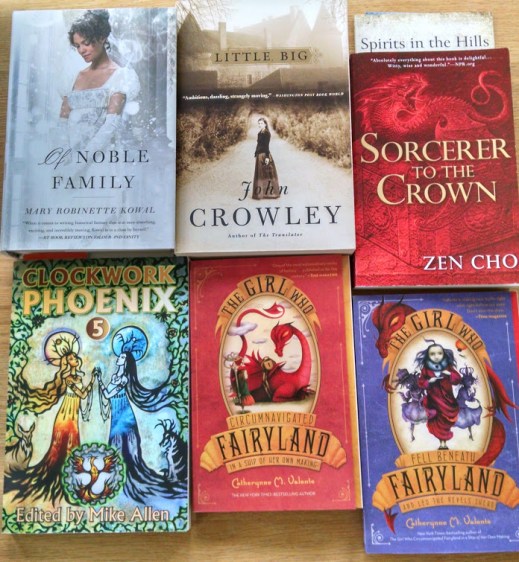
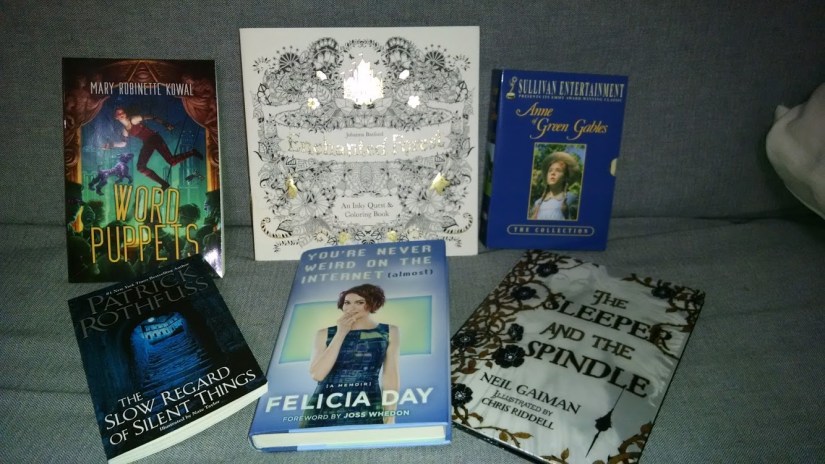
 

readercon bookpile
Books I either acquired this weekend or brought along to get autographs. My to-be-read pile just never gets any shorter…
Uncategorized

A very bookish New Year

As January gets into swing and we’re all readjusted to the demands of the school and work week, I thought it would be nice to take a moment to reflect on some of what was awesome about the holidays, and the good feelings, things, and ideas that I’m carrying into the new year. (I invite you to do the same in the comments below!)

I had a very literary Christmas, which was awesome. Being the daughter of a librarian, I can always count on getting books for gift-giving occasions, and this year was no exception.

bookmas

As you can see, this was a glorious occasion for bookish and literary-adjacent gifts (and writing tools not pictured like a planbook and beautiful hand-bound blank book to tote about with me in my rambles). I have to admit, I already finished Felicia Day’s memoir, and it was excellent; funny, brave, insightful, and inspiring. I’m pacing myself on picking up the others so I don’t run through them too fast.

In the spirit of starting the new year right, I decided this year I’d actually attempt Goodreads’ book challenge, where you can set your own goal for how many books you want to read in 2016. Inspired by Stellar Four’s 52 books/year challenge, I went for 52; we’ll see how it goes. Feel free to friend me on Goodreads to keep me honest. (I’ll also be setting some creative goals for 2016, but I’m giving myself the rest of this month to get organized on them first!)

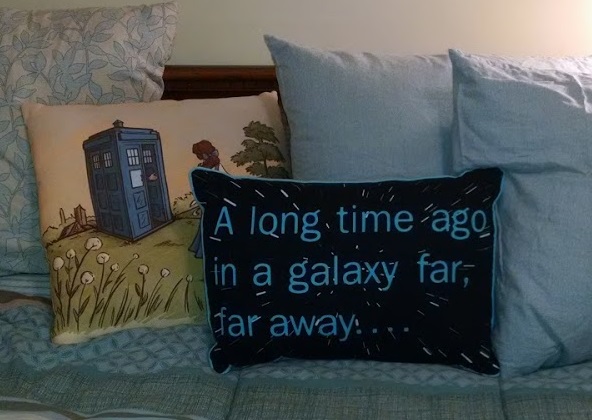
It must be noted that in addition to the genre-filled Bookmas, I had a very Merry Geekmas as well. I would post pictures of my Star Wars, Agent Carter and other geeky spoils, but I don’t want to make you all too jealous. Suffice it to say that I can now wear, carry, and otherwise use my fannishness in many happy-making ways.

galaxy pillow

Speaking of geekery, I’ll be heading to Arisia down at the Boston waterfront this weekend, so I’ll post a list of what I’m hoping to attend a little later in the week. If you have suggestions, as always, please fill me in.

What creative treasures, projects, or inspirations are you excited about in 2016? Tell me all about them!


Uncategorized

Beta Readers and Your Internal Editor

Camp Nanowrimo has rolled around again, which means the corners of the internet I frequent are full of cheerleading and wordcounts and interesting snippets of advice from published authors.  As I am currently more in the editing stage of several projects as opposed to the frantic amassing of words, I thought I’d share some of the things that have caught my attention in the last week or two:

How to Train your Inner Editor by Mary R. Kowal

I watched this right before making notes for critiquing two pieces for my writers’ group, and it did really make me think about the kind of feedback I give, as well as the feedback I’ve gotten. I’ve done the beta-reader thing in several different ways, by email and in person, for strangers, acquaintances, and friends, and I do enjoy it, but now I get to appreciate it as a training exercise for my own writing in a way I’d never considered before.

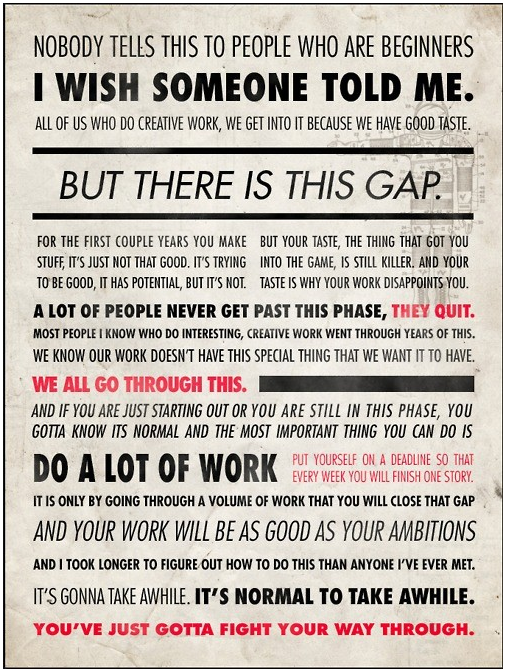
Quote by Ira Glass, Lovely layout by artist unknown.  If you know whom to credit, please let me know! (Google's reverse image search failed me)
Quote by Ira Glass, Lovely layout by artist unknown. If you know whom to credit, please let me know! (Google’s reverse image search failed me)

For a deeper look at that idea-to-editing-to-just-publish-already zone, Kowal and her fellow authors from the podcast series Writing Excuses have a new anthology called Shadows Beneath, featuring 4 short stories in first draft and revised versions, with discussions of the editing process.  I haven’t read it yet, but it looks like fun.

How Amazon and Goodreads are changing literary criticism – Do you write Goodreads reviews?  Do you follow book bloggers?  Whose opinions do you trust?  I had a bunch of books on my ‘to read’ list based off bloggers’ book reviews that were *panned* on Goodreads–so what now?  I moved them from my ‘buy if you see them’ to ‘see if they’re at the library next time you’re there’ list.  But I won’t ditch them entirely until I read the first few chapters.  How do you react to online reviews?

Slowing down the brain with calligraphic text messaging?  Since much of this post is about being aware of your writing as you’re writing, and being a more mindful reader/responder, I thought it would be fun to wrap up with this entertaining article from a woman who spent a week replying to text messages with hand-written photographic replies.

What do you do to make yourself a more mindful reader and writer?

Uncategorized

Recent Reads (and a moment of cute)

As much reading and writing as I do in front of a screen these days, it’s still nice to curl up in a sunny corner that has *just enough* shade and enjoy the feel of a book in hand.  (I get so much reading done in the spring!)  Here are a few of the books I’ve read and enjoyed in the last week or two:

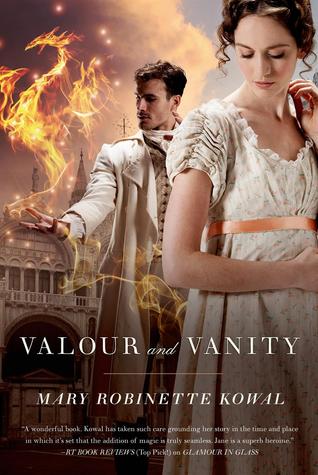
valour and vanity

Valour and Vanity by Mary Robinette Kowal – I’ve loved this series from the beginning (Shades of Milk and Honey), and this latest installment was just as entertaining, full of the joy of someone who really loves both the period and the universe she’s created within it.  Unlike some authors who lose interest in their characters once they’re married, Kowal gives us a plot with well developed characters undergoing understandable relationship growing pains even well into a married partnership.  Jane and Vincent have always reminded me of the best of Elizabeth Peters’ Amelia Peabody and ‘the irascible Emerson,’ so it was fun to return to their dynamic.  Plus, heists! Cons! A Doctor Who cameo!  As a bit of light reading after a steady diet of poetry for the last several weeks, it was perfect.   I highly recommend it if you’re fond of historical fantasy, Regency England, bonus Venice and glassblowing, and/or magic.  Plus, Kowal is the mind behind the awesome Month of Letters I’ve mentioned before, and she wrote me a really awesome response to the letter I sent her main character, Jane, Lady Vincent.

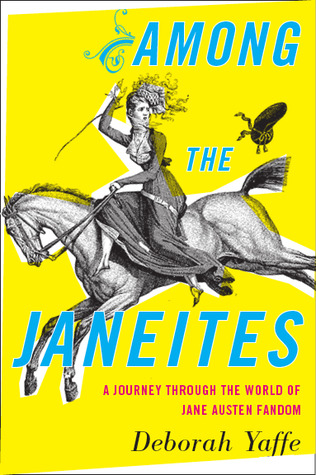
among the janeites

Among the Janeites by Deborah Yaffe – I do a fair amount of research at work, so when I’m off duty I tend not to read a ton of nonfiction, but a friend lent me this book and I was excessively diverted.  While not purporting to explore the entirety of Austen’s popularity, her fans, or global fandom, this book did a pretty admirable job of exploring the many ways people relate to Austen and her work, the possible reasons they are drawn to her, and the history of the founding, growth, and eventual membership explosion of the Jane Austen Society North American branch.  Fandom history is always entertaining to me, and while I did not recognize a ‘me’ style fan in Yaffe’s accounts, I certainly have encountered some similar personalities among other Austen fans or fans in general.  (I did, after all, declare in high school that ‘Everything in life relates to Jane Austen.  Or Star Wars.  And possibly both.’)  If you have any affection for Austen’s work or any curiosity about the phenomenon that is her pop culture presence, this is a quick and enjoyable read.

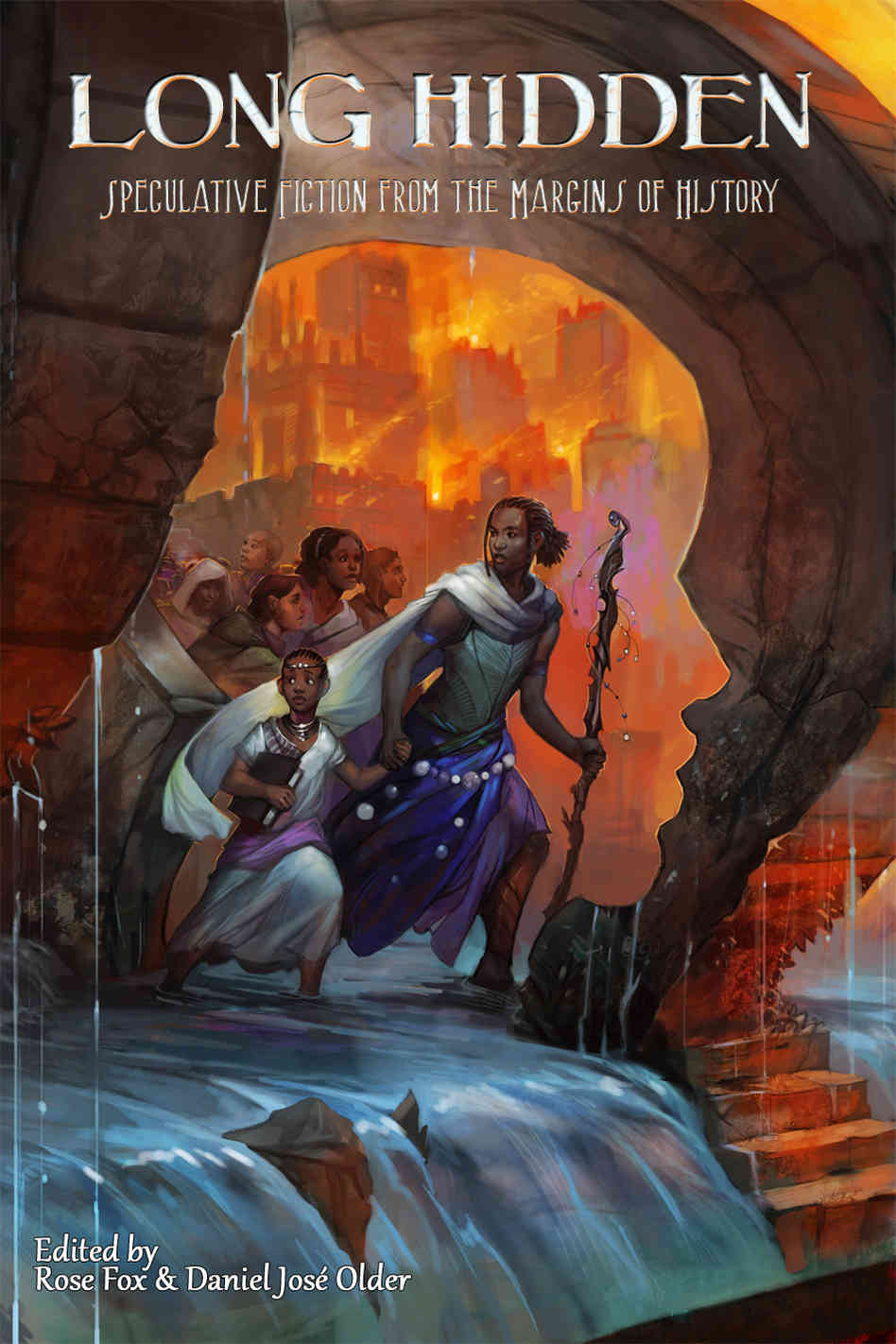
long hidden

 Long Hidden short story anthology from Crossed Genres – I’m actually only partway through this anthology so far, but I’m having a fascinating time while reading.  The voices are as diverse as the editors proclaimed, the vocabulary rich, and the assorted magic systems and other fantastical elements so far have a lot of emphasis placed on dreaming.  I can’t tell yet whether that last element’s due to editorial bias, something that non-Western stories have in common, the product of small sample size, or simply what happens when the author/main character exists in a tradition where their voices and actions are belittled in a prejudiced or oppressive society.  It’s certainly giving me a lot to think about!  My one quibble with the anthology so far is physical–the margins on each page are nearly nonexistent, meaning one opens the book to a wall of text with little white space for either ocular rest or helpful marginalia.  I don’t write in my books much, but I can see where one might be prompted to with a collection like this, and would be forced to resort to post-its instead.

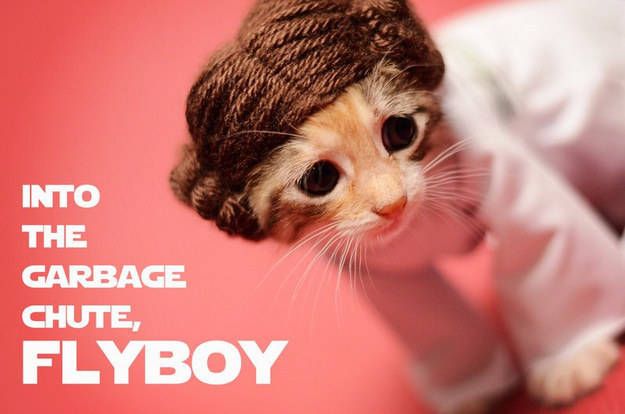
Did you get through all that?  Then I present to you, a moment of cute:

kitten leiaKittens dressed as fantasy characters.  You’re welcome.

What have you been reading recently?  I’m always looking for the next page turner…


Uncategorized

Month of Letters Update

To my favorite Took
To my favorite Took

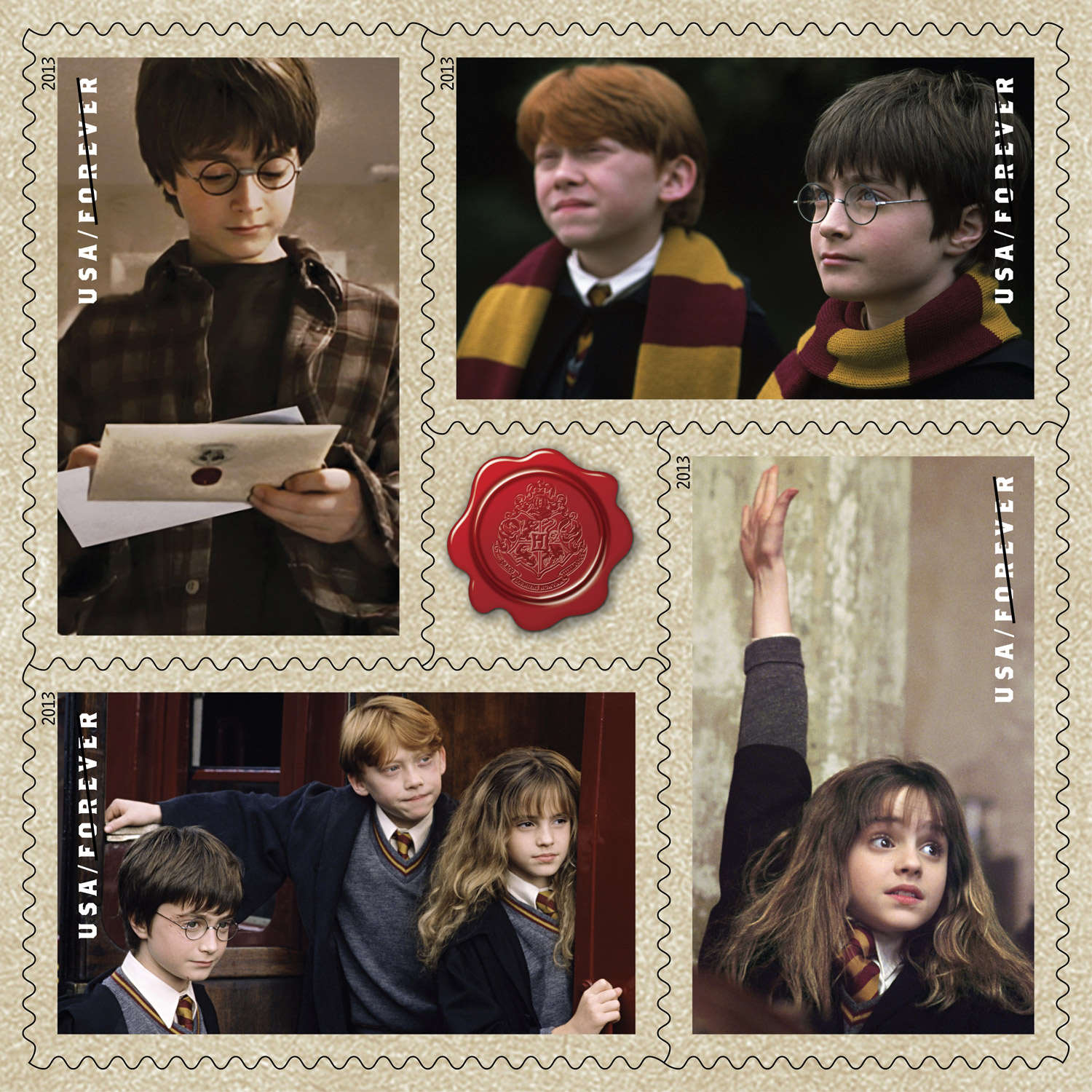
Earlier in the  month I mentioned that I’d signed up to participate in A Month of Letters, and it’s been a very enjoyable experience.  I’ve had a lot of fun with all the variation possible in this challenge – hand making cards, using my old-fashioned pens &  inkwells, picking out fun valentines, and using stationery I’ve been hoarding.  Not to mention hunting out new mailboxes and buying fun stamps.  Did you know that the USPS currently has Harry Potter stamps?  They’re awesome. (Also, it turns out that there are an awful lot of sci-fi/fantasy letter writing fiends. There are Whovians and more all over the Lettermo forums!)

USPS Harry Potter stamps, subset

Challenges like this are theoretically all about the numbers (though this one has the added bonus of really fun correspondence to read!), so here are my numbers for the month:

_4_ international letters

_3_ letters with enclosed surprises

_21_ hand made cards (valentines, mostly!)

_2_ postcards

_3_ Austen-style letters, written with a dip pen and sealed with wax

_2_ fan letters

_2_ birthday cards

_1_ wedding congratulations

_2_ thank you notes

_6_ replies to correspondence from friends and Lettermo participants

_2_ new pen pals

_5_ valentines I didn’t make by hand

_3_ letters by fictional characters (counting one still to be finished)

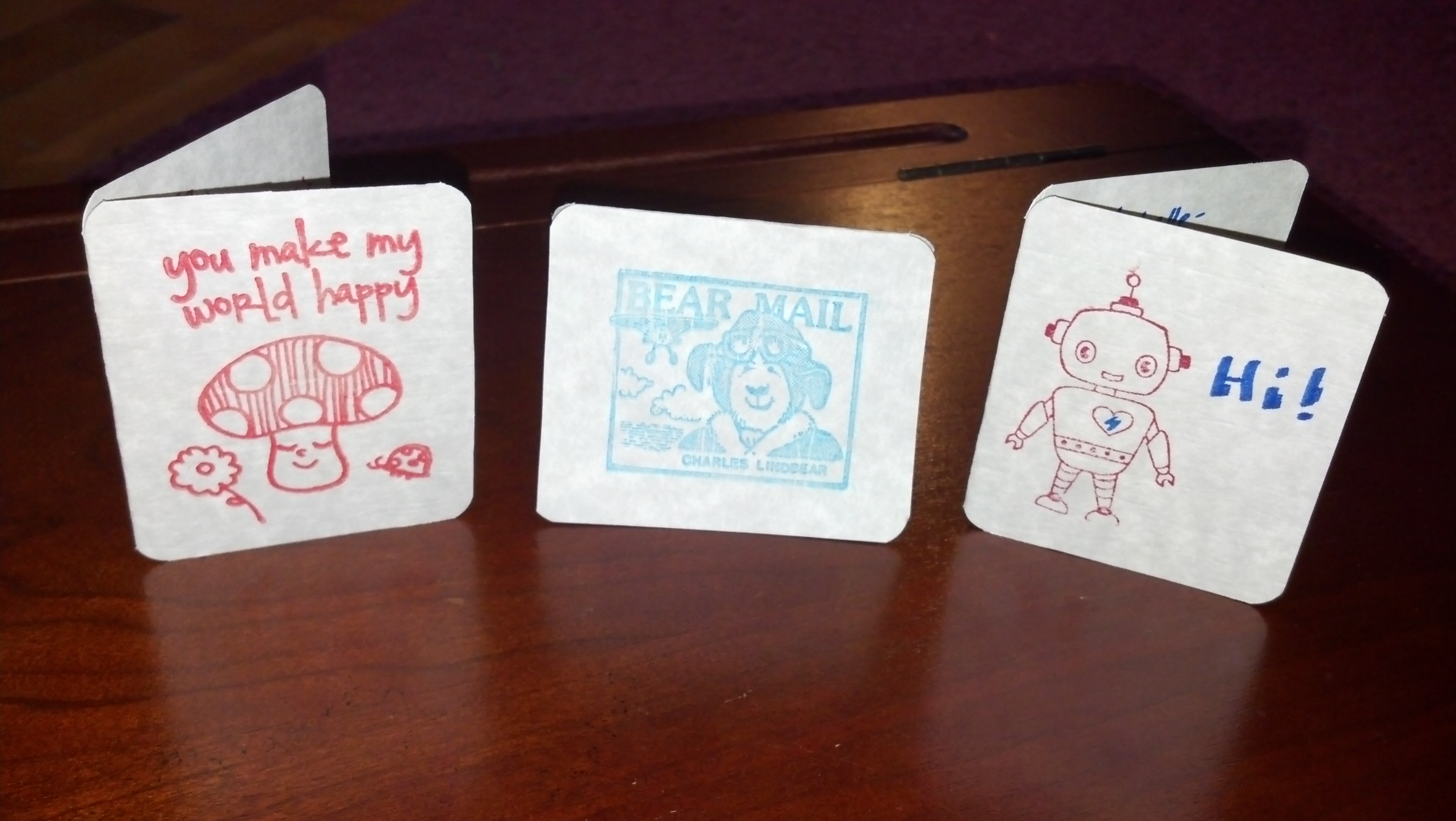
Teeny valentines for coworkers and friends

One of my favorites was taking author Mary Robinette Kowal up on her offer to write to one of her characters.  I had a blast borrowing names from further up the family tree and writing as an amateur glamourist traveling on the Grand Tour.  I can’t wait to see what Lady Jane Vincent says in return!

Curious? My letter went something like this:

Sunday 16th February, 1817
 
To Lady Jane Vincent
Dear Madam,
 
I hope you will forgive the presumption I have made in writing to you without an introduction or mutual acquaintance, but I found I simply must express my deep admiration and near boundless curiosity about your remarkable work with glamour. 
 
My name is Miss Margaret Carter, of Boston, Massachusetts.  Being fortunate enough to have parents who deem travel imperative for a lady to be considered accomplished, I have been touring Great Britain and the Continent with my cousin, Miss Millicent Townsend, as extensively as events have allowed.  Though I am myself but a garden variety artist – a lily of the valley, perhaps, quite far from an heirloom rose or tulip varietal – I can appreciate exemplary work when I see it.  Your work on the Prince Regent’s underwater mural quite took my breath away when Minnie and I had the opportunity to view it.  I could almost believe we were standing in a glass dome under the waves while the fish performed a gavotte around us. 
Until such marvels are possible, which I sincerely hope they may be one day, the work you and your husband do stands in most admirably. 
 
And here we come to my curiosity, which I hope you do not find burdensome to satisfy.  First, what manner of study did you need to undertake to portray the light and movement underwater?  For the fish at the market look nothing like their living counterparts, and a set of scientific prints is equally dead.  And secondly, might I inquire as to the kind of knotwork you employed for their schooling?  I have been attempting a small sort of glamural that incorporates moving lines of poetry, but have yet to make the words scroll as I wish, and would appreciate some hint in that direction if it is not a secret between Sir Vincent and yourself. 
 
My thanks for the time and attention you have already given to a stranger, and please accept my best wishes for the success of your future artistic endeavours.
 
Regards,

Margaret Carter


Uncategorized

A Month by the Pen

R2D2 mailbox from the 30th anniversary of Star Wars.  Photographed in Boston by David Heiniluoma, Jr.
R2D2 mailbox from the 30th anniversary of Star Wars. Photographed in Boston by David Heiniluoma, Jr.

Despite the eternal frustration that is slow postal delivery to my neighborhood in Salem, I really love getting snail mail.  There’s something really exciting about opening up the box and seeing a postcard or a letter that a digital inbox just doesn’t convey.  Maybe that makes me a temporal leftover, but apparently there are a lot of people that feel the same way, one of whom is an author I admire, Mary Robinette Kowal, whose Glamourist Histories I read with great glee.

A few years ago, she started the Month of Letters challenge, wherein participants mail one piece of actual mail every day that the post office is open, for the entire month of February.  It corresponds (ha!) perfectly with a month in which one would potentially be sending valentines anyway, and is a nice manageable month if one isn’t running February school vacation week programming.  (Which I am, but oh well.)  This year, she upped the game by offering to write a character letter back to anyone who wrote to either of her two main characters from the Austen-era Glamourist Histories, and that’s what made me decide to go for it.  I probably won’t manage a letter/postcard/package a day, but there are a few people with whom I do keep up a written correspondence, and I’ve owed a few of them letters anyway (looking at you, Devlin!).  Because who can turn down the opportunity for a letter from Jane, Lady Vincent?  Not I.

(This is a brilliant idea, by the way, and crazy generous of her time and attention.  I’m impressed.)

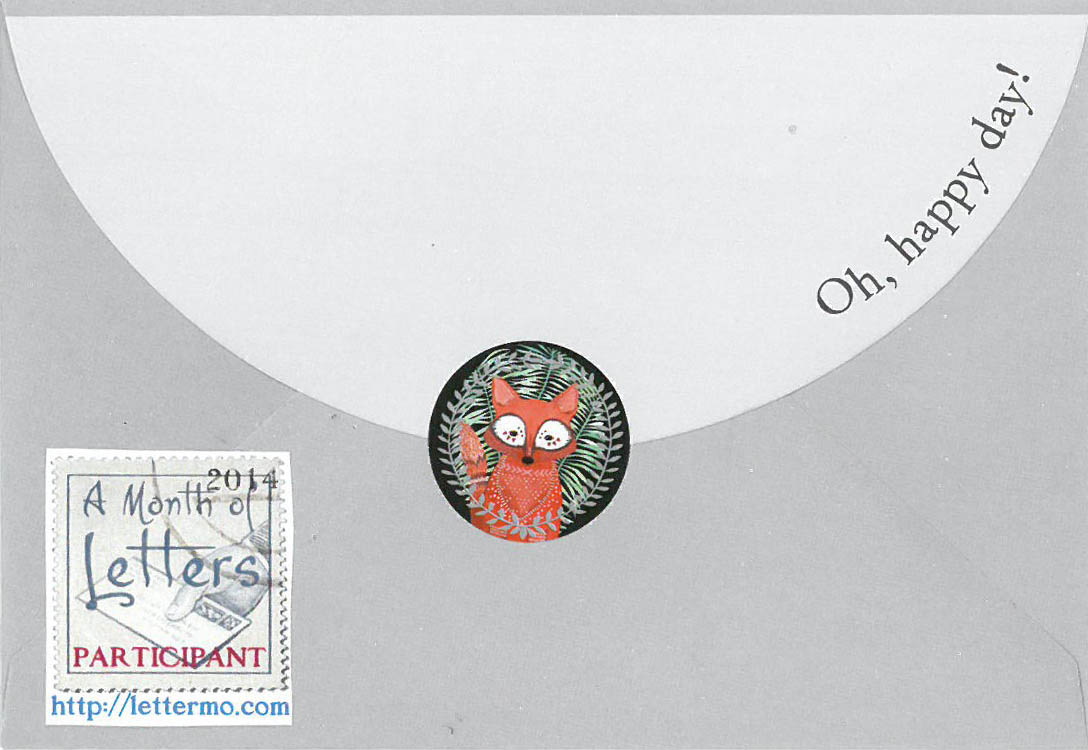
LetterMo2014square

So if you’d like a letter/note/postcard/light shippable curiosity from me, drop me a line here and let me know!  (If I don’t have your address already, you can leave it in the comments, which will be screened so it doesn’t go public.)