
Uncategorized

What makes a literary district?

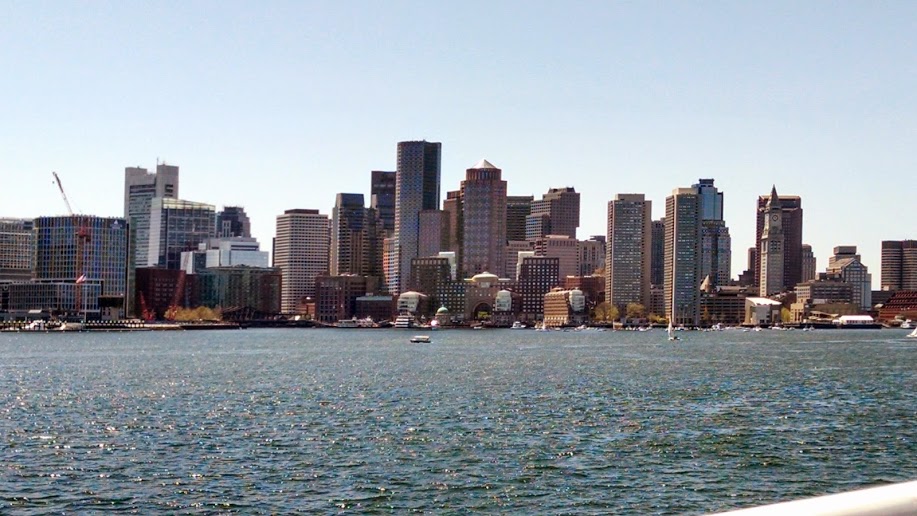
Boston from the harbor. Photo by Meg Winikates.

In August of this year, the Mass Cultural Council approved the creation of a ‘cultural district’ in Boston dedicated to the literary arts.  Cultural districts are a way of raising awareness about the various arts organizations and resources in an area, and are meant to have an economic impact as well, attracting businesses and creative professionals to a designated area.  There are currently 26 designated cultural districts in Massachusetts, and I find a lot to like in the definition the MCC provides:

It is a walkable, compact area that is easily identifiable to visitors and residents and serves as a center of cultural, artistic and economic activity. The Massachusetts Cultural Council recognizes that each community is unique and that no two cultural districts will be alike.

That seems like a set of very achievable guidelines, given that much of New England falls into the ‘walkable, compact’ category already, and the rest of the definition of ‘culture’ is left open to the strengths of the city/town that applies.
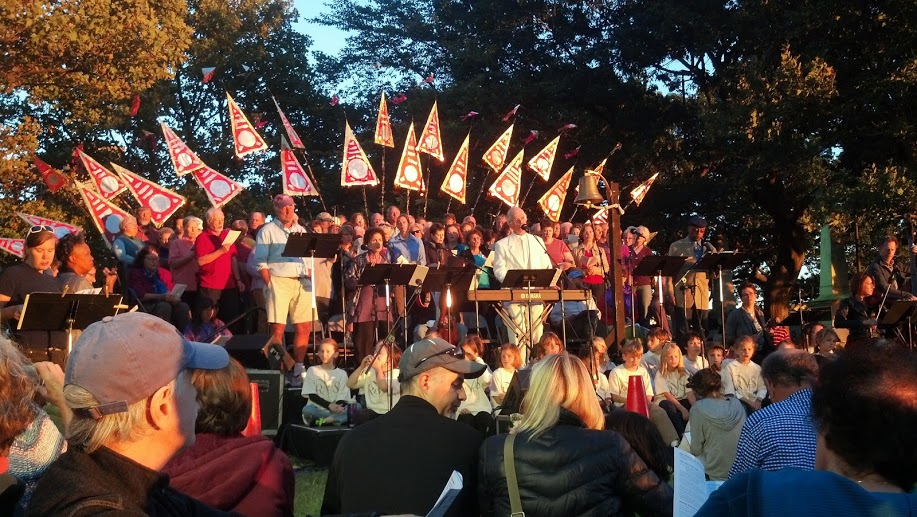
Revels' River Sing on the banks of the Charles.  Photo by Meg Winikates.
Revels’ River Sing on the banks of the Charles. Photo by Meg Winikates.  Many cultural districts seem to feature recurring music and dance festivals like this one, as well as the local waterfront, for understandable reasons. (Though the current Cambridge cultural district is in Central Square, up the road from where this celebration of the autumnal equinox occurs.)

So what makes the Boston Literary District (the only one of its kind in MA and the only district specifically geared to one arts discipline) fit the bill?

Mass Poetry recently interviewed Larry Lindner, the Literary District’s coordinator, who enthused about his hope that “the Lit District website becomes for Boston what Time Out is for people who go to London — a kind of what’s-going-on-in-the world-of-literature in Boston” and mentioned plans for an app to help explore the District in 2015.  And the physical district itself?  By making the sites and events more visible, accessible, and tangible, Lindner hopes to encourage timid readers as well as those already deep in the reading and writing world.  He also suggests that associate partnerships with organizations and businesses outside the District’s official borders can help their visibility as well, and bring some of the benefits of the district designation to other areas of the city that need it.  (Even events outside the city get a chance to be included on the District’s events calendar, such as a public art/poetry event in Newton earlier this month.)

The thing I love best about perusing the map of the district is the number of surprises it holds, even for someone who has lived all but 2 years of her life in and around this city, who has worked at a local literary/historical site (2 if you count the Paul Revere house and his own poetical connections), and who was an English major to boot.  For instance, did I know that E.B. White’s The Trumpet of the Swan was set in Boston’s Public Garden?  Maybe when I read it when I was nine, but I certainly didn’t remember the scene with Louis playing his trumpet on the actual existing bridge over the pond.  Nor could I have named even half the writers and poets listed as having ever been Boston residents.  (I love learning new things about my city!)

A few of the sites listed do seem like a stretch (there’s a small bookshop on the ground floor of the State House, really?) and some a bit vague (the Old City Hall listing says ‘Legend has it that that’s the setting for Edwin O’Connor’s novel The Last Hurrah‘) but on the other hand, one can choose to take that as a plus.  Some of these places had to really *try* to connect to the literary district.  It was worth the effort to find the thread, the history, the destroyed address that this modern building now stands over–and that’s kind of awesome, that people want to be a part of it.  I know next time I’m free to wander a bit downtown, I’ll be keeping my eye out for some of the literary landmarks listed.

Boston Public Garden (and Louis' bridge!).  Photo by Captain Tucker, used under creative commons license.  Click for source.
Boston Public Garden (and Louis’ bridge!)  Photo by Captain Tucker, used under creative commons license. Click for source.

And if you can’t make it to Boston to check out what’s going on on the bookish byways, take a stroll down Author Avenue  or Fantasy Street as you check out this virtual literary district at  My Independent Bookshop.  This site is a visually appealing compilation of people’s book recommendations which are then linked to independent bookstores.  I haven’t set up a ‘bookstore’ of my own yet, but it does look like a fun community and a fairly intuitive interface. (Don’t forget to scroll sideways as well as down, though!)
Uncategorized

Recent Reads (and a moment of cute)

As much reading and writing as I do in front of a screen these days, it’s still nice to curl up in a sunny corner that has *just enough* shade and enjoy the feel of a book in hand.  (I get so much reading done in the spring!)  Here are a few of the books I’ve read and enjoyed in the last week or two:

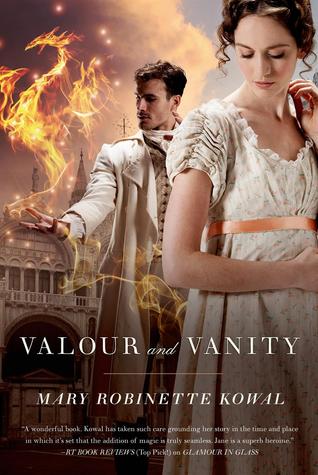
valour and vanity

Valour and Vanity by Mary Robinette Kowal – I’ve loved this series from the beginning (Shades of Milk and Honey), and this latest installment was just as entertaining, full of the joy of someone who really loves both the period and the universe she’s created within it.  Unlike some authors who lose interest in their characters once they’re married, Kowal gives us a plot with well developed characters undergoing understandable relationship growing pains even well into a married partnership.  Jane and Vincent have always reminded me of the best of Elizabeth Peters’ Amelia Peabody and ‘the irascible Emerson,’ so it was fun to return to their dynamic.  Plus, heists! Cons! A Doctor Who cameo!  As a bit of light reading after a steady diet of poetry for the last several weeks, it was perfect.   I highly recommend it if you’re fond of historical fantasy, Regency England, bonus Venice and glassblowing, and/or magic.  Plus, Kowal is the mind behind the awesome Month of Letters I’ve mentioned before, and she wrote me a really awesome response to the letter I sent her main character, Jane, Lady Vincent.

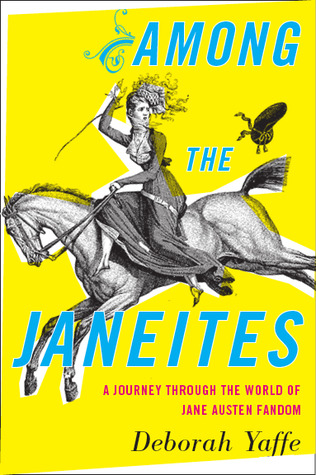
among the janeites

Among the Janeites by Deborah Yaffe – I do a fair amount of research at work, so when I’m off duty I tend not to read a ton of nonfiction, but a friend lent me this book and I was excessively diverted.  While not purporting to explore the entirety of Austen’s popularity, her fans, or global fandom, this book did a pretty admirable job of exploring the many ways people relate to Austen and her work, the possible reasons they are drawn to her, and the history of the founding, growth, and eventual membership explosion of the Jane Austen Society North American branch.  Fandom history is always entertaining to me, and while I did not recognize a ‘me’ style fan in Yaffe’s accounts, I certainly have encountered some similar personalities among other Austen fans or fans in general.  (I did, after all, declare in high school that ‘Everything in life relates to Jane Austen.  Or Star Wars.  And possibly both.’)  If you have any affection for Austen’s work or any curiosity about the phenomenon that is her pop culture presence, this is a quick and enjoyable read.

long hidden

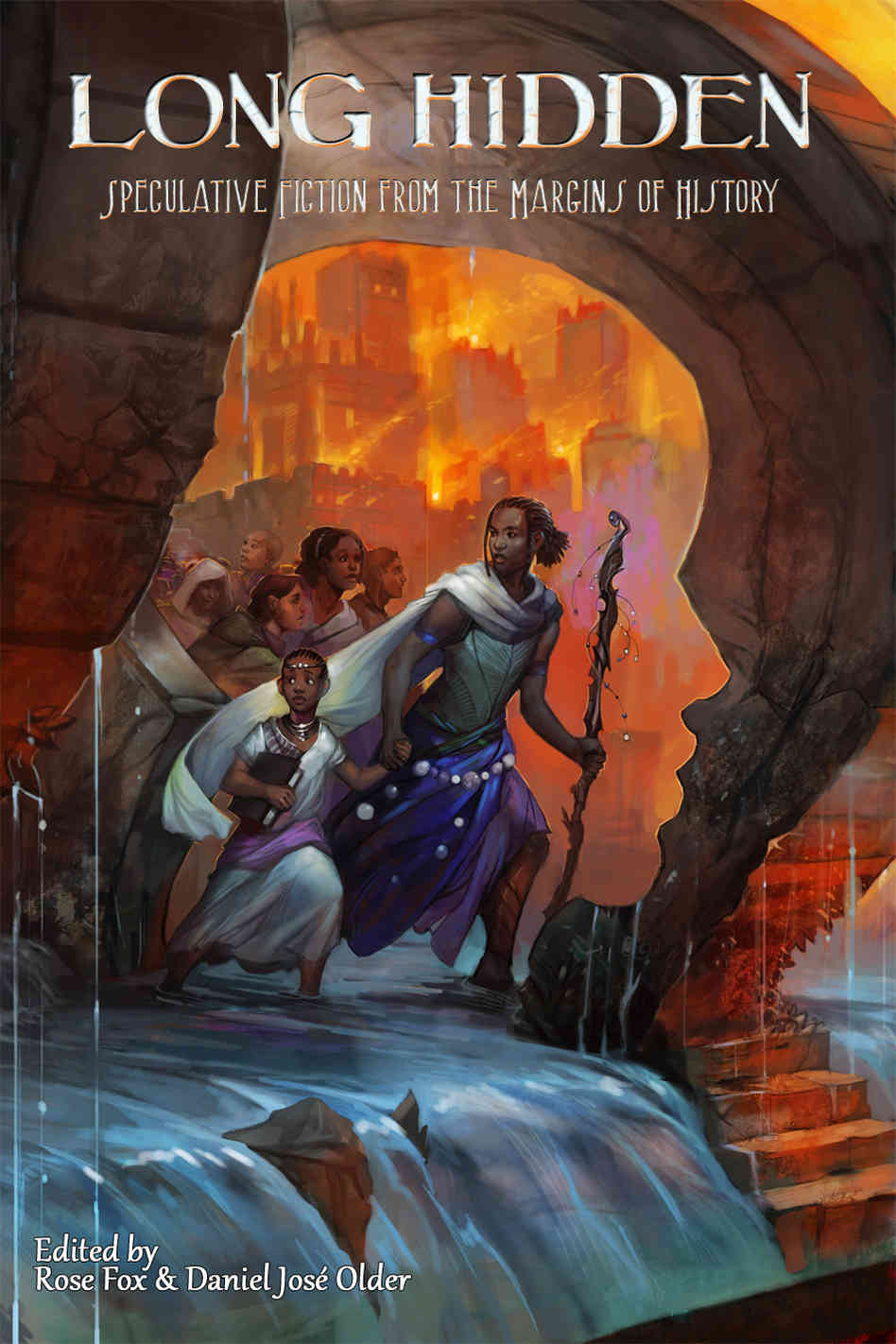
 Long Hidden short story anthology from Crossed Genres – I’m actually only partway through this anthology so far, but I’m having a fascinating time while reading.  The voices are as diverse as the editors proclaimed, the vocabulary rich, and the assorted magic systems and other fantastical elements so far have a lot of emphasis placed on dreaming.  I can’t tell yet whether that last element’s due to editorial bias, something that non-Western stories have in common, the product of small sample size, or simply what happens when the author/main character exists in a tradition where their voices and actions are belittled in a prejudiced or oppressive society.  It’s certainly giving me a lot to think about!  My one quibble with the anthology so far is physical–the margins on each page are nearly nonexistent, meaning one opens the book to a wall of text with little white space for either ocular rest or helpful marginalia.  I don’t write in my books much, but I can see where one might be prompted to with a collection like this, and would be forced to resort to post-its instead.

Did you get through all that?  Then I present to you, a moment of cute:

kitten leiaKittens dressed as fantasy characters.  You’re welcome.

What have you been reading recently?  I’m always looking for the next page turner…


Uncategorized

Roma Eterna: Alternate Histories, and Missing Ones

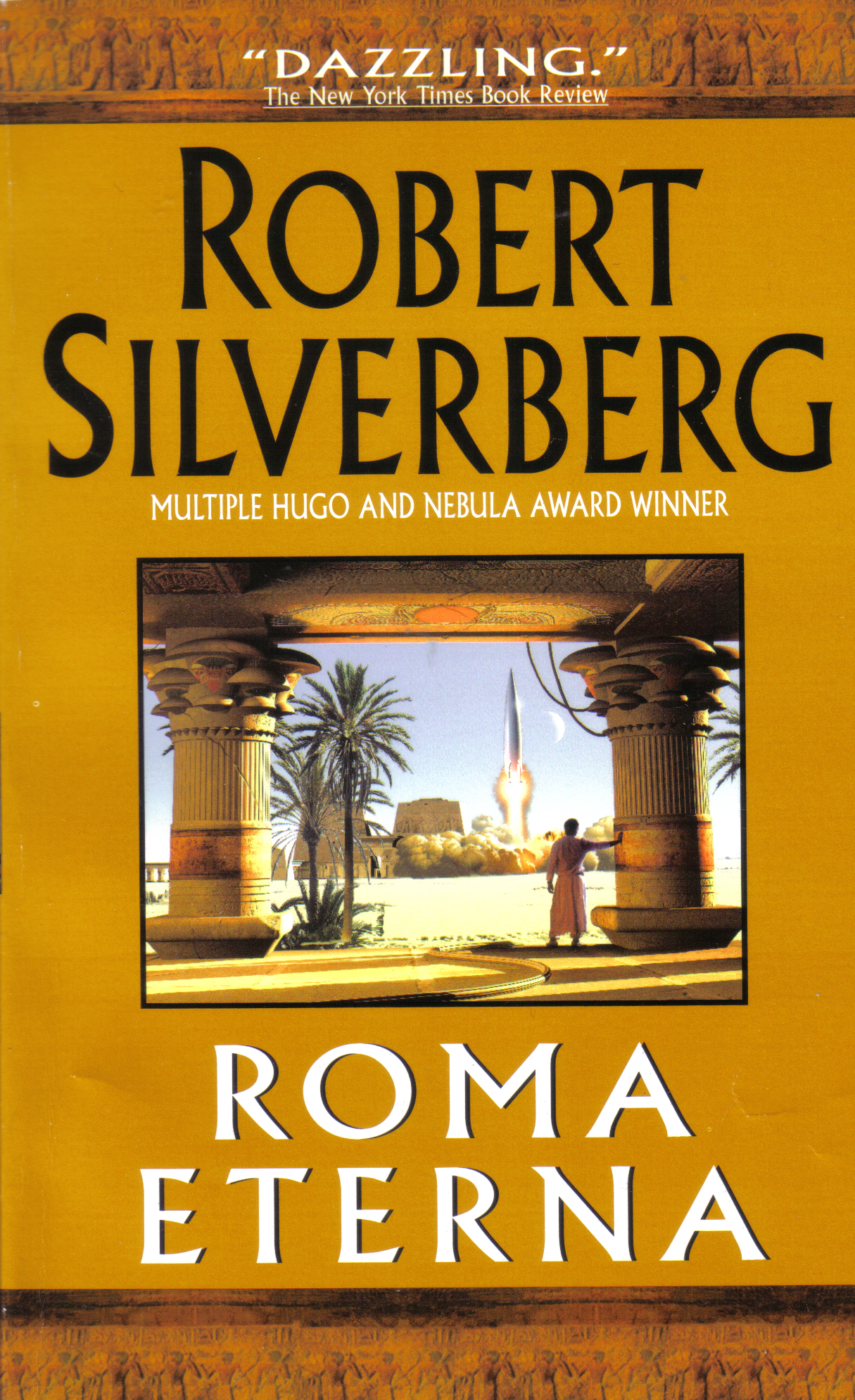
There are benefits to being stuck on the couch with a virus: my favorite is the permission to take a few consecutive hours to read, without feeling guilty about not doing something else (there’s always something else).  So today I finished Roma Eterna by Robert Silverberg.  It’s been sitting on my to-read shelf for a while, because who can turn down a book that wonders what would have happened if the Roman Empire never fell?

Not me, that’s for sure.  I love a good alternate history.  (Alternate historical fantasy too, but that’s a whole ‘nother blog post.)

roma_eterna_coverI haven’t read any other Silverberg to my knowledge, but I recognized the name and I’m always looking to get to like an author that’s new to me.  So that plus five years of studying Latin and a fondness for speculative fiction meant I was geared up for a really good read.

And I mostly got it.  Once I got in the habit of subtracting 750 years or so from all the chapter heading dates so that I could compare the alternate timeline to this reality’s history, there were some really fun comparisons and contrasts to be drawn.  Would certain events still happen, and if so, when?  Discovery/attempted conquering of the New World, exploration of the islands in the Pacific, trade agreements with Asia, those are all practically givens given what we know of the Roman Empire’s sense of manifest destiny.  But what about movements towards alternate forms of government, huge sociopolitical upheavals on the models of the French or Russian revolutions?  What about attempts towards independence?  Development of certain major world religions?  Minds like Leonardo daVinci or Einstein?  And is there a way to measure which of these historical paths is ‘better?’  And better for whom?

Do you sense a trend in these questions at all?  Because I did, and much as I enjoyed Silverberg’s well-researched and imaginative answers to them, there were entire swathes of stories I felt were *completely missing.*

Let me give you a hint: in eleven chapters, told by eleven different narrators at different eras in this expanded ‘eternal Rome,’ there was one female narrator, living in Venice, mostly interested in contemplating how willing she was to be seduced by the newest Roman proconsul, or was she more interested in being the one doing the seducing.  Aside from offering a ‘provincial’ point of view, she influenced the narrative not at all, barely witnessing the events of the era, let alone being part of them.  There were maybe two or three other female characters of any note in the whole book, seen primarily through the lens of their desirability to the narrators.

In a book spanning approximately 2,000 years of history.

Should I have been surprised?  Probably not.  Original copyright on my edition said 1989, male author, clearly more interested in telling a story about how the delayed development of Judaism was a key factor in the stagnation of the world.  (Now, that ending I was surprised by, but I can go with it, at least to a point.) Invisible privilege is a thing, and I guess I’d rather believe the author was oblivious than that he was deliberately exclusionary.

Should I be as disappointed as I was?  Am I oversensitive because of who I am and what I read?  Wasn’t the Roman Empire pretty male-dominated anyway?

1) Yes.  2) It’s an unfortunately short step from ‘oversensitive’ to ‘hysterical’ and that leads us to all sorts of Victorian places I don’t want to go. and 3) Not really, which is partly why I was surprised and partly why I was disappointed.

Look up at the cover of this book.  There’s a rocketship.  I picked this book up at a sci-fi/fantasy convention last year.  This is a genre that has given me and readers and watchers like me princesses that don’t want to be rescued from dragons, and spaceship captains that fall in love with the female souls of their ships, and female spaceship captains that bring their crews home across unfathomable distances through hostile territories, and senatorial princesses that rescue frozen smugglers with a kiss while in the middle of leading a rebellion, and dozens of other  situations in which the contributions of half the society are recognized by the other half.   Take the person who has steeped in these stories and mash her together with someone who has also read I, Claudius, and you get someone who expects that the fearsome, ambitious, clever, savvy, and otherwise remarkable women of ancient Rome will at least have a mention for the role they played (and could have continued to play) in things like determining succession in the Empire, and influencing elected politicians, and discussing strategy with military commanders.

They existed historically.  They’re nowhere in this book, even in the parts that line up perfectly with our own history.  (You know who else doesn’t get a voice? Slaves.  Any of the cultures the Romans trade with.  Any of the plebians or non-Roman citizens.  Positive queer characters, even in a universe where the Greco-Romans run the Eastern Empire for a while.)

And yes, I am *sensitive* to the issues of representations of women in books and other media.  I’m influenced by what I choose to read and who I choose to follow in the vastness of the internet (Hi, Book Smugglers and Stellar Four and Seanan McGuire and others).  I recognize that not every book can tell *everyone’s story,* because that would be either too many stories, or none at all.  But if you’re trying to give us a picture of an alternate world, how hard is it to give us a little more about half the population?  This book has 449 pages, and it couldn’t even pass the Bechdel test.  But there’s nothing wrong with being sensitive, because being sensitive is being aware, and being aware and critical of what you read makes you a better reader, and a better reader is a better writer, and someday I will be writing my alternate history epic and I will remember this book.

And I will try to do better.