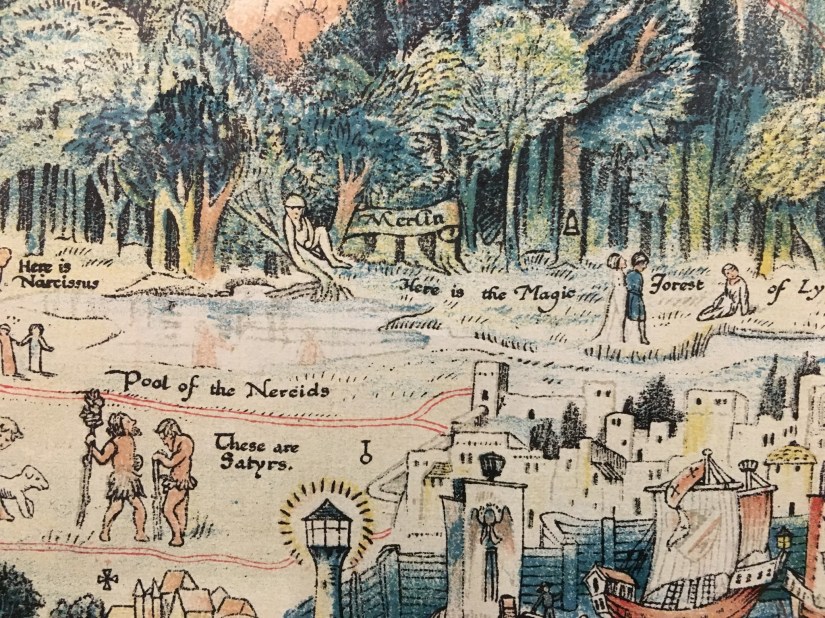
Detail from a map in the collection of the Boston Public Library’s Norman B. Leventhal Map Center.
A few weeks ago, all the sins published my reflections on and exhortations to the wonders of gathering artistic inspiration in museums. (If you missed it, you can find it here.)
This week, they’re back with my best suggestions on how to outfit yourself for a museum exploration. Matthew Henson didn’t head for the North Pole without a coat, after all!
So if you’re suffering writer’s block, or it’s been ages since you went on that school trip to your local historical society, here are my 5 tips on using museums for inspiration.
…Inspiration can come from a fossil in a natural history collection, a scrap of wallpaper in a historic house, the view from a national park peak. What would a taxidermied specimen have to say to its collector? What words still resonate in the walls of an old structure? Whose hands molded the pot whose shards sit in that case, and how do the pieces evoke the whole?
Happy Monday, all, this is going to be a science-fiction week on Sea Dreams & Time Machines! We’re starting with a really fun video about sci-fi predictions that are now today’s everyday facts from the awesome folks over at “It’s Okay to Be Smart.”
I have a fabulous time at the Mass Poetry Festival every year. Every year I learn something new about writing, I am bowled over by a poet (or multiple poets) whose work I hadn’t before had a chance to appreciate, I get to spend time surrounded by people who love words as much as I do, and I come away exhilarausted, which is that peculiar state of wiped out and buzzed that comes from too much inspiration in too short a time period.
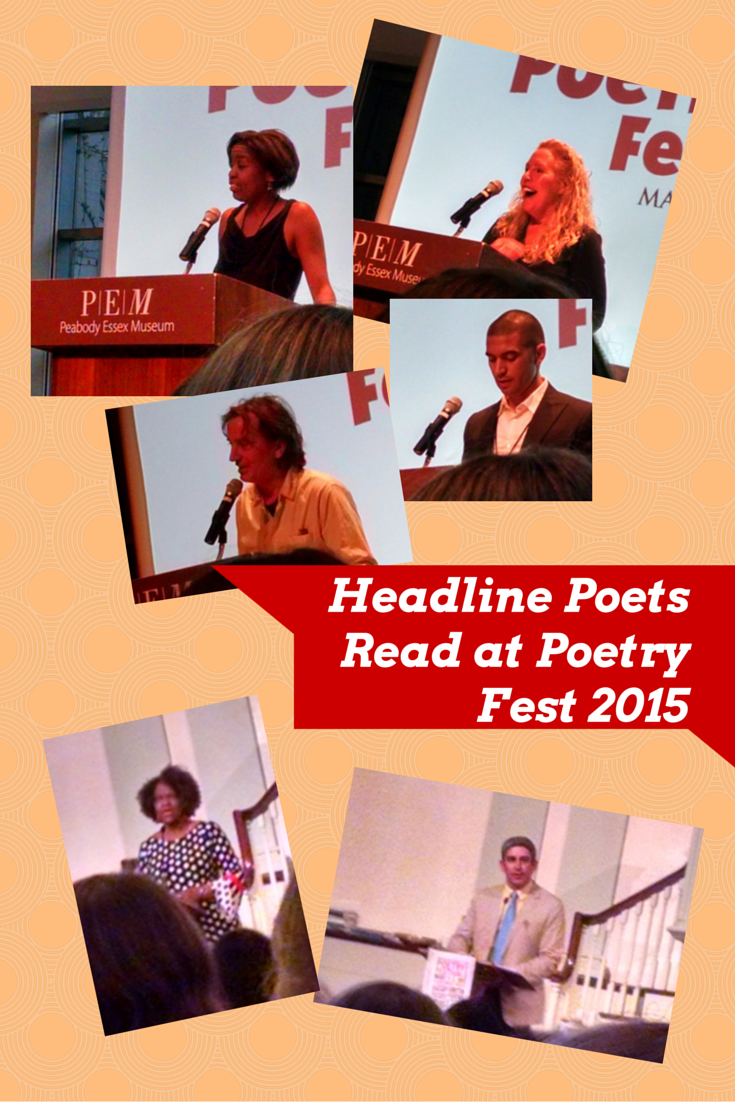
As always, the headline poets were fantastic. I didn’t make it to all the headline sessions, but both the Friday and Saturday night readings were interesting, featuring Nick Flynn, Adrian Matejka, Denise Duhamel, Rita Dove, and Richard Blanco. I was especially enamored of Rita Dove’s reading, and most particularly loved her poem “Maple Valley Branch Library, 1967,” linked below:
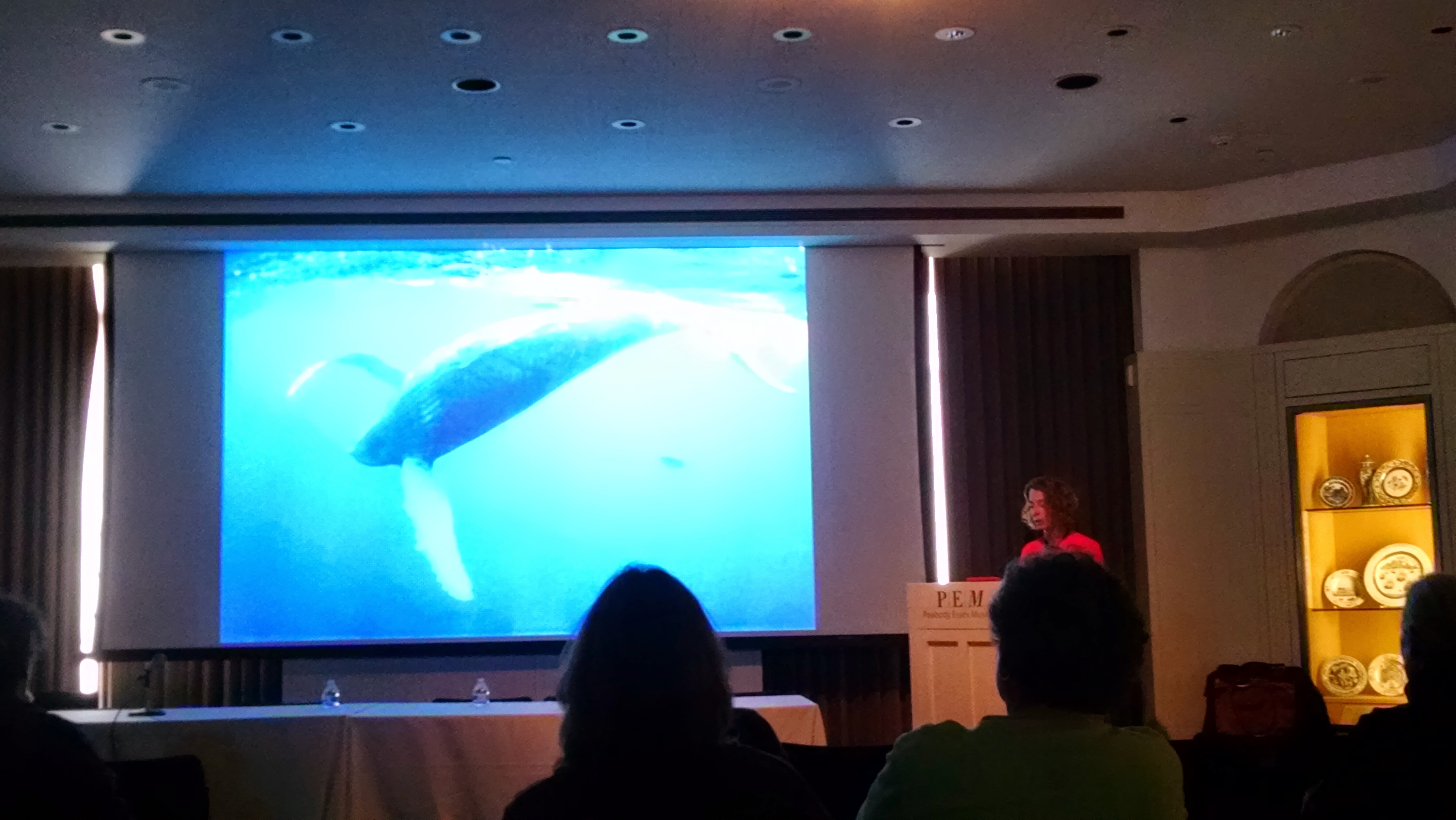
Scuba diving poet Marie Elizabeth Mali reads against a backdrop of her photography.
Other moments that caught my imagination included the reading of marine-inspired poetry to a running background of underwater photography, the highly entertaining “Digital Age Poetics” workshop from the lovely folks at Window Cat Press, and the absolutely fabulous “Writing Sound to Sound” workshop with Moira Linehan and Mary Pinard, which focused on exercises that build sound consciousness into your writing from the very start. As someone who loves the music of language, syllable and rhythm, I found that session especially inspiring. Overall, from humorous memes and ‘flarf’ searches to dictionary page and abecedarius poetry, I came away with a ton of new writing prompts and a few promising new poem kernels.
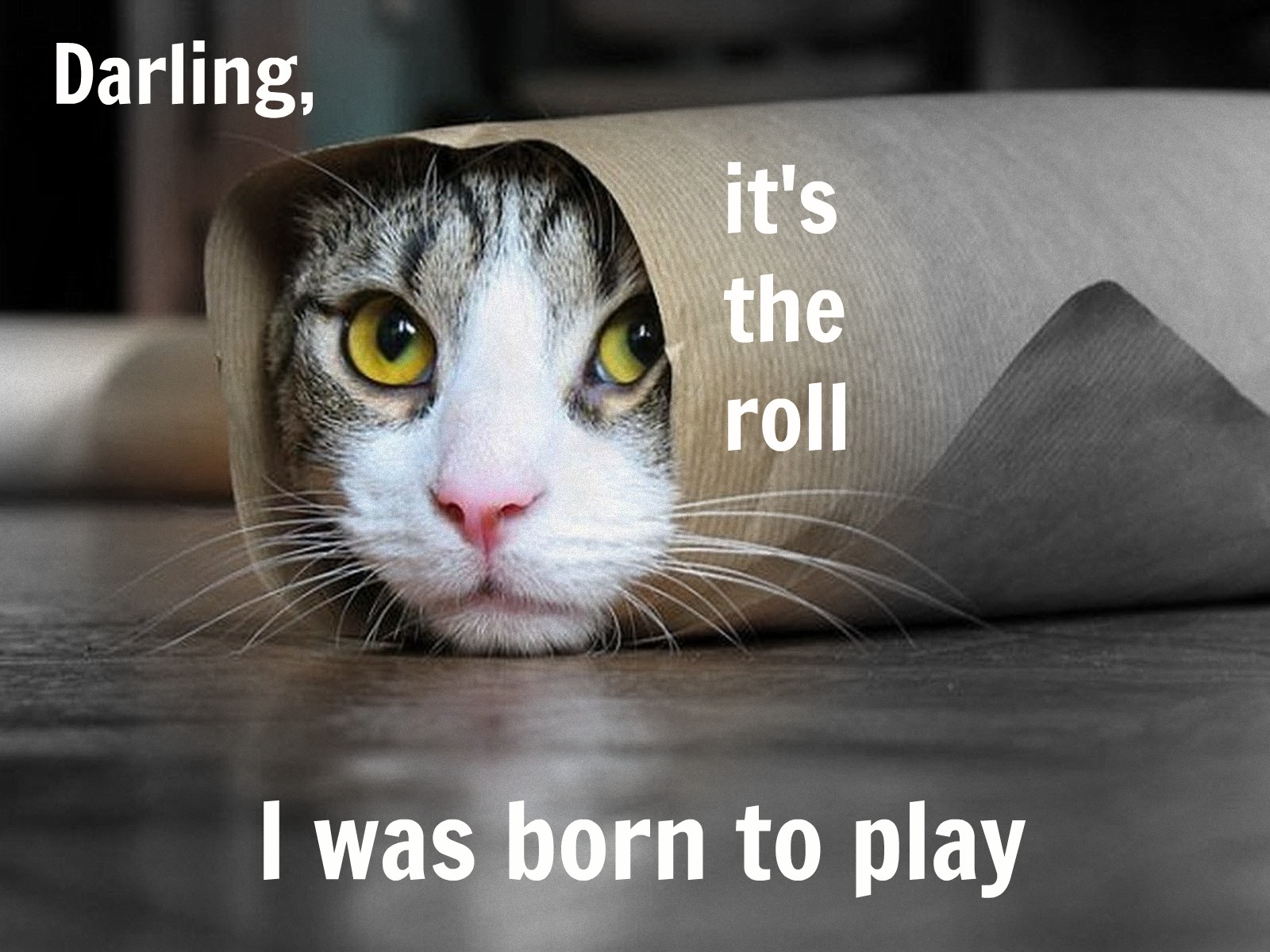
Meme as digital poetics: Dramatic Cat has found her role of a lifetime, courtesy of a penchant for puns by yours truly.
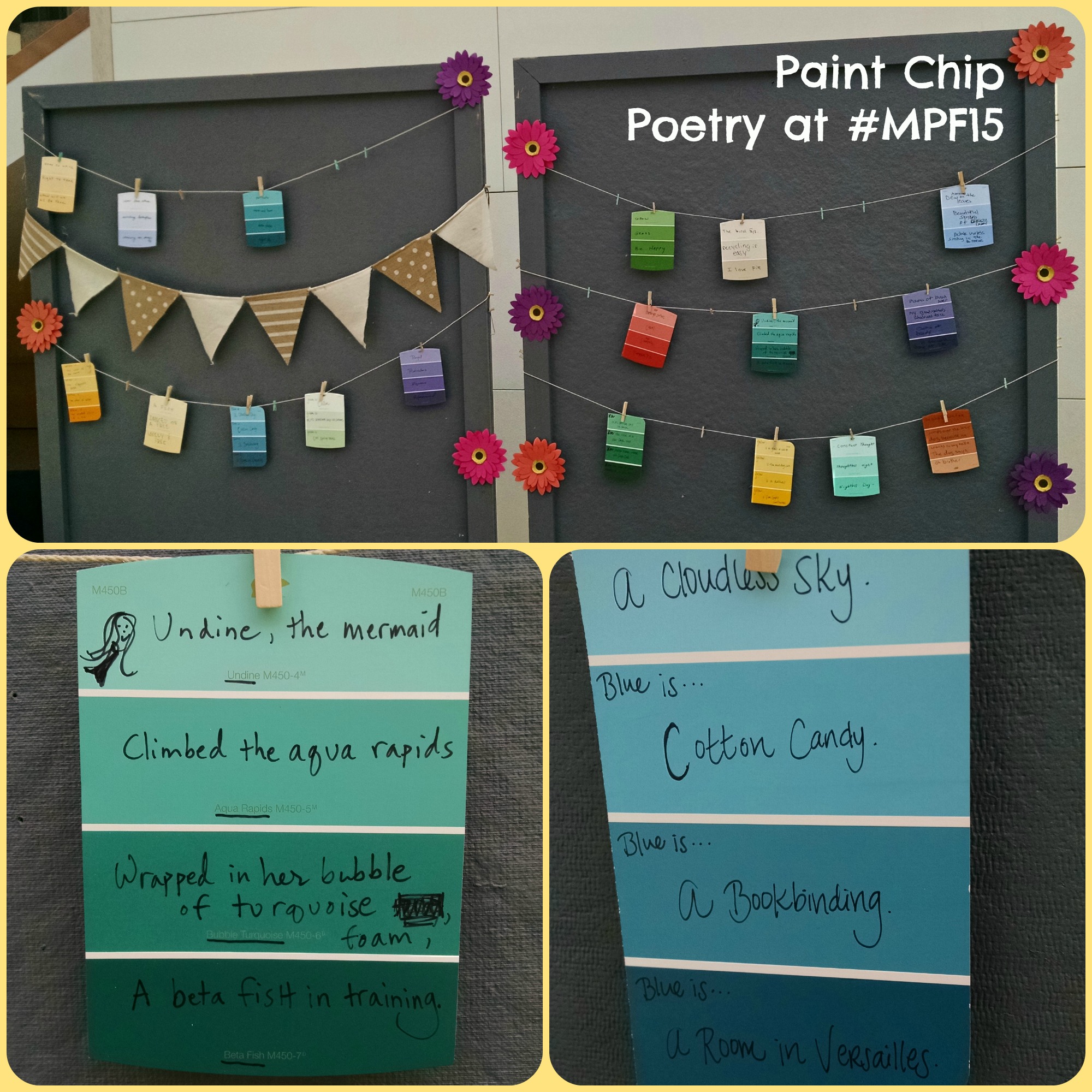
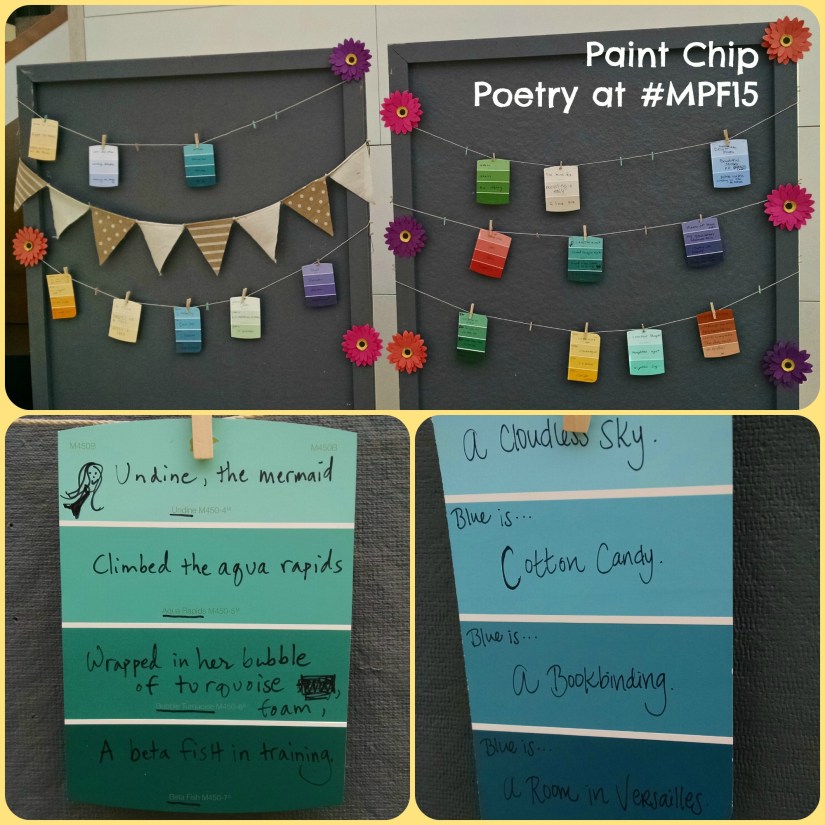
I learned about Edna St. Vincent Millay, read aloud and listened to a great collection of winter and spring poems from my fellow long-suffering New Englanders, and had many a meal with friends old and new. Finally, I was pleased to see that PEM continued to play with words and art, featuring Mad Libs Muse prompts featuring ‘erasures’ from famous poems, paint chip poetry focused on color and brevity, and even a giant Scrabble game.
Thanks and congratulations again to Michael, Jan, and Laurin for putting together another spectacular weekend!
Last week I had the pleasure of attending a workshop hosted by the folks over at Mass Poetry as a reward for supporting their Poetry on the T campaign. (and I happened across some of said poetry just this week on the Red Line, which made me extra happy!) The workshop was appealingly titled “Super Writing Fun Time” and was led by Jill McDonough.
I’ve been working on several projects recently (which is why I haven’t posted as much this month, oops!) and those projects have had me thinking a lot about editing, both prose and poetry. One of the hardest things to do is look at a piece of writing and say, “You know, there’s really only one good line in that whole passel of words.”
Ouch.
Sometimes, though, it’s worth just hanging on to that one good line and rebuilding around it, and that was made abundantly clear in McDonough’s workshop.
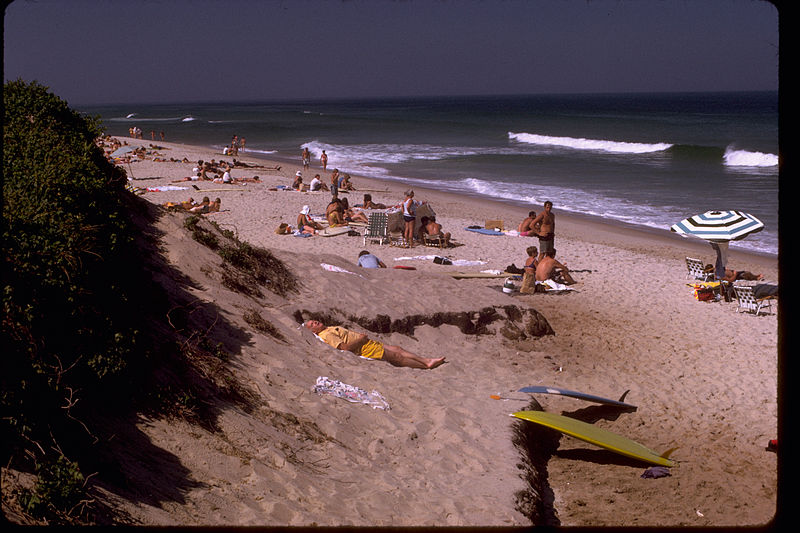
Cape Cod National Seashore, National Park Service (public domain)
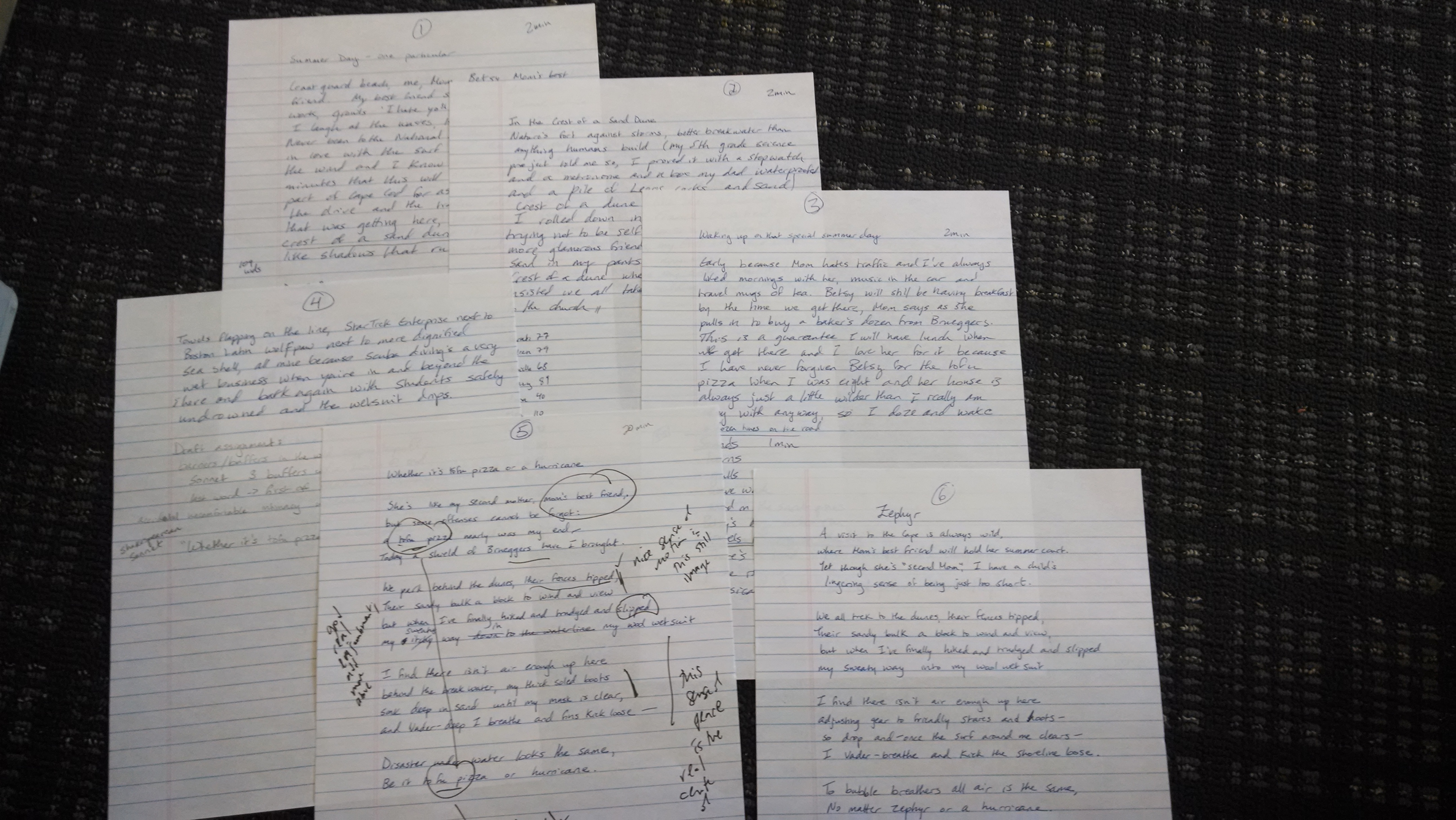
In a series of word-spilling sprints, she urged us to write about one particular summer day, read our result aloud, and then run on again from whichever phrase she highlighted as the most interesting part of our rushed verbiage. After several iterations, we had to look back through everything we’d written and give ourselves an assignment to create a more thoughtful poem draft using themes or language we’d found in our earlier efforts. Where we were stuck, she offered help by way of a format or a title or a direction, and then came around to ‘mess with’ our work if we indicated we wanted help/critique. I ended up writing and rewriting a Shakespearean sonnet in about 25 minutes, and it was an enormously confidence-boosting evening.
A passel of words thanks to McDonough’s workshop!
So why was it so effective? Beyond McDonough’s humor and generous handfuls of Hershey’s kisses, she created a judgement-free zone. Spilling all those words on the page in the beginning, without worrying about quality or phrasing overmuch meant it was easier to let those words go in favor of the best ones–and it’s a device I think I’ll adopt in future. I’ve never been much of a ‘drafter’ by personal preference: I like spending the time and thought to feel like I’ve got it ‘right’ the first time around, but what works in an essay or a professional memo is really not conducive to the creative process, which is almost by definition iterative. And carrying that mindset over from the workshop has been helping me edit the rest of my writing, as well.
If you’d like to find out more about McDonough’s process in her own words, I recommend this article: “Primary Sources” hosted over on the Poetry Foundation website. Between that evening and this article, I’ve spent not a little time recently seriously entertaining the idea of going back to grad school, and then smacking myself on the back of the head, a little. (Is there an Academia Anonymous? ‘It’s been two years since my last graduation…’)
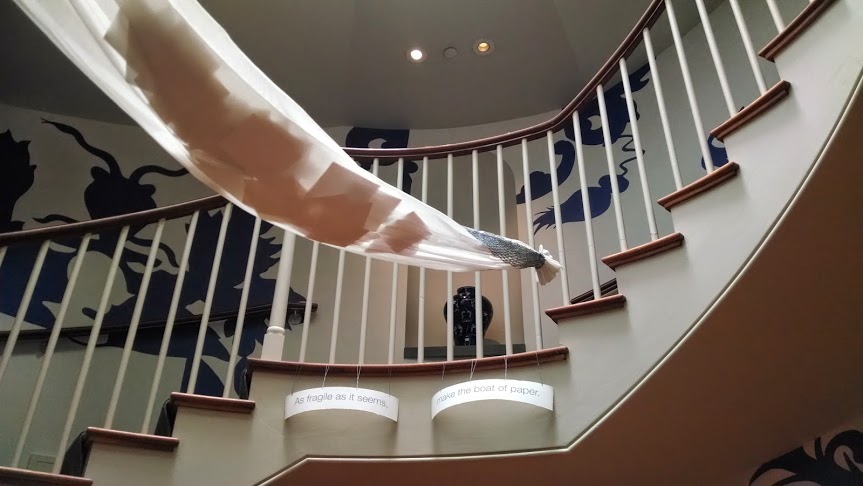
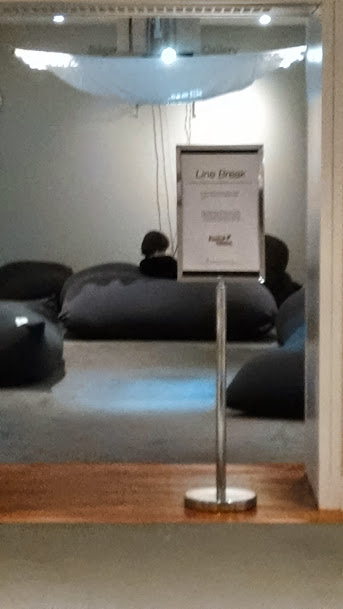
Leading up to the Line Break room at PEM, installation by Colleen Michaels and Lillian Harden
You know that a public space is inviting if there are people in there every time you walk by. When that space is a quiet area in a back corner of a museum set aside for poetic contemplation and respite, you make invisible fist pumps of joy and plan to come back later when you can abuse your staff privilege of getting in there before it opens to the public.
This is exactly what happened with Line Break, an installation at PEM for the Mass Poetry Festival. (Read more about the background of the two artists and plans for the space here: Line Break on masspoetry.org)
When Colleen and Lillian first approached my colleague and I about a poetry installation during the festival, we were eager to try to make it happen, but neither of us suspected, I think, how successful they would be at creating the atmosphere they described: the soft hum and click of an old slide projector, the feeling of floating as you lay beneath the hammock of words, the wordless invitation of blank books and pure white pencils.
(Blank books always call to me, I always answer.)
Poetry hammock catches words in Line Break
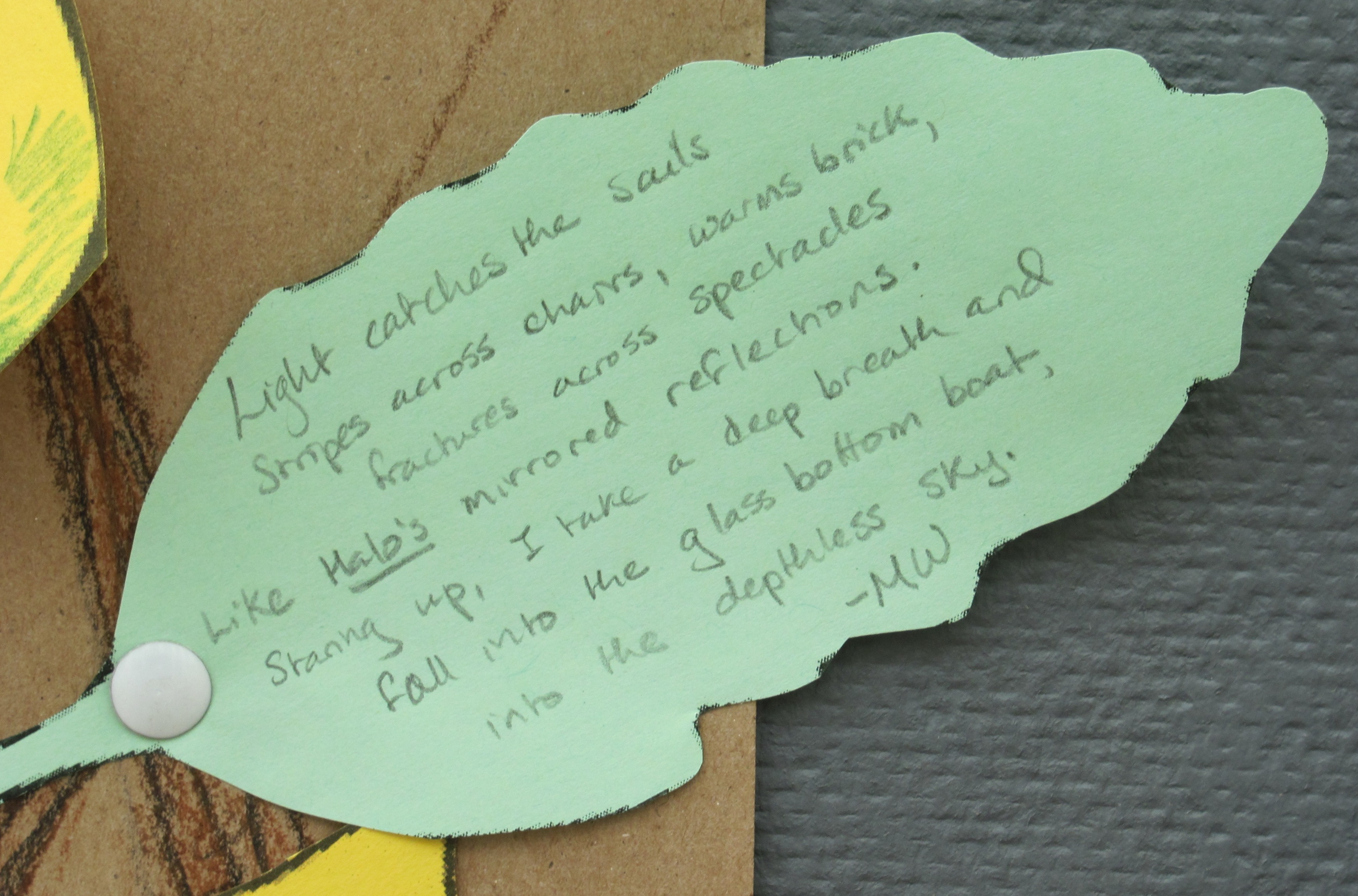
My favorite lines I saw float across the net/hammock were:
“if your net
were knit
by bloom
would it feel
like raised hands?”
And, based off another quote from a few lines later, I wrote this poemlet:
Transformations
Almost feather, almost fin
almost heaven, almost in.
Almost always, almost lost–
What’s the danger? What’s the cost?
Almost sorry, almost wise,
almost perfect in your eyes.
Really, the floor cushions were the part my inner child liked best.
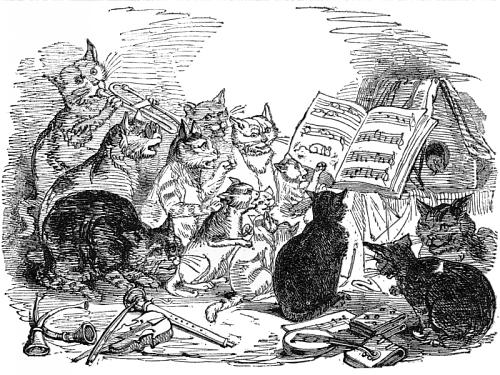
Leading a workshop can be like trying to get cats to sing in tune, but here are a few suggestions based on what worked and didn’t at the 2014 Mass Poetry Festival
Any teacher knows that a one hour window in which to teach does not actually involve a full hour’s useful time. If you’re lucky and you have dedicated learners, by the time you get everyone settled and have introduced the topic, you have maybe 50 minutes at best. I’m stating this up front, because I recognize how hard it is to fit everything you want to do and say into that kind of time constraint, and I value all the effort that goes into organizing a lesson, workshop, or conference session. It’s hard to do right, and of the three workshops I attended at the 2014 Mass Poetry Fest, two knocked it out of the park and one was fairly disappointing when it didn’t have to be.
What Doesn’t Work (because it’s always worth getting through those first)
1) Actual session activities don’t match what’s described in the festival program – Yes, between when you submit a conference proposal and when you give your presentation/lead your program, ideas can morph. But if your session description asks people to bring their own works in progress, and when you start the workshop you make no mention of that and work with writing prompts instead, you will confuse people even if they are willing to go with it. If you also fail to address anything else listed in the description beyond the vaguest overarching theme, you will end up with at least vaguely dissatisfied participants.
2) What you outline (promise) at the beginning of the session doesn’t happen – Even if you’ve changed your mind about what you want to do in your session, if you don’t follow through on your newly announced plan, your vaguely dissatisfied participants will end up disgruntled. If it’s important enough to you to look at everyone’s work during the session that you say you’ll do it, then actually do it. Otherwise, no matter what other interesting information you dispense, the people who get skipped over will feel like they’ve wasted their time.
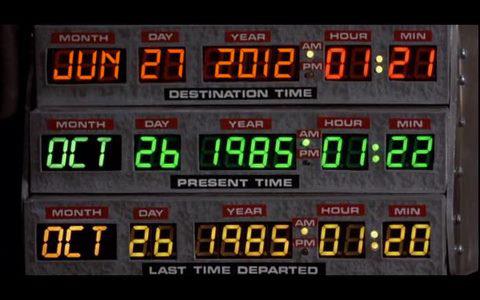
If you have a flying Delorean or a Time Turner or a TARDIS, I will take your workshop and not mind time management issues at all. Otherwise, make sure you have a timeline for yourself and stick to it as closely as you can.
3) Wasting time – Be realistic about how much you can get done in an hour, hour and a half, two hours. If you’re used to giving three day long intensive writing workshops, think back over how long your introductory activity takes, and that’s probably about as much as you can cover in this kind of time window.
4) Self-advertising – Not actually a terrible thing if you make your living as a writing coach or a consultant, so long as the session’s gone smoothly and you have a good sense of the temperature of the room. But if you’ve had issues with any of numbers 1-3, promoting your next course is likely to backfire.
What Works! (Yay!)
1) Group participation – Chances are good that most of the people in the room don’t know each other all that well, but a bunch of them likely do belong to writers’ groups and are familiar with both reading their work aloud and collaborative writing prompts. If you don’t have time to have everyone read, that’s fine and people won’t expect it unless you tell them they will, but a writing exercise as simple as Exquisite Corpse works great as an icebreaker. And it makes everyone feel included without taking any more time than you might have given to any other writing prompt, sometimes with bonus hilarious results.
2) Handouts – Seems pretty common sense, but if you’re referencing a bunch of works, poems or otherwise, having at least a bibliography and at best a set of full text, along with whatever prompts or resources you’re using in your presentation. It frees people up from stressing about taking notes, so they can pay more attention to what you’re saying and really take it in. Plus it’s helpful when they want to go back and reflect after. I’m really looking forward to reading carefully through the poems provided by Elisabeth Horowitz in the intensely enjoyable “Writing the Sea.”
Bonus suggestion: I used to make sure I had ’emergency sugar’ in my desk when I had tired afternoon seventh graders in my classes. Stick with stuff that’s free of the most likely allergens (or with caffeine) and your audience will perk right up.
3) Spare paper and pens – Okay, at a writers’ event, this may be superfluous. But notebooks fill and pens run out of ink, so having extras makes you look sweet and thoughtful. Because you are!
4) Personal touch – Best practices and survey data and such are useful, but the reassurance of a personal success story shouldn’t be undervalued. And admitting where things went wrong is as interesting and useful as the list of things that went right along the way.
5) Interesting, diverse writing prompts and/or discussion questions – Form, theme, vocabulary, cultural context – there are so many options for cool prompts, and even mixing up the general (‘rivers’) with the specific (line beginnings and ends must match) can lead to really interesting variation that makes people think fast and write fast and be more willing to share, in general, than the things they’ve slaved over and have more invested in. And it’s not all about the writing either – time for questions is equally important!
Homework is way more fun when you are only being graded by your inner editor.
6) Homework assignments – In the corporate world, these are called ‘action items,’ but the point stands: especially if you’re leading a session on practicalities or logistics, like Susan Rich’s excellent session this weekend on “From Manuscript into Book: Demystifying the Process,” giving participants ideas on what next steps they can be taking once the session is over is great. I have a number of ‘assignments’ to add to my running to-do lists thanks to Susan, and I’m actually really looking forward to it. Who knew a task like ‘list the titles of the poems you know you still need to write’ would be such a spur to creativity?
Have you attended any particularly good (or regrettable) conference/festival sessions? Any helpful hints to share in the comments? Please do!
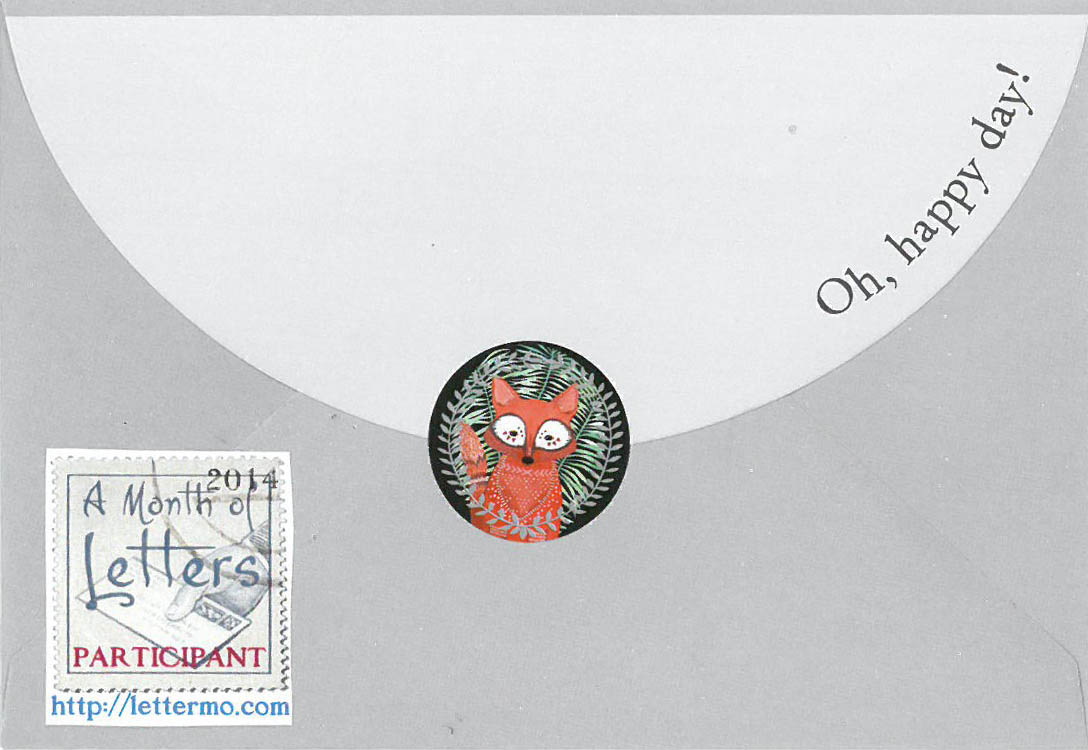
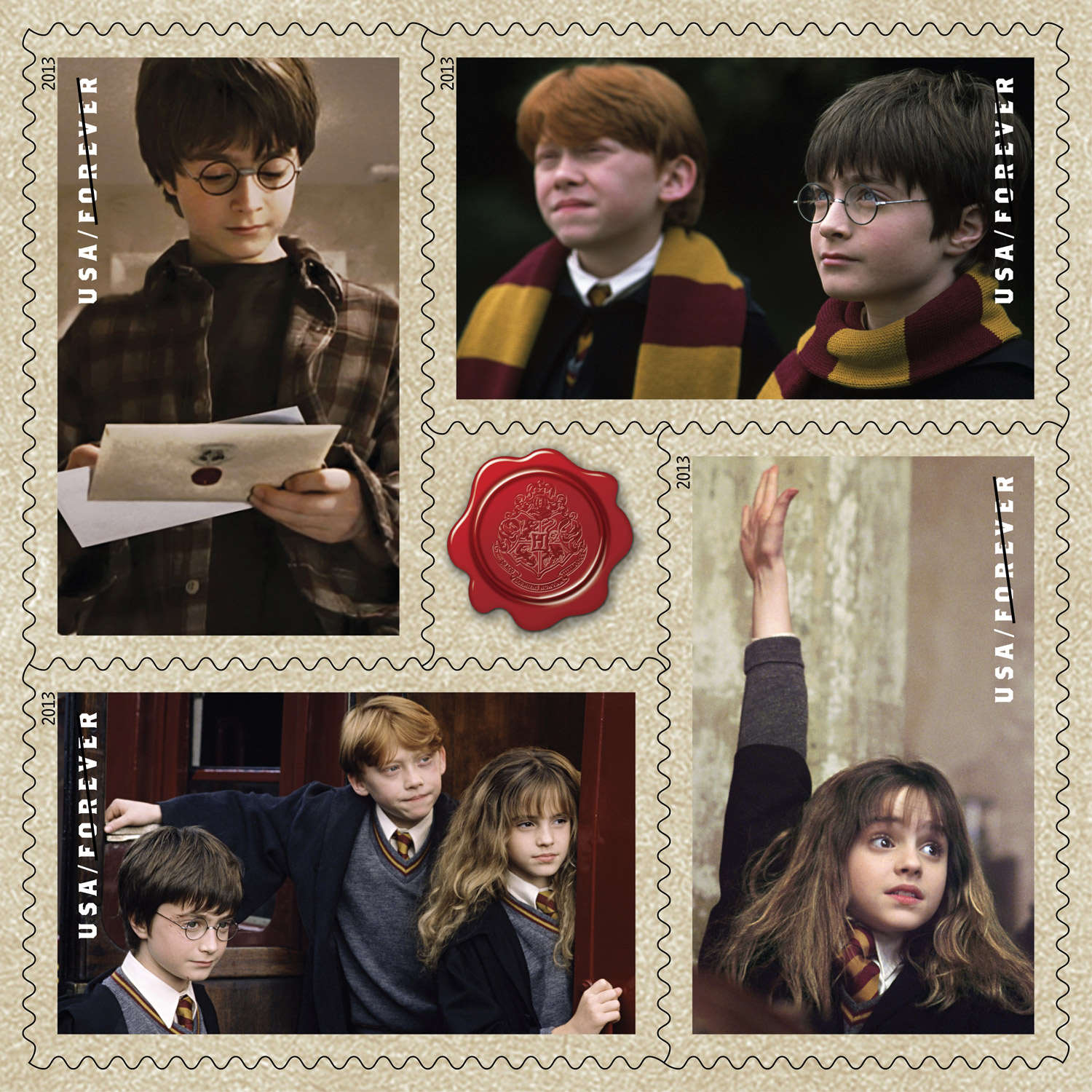
Earlier in the month I mentioned that I’d signed up to participate in A Month of Letters, and it’s been a very enjoyable experience. I’ve had a lot of fun with all the variation possible in this challenge – hand making cards, using my old-fashioned pens & inkwells, picking out fun valentines, and using stationery I’ve been hoarding. Not to mention hunting out new mailboxes and buying fun stamps. Did you know that the USPS currently has Harry Potter stamps? They’re awesome. (Also, it turns out that there are an awful lot of sci-fi/fantasy letter writing fiends. There are Whovians and more all over the Lettermo forums!)
USPS Harry Potter stamps, subset
Challenges like this are theoretically all about the numbers (though this one has the added bonus of really fun correspondence to read!), so here are my numbers for the month:
_4_ international letters
_3_ letters with enclosed surprises
_21_ hand made cards (valentines, mostly!)
_2_ postcards
_3_ Austen-style letters, written with a dip pen and sealed with wax
_2_ fan letters
_2_ birthday cards
_1_ wedding congratulations
_2_ thank you notes
_6_ replies to correspondence from friends and Lettermo participants
_2_ new pen pals
_5_ valentines I didn’t make by hand
_3_ letters by fictional characters (counting one still to be finished)
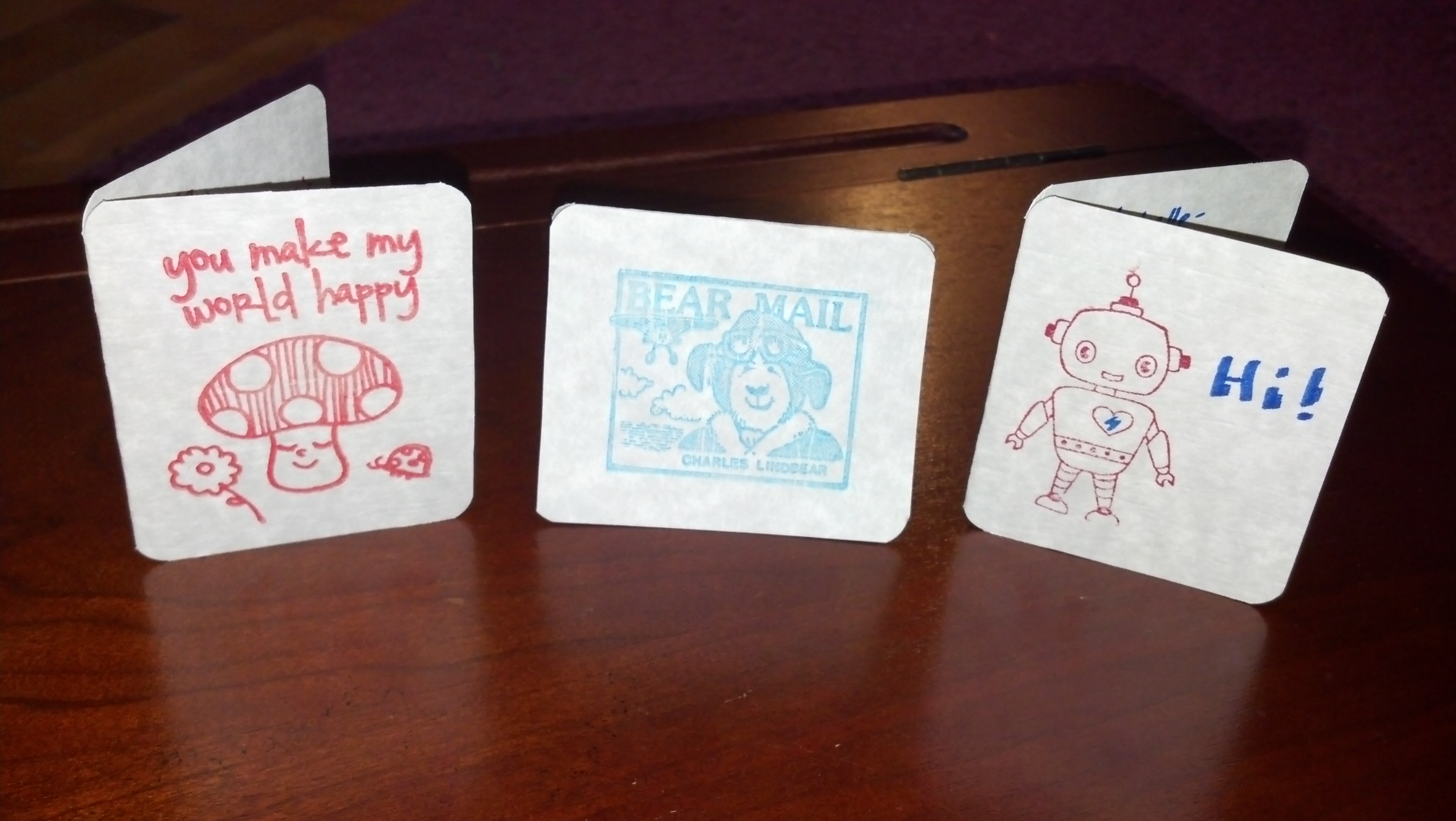
Teeny valentines for coworkers and friends
One of my favorites was taking author Mary Robinette Kowal up on her offer to write to one of her characters. I had a blast borrowing names from further up the family tree and writing as an amateur glamourist traveling on the Grand Tour. I can’t wait to see what Lady Jane Vincent says in return!
Curious? My letter went something like this:
Sunday 16th February, 1817
To Lady Jane Vincent
Dear Madam,
I hope you will forgive the presumption I have made in writing to you without an introduction or mutual acquaintance, but I found I simply must express my deep admiration and near boundless curiosity about your remarkable work with glamour.
My name is Miss Margaret Carter, of Boston, Massachusetts. Being fortunate enough to have parents who deem travel imperative for a lady to be considered accomplished, I have been touring Great Britain and the Continent with my cousin, Miss Millicent Townsend, as extensively as events have allowed. Though I am myself but a garden variety artist – a lily of the valley, perhaps, quite far from an heirloom rose or tulip varietal – I can appreciate exemplary work when I see it. Your work on the Prince Regent’s underwater mural quite took my breath away when Minnie and I had the opportunity to view it. I could almost believe we were standing in a glass dome under the waves while the fish performed a gavotte around us.
Until such marvels are possible, which I sincerely hope they may be one day, the work you and your husband do stands in most admirably.
And here we come to my curiosity, which I hope you do not find burdensome to satisfy. First, what manner of study did you need to undertake to portray the light and movement underwater? For the fish at the market look nothing like their living counterparts, and a set of scientific prints is equally dead. And secondly, might I inquire as to the kind of knotwork you employed for their schooling? I have been attempting a small sort of glamural that incorporates moving lines of poetry, but have yet to make the words scroll as I wish, and would appreciate some hint in that direction if it is not a secret between Sir Vincent and yourself.
My thanks for the time and attention you have already given to a stranger, and please accept my best wishes for the success of your future artistic endeavours.
Between holidays, snow, and work commitments, this was maybe not the ideal weekend to go to a sci-fi/fantasy convention. I went anyway. Last year was my first con ever, and much as I had an immensely enjoyable time at Arisia, I’d heard Boskone had a lot going for it as well, so that was this year’s adventure in geekery. (So far. It’s only February, after all.)
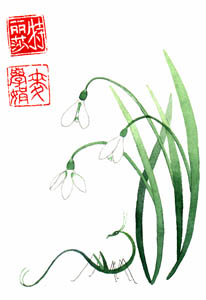
“Snow Drops” by Patricia McCracken, my favorite artist find from this year’s Boskone. Click for source (and to order her lovely prints!)
One of the selling points of Boskone is the chance to have a close encounter with some pretty big names in the world of sci-fi and fantasy writing, and when I saw that this year’s guests of honor included Jane Yolen and Seanan McGuire, I was definitely sold. I do, after all, have that thing about meeting your literary heroes, and I’ve been a fan of Yolen’s basically since I learned to read. Though I only started reading McGuire’s Rosemary and Rue this week, I’ve been following her on Twitter and Tumblr for a while and have a lot of respect for the way she interacts with her fans and the way she stands up for inclusion and respect in geek culture.
Despite having an abbreviated stay at Boskone due to weather et al, I had a fabulous time. It was as inspiring and entertaining as I hoped, and the worst part was that there were way more events I wanted to attend than I had time for. These are some of my favorite moments from the weekend:
“Finish It!” panel on ways to cope with and defeat everything that gets between you and finishing your novel: best tips included setting yourself manageable goals like ‘write non-stop until the end of the playlist,’ and making sure to ‘touch base’ with your novel every day, even if that means writing up bits of background for minor characters or historical elements to your world instead of advancing the main story. (With the bonus that you might get a short story or another book out of those extra elements later!)
“The Evolving Role of Heroes” panel on what’s beyond Joseph Campbell: lots of great questions raised about heroes outside the Eurocentric hetero male model. Author Greer Gillman talked about how many of the female hero stories centered less on the ‘zero to hero’ trope and more on the idea of finding a way out of restrictive circumstances (labyrinths, castles overseen by older, dangerous people), finding a solution to a problem (and often rescuing a clueless boy as a side-project). Others talked about how all heros’ journeys are about self-discovery–but some are about following the steps to taking power (Aragorn), and others are about being forced out of one’s comfort zone for the greater good (Frodo). There was also a fun discussion of alien cultures and what would heroism look like in a collective society, what would our concepts of heroes look like to them, etc.
“The Light Fantastic” and “Humor in SF” panels each focused on recommending and supporting the happier, more humorous side of sf/f, and on the defense of escapism and humor as a teaching tool and cover for topics that are actually harder to take on in drama. Bruce Coville was particularly entertaining in the SF panel, and in between admitting to having an 8 year old’s sense of humor and telling body humor jokes, handed out some great advice about emotional pacing and build-up (“three and a topper”), pleas for wit over thin parody, and ‘cute and fuzzy humor with teeth.’ Plus I got a list of new authors to check out, bonus.
Interview with Seanan McGuire pretty much had me laughing the entire way. Not a lot of focus on writing technique, etc, but who knew reptile and raven rescue stories could be so funny?
Discussion group with Joshua Bilmes, literary agent, who took the time to answer lots of questions about networking, the search for an agent, what to look for in an agent, and to dispel myths about needing short story credits to query for a novel, etc.
Tea and Coffee with Jane Yolen! 45 minutes at a table with Yolen and 9 other people, in which I did not make a blithering idiot of myself and asked a few relatively intelligent questions about the market for recast fairy tales, got to hear about some of her new projects, her opinions on how authors should or should not try to tie in with the Common Core, and all kinds of other fascinating stuff. I didn’t take notes because it was an informal conversation, but she was warm and funny and just so incredibly cool. Definitely the summit of my con experience.
In short, chances are good I’ll be going back next year.
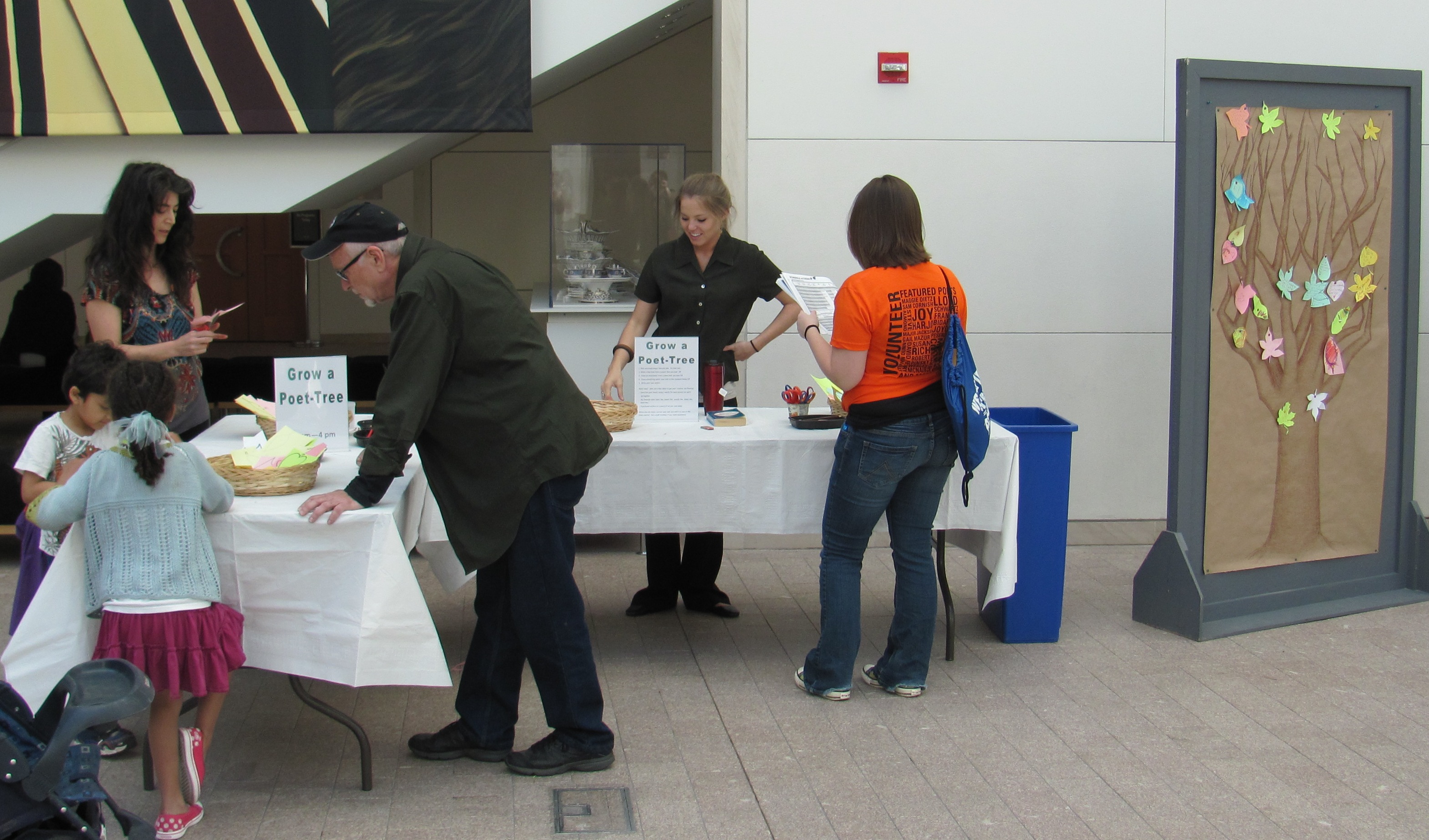
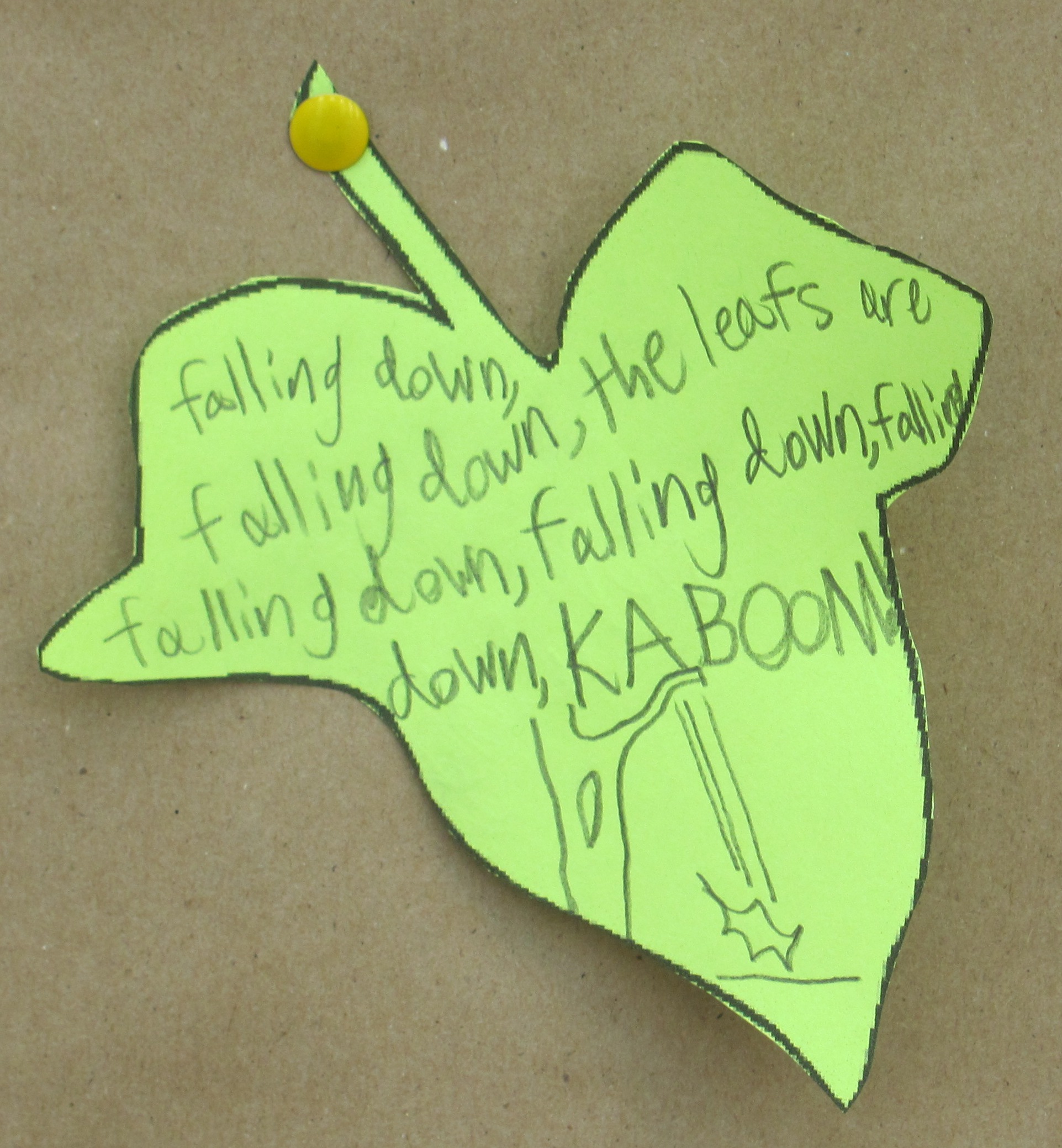
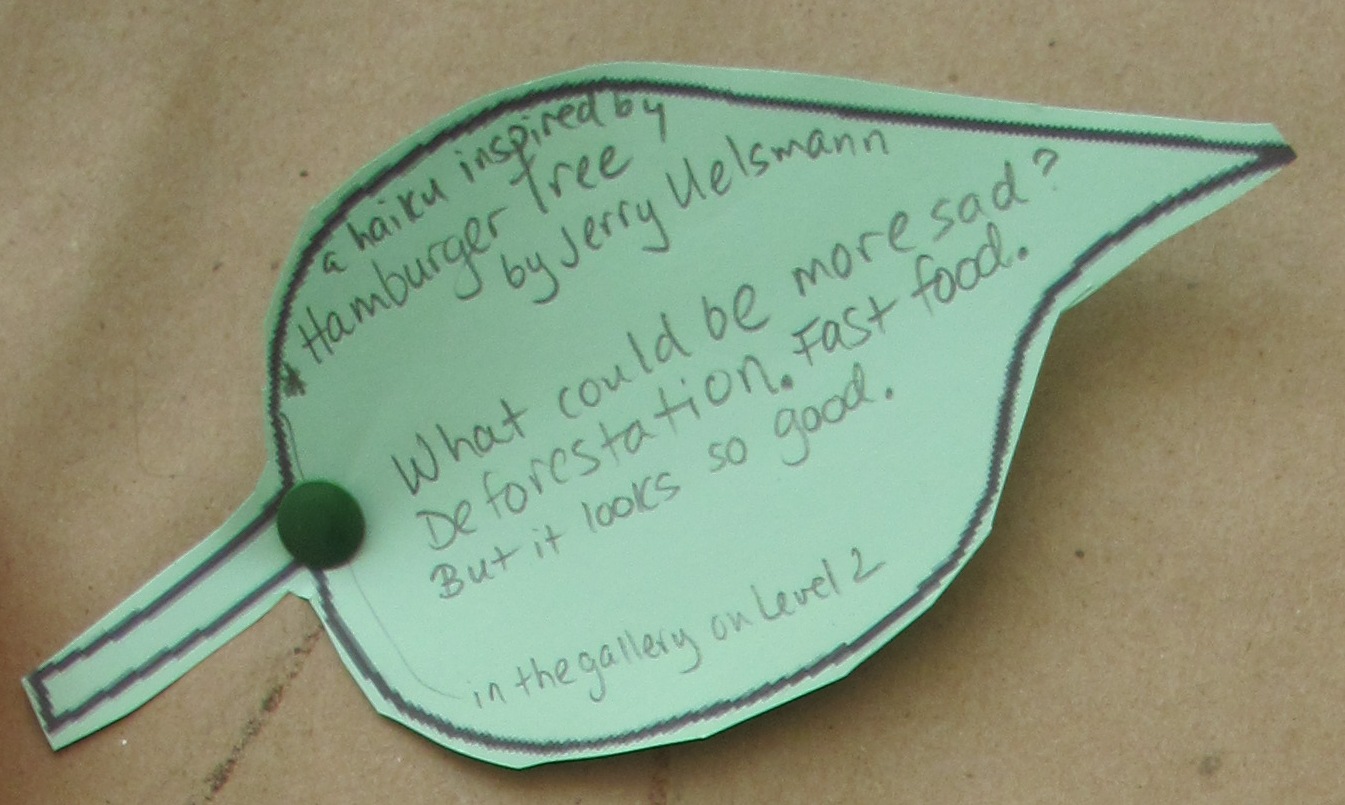
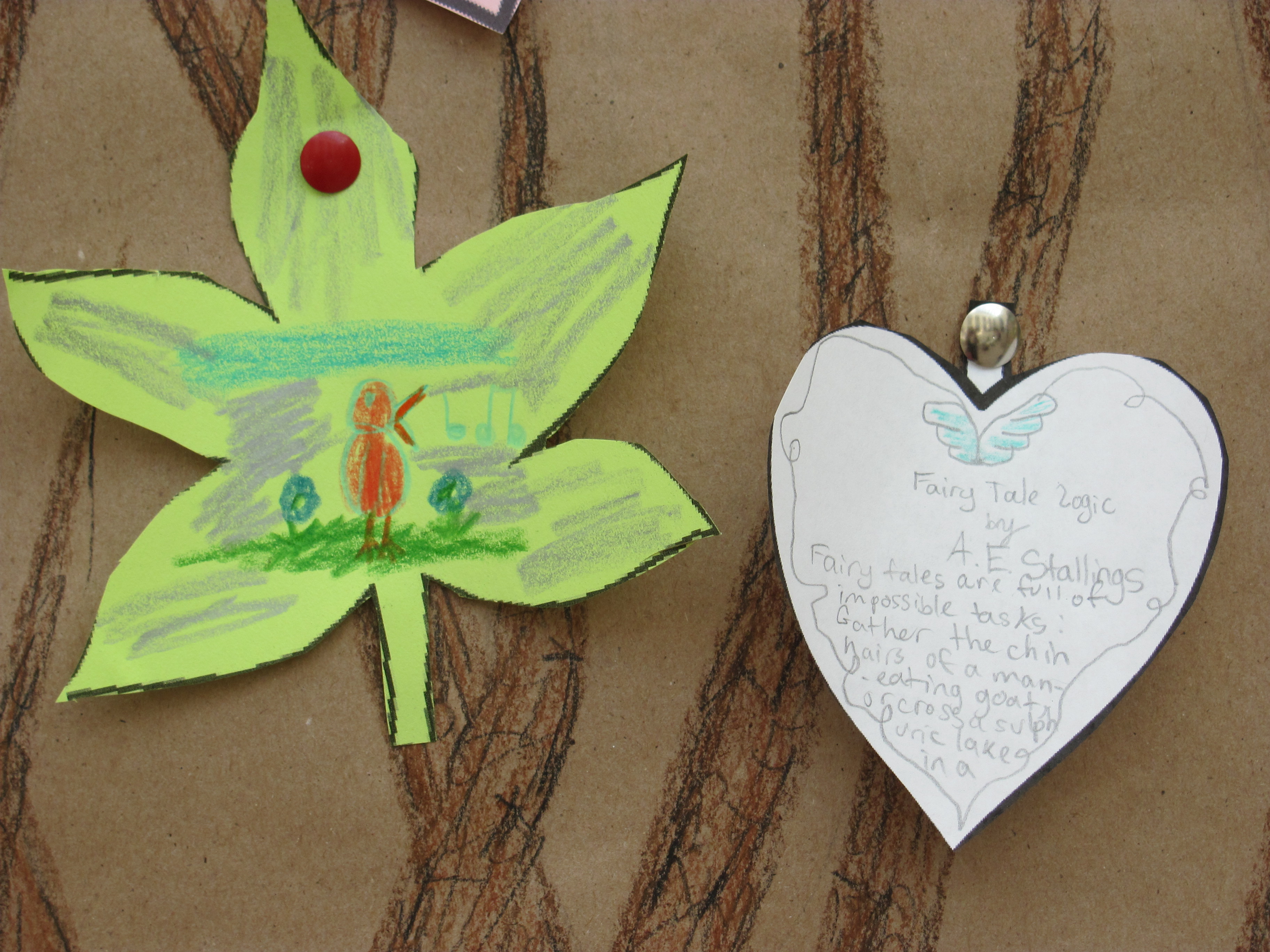
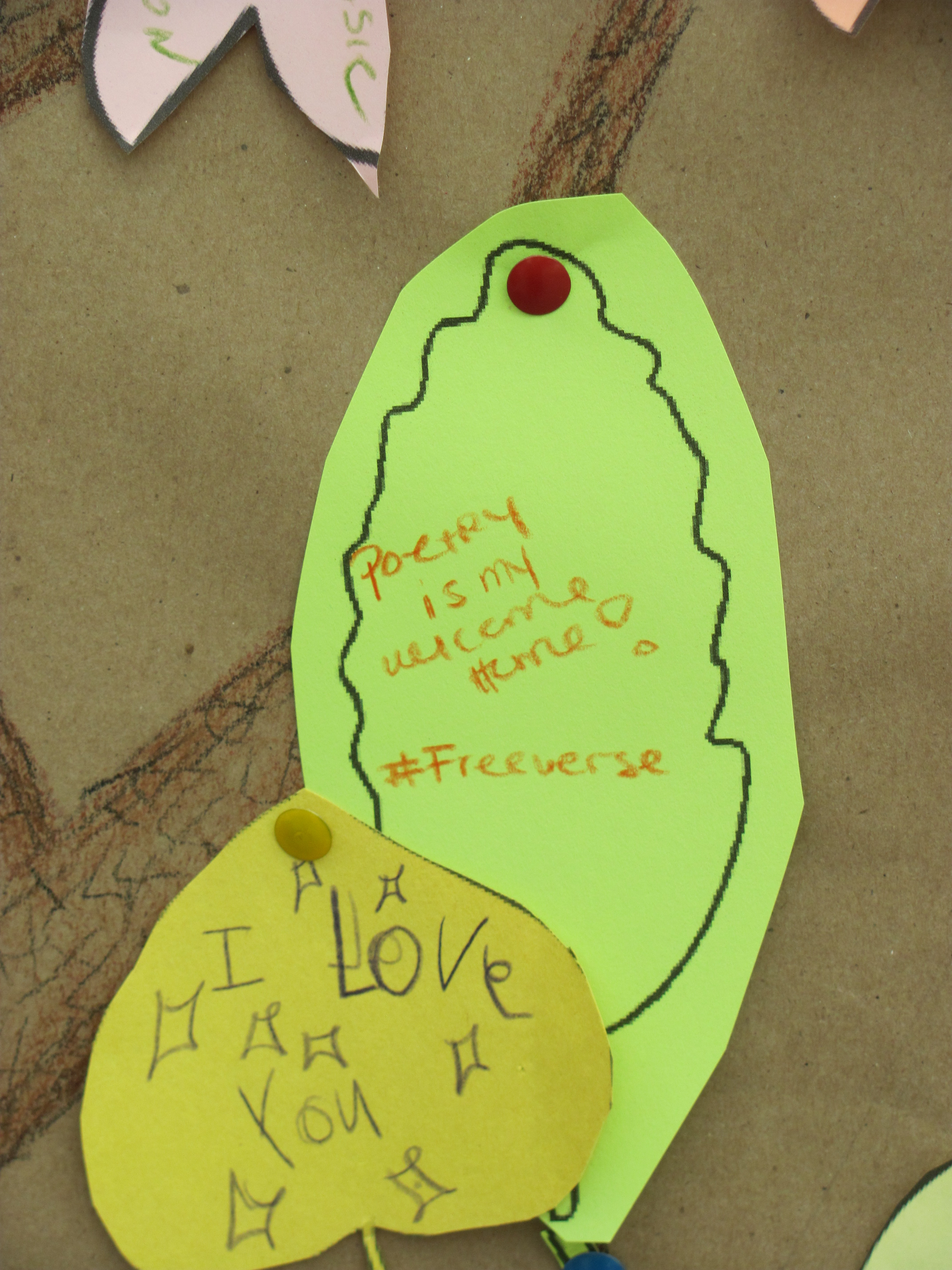
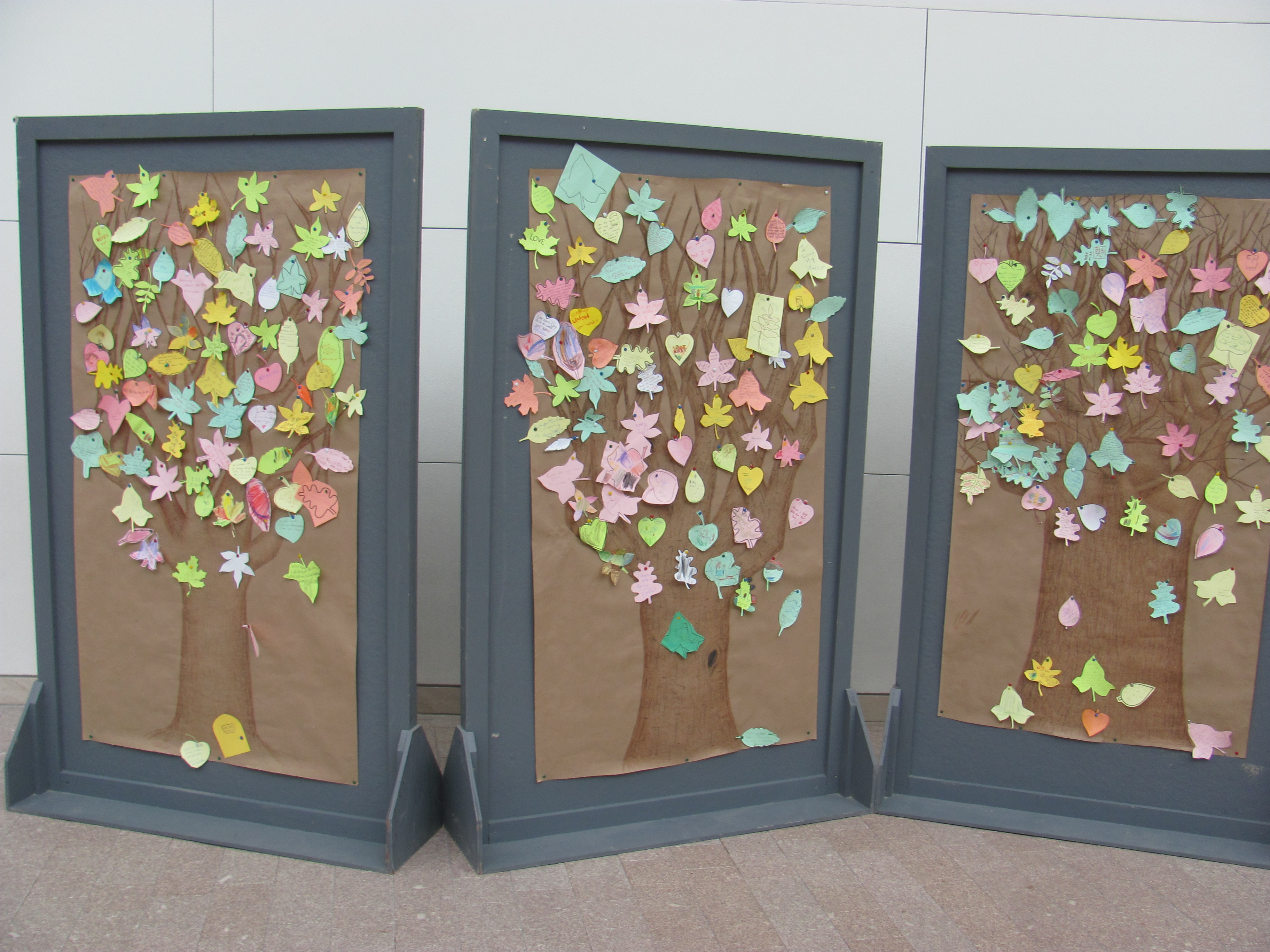
Just a few snapshots from this weekend’s drop-in art and writing activity, “Grow a Poet-Tree” at PEM for the Massachusetts Poetry Festival. Kudos to my intern Kate for drawing three beautiful trees for us to decorate with leaves of original and remembered poetry, illustration, and reflection.
Poets quoted included but were not limited to: ee cummings (the runaway favorite with at least 5 quotes on the trees), Robert Frost, Henry Wadsworth Longfellow (the runner up in popularity, and not my fault), John Masefield (okay, that was my fault), and Shel Silverstein, with a hefty sprinkling of song lyrics (“Morning has Broken” for instance, though no “Amazing Grace”) and a few ad jingles thrown in. Other messages included variations on a theme of ‘save the trees’ (clearly I do my work as an Art & Nature specialist thoroughly…), a lot of ‘I love you’s, and a few witty folk who wrote things like ‘This space intentionally left blank.’ I was most amused by the inclusion of text speak and hash-tags on several of the submissions, I think, but I was also impressed by the way some of the participants chose to address some fairly serious themes even in 2 square inches of space on a public bulletin board.
Greeting early poets and artists of all ages on Friday morning
A few of my favorite additions to the Poet-Tree forest, courtesy of PEM visitors and attendees of the Poetry Festival:
Forget asking about when a tree falls in the forest--apparently even these leaves make a noticeable auditory shock upon impact!Responding to a photomanipulated image by artist Jerry Uelsmann from a current PEM exhibit--someone went to the ekphrastic workshop!A fun illustration and a sweet poem about 'Fairy Tale Logic' (that participant was clearly my kind of whimsical!)One of several #freeverse tags. Who says poetry isn't adapting to the 21st century?My own addition to the tree, inspired by sitting in the Atrium and appreciating the greenhouse/sailboat effect of Moshe Safdie's glass roof.The final product
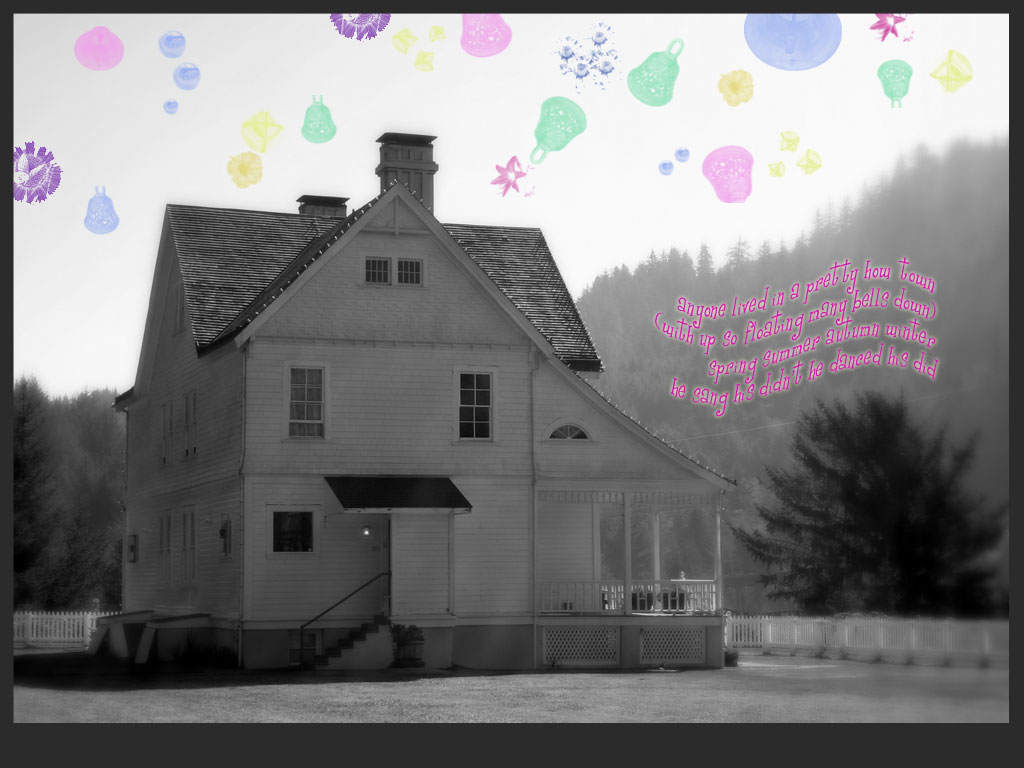
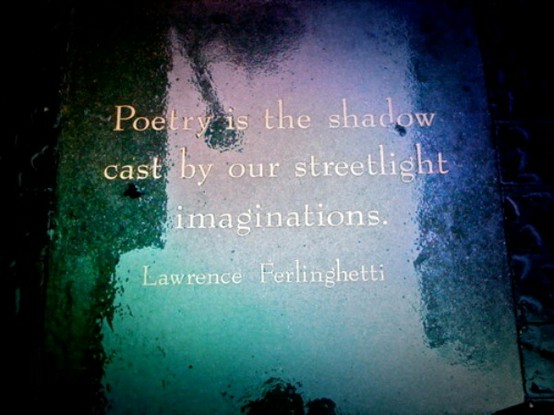
A few collected graphics to celebrate the way a few well-crafted words create such strong mental images. Huzzah for poetry!
"anyone lived in a pretty how town/with up so floating many bells down" by ee cummings, graphic by me
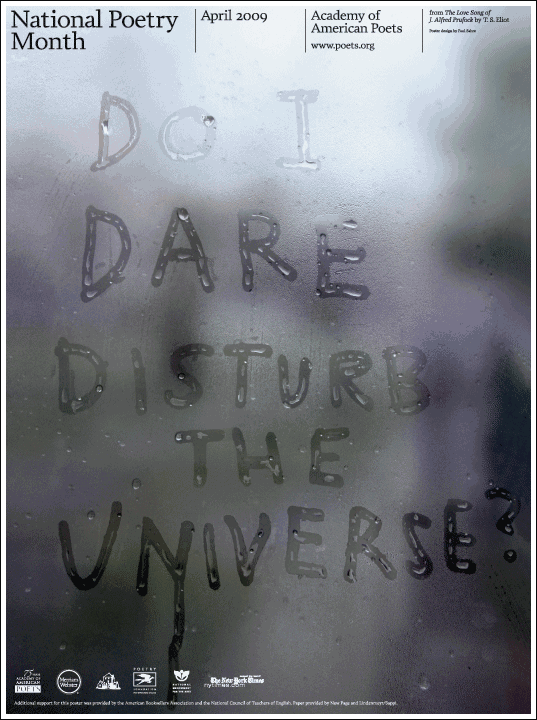
My favorite of the official National Poetry Month posters (though this poem reminds me of high school chemistry class, the teacher was a frustrated poet, I think, better that than a self-identified Prufrock) As usual, pictures are links to their sources.
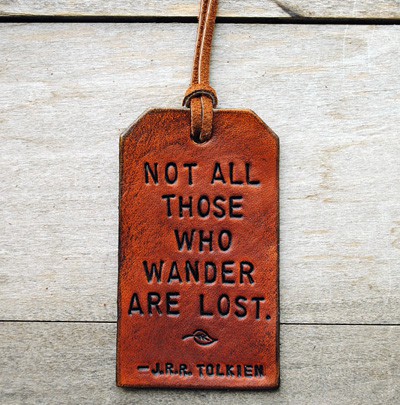
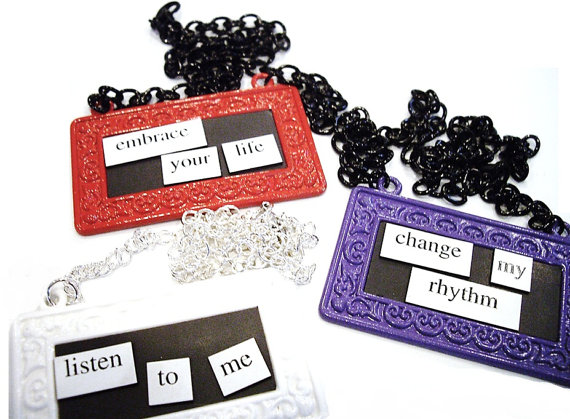
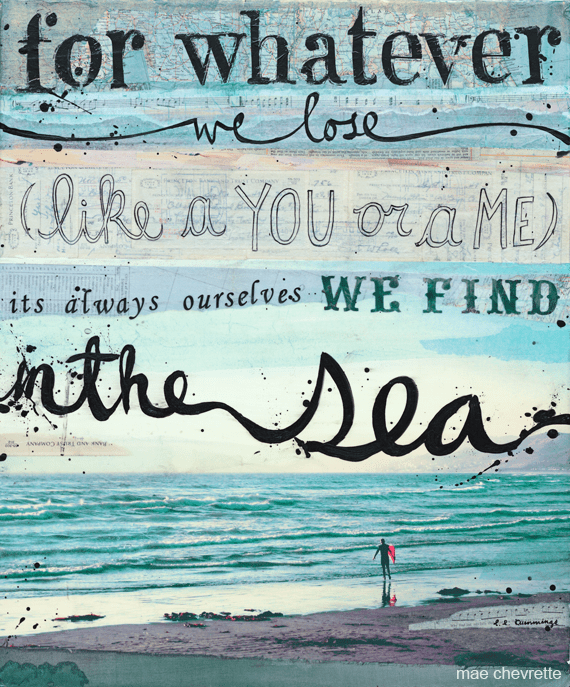
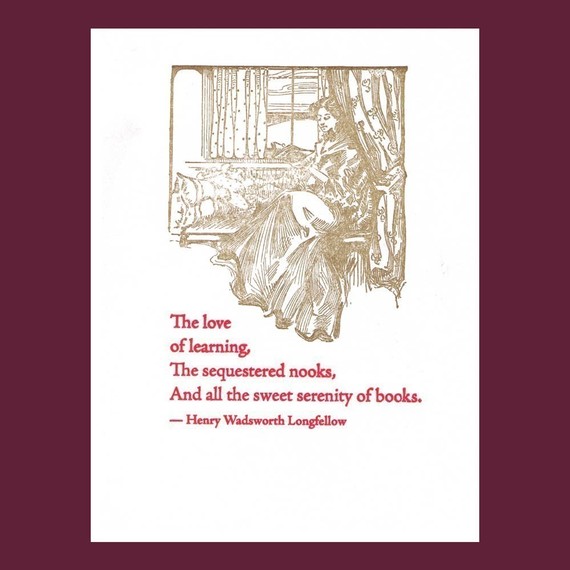
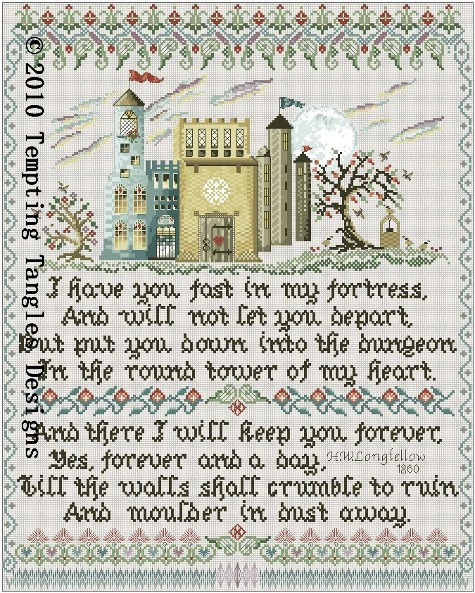
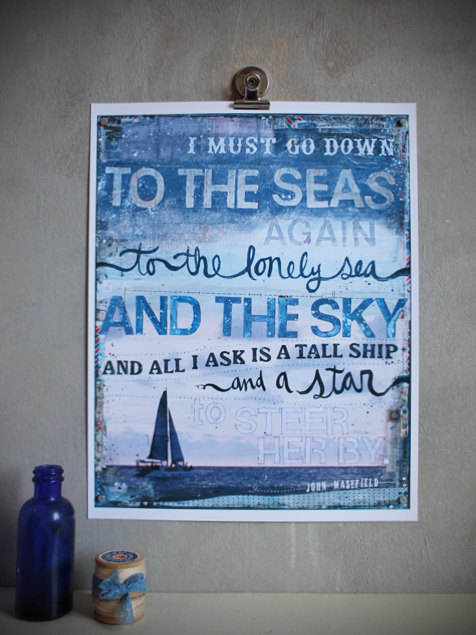
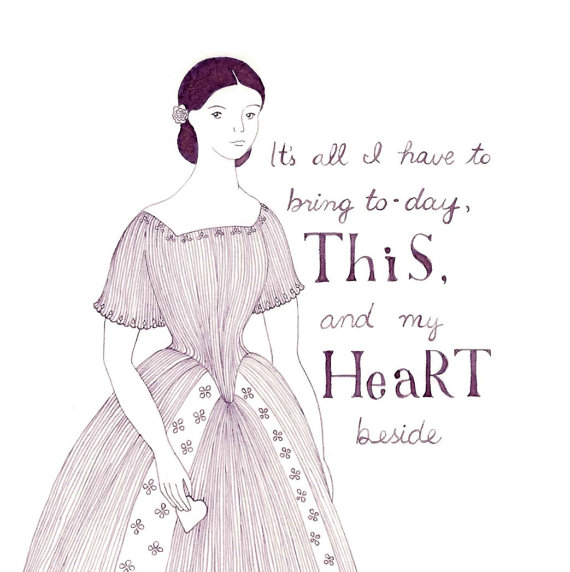
2009 National Poetry Month Poster, from T.S. Eliot's "Love Song of J. Alfred Prufrock"A favorite bit of Tolkien, via Pinterest (I want this luggage tag. A lot.)Couldn't resist including the make-your-own magnetic poetry necklace--some of several styles and options, including earrings. I'm not sure whether this is weird or hilarious or brilliant. Maybe that means I've worked at an art museum too long? Available on Etsy from VitalMadnessPoem by ee cummings, artwork by Mae ChevretteFrom the FreePeople blog, via PinterestPoetry by Henry Wadsworth Longfellow (an old friend of mine), art by LetteraryPress (Etsy)From "The Children's Hour" by Longfellow, pattern by Deborah Dick (Etsy)poem by John Masefield, art by Mae Chevrette (Etsy)"...This, and my heart, and all the fields, And all the meadows wide." by Emily Dickinson, art by Brigida Swanson (Etsy)


 Sea Dreams and Time Machines