
Uncategorized

Inspiration or frustration? Workshop “do’s and don’t’s” from the MA Poetry Fest

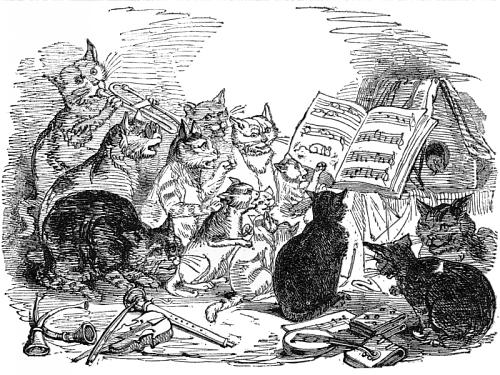
Leading a workshop can be like trying to get cats to sing in tune, but here are a few suggestions based on what worked and didn't at the 2014 Mass Poetry Festival
Leading a workshop can be like trying to get cats to sing in tune, but here are a few suggestions based on what worked and didn’t at the 2014 Mass Poetry Festival

Any teacher knows that a one hour window in which to teach does not actually involve a full hour’s useful time.  If you’re lucky and you have dedicated learners, by the time you get everyone settled and have introduced the topic, you have maybe 50 minutes at best.  I’m stating this up front, because I recognize how hard it is to fit everything you want to do and say into that kind of time constraint, and I value all the effort that goes into organizing a lesson, workshop, or conference session.  It’s hard to do right, and of the three workshops I attended at the 2014 Mass Poetry Fest, two knocked it out of the park and one was fairly disappointing when it didn’t have to be.

What Doesn’t Work (because it’s always worth getting through those first)

1) Actual session activities don’t match what’s described in the festival program – Yes, between when you submit a conference proposal and when you give your presentation/lead your program, ideas can morph.  But if your session description asks people to bring their own works in progress, and when you start the workshop you make no mention of that and work with writing prompts instead, you will confuse people even if they are willing to go with it.  If you also fail to address anything else listed in the description beyond the vaguest overarching theme, you will end up with at least vaguely dissatisfied participants.

2) What you outline (promise) at the beginning of the session doesn’t happen – Even if you’ve changed your mind about what you want to do in your session, if you don’t follow through on your newly announced plan, your vaguely dissatisfied participants will end up disgruntled.  If it’s important enough to you to look at everyone’s work during the session that you say you’ll do it, then actually do it.  Otherwise, no matter what other interesting information you dispense, the people who get skipped over will feel like they’ve wasted their time.
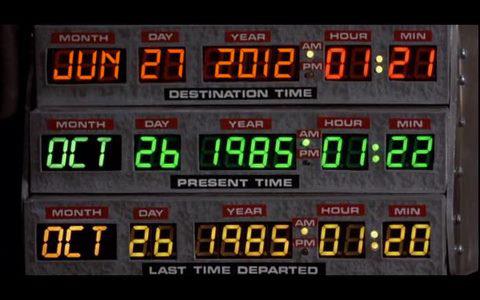
If you have a flying Delorean or a Time Turner or a TARDIS, I will take your workshop and not mind time management issues at all.  Otherwise, make sure you have a timeline for yourself and stick to it as closely as you can.
If you have a flying Delorean or a Time Turner or a TARDIS, I will take your workshop and not mind time management issues at all. Otherwise, make sure you have a timeline for yourself and stick to it as closely as you can.

3) Wasting time – Be realistic about how much you can get done in an hour, hour and a half, two hours.  If you’re used to giving three day long intensive writing workshops, think back over how long your introductory activity takes, and that’s probably about as much as you can cover in this kind of time window.

4) Self-advertising – Not actually a terrible thing if you make your living as a writing coach or a consultant, so long as the session’s gone smoothly and you have a good sense of the temperature of the room.  But if you’ve had issues with any of numbers 1-3, promoting your next course is likely to backfire.

What Works! (Yay!)

1)  Group participation – Chances are good that most of the people in the room don’t know each other all that well, but a bunch of them likely do belong to writers’ groups and are familiar with both reading their work aloud and collaborative writing prompts.  If you don’t have time to have everyone read, that’s fine and people won’t expect it unless you tell them they will, but a writing exercise as simple as Exquisite Corpse works great as an icebreaker.  And it makes everyone feel included without taking any more time than you might have given to any other writing prompt, sometimes with bonus hilarious results.

2) Handouts – Seems pretty common sense, but if you’re referencing a bunch of works, poems or otherwise, having at least a bibliography and at best a set of full text, along with whatever prompts or resources you’re using in your presentation.  It frees people up from stressing about taking notes, so they can pay more attention to what you’re saying and really take it in.  Plus it’s helpful when they want to go back and reflect after.  I’m really looking forward to reading carefully through the poems provided by Elisabeth Horowitz in the intensely enjoyable “Writing the Sea.”

Bonus suggestion: I used to make sure I had 'emergency sugar' in my desk when I had tired afternoon seventh graders in my classes.  Stick with stuff that's free of the most likely allergens (or with caffeine) and your audience will perk right up.
Bonus suggestion: I used to make sure I had ’emergency sugar’ in my desk when I had tired afternoon seventh graders in my classes. Stick with stuff that’s free of the most likely allergens (or with caffeine) and your audience will perk right up.

3) Spare paper and pens – Okay, at a writers’ event, this may be superfluous.  But notebooks fill and pens run out of ink, so having extras makes you look sweet and thoughtful.  Because you are!

4) Personal touch – Best practices and survey data and such are useful, but the reassurance of a personal success story shouldn’t be undervalued.  And admitting where things went wrong is as interesting and useful as the list of things that went right along the way.

5) Interesting, diverse writing prompts and/or discussion questions – Form, theme, vocabulary, cultural context – there are so many options for cool prompts, and even mixing up the general (‘rivers’) with the specific (line beginnings and ends must match) can lead to really interesting variation that makes people think fast and write fast and be more willing to share, in general, than the things they’ve slaved over and have more invested in.  And it’s not all about the writing either – time for questions is equally important!

Homework is way more fun when you are only being graded by your inner editor.

6) Homework assignments – In the corporate world, these are called ‘action items,’ but the point stands: especially if you’re leading a session on practicalities or logistics, like Susan Rich’s excellent session this weekend on “From Manuscript into Book: Demystifying the Process,” giving participants ideas on what next steps they can be taking once the session is over is great.   I have a number of ‘assignments’ to add to my running to-do lists thanks to Susan, and I’m actually really looking forward to it.  Who knew a task like ‘list the titles of the poems you know you still need to write’ would be such a spur to creativity?

Have you attended any particularly good (or regrettable) conference/festival sessions?  Any helpful hints to share in the comments?  Please do!


Uncategorized

A Month by the Pen

R2D2 mailbox from the 30th anniversary of Star Wars.  Photographed in Boston by David Heiniluoma, Jr.
R2D2 mailbox from the 30th anniversary of Star Wars. Photographed in Boston by David Heiniluoma, Jr.

Despite the eternal frustration that is slow postal delivery to my neighborhood in Salem, I really love getting snail mail.  There’s something really exciting about opening up the box and seeing a postcard or a letter that a digital inbox just doesn’t convey.  Maybe that makes me a temporal leftover, but apparently there are a lot of people that feel the same way, one of whom is an author I admire, Mary Robinette Kowal, whose Glamourist Histories I read with great glee.

A few years ago, she started the Month of Letters challenge, wherein participants mail one piece of actual mail every day that the post office is open, for the entire month of February.  It corresponds (ha!) perfectly with a month in which one would potentially be sending valentines anyway, and is a nice manageable month if one isn’t running February school vacation week programming.  (Which I am, but oh well.)  This year, she upped the game by offering to write a character letter back to anyone who wrote to either of her two main characters from the Austen-era Glamourist Histories, and that’s what made me decide to go for it.  I probably won’t manage a letter/postcard/package a day, but there are a few people with whom I do keep up a written correspondence, and I’ve owed a few of them letters anyway (looking at you, Devlin!).  Because who can turn down the opportunity for a letter from Jane, Lady Vincent?  Not I.

(This is a brilliant idea, by the way, and crazy generous of her time and attention.  I’m impressed.)

LetterMo2014square

So if you’d like a letter/note/postcard/light shippable curiosity from me, drop me a line here and let me know!  (If I don’t have your address already, you can leave it in the comments, which will be screened so it doesn’t go public.)

Uncategorized

Grow a Poet-Tree

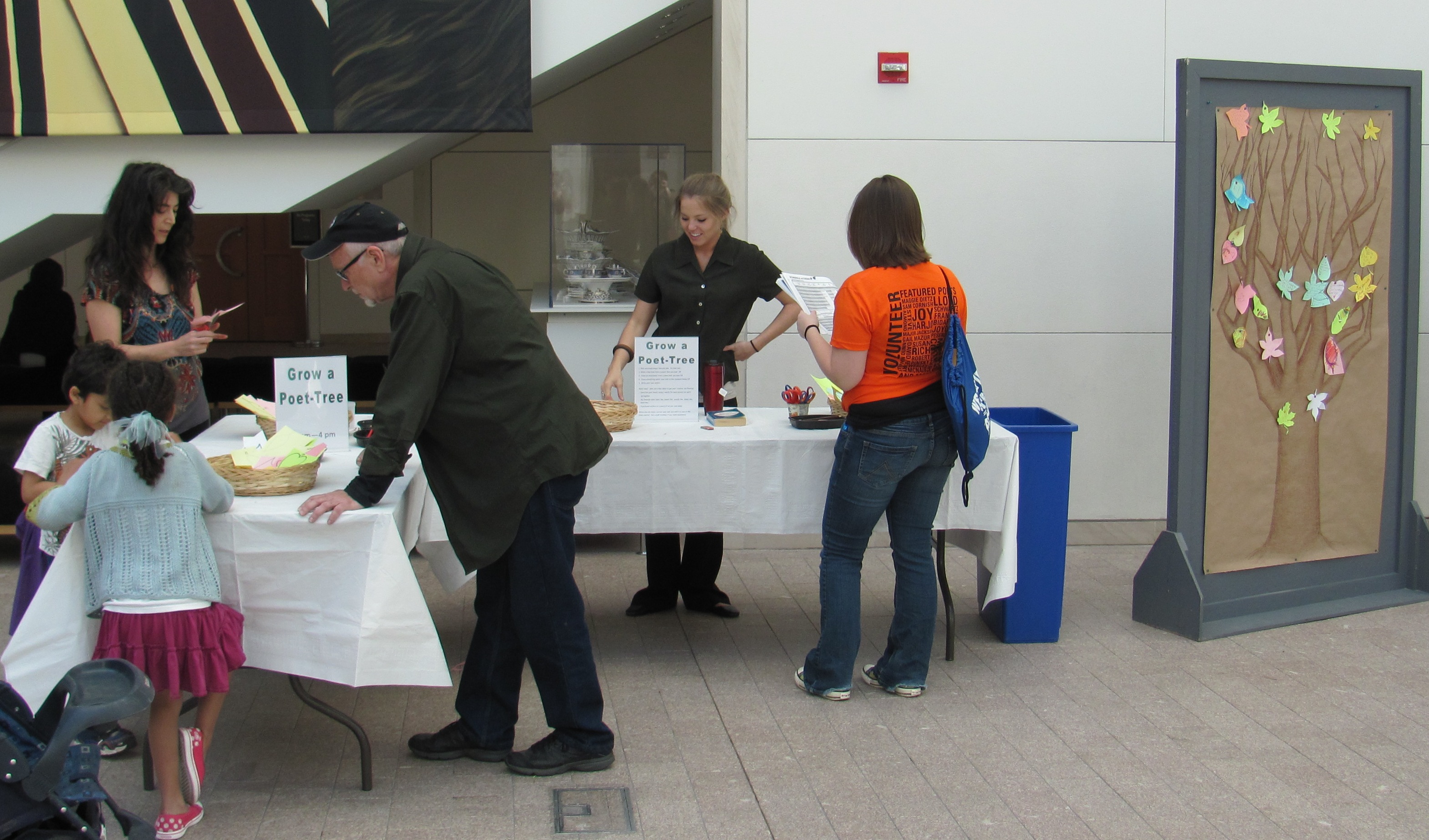
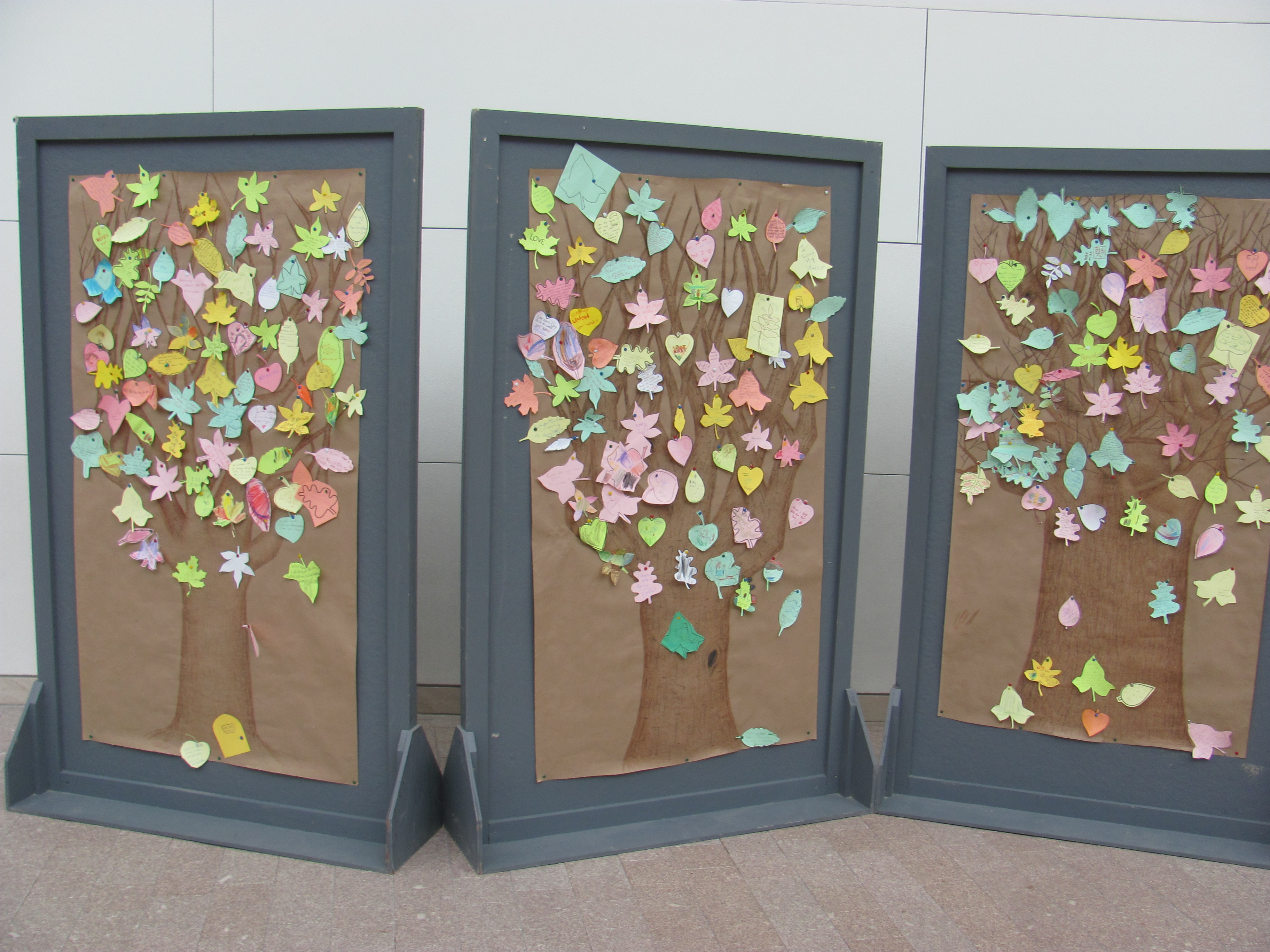
Just a few snapshots from this weekend’s drop-in art and writing activity, “Grow a Poet-Tree” at PEM for the Massachusetts Poetry Festival.  Kudos to my intern Kate for drawing three beautiful trees for us to decorate with leaves of original and remembered poetry, illustration, and reflection.

Poets quoted included but were not limited to: ee cummings (the runaway favorite with at least 5 quotes on the trees), Robert Frost, Henry Wadsworth Longfellow (the runner up in popularity, and not my fault), John Masefield (okay, that was my fault), and Shel Silverstein, with a hefty sprinkling of song lyrics (“Morning has Broken” for instance, though no “Amazing Grace”) and a few ad jingles thrown in.  Other messages included variations on a theme of ‘save the trees’ (clearly I do my work as an Art & Nature specialist thoroughly…), a lot of ‘I love you’s, and a few witty folk who wrote things like ‘This space intentionally left blank.’   I was most amused by the inclusion of text speak and hash-tags on several of the submissions, I think, but I was also impressed by the way some of the participants chose to address some fairly serious themes even in 2 square inches of space on a public bulletin board.

Greeting early poets and artists of all ages on Friday morning

A few of my favorite additions to the Poet-Tree forest, courtesy of PEM visitors and attendees of the Poetry Festival:

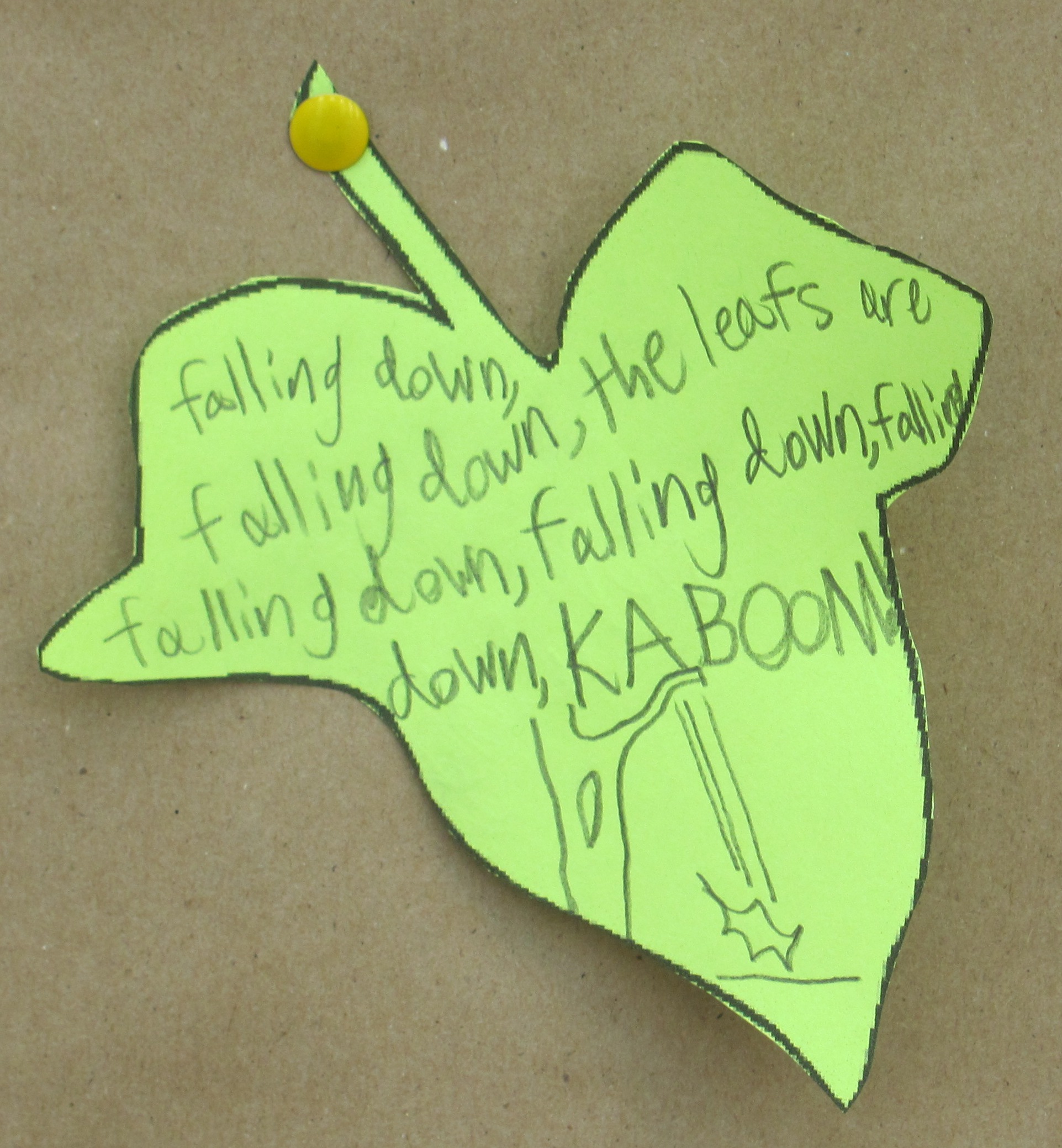
Child's Poem: Falling down, the leaves are falling down, falling down, falling down--KABOOM!
Forget asking about when a tree falls in the forest--apparently even these leaves make a noticeable auditory shock upon impact!
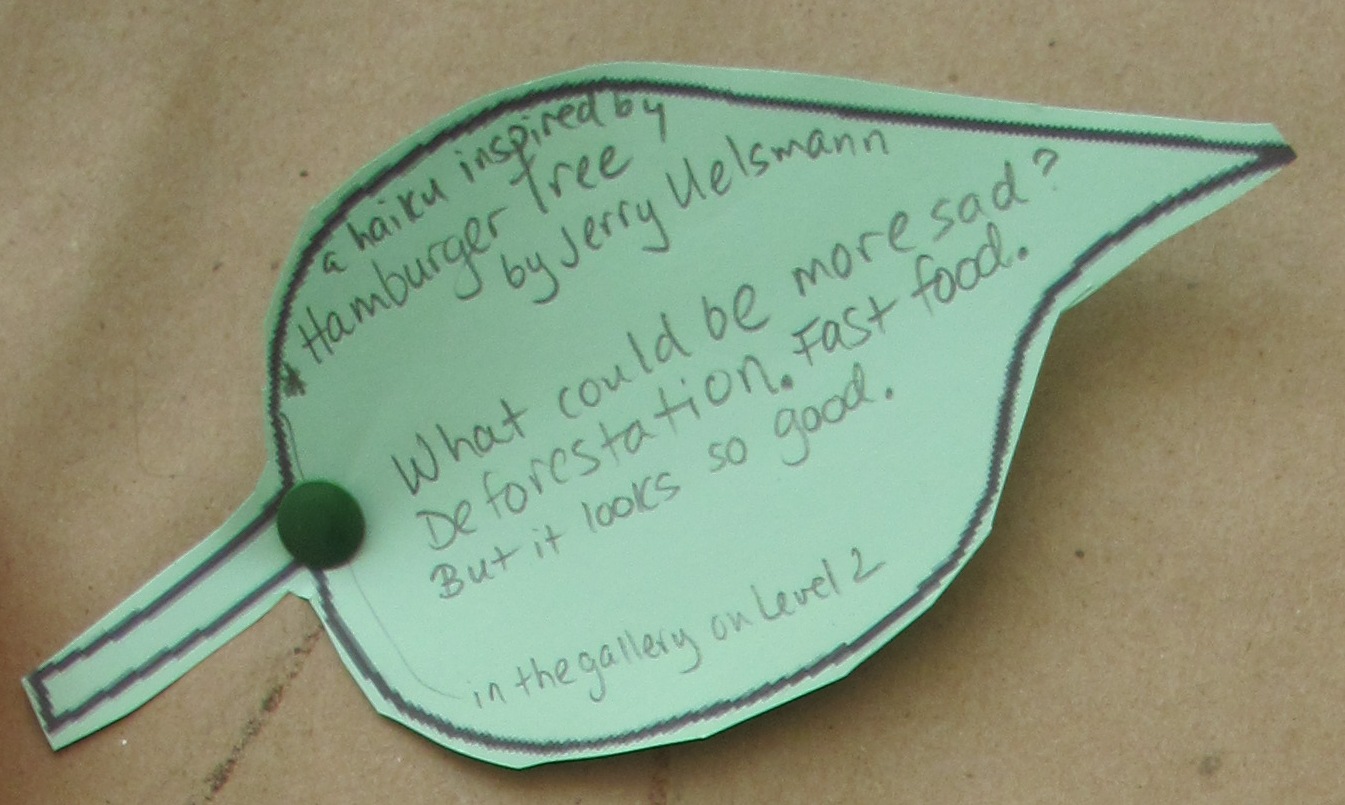
Responding to a photomanipulated image by artist Jerry Uelsmann from a current PEM exhibit--someone went to the ekphrastic workshop!
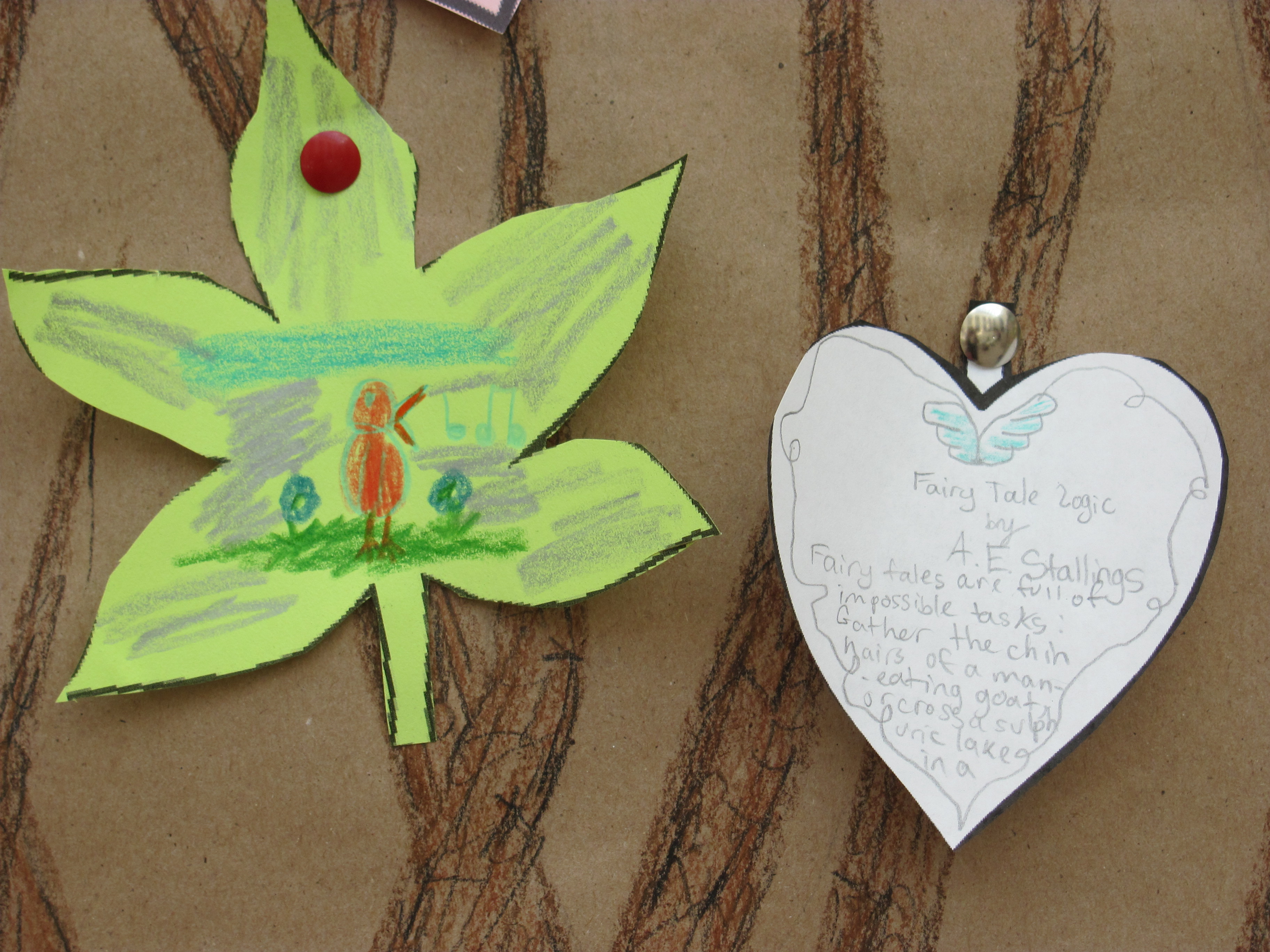
A fun illustration and a sweet poem about 'Fairy Tale Logic' (that participant was clearly my kind of whimsical!)
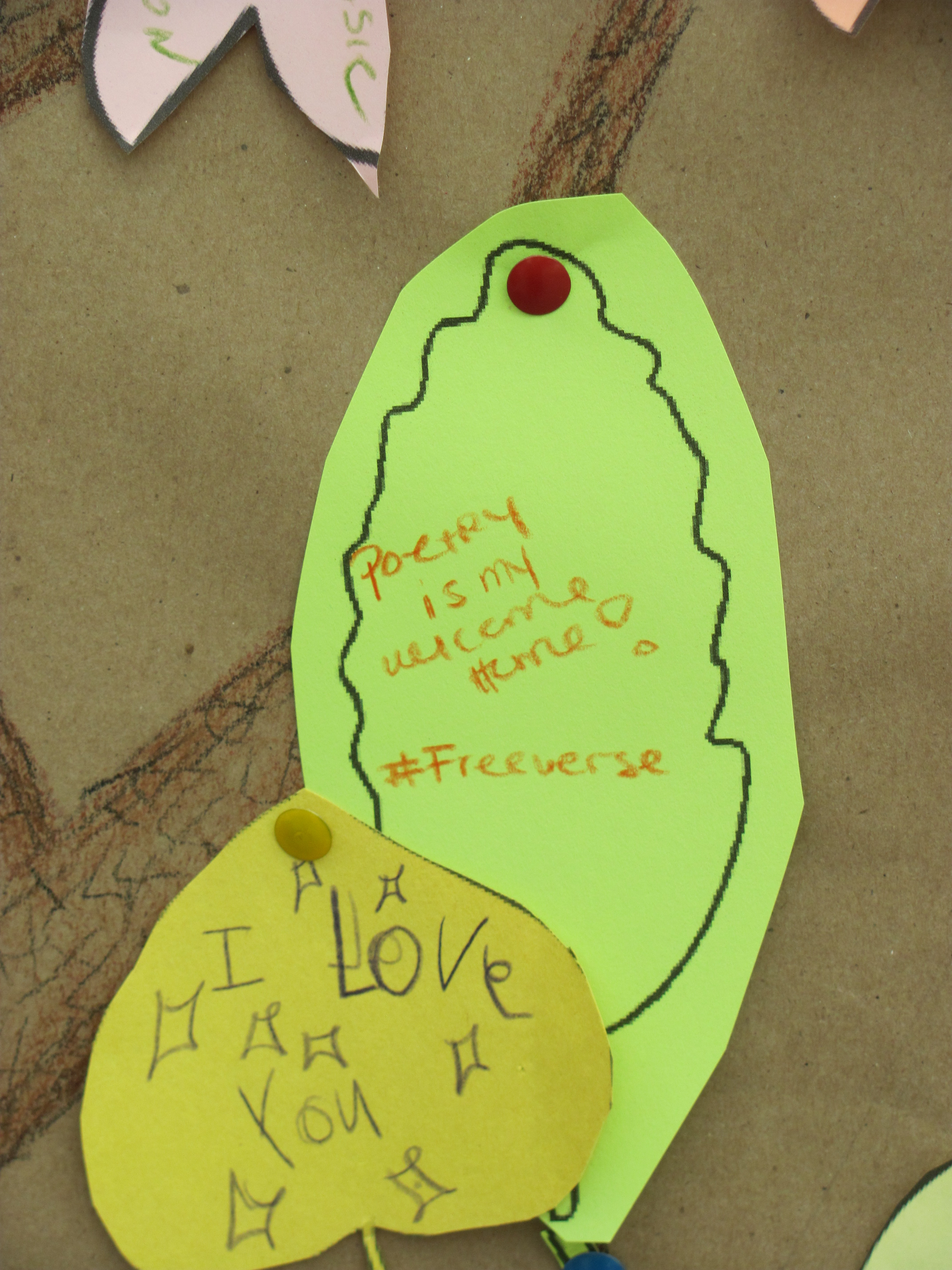
One of several #freeverse tags. Who says poetry isn't adapting to the 21st century?
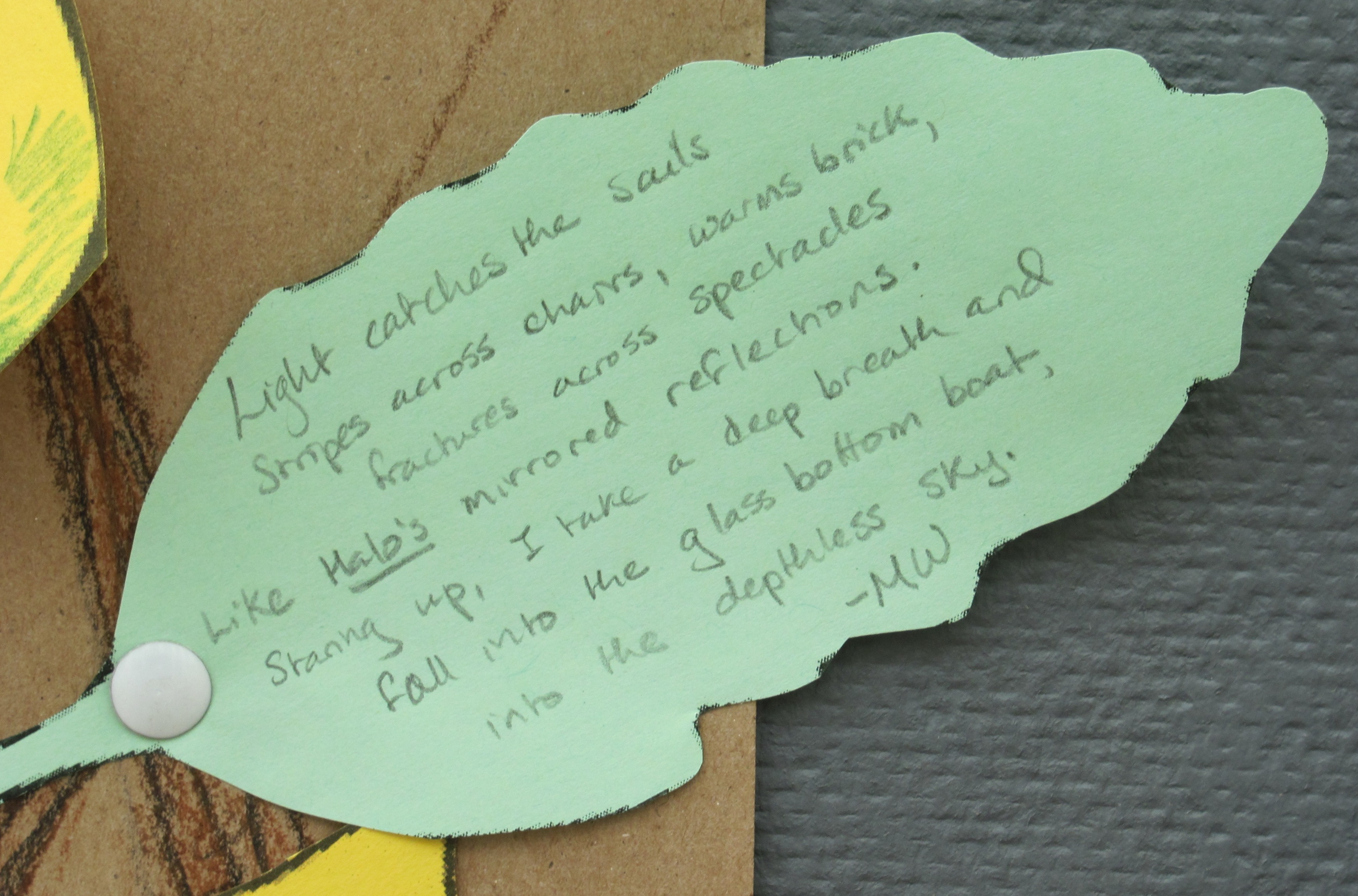
My own addition to the tree, inspired by sitting in the Atrium and appreciating the greenhouse/sailboat effect of Moshe Safdie's glass roof.
The final product