It’s that time of year again! All the fun kidlit contests are swinging back into season, starting with the marvelous Fall Writing Frenzy.
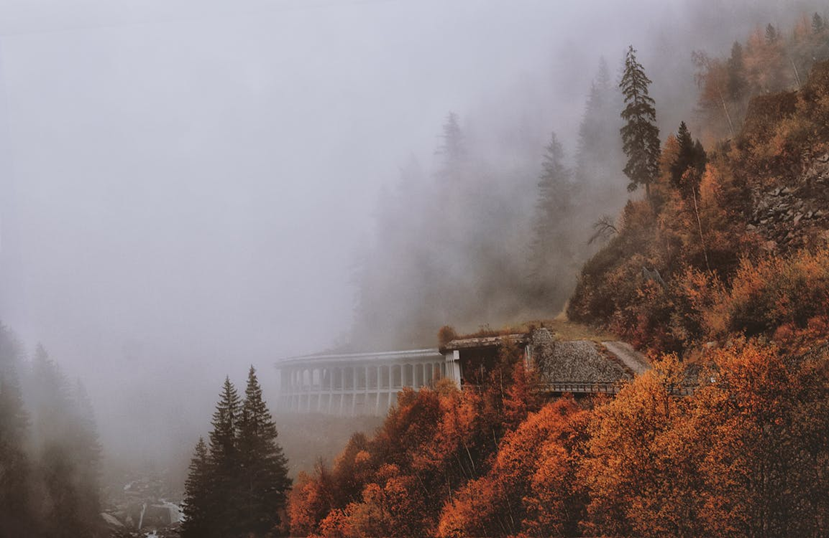
This year’s donor list is full of amazing authors, illlustrators, editors, and agents, so definitely swing by to check them out as well as the rest of the entries. My entry, clocking in at exactly the maximum 200 words, is below, inspired by the following image:
Beware where you wander on a foggy fall day when there’s no hint of wind but the branches still sway, where time stretches strangely and your watch makes no sense: there’s no morning or evening, just a long present tense. Where a tune through the trees seems to beckon you on, towards a glow that’s not moonlight nor starlight nor dawn. If you cross the pale bridge in the shimmering mist, the land feels familiar with an uncanny twist. If you follow the whispers of the pine-needled trail you might find a mystery, a garden, a grail. If instead you try tracking the dragon’s wingbeat, you’ll need all your courage, so stand firm on your feet. If you dance with the Fair Ones, don’t forget how to breathe– to remember you’re mortal is the passport to leave. Close your eyes, take a step, and believe you can fly— in a blink you’ll be back under homelier skies. When you’re home safe and sound, getting warm by the fire, you may find your heart filled by a fog-born desire— for a toll must be paid when you cross that pale span— and you’ll never quite be the same you that began.
They say poetry is a form of protest, and certainly it is good to feel like sometimes one’s words can pack a punch. I wrote this poem originally inspired by Rattle’s ekphrastic challenge for September of 2024, using this image by artist Barbara Gordon. I thought I was angry then, and I’m angrier now. So I’m sharing a poem, and asking you to contact the people who have power over the things you care about. Maybe that’s at the federal level, but maybe it’s your state or local government, your school committee, your library trustees. Make sure they know you’re paying attention.
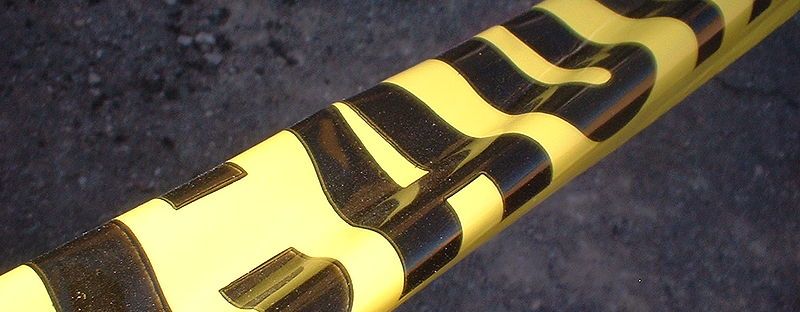
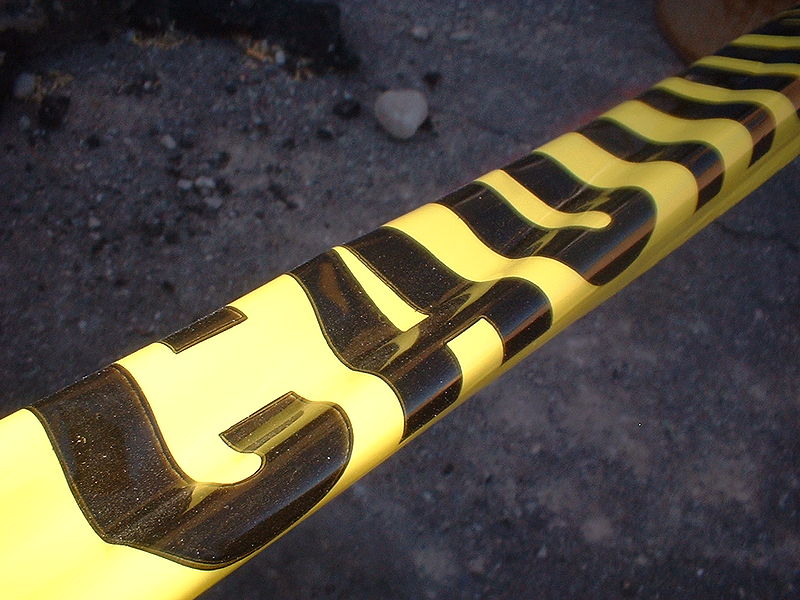
CAUTION — DANGER — DO NOT CROSS — Barricades and barrels, flashing lights and flaring eyes. They tried to lock us out. They tried to box us in. But the people are the books are the ideas are the will to be free. And the library stayed open. And the books flew off the shelves. And the only words left unread flutter yellow in the wind like the cowardice that strung them.
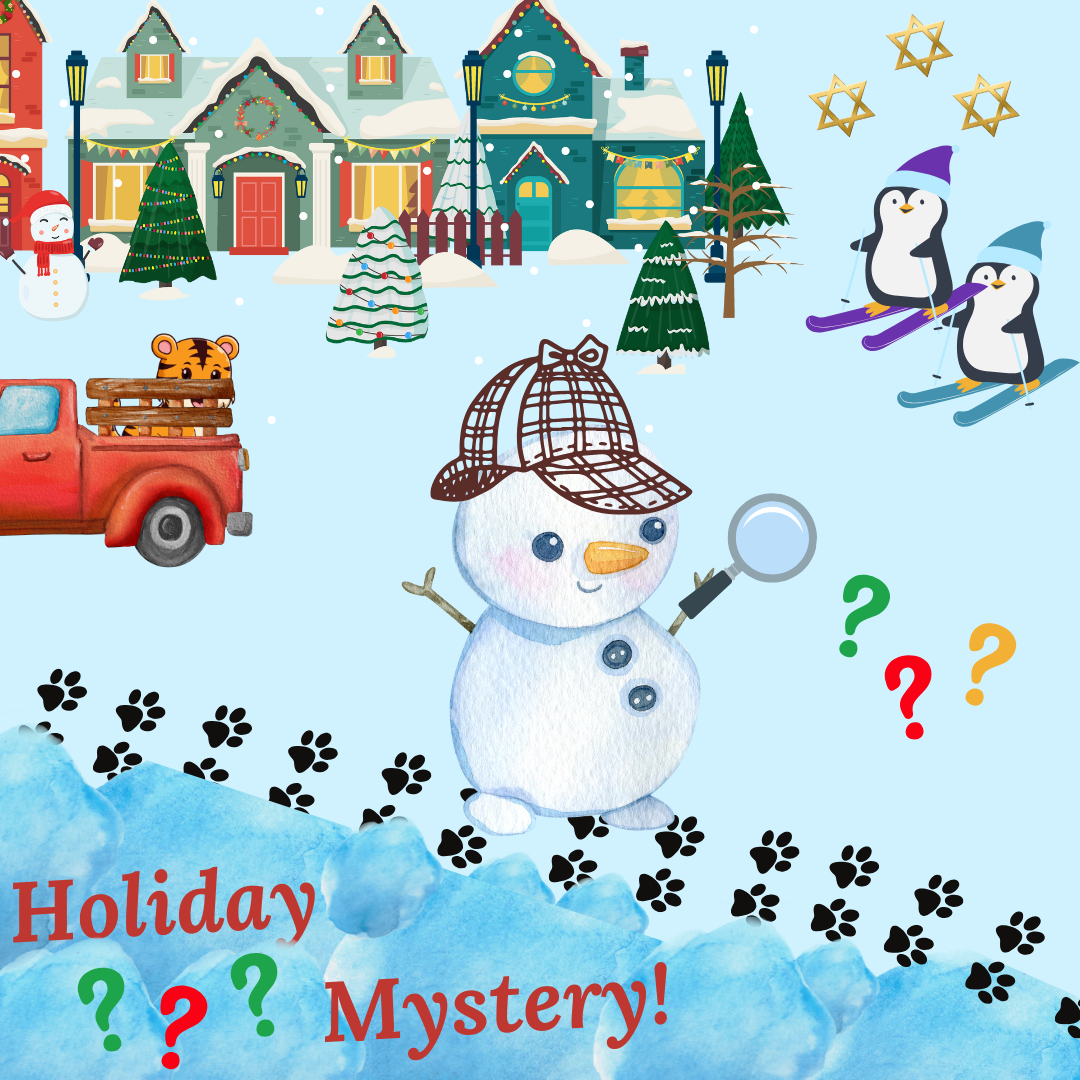
In amidst the addressing of Christmas cards, the list making, and tree decorating, it’s also the time for Susanna Leonard Hill’s Holiday Writing Contest!
Image from Susanna Hill’s contest page, see link above
The guidelines are that it must relate to any winter holiday, be a mystery, and no longer than 250 words (not including title). I was extremely honored to get an all-around honorable mention in the Halloweensie contest for Baby Goblin at the Halloween Ball, and am happy to present to you my tiny Christmas mystery, Who Stole Santa’s Boot?
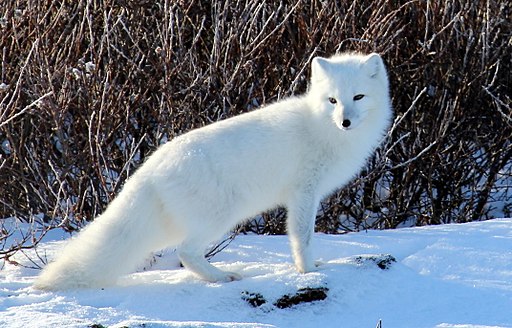
An arctic fox in winter, all white, standing in the snow in front of a thicket of winter twigs. Emma, CC BY 2.0 https://creativecommons.org/licenses/by/2.0, via Wikimedia Commons
Who Stole Santa’s Boot? By Meg Winikates (250 words)
This is the kitchen, smelling great, where cookies slide right off the plate. A chocolate boot-print on the floor— and Mrs. Claus points to the door.
This is the spot beside the sleigh where Santa tucks his boots away. He turns to put his slippers on— but suddenly, one boot is gone!
This is the fox who nabs the shoe for playful kits to gnaw and chew.
This is the stoat who shocks the fox (while Santa wanders in his socks) and drags the boot along the ground, delighted by this thing he’s found.
This is the owl that spooks the stoat, who hides below as white wings float. The owl swoops, the boot falls down, and crashes into tunnel town!
These are the lemmings that scoot and swarm into the boot, so safe and warm.
(This is St. Nick with chilly toes, his glasses balanced on his nose, requesting acrobatic elves to search the closets, climb the shelves!)
This is the hare with legs so strong, a boot hat on his ears so long, leaping across a frozen brook— (Where else can Santa think to look?)
This is the wise old caribou who gently bends to sniff the shoe; with boot between her teeth, she clops, and near the stable-door it drops, ready for Santa to retrieve— barely in time for Christmas Eve!
“So where do you suppose it’s been?” asks Mrs. Claus, and Santa grins. “My dear, we must admit defeat, and just rejoice they’re on my feet!”
Today’s the start of the Halloweensie contest run by author Susanna Leonard Hill, and this year’s challenge was to write no more than 100 words (not including the title) using the three prompt words: goblin, tiptoe, and chill. There’s lots of fun stories up already, and I encourage you to go check them out. Here’s my entry:
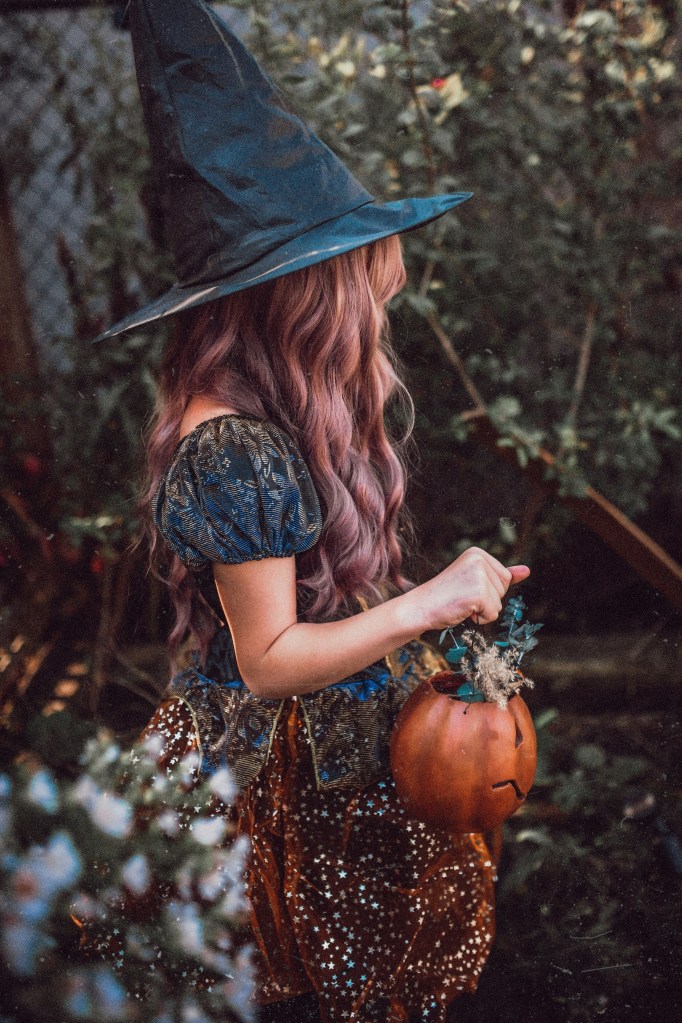
A girl with curly red hair, seen in profile, wearing a sparkly black and gold dress and black witch hat, carrying a small pumpkin shaped bucket with plants inside. Photo by Paige Cody on Unsplash
Baby Goblin at the Halloween Ball by Meg Winikates (100 words)
Baby Goblin on tiptoe, sneaking where she shouldn’t go— Grown-up goblins celebrate, Halloween Ball starting late.
Ghosties twirling, goblins bounce, Werewolves whirling, black cats pounce. Baby Goblin, heaving sighs, knows that boogying’s unwise: squishing’s likely, being small. Baby Goblin hugs the wall.
Cider simmers in a pot, sweetly spicy, piping hot! Tempting taste relieves the chill— Trembling fingers almost spill… Uh-oh! Slipping! Tipping! Crash! Baby Goblin makes a splash.
Many fingers point her way— Mama Goblin saves the day. “Someone should be safe abed, but tonight, let’s dance instead.” Tucked in Mama’s arms, she spins; Baby Goblin grins and grins.
A year ago, right around now, a friend of mine died tragically and unexpectedly. He was a gentle, lanky, funny person, who loved haiku, photography, and martial arts, which he whimsically referred to as ‘slicing the sky with a stick.’ (And cutting the occasional pumpkin with a sword, especially this time of year.) The skies around town have been showing off particularly well this week–I like to think that they’re turning out some autumnal best in honor of his memory as well.
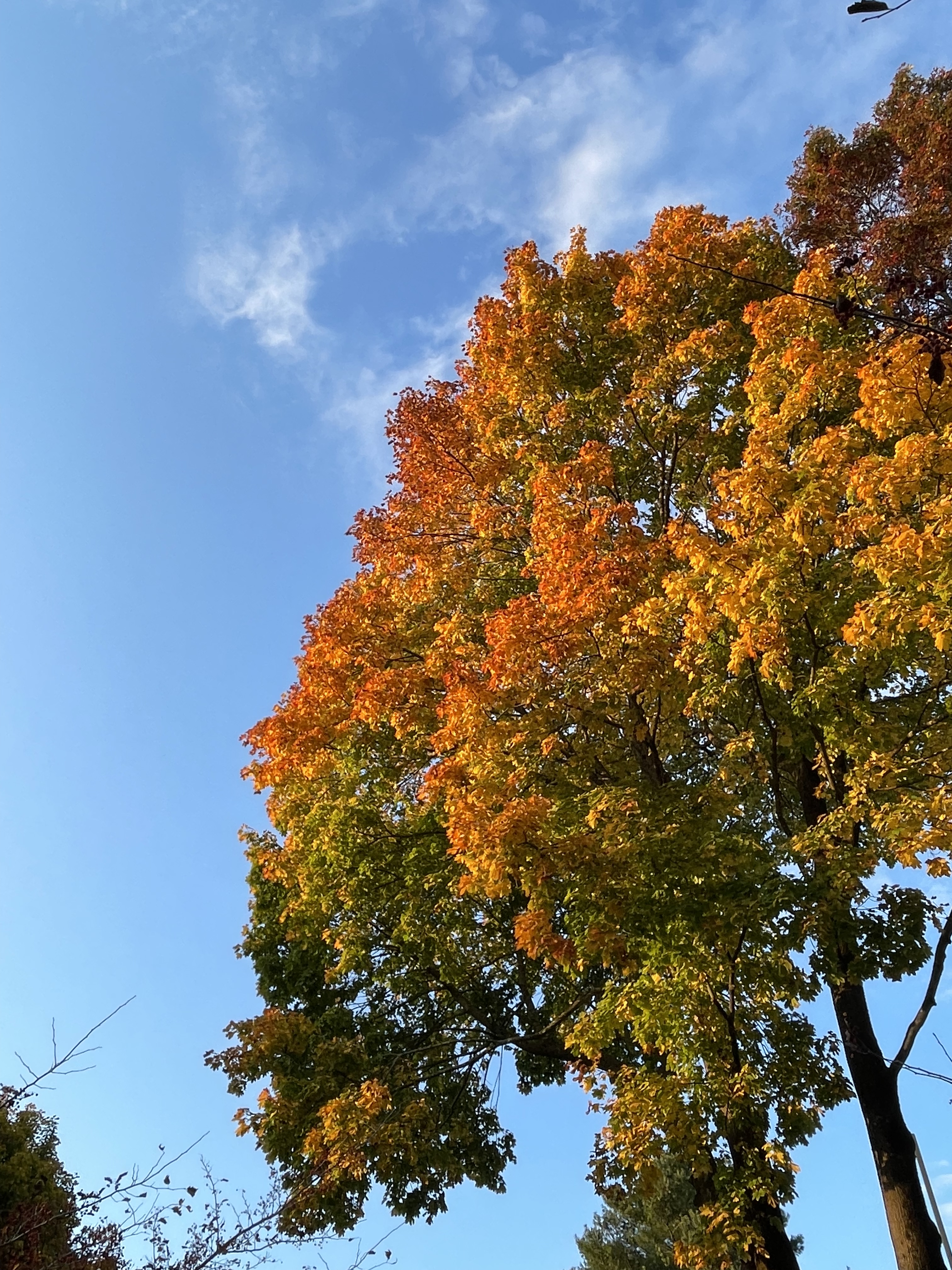
Orange and green leaves on a maple tree glow in full afternoon sunlight against a clear blue sky. Photo by me, October 2024
Autumn winds whip trees, dropping twigs, leaves, and one stick perfect to slice the sky.
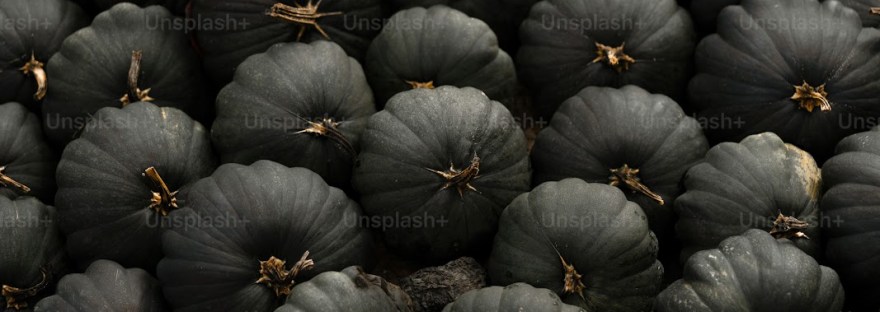
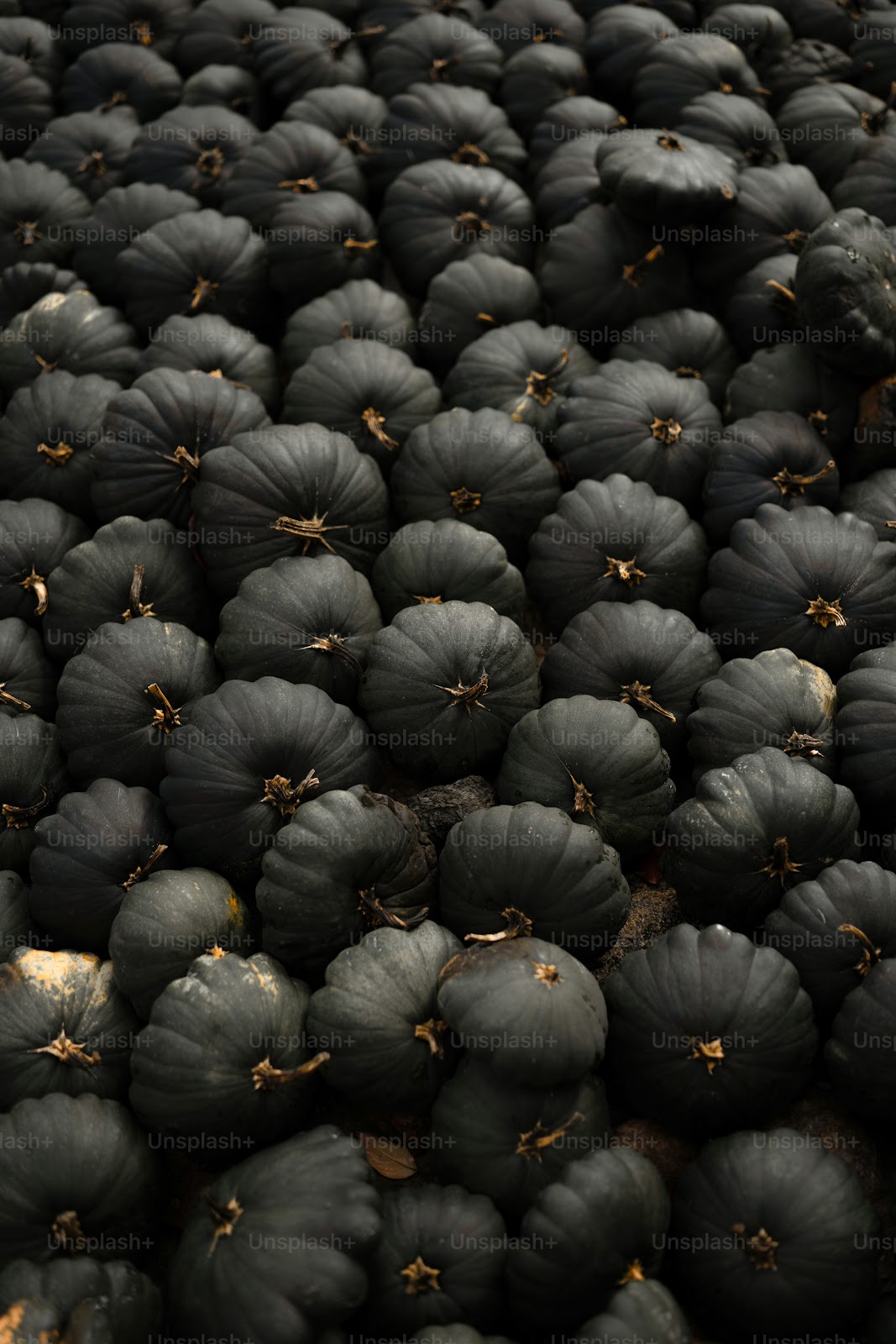
It’s that time of year again! I’m participating in the kidlit contest, Fall Writing Frenzy, which is this year hosted over on Lydia Lukidis’s blog. I was inspired by the image below, and the challenge is to write a story in 200 words (!!), for any age reader, board book through YA. Check out the amazing judges and prize donors for the contest here.
A pile of black pumpkins Credit: Unsplash via Leandra Rieger
The Patchwork Pumpkin Patch
Nighttime in the pumpkin patch, where nobody was cheery. “Always the same!” the gourds proclaimed. “Orange is so dreary!” “No complaints,” the scarecrow huffed, “Honestly, what’s the use? Orange can never be cyan, chartreuse or even puce.” “We could! We will!” the pumpkins cried. “Who knows ‘til we try it?” Whereupon some warty sorts turned amethyst and violet. The scarecrow appeared gobsmacked, with cheeks flaming scarlet; giddy, giggling pumpkins sported ruby, plum, and garnet.
Come morning, pumpkin-hunters surveyed the startling scene: which bedazzling gourd would illuminate Halloween? Some rejoiced at rose, or jived with midnight shades, many vibrant pumpkins left, but many others stayed. “You know,” said one, “today was fun, exploring something strange, but I’m done with celadon—to orange now I’ll change.”
Across the patch murmurs arose; some argued, some agreed. “What if,” the scarecrow offered, “everyone picks the hue they need? If your heart is truly turquoise, then turquoise you should stay, but if you’re more champagne-inclined, that’s equally okay. Nobody should hide away the truths that make them glow, which seems to me something jack-o-lanterns ought to know.” Today the patchwork patch proclaims with multicolored cheer: Let your outsides match your insides all throughout the year.
Many thanks to editor and judge Ivan Taurisano, who selected my piece. Check out his manuscript wish list and share it with any authors you know who might have a manuscript to share! There are also lots of other great books and projects from the rest of the guest judges and prize donors here.
This summer, my son was old enough to participate in the town library’s summer reading program, and as I like to lead by example, that meant I got to read a lot this summer too, and we both logged our books in Beanstack, a purpose-built reading app for schools and libraries. Part of me definitely missed the old paper summer reading logs of my youth, but my son got excited every time he reached a new badge or completed an activity for another virtual sticker, and I admit being able to scroll through and see cover art for all those books we read together is pretty enthralling. He’s already looking forward to the October “Boooooooooks!” bingo challenge, so that’s a good sign too.
Looking at the list of what I read, there was definitely an unintentional (but not the slightest bit surprising) marine/nautical theme to the novels I picked up for the summer, with a secondary theme definitely being fantastical academia. Here are a few that really stood out for me:
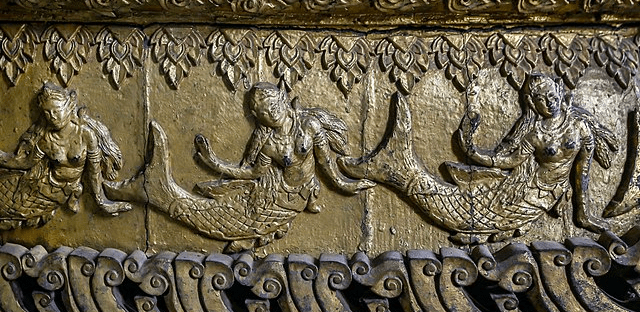
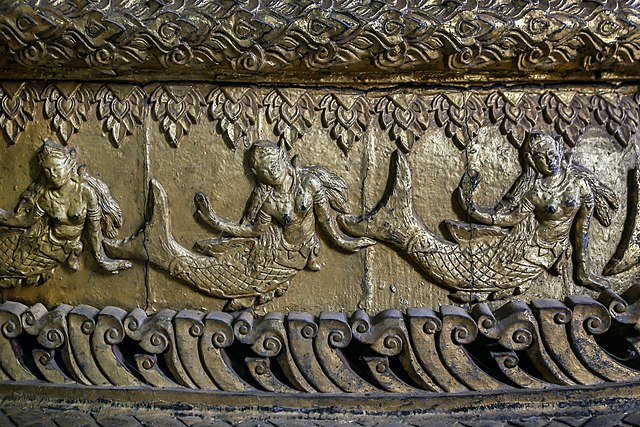
Carved decorative motif of mermaids from the Southeast Asian version of the Ramayana. Wat Xieng Thong, Luang Prabang, Laos. Photo by David Clay, used with permission through Creative Commons
Mermaids and Pirates
The Mermaid, the Witch, and the Sea by Maggie Tokuda Hall – Piracy, coming of age, star crossed love, self-reflection, non-binary characters, criticism of imperialism and colonial economic policies, this was a chock-full read that barely took a breath from start to finish and I thoroughly enjoyed it.
Tress of the Emerald Sea by Brandon Sanderson – Weird but satisfying. High seas adventure, working girl goes off to rescue her lordling in distress, piracy and questing and curses and wordplay. This book is impossible to explain, largely because it’s told by an unreliable and probably slightly unhinged narrator, but I’m very curious to find out what else Sanderson has planned with his other “secret Covid books” he wrote in this same universe.
The Adventures of Amina Al-Sirafi by Shannon Chakraborty – Probably my favorite thing I read this summer, this was densely delightful world building, really fun historical fantasy, non-Eurocentric, dryly hilarious, and featuring a 40-something retired-pirate mom who gets to go adventuring again to save her family and reunite with her old crew. I was so sorry when I turned the last page. I recommend this one highly.
American Mermaid by Julia Langbein – This promised to be a critical look at writing, Hollywood, and the cost of fame with a healthy dash of magical realism thrown in, which sounded really fun. Sadly, it was a little more cynical than I was really up for, and had far less magical realism than I would have liked, but there are definitely some scenes that linger in my memory, so it was an interesting read.
Fantastical Schools and Libraries
The Golden Enclaves, by Naomi Novik – The final volume in the Scholomance series, which deserves a deep-dive post of its own, probably after I have a chance to re-read them all (though not right before I go to bed, yikes. So many nightmares.). Fascinating reflection on what it takes to really change unjust systems, from both outside and within, and I loved so many of Novik’s character choices. One of my favorite writers for so many reasons.
Ink Blood Sister Scribe, by Emma Torzs – This one was on everyone’s recommendation lists this summer, and I can see why. Fascinating magic system, well developed characters, satisfying plot, just enough humor to offset how very dark things can and do get at points. I turned around and recommended it myself to various folks as soon as I finished it.
Akata Witch by Nnedi Okorafor – This has been on my backlist to read for years, and I was happy to grab it finally. I loved the Binti trilogy by Okorafor and this has a lot of the same: beautiful language, very fierce and charming protagonists, marvelous and immersive worldbuilding with science and magic. I definitely want to pick up the next in the series when I get a chance.
A Novel Disguise by Samantha Larsen – Historical fiction that I did not pick up with any real expectation of historical accuracy, as it was mostly a cozy mystery featuring a single woman who goes undercover as her dead half-brother to save her cottage and find out who poisoned him. Definitely a ‘potato chip’ sort of book, but amusing, and set earlier than the Regency period one could have easily assumed it would be, so the details of wigs, powder, and beauty patches to cover pox marks were all fun additions to the disguise.
Mooncakes by Suzanne Walker – A cute YA graphic novel about a late teen witch who works in a bookstore with her amazing witchy grandmothers, and her werewolf girlfriend who comes back to town to deal with something creepy in the woods. Great intergenerational team up, sweet illustration style, funny and creepy in a good balance, probably should have saved it to read in October for some Halloween fluff.
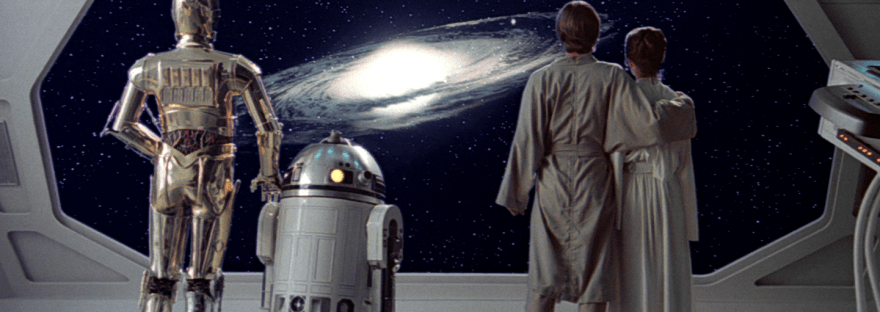
I don’t write about a lot of fannish things here, but anyone who knows me knows that I grew up a Star Wars fan, and certain stories at certain times have a really formative effect on the way you see and create stories from there on. As my witness, see all those Pixar artists and storytellers who are my age and grew up on R2-D2, C-3PO, Johnny 5 of Short Circuit, and various other tragi-comic helpful robots of the 1980’s (SpaceCamp and Flight of the Navigator and Asimov’s Norby series)…and who then went on to create Wall-E.
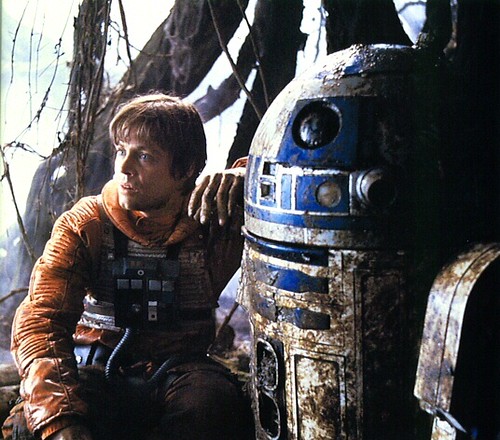
So some stories really stick with you, and good books do too, and since reading Carriger’s The Heroine’s Journey I have not been able to stop thinking about it in relation to that first deep love of mine, Luke Skywalker and his rebel space family. Luke has been the epitome of ‘heroic’ to me since I was tiny; kind, hopeful, sometimes clever and sometimes just lucky, a bit of a mix of brash and bashful as the situation demands, and–most importantly–to a fault loyal to his friends and family, regardless of their species or model number. (“Your droid’s pretty beat up, want a new one?” “Not on your life, that little droid and I have been through a lot together.”)
Very glad the swamp shark didn’t eat you, my friend.
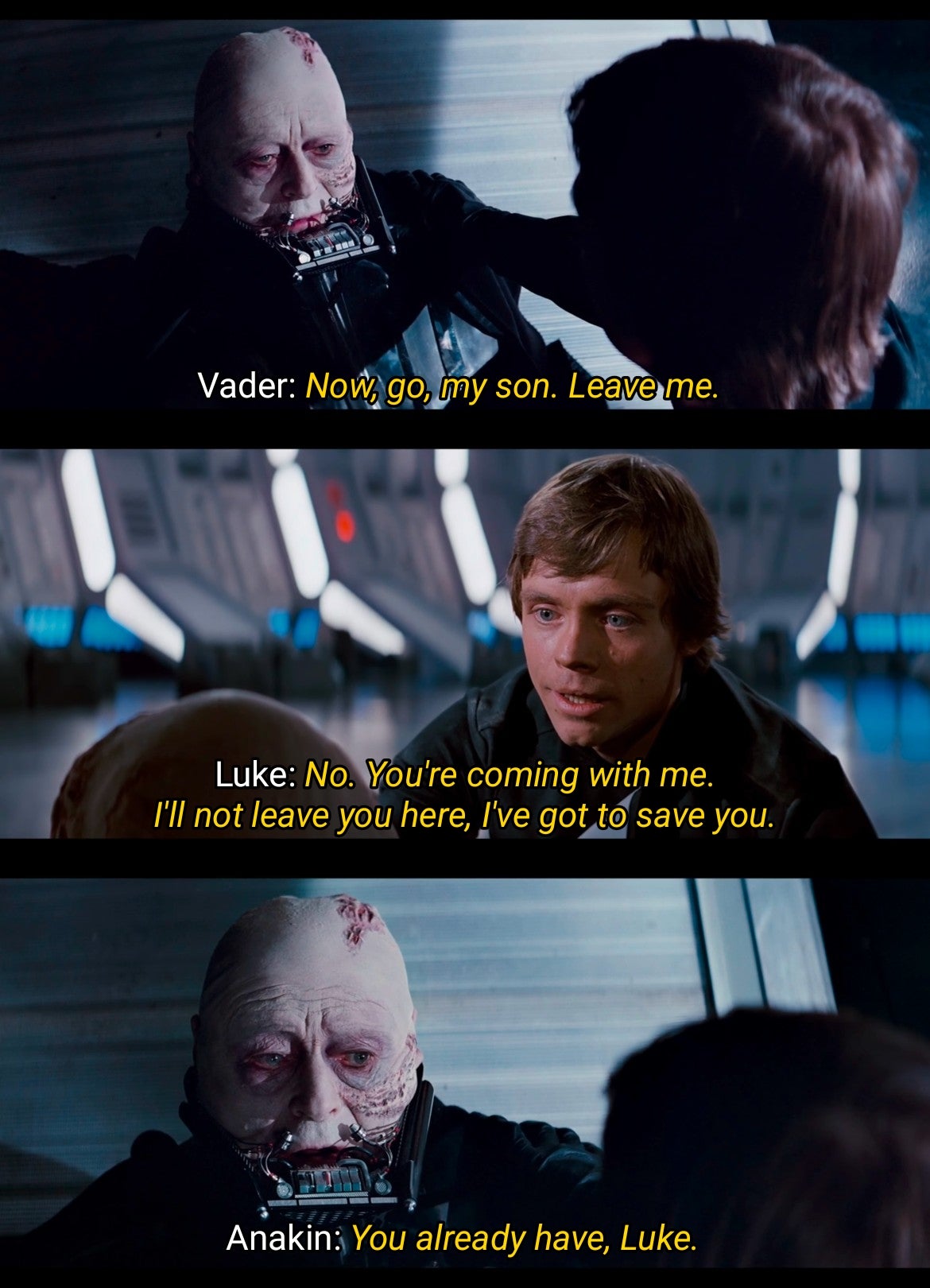
In the fannish corners of the internet that I occasionally haunt, there was a lot of upset about Luke’s arc in The Last Jedi, followed by some breaths of relief and recognition in his brief appearance at the end of The Mandalorian Season 2. People (including Mark Hamill, apparently) didn’t feel like the Luke they saw hiding out on that wild Irish island reflected the Luke of the original trilogy. He was too bitter, too cynical, too lonely, and too judgmental to feel like the same man who tossed his lightsaber away in the face of hatred and greed personified, who saved and forgave his father, and who never lost faith in his friends. There was hope, then, when he seemed a little more familiar as he came to collect Grogu to become a Jedi student.
And those same corners of the internet were not terribly happy with Luke’s characterization in last week’s episode of The Book of Boba Fett, even as there were justified giggles of glee over Force-skipping Grogu on a walk through a bamboo forest. Fans (myself included) who love Luke Skywalker for the gentleness, forgiveness, and hope that he embodies in the original trilogy were not super keen to see him forced into the same failings of previous Jedi generations, making a functional toddler attempt to choose between the traditional (lonely, failed) Jedi path and his affection for Din Djarin, walking disaster and accidental space dad. People watching this storyline felt betrayed.
And here’s where we get to my theory. Carriger says in her book that one of the best way to lose your readers (viewers, listeners) is to make them think they’re in for one kind of story, and then giving them something that doesn’t follow the signposts they expect. Story structures, themes, tropes, they all help build expectations that support and explain character growth, plot decisions, etc.
George Lucas has repeatedly talked about the influence of Joseph Campbell and the Hero’s Journey on his writing of Star Wars, and people map that journey onto Luke Skywalker all the time. Refusing the call (“I’m not going to Alderaan, I’ve got to stay here and take care of the harvest…”), magical aid (“your father’s lightsaber”), journey to the Underworld (trash compactor), death of the mentor (Obi-Wan’s sacrifice), and victorious battle/showdown (blowing up the Death Star) are just a few of the traditional signposts of a Hero’s Journey.
However, in the ultimate run of the trilogy, I would argue that Luke is a Heroine, not a Hero. Certain elements appear in both journeys, including trips to the underworld, gaining and losing of allies and power, delays, and ultimate confrontations – but the motivations and the strengths of the hero and heroine are different, not to mention the resolutions. Luke is constantly relying on and returning to his friends when they’ve been separated over the course of the original trilogy, and some of them are nearly inseparable regardless (hi, Artoo!). He prioritizes rescuing his friends from Cloud City over his training with Yoda, against both Yoda’s and Obi-Wan’s advice. He chooses to leave Han, Leia, and company on Endor and go to the second Death Star, not out of a ‘I must do this alone’ motivation of a Hero, who prioritizes isolation and individual strength, but because he’s the best person to try to reach Vader and reawaken Anakin Skywalker, rebuilding a family connection. Plus, he trusts his friends to complete their parts of the mission with their own strengths. That faith in his friends, so strong that the Emperor cannot help but needle him for it, is the same strength that lets him throw away his lightsaber and seek reconciliation with his father rather than revenge. That is a pure Heroine’s Journey resolution — compromise, forgiveness, rather than destruction. And in the last scene, when it looks like Luke might end up alone in the forest with the Force Ghosts, it’s his family who draw him back into the (fire)light. Subtle, that symbolism is not, especially in the light of the prequels that posit ‘family’ as Anakin’s reason for his fall into darkness (oversimplification, but still).
In summary: ultimately it’s Anakin who has the Hero’s Journey here, not Luke.
I’m not crying, you’re crying.
And so we get back to how betrayed and annoyed Luke Skywalker fans are right now. Because Dave Filoni, who directed the episode in question, clearly thinks George Lucas hangs the moon, and I would venture to guess has completely bought into the “Luke is on the Hero’s Journey” idea. (I can’t explain Rian Johnson beyond the impression that his directorial motivation was that meme about “I will pee on everything you love.” There were a handful of good things in that movie, my favorite was the little stablehand holding their broom like a lightsaber, my second favorite was the potential of Rose Tico, and that’s another post entirely. But still: they let someone who hates Star Wars direct Star Wars and that was dumb.)
So fans are expecting Luke post-Return of the Jedi, the triumphant heroine who supports his family (found and otherwise), values connections, prioritizes understanding and forgiveness, who has learned something from the mistakes of his mentors. And in the recent Book of Boba Fett episode they are getting…the opposite of that. Luke looks to be going down the same (Hero’s) lonely and repressed road as that of the Jedi at the end of the New Republic, asking ridiculous emotional sacrifices of children too young to understand the choices they’re being asked to make, training a new generation of Heroes who think attachment is a weakness and solitude a strength.
(Honestly, it would serve *this* version of Luke right if Grogu decided to go back to the Mandalorian and ride along in the starfighter-with-babyseat. Do you know any toddler who will pick a shiny toy over their parental figures when the chips are really down? There’s a reason parents everywhere lament being unable to use the restroom in peace.)
I’m writing this Tuesday night, so there’s still hope they turn it around for the end of this series/season. We’ll see what tomorrow’s episode brings. Like Luke (and, because I cannot end this post without saying so, like Leia, whom I love equally), I choose hope.
When things look bad, Heroines rely on each other.
This Christmas I wished for and received a copy of The Heroine’s Journey by Gail Carriger, and having read it, I have been bending the ear of anyone I know remotely interested in story structure, literary or pop culture analysis, or who has been simply willing to let me enthuse in their general direction for 5-10 minutes.
Like a lot of people, I ran across (and I think I wrote a paper on?) Joseph Campbell and “the hero’s journey” in late high school or early college, and have run across it with reasonable frequency ever since. Granted, I took a fairly high number of mythology and folklore classes in college, and have been going to sci-fi and fantasy readers’ and writers’ conventions in the years since, so my exposure has been higher than your average duck, but still. The Hero’s Journey saturates a lot of narratives in the popular imagination, with perfectly good reasons. Individuals triumphing through adversity, going on journeys, learning self-reliance, rescuing and losing people and causes along the way, all very exciting.
However, I first heard mention of an alternate narrative, the Heroine’s Journey, at a writing panel a few years ago, and was instantly fascinated, so when I found out there was a book, by a hilarious and clever writer to boot, I had to read it.
To hear the author describe the differences herself, I recommend this excellent podcast (transcript also provided for those who’d rather read). The short list of differences, however, boils down to motivation, strength, and resolution. Heroes (whatever their gender) often need a push to get going, are seeking an external reward, see seeking help as a weakness and civilization as a hindrance, “must do this alone,” and often end up, even when victorious, still alone. Heroines are prompted by a loss or separation within their family, often start out alone because their pleas for help go unanswered, and then collect knowledge, friends, found family, and other assistance along the way, seeking reunion, compromise, and connection as ultimate goals. Heroes go on inspiring, exciting, but often bittersweet or downright depressing journeys. Heroines go on journeys that have more room for humor, connection, and comfort, and are most often found in genres and story forms that have been traditionally undervalued in modern Western/European cultures.
Where things get really interesting, from the point of view of writing or story structure analysis, is what happens when you get mashups of the two story structures. In Marvel’s recent movie, The Eternals, for instance, Ikaris is on a hero’s journey and Sersi is on a heroine’s journey. Ikaris can’t adapt to be part of the victory of the heroine’s journey and accept reconciliation, and so literally flies himself into the sun. (Waste of a good actor, but oh well.) In Carriger’s book, she posits that Harry Potter is on a heroine’s journey, and that much of the conflict many readers have with Dumbledore’s actions towards Harry stems from the fact that Dumbledore is trying to play the role of mentor to a hero, not a heroine. He seems to be positioning Harry for the road of lonely sacrifice, when Harry’s inclinations and strengths all come from relying on his friends and extended network.
Like so many people, I’ve found my creative work stymied by the stresses of the pandemic, but reading this book has helped me think through some of my stories in progress, and given me new energy to get back to them. Whether you’re a writer or just like to think about the themes, tropes and structures of the media you consume, I highly recommend this book!

 Sea Dreams and Time Machines
